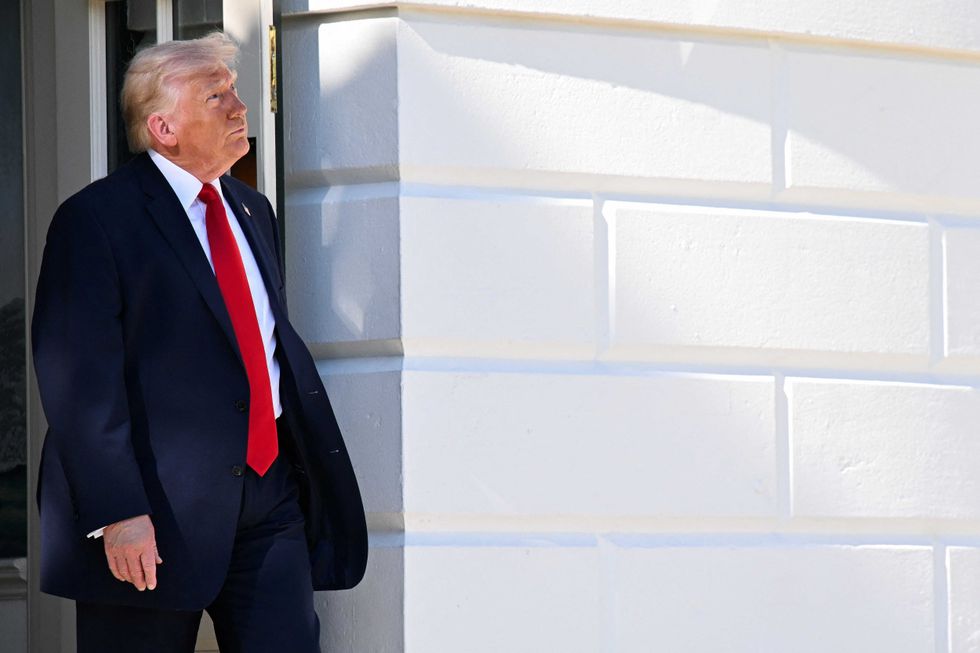
Fidelity Labs managing partner Parth Gargava says bitcoin may be transitioning away from its familiar, halving-linked four-year rhythm and into something closerFidelity Labs managing partner Parth Gargava says bitcoin may be transitioning away from its familiar, halving-linked four-year rhythm and into something closer

Bitcoin Could Be Entering A Supercycle, Fidelity Warns

2026/01/13 19:00

Fidelity Labs managing partner Parth Gargava says bitcoin may be transitioning away from its familiar, halving-linked four-year rhythm and into something closer to a “supercycle”, a regime that could keep prices elevated for longer and make drawdowns less severe, if structural demand continues to build.

Speaking in Fidelity’s Jan. 9 crypto outlook for 2026 video, Gargava anchored the discussion in the cycle framework many market participants have used for years: peaks arriving roughly a year and a half after each halving. “Traditionally, what we have seen is Bitcoin has had this four-year cycle,” he said, adding that the pattern has been “highly correlated to Bitcoin’s halving events.” He pointed to the 2016 halving followed by a peak in December 2017 near $20,000, and the 2020 halving followed by another peak in 2021 about 18 months later.

That history matters because it frames the debate around the most recent halving in April 2024. Gargava acknowledged the straightforward inference some investors make from prior cycles: “So maybe we are past that peak price.” But he positioned that view as only one side of the argument, highlighting a competing thesis that the market’s structure is evolving.

“On the other side, you’re also seeing a lot of arguments around how we might have entered into a supercycle as opposed to what we have seen in the past four years,” Gargava said. “And what a super cycle really means is you might have more prolonged highs, longer highs, and shallower dips.”

Gargava credited Fidelity Digital Assets’ research team for outlining what he called the “super cycle mechanism,” and suggested an analogy to the commodities market in the 2000s. The key point was not that bitcoin would mechanically copy commodities, but that a sustained, multi-year bid can alter how markets behave, extending expansions and compressing the depth of selloffs.

Three Forces That Could Push Bitcoin Into A Supercycle

He outlined three drivers he believes could underpin that kind of regime shift.

First is “steady buy-in by institutions focused on ETFs,” which Gargava framed as persistent demand rather than episodic speculative bursts. In his telling, ETFs can function as a channel that keeps incremental capital flowing even when sentiment softens, potentially changing the market’s typical post-peak unwind.

Second is policy. Gargava pointed to “pro-crypto policies” in the US as a supportive backdrop, implying that a friendlier regulatory stance could reduce headline risk and encourage broader participation from investors and intermediaries that previously stayed on the sidelines.

Third is market maturation and changing correlations. “We’re also seeing how the crypto market as a whole is maturing and deviating from the S&P 500 and precious metals,” he said. The implication is that bitcoin’s trading behavior may be becoming less captive to traditional risk-asset moves and the simple “digital gold” narrative, an evolution that could matter for positioning, hedging, and macro sensitivity.

Notably, Gargava did not claim the four-year cycle is definitively broken. Instead, he presented a live question for 2026: whether bitcoin continues to follow a post-halving path that culminates in a familiar, sharp boom-and-bust pattern, or whether structural forces: ETF-driven institutional demand, a more supportive US policy tone, and a maturing market profile support a longer, steadier expansion with “shallower dips.”

At press time, Bitcoin traded at $92,182.
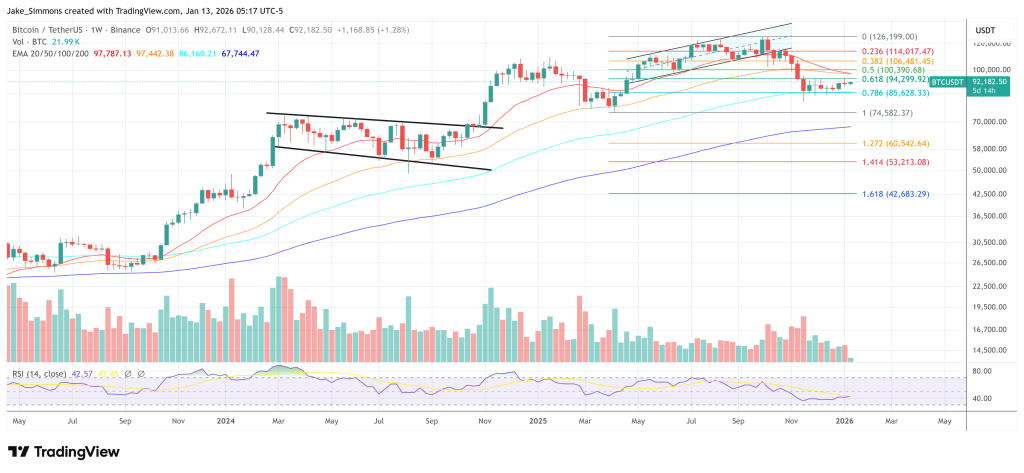
Bitcoin price chart
Market Opportunity
MAY Logo
MAY Price(MAY)
$0.01382
$0.01382$0.01382
+0.29%
USD
MAY (MAY) Live Price Chart
Disclaimer: The articles reposted on this site are sourced from public platforms and are provided for informational purposes only. They do not necessarily reflect the views of MEXC. All rights remain with the original authors. If you believe any content infringes on third-party rights, please contact service@support.mexc.com for removal. MEXC makes no guarantees regarding the accuracy, completeness, or timeliness of the content and is not responsible for any actions taken based on the information provided. The content does not constitute financial, legal, or other professional advice, nor should it be considered a recommendation or endorsement by MEXC.

You May Also Like

The Channel Factories We’ve Been Waiting For

The Channel Factories We’ve Been Waiting For

The post The Channel Factories We’ve Been Waiting For appeared on BitcoinEthereumNews.com. Visions of future technology are often prescient about the broad strokes while flubbing the details. The tablets in “2001: A Space Odyssey” do indeed look like iPads, but you never see the astronauts paying for subscriptions or wasting hours on Candy Crush.  Channel factories are one vision that arose early in the history of the Lightning Network to address some challenges that Lightning has faced from the beginning. Despite having grown to become Bitcoin’s most successful layer-2 scaling solution, with instant and low-fee payments, Lightning’s scale is limited by its reliance on payment channels. Although Lightning shifts most transactions off-chain, each payment channel still requires an on-chain transaction to open and (usually) another to close. As adoption grows, pressure on the blockchain grows with it. The need for a more scalable approach to managing channels is clear. Channel factories were supposed to meet this need, but where are they? In 2025, subnetworks are emerging that revive the impetus of channel factories with some new details that vastly increase their potential. They are natively interoperable with Lightning and achieve greater scale by allowing a group of participants to open a shared multisig UTXO and create multiple bilateral channels, which reduces the number of on-chain transactions and improves capital efficiency. Achieving greater scale by reducing complexity, Ark and Spark perform the same function as traditional channel factories with new designs and additional capabilities based on shared UTXOs.  Channel Factories 101 Channel factories have been around since the inception of Lightning. A factory is a multiparty contract where multiple users (not just two, as in a Dryja-Poon channel) cooperatively lock funds in a single multisig UTXO. They can open, close and update channels off-chain without updating the blockchain for each operation. Only when participants leave or the factory dissolves is an on-chain transaction…
Share
BitcoinEthereumNews2025/09/18 00:09
Trading time: Tonight, the US GDP and the upcoming non-farm data will become the market focus. Institutions are bullish on BTC to $120,000 in the second quarter.

Trading time: Tonight, the US GDP and the upcoming non-farm data will become the market focus. Institutions are bullish on BTC to $120,000 in the second quarter.

Daily market key data review and trend analysis, produced by PANews.
Share
PANews2025/04/30 13:50
CEO Sandeep Nailwal Shared Highlights About RWA on Polygon

CEO Sandeep Nailwal Shared Highlights About RWA on Polygon

The post CEO Sandeep Nailwal Shared Highlights About RWA on Polygon appeared on BitcoinEthereumNews.com. Polygon CEO Sandeep Nailwal highlighted Polygon’s lead in global bonds, Spiko US T-Bill, and Spiko Euro T-Bill. Polygon published an X post to share that its roadmap to GigaGas was still scaling. Sentiments around POL price were last seen to be bearish. Polygon CEO Sandeep Nailwal shared key pointers from the Dune and RWA.xyz report. These pertain to highlights about RWA on Polygon. Simultaneously, Polygon underlined its roadmap towards GigaGas. Sentiments around POL price were last seen fumbling under bearish emotions. Polygon CEO Sandeep Nailwal on Polygon RWA CEO Sandeep Nailwal highlighted three key points from the Dune and RWA.xyz report. The Chief Executive of Polygon maintained that Polygon PoS was hosting RWA TVL worth $1.13 billion across 269 assets plus 2,900 holders. Nailwal confirmed from the report that RWA was happening on Polygon. The Dune and https://t.co/W6WSFlHoQF report on RWA is out and it shows that RWA is happening on Polygon. Here are a few highlights: – Leading in Global Bonds: Polygon holds 62% share of tokenized global bonds (driven by Spiko’s euro MMF and Cashlink euro issues) – Spiko U.S.… — Sandeep | CEO, Polygon Foundation (※,※) (@sandeepnailwal) September 17, 2025 The X post published by Polygon CEO Sandeep Nailwal underlined that the ecosystem was leading in global bonds by holding a 62% share of tokenized global bonds. He further highlighted that Polygon was leading with Spiko US T-Bill at approximately 29% share of TVL along with Ethereum, adding that the ecosystem had more than 50% share in the number of holders. Finally, Sandeep highlighted from the report that there was a strong adoption for Spiko Euro T-Bill with 38% share of TVL. He added that 68% of returns were on Polygon across all the chains. Polygon Roadmap to GigaGas In a different update from Polygon, the community…
Share
BitcoinEthereumNews2025/09/18 01:10