JPMorgan Expresses Caution Over Stablecoins Amid Regulatory Concerns During its recent fourth-quarter earnings call, JPMorgan Chase highlighted the evolving landscapeJPMorgan Expresses Caution Over Stablecoins Amid Regulatory Concerns During its recent fourth-quarter earnings call, JPMorgan Chase highlighted the evolving landscape

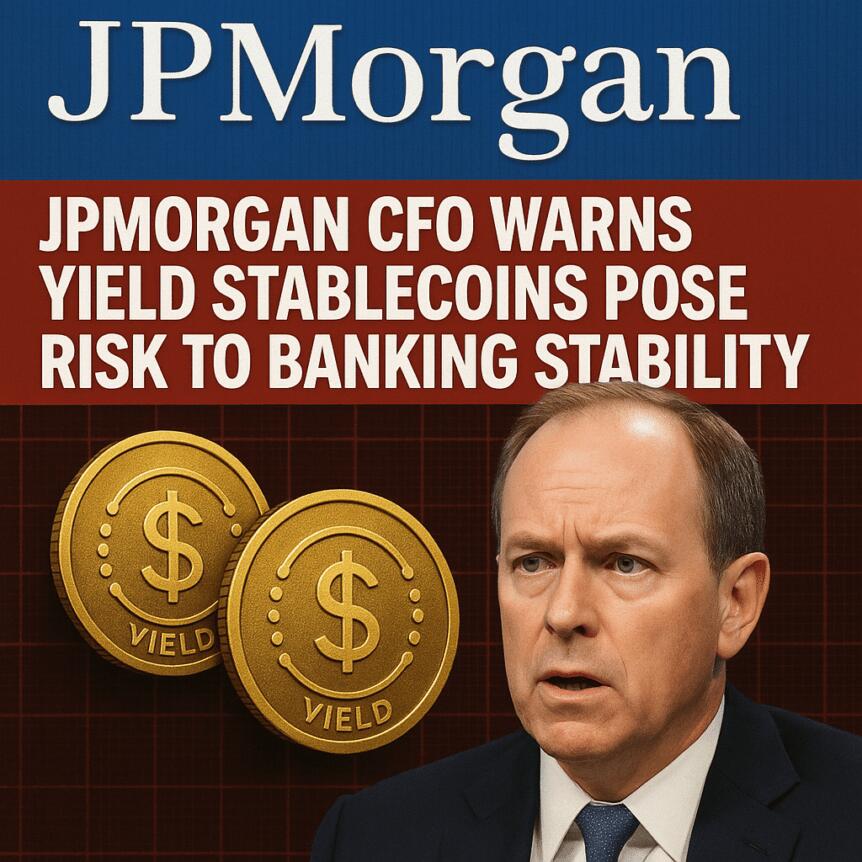
JPMorgan CFO Warns Yield Stablecoins Pose Risk to Banking Stability
For feedback or concerns regarding this content, please contact us at crypto.news@mexc.com
Jpmorgan Cfo Warns Yield Stablecoins Pose Risk To Banking Stability

JPMorgan Expresses Caution Over Stablecoins Amid Regulatory Concerns

During its recent fourth-quarter earnings call, JPMorgan Chase highlighted the evolving landscape of stablecoins, emphasizing both technological promise and potential risks to the traditional banking system. Bank executives voiced cautious support for blockchain innovations while warning against certain stablecoin designs that could undermine regulatory safeguards.

Key Takeaways

  • JPMorgan aligns with regulatory efforts to establish guardrails around stablecoin issuance, supporting the GENIUS Act.
  • Chief Financial Officer Jeremy Barnum warned against interest-bearing stablecoins that mimic traditional banking without proper oversight.
  • The bank advocates for a controlled evolution in digital asset adoption, emphasizing the importance of regulatory protections.
  • Lawmakers are scrutinizing stablecoin rewards, aiming to prevent stablecoins from functioning as unregulated bank deposits.

Tickers mentioned: None

Sentiment: Cautiously optimistic with regulatory caution

Price impact: Neutral, as the discussion underpins ongoing regulatory developments rather than immediate market moves

Trading idea (Not Financial Advice): Hold, given the regulatory uncertainties surrounding stablecoins

Market context: The developments reflect broader regulatory focus on digital assets as mainstream adoption grows

JPMorgan Weighs In on Stablecoin Risks and Regulation

At JPMorgan Chase, executives discussed the implications of stablecoins during their earnings call, emphasizing the importance of safeguarding the financial ecosystem. Jeremy Barnum, CFO of JPMorgan, commented that the bank supports innovation but remains opposed to the creation of a parallel banking system that operates outside established oversight. He expressed concern over interest-bearing stablecoins that resemble deposit accounts but lack the prudential safeguards developed through decades of banking regulation.

Source: Radar w Archie

While JPMorgan welcomes technological competition and innovation in the digital asset space, it insists on the importance of regulation to prevent the emergence of a “parallel banking system” that could threaten financial stability. This stance echoes concerns from the broader banking industry, which perceives yield-bearing stablecoins as a disruptive threat. These tokens have gained traction as tools for fast, cost-efficient payments, on-chain settlement, and dollar access, but the prospect of earning interest on them raises regulatory alarms.

Regulatory Focus on Stablecoin Rewards

Meanwhile, U.S. lawmakers are actively examining stablecoin rewards within recent legislative proposals. The draft of the Digital Asset Market Clarity Act proposes prohibiting service providers from paying interest or yield solely based on stablecoin holdings, aiming to prevent these tokens from functioning as deposit instruments. However, it allows for incentives tied to broader participation activities, such as liquidity provision, governance, and staking, rather than passive income streams.
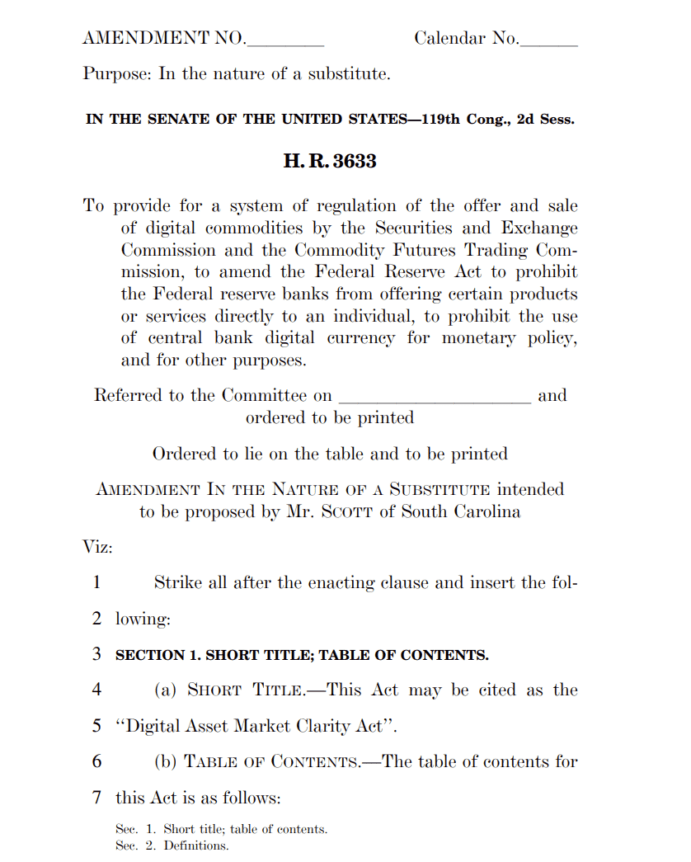
Source: US Senate Banking Committee

This legislative effort underscores ongoing efforts by regulators to balance innovation with financial stability, ensuring that stablecoins serve their intended purpose without resembling unregulated banking products. The debate is a key aspect of broader regulatory discussions that will shape the future trajectory of digital assets in the United States and beyond.

This article was originally published as JPMorgan CFO Warns Yield Stablecoins Pose Risk to Banking Stability on Crypto Breaking News – your trusted source for crypto news, Bitcoin news, and blockchain updates.


Market Opportunity
Lorenzo Protocol Logo
Lorenzo Protocol Price(BANK)
$0.04073
$0.04073$0.04073
+1.06%
USD
Lorenzo Protocol (BANK) Live Price Chart
Disclaimer: The articles reposted on this site are sourced from public platforms and are provided for informational purposes only. They do not necessarily reflect the views of MEXC. All rights remain with the original authors. If you believe any content infringes on third-party rights, please contact crypto.news@mexc.com for removal. MEXC makes no guarantees regarding the accuracy, completeness, or timeliness of the content and is not responsible for any actions taken based on the information provided. The content does not constitute financial, legal, or other professional advice, nor should it be considered a recommendation or endorsement by MEXC.

You May Also Like

Cashing In On University Patents Means Giving Up On Our Innovation Future

Cashing In On University Patents Means Giving Up On Our Innovation Future

The post Cashing In On University Patents Means Giving Up On Our Innovation Future appeared on BitcoinEthereumNews.com. “It’s a raid on American innovation that would deliver pennies to the Treasury while kneecapping the very engine of our economic and medical progress,” writes Pipes. Getty Images Washington is addicted to taxing success. Now, Commerce Secretary Howard Lutnick is floating a plan to skim half the patent earnings from inventions developed at universities with federal funding. It’s being sold as a way to shore up programs like Social Security. In reality, it’s a raid on American innovation that would deliver pennies to the Treasury while kneecapping the very engine of our economic and medical progress. Yes, taxpayer dollars support early-stage research. But the real payoff comes later—in the jobs created, cures discovered, and industries launched when universities and private industry turn those discoveries into real products. By comparison, the sums at stake in patent licensing are trivial. Universities collectively earn only about $3.6 billion annually in patent income—less than the federal government spends on Social Security in a single day. Even confiscating half would barely register against a $6 trillion federal budget. And yet the damage from such a policy would be anything but trivial. The true return on taxpayer investment isn’t in licensing checks sent to Washington, but in the downstream economic activity that federally supported research unleashes. Thanks to the bipartisan Bayh-Dole Act of 1980, universities and private industry have powerful incentives to translate early-stage discoveries into real-world products. Before Bayh-Dole, the government hoarded patents from federally funded research, and fewer than 5% were ever licensed. Once universities could own and license their own inventions, innovation exploded. The result has been one of the best returns on investment in government history. Since 1996, university research has added nearly $2 trillion to U.S. industrial output, supported 6.5 million jobs, and launched more than 19,000 startups. Those companies pay…
Share
BitcoinEthereumNews2025/09/18 03:26
Subaru Motors Finance Reviews 2026

Subaru Motors Finance Reviews 2026

If you’re at a Subaru dealership, your heart is set on the perfect Outback or Forester. The salesperson asks, “Would you like to finance it today?” That’s where
Share
Fintechzoom2026/03/08 10:55
Shiba Inu Price Prediction: Dubai Cracks Down on KuCoin as Pepeto Outpaces DOGE and SHIB With $7.4M Raised

Shiba Inu Price Prediction: Dubai Cracks Down on KuCoin as Pepeto Outpaces DOGE and SHIB With $7.4M Raised

SHIB trades near cycle lows, but Pepeto is outpacing every Shiba Inu price prediction with $7.4M raised and a full exchange ecosystem approaching launch as Dubai
Share
Techbullion2026/03/08 10:54