

SpoonOS Web3 Skill Marketplace Launches Revolutionary Platform for Modular AI Agent Development on Neo

BitcoinWorld
SpoonOS Web3 Skill Marketplace Launches Revolutionary Platform for Modular AI Agent Development on Neo
In a significant development for decentralized artificial intelligence, the Neo-based SpoonOS project has officially launched its Web3 Skill Marketplace, creating a groundbreaking platform for the modular development of AI agents. This launch, announced globally on March 21, 2025, represents a strategic evolution in how developers build and verify intelligent systems within a blockchain-native environment. The marketplace directly addresses key challenges in AI development by promoting reusability, collaboration, and verifiable contribution, potentially accelerating innovation across the entire Neo ecosystem and enhancing the fundamental utility of its native NEO and GAS tokens.
SpoonOS Web3 Skill Marketplace Architecture and Core Function
The newly launched SpoonOS Web3 Skill Marketplace operates as a decentralized application (dApp) built directly on the Neo N3 blockchain. Fundamentally, it reimagines AI agent construction by breaking down complex functionalities into discrete, reusable modules called “skills.” Consequently, developers no longer need to build agents from scratch. Instead, they can assemble them from a library of pre-verified, interoperable components. This modular approach mirrors successful paradigms in software engineering, such as package managers in traditional development, but adds the immutable, transparent, and incentive-aligned properties of Web3.
Each skill on the marketplace is a self-contained unit of logic or capability—for example, a natural language processing module, a data-fetching routine, or a specific transaction validator. Developers can publish their own skills, license others’ work, and combine multiple skills to create sophisticated AI agents. The platform’s smart contract infrastructure, powered by Neo, manages the entire lifecycle: listing, discovery, licensing, and royalty distribution. This structure ensures creators are compensated fairly when their skills are reused, creating a sustainable economic model for open-source AI development.
The Verification Layer and Incentive Mechanism
A critical differentiator for the SpoonOS marketplace is its integrated verification layer. Unlike centralized AI platforms where output trust is assumed, SpoonOS introduces a decentralized verification network. Users can participate as verifiers, testing and validating the performance and security of AI agents built from marketplace skills. For their work, verifiers earn rewards, typically distributed in the platform’s native token or in GAS. This creates a flywheel effect: more developers build agents, attracting more verifiers, which in turn increases trust and attracts more users and developers. The system is designed to align economic incentives with the goal of creating reliable, high-quality AI agents, addressing the “black box” problem common in AI.
Strategic Impact on the Neo Blockchain Ecosystem
The launch of the SpoonOS Web3 Skill Marketplace is not an isolated event but a strategically timed initiative to bolster the entire Neo smart economy. Neo’s vision has long centered on a digitized, smart economy powered by blockchain. SpoonOS, as an AI-focused operating system, acts as a high-utility application layer on top of this foundation. By driving development activity onto the Neo N3 chain, the marketplace directly increases demand for two key resources:
- Computational Resources (GAS): Every skill deployment, agent execution, and verification transaction consumes GAS, Neo’s utility token. Increased platform activity translates to higher, more consistent GAS consumption.
- Governance and Staking (NEO): A thriving dApp ecosystem enhances the value proposition of holding NEO, the governance token. Stakeholders may benefit from a more vibrant network and participate in governing the SpoonOS marketplace’s future parameters.
This symbiotic relationship exemplifies how sophisticated dApps can move beyond simple token transactions to create real, utility-driven demand for a blockchain’s core assets. Industry analysts often cite the “killer dApp” theory for blockchain adoption; SpoonOS aims to position itself as that catalyst for Neo by solving a tangible, large-scale problem in AI development.
Context and Comparison in the Web3 AI Landscape
The Web3 AI sector has seen rapid growth, with projects like Fetch.ai, Ocean Protocol, and SingularityNET exploring different facets of decentralized machine learning. However, SpoonOS’s approach is distinct in its focus on modularity and agent-specific development. While other platforms may focus on data markets or model training, the Skill Marketplace specifically streamlines the assembly of AI agents. This positions it as a tool for rapid prototyping and deployment, potentially lowering the barrier to entry for developers wanting to create blockchain-integrated AI.
The following table contrasts key features:
| Platform | Primary Focus | Blockchain | Core Value Proposition |
|---|---|---|---|
| SpoonOS Skill Marketplace | Modular AI Agent Assembly | Neo (N3) | Reusable skills, decentralized verification, developer incentives |
| Fetch.ai | Autonomous Economic Agents | Cosmos SDK | Multi-agent systems for automation and commerce |
| Ocean Protocol | Data Exchange & Monetization | Various (Ocean datatokens) | Publishing, discovery, and consumption of data services |
| SingularityNET | AI Service Marketplace | Cardano, Ethereum | Monetizing and accessing a broad range of AI algorithms |
This differentiation is crucial. By carving out a specific niche, SpoonOS avoids direct, head-to-head competition and instead complements the broader Web3 AI stack. A developer could, theoretically, use Ocean for data, train a model elsewhere, and then use SpoonOS to modularize that model into skills for agent creation.
Future Roadmap and Development Support
According to the SpoonOS development roadmap, the launch of the Skill Marketplace is Phase 1 of a broader strategy. Future phases, slated for 2025 and 2026, aim to introduce more advanced features, including:
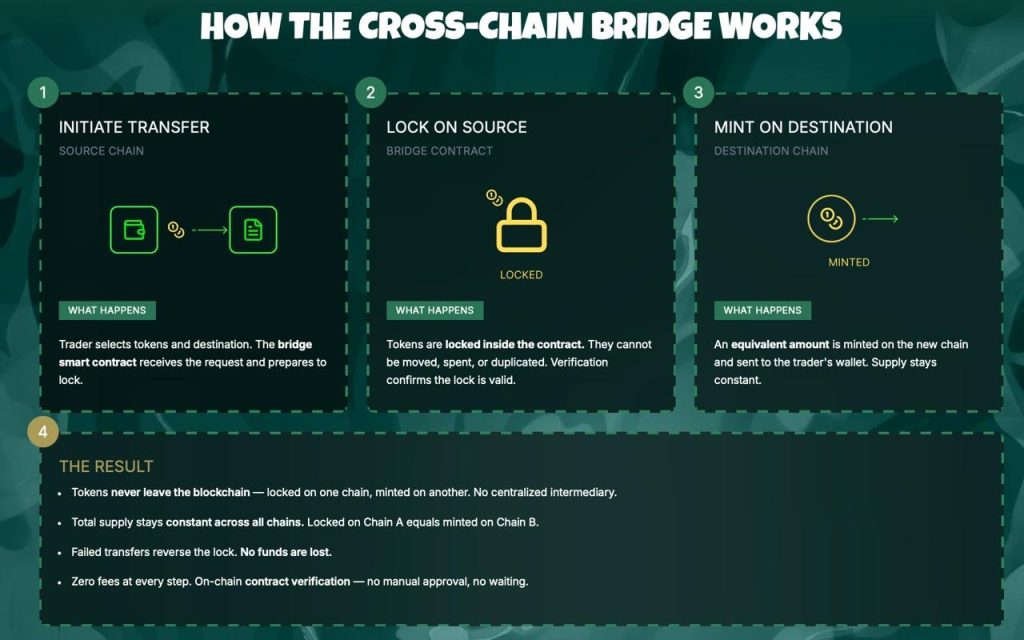
- Cross-chain Skill Interoperability: Exploring bridges to allow skills to be used or called from agents on other compatible blockchain networks.
- Advanced Governance Models: Allowing NEO holders to vote on marketplace upgrades, fee structures, and skill curation standards.
- Integrated Development Environments (IDEs): Releasing official tools and plugins for popular coding environments to streamline the skill creation and agent assembly process.
- Grants and Ecosystem Funding: Direct support for developers building foundational or innovative skills, funded through a treasury or ecosystem pool.
These planned developments signal a long-term commitment to building a comprehensive ecosystem, not just a standalone product. The focus on supporting development within Neo aligns with the blockchain’s core philosophy of fostering a developer-friendly environment through tools like Neo’s robust smart contract system and NeoFS for decentralized storage.
Evidence of Real-World Application and Traction
While the marketplace is newly launched, the underlying SpoonOS concept has been in development. Prior testnet phases demonstrated use cases in automated customer service agents, decentralized finance (DeFi) portfolio managers that execute strategies across multiple protocols, and content moderation assistants for decentralized social platforms. The move to a mainnet marketplace opens these prototypes to a global developer base. Success will be measured by tangible metrics: the number of unique skills published, the volume of agent deployments, the active count of verifiers, and the total value of incentives distributed. Early data from the announcement period shows a significant spike in new developer wallet addresses interacting with the Neo N3 network, suggesting strong initial interest.
Conclusion
The launch of the SpoonOS Web3 Skill Marketplace marks a pivotal moment for both the Neo blockchain and the decentralized AI landscape. By providing a structured, incentive-driven platform for modular AI agent development, it tackles inefficiencies in current AI creation processes. Furthermore, its design directly fuels the Neo smart economy by driving utility for NEO and GAS. The platform’s success will ultimately depend on developer adoption and the quality of the skills ecosystem it cultivates. However, its unique focus on reusability and verification presents a compelling vision for the future of AI development—one that is collaborative, transparent, and built on the foundational principles of Web3. The SpoonOS Web3 Skill Marketplace is now live, inviting developers and verifiers worldwide to participate in shaping this new paradigm.
FAQs
Q1: What is the primary purpose of the SpoonOS Web3 Skill Marketplace?
The primary purpose is to enable the efficient, modular development of AI agents by allowing developers to build, share, and reuse discrete functional components called “skills” within a decentralized, incentive-aligned ecosystem on the Neo blockchain.
Q2: How does the marketplace benefit the Neo (NEO and GAS) ecosystem?
It increases on-chain activity and utility. Skill deployments, agent executions, and verification transactions consume GAS, creating demand. A successful dApp ecosystem also enhances the value and governance importance of holding NEO, strengthening the overall Neo network.
Q3: Who can participate in the SpoonOS marketplace, and what roles exist?
Three main roles exist: Developers who create and publish skills, Builders who assemble skills into AI agents, and Verifiers who test and validate agent performance. All participants can earn incentives for their contributions.
Q4: How does SpoonOS ensure the quality and security of AI skills on the marketplace?
Quality is enforced through a decentralized verification network. Verifiers test skills and agents, and their consensus on performance is recorded on-chain. Poorly performing or malicious skills will fail verification, receive poor ratings, and be less likely to be used, while their creators may lose staked collateral.
Q5: How does this differ from other Web3 AI projects like Fetch.ai or SingularityNET?
While other projects may focus on autonomous agent economies or broad AI service marketplaces, SpoonOS specifically focuses on the modular construction layer. It is akin to a “LEGO kit” for AI agents, emphasizing reusability and composability of pre-built skill components, rather than being a marketplace for end-to-end AI services or data.
This post SpoonOS Web3 Skill Marketplace Launches Revolutionary Platform for Modular AI Agent Development on Neo first appeared on BitcoinWorld.


You May Also Like

SIREN Token Surges 325% in 24 Hours: Analyzing the Sudden Rally to Top 100
Best Crypto to Buy Now Before the Listing as Dollar Dominance Cracks One Year After Liberation Day While Pepeto, BTC, and SOL Build




