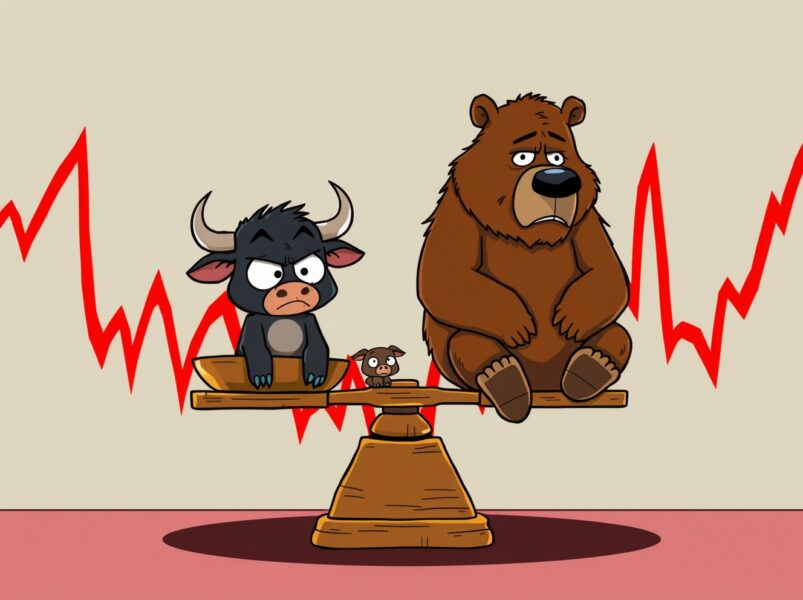
Crypto Futures Liquidated: A Staggering $125 Million Cascade Unfolds in One Hour
BitcoinWorld
Crypto Futures Liquidated: A Staggering $125 Million Cascade Unfolds in One Hour
A sudden and significant wave of forced closures has swept through cryptocurrency derivatives markets, with major exchanges reporting a staggering $125 million in crypto futures liquidated within a single hour. This rapid event, occurring against a backdrop of heightened market sensitivity, underscores the inherent volatility and leverage risks present in digital asset trading. Furthermore, data reveals that over the preceding 24-hour period, total liquidations surpassed $1.065 billion, painting a broader picture of sustained market pressure and shifting sentiment among leveraged traders globally.
Crypto Futures Liquidated: Deconstructing the $125 Million Hour
The core mechanism of futures liquidation is straightforward yet impactful. Exchanges automatically close a trader’s leveraged position when their collateral falls below a required maintenance margin. Consequently, this process triggers a sell or buy order to cover the debt. When numerous leveraged positions approach their liquidation thresholds simultaneously, a cascade effect can occur. The initial liquidations push the market price further, thereby triggering more liquidations in a self-reinforcing cycle. This recent $125 million liquidation spike primarily involved long positions, indicating a swift downward price movement caught many bullish traders off guard.
Major centralized exchanges like Binance, Bybit, and OKX typically facilitate the bulk of such activity. These platforms offer high leverage, sometimes exceeding 100x, which magnifies both potential profits and risks. For context, the scale of this hourly event is substantial. To illustrate, the table below compares this liquidation wave to other notable market events in recent years.
| Event Period | Approx. Liquidation Value | Primary Market Context |
|---|---|---|
| Past Hour (This Event) | $125 Million | Sharp intraday volatility |
| May 2021 (China Mining Ban) | Over $2.5 Billion (24h) | Regulatory shock |
| November 2022 (FTX Collapse) | Over $1 Billion (24h) | Exchange insolvency crisis |
| Typical Low-Volatility Day | $50 – $200 Million (24h) | Standard market fluctuations |
Understanding the Mechanics of Derivatives Liquidation
Liquidation events are not random; they are a direct function of market structure and trader behavior. Several key factors consistently contribute to these cascades:
- Excessive Leverage: Traders using very high leverage have minimal margin for error.
- Market Illiquidity: Thin order books can amplify price swings during stress.
- Clustered Liquidation Levels: Many traders set stops or get liquidated near similar price points.
- External Catalysts: News, macroeconomic data, or large spot market sells can trigger the initial move.
Moreover, the $1.065 billion in 24-hour liquidations provides crucial context. It suggests the $125 million hour was not an isolated anomaly but rather the peak of sustained deleveraging. This pattern often indicates a market transitioning from a strongly bullish or bearish consensus to a more uncertain or corrective phase. Analysts monitor funding rates in perpetual swap markets as a leading indicator; persistently high positive funding can signal overcrowded long positions ripe for liquidation.
Expert Analysis on Market Structure and Risk
Market structure professionals emphasize that liquidation cascades are a feature, not a bug, of leveraged derivatives markets. They act as a risk transfer mechanism, forcibly closing positions that can no longer be maintained. However, their scale and speed can create systemic short-term volatility. This volatility often spills over into the spot market, as liquidation engines execute large market orders. Consequently, retail spot holders can experience heightened price swings due to activity in the derivatives sector, even if they do not use leverage themselves. This interconnection underscores the importance of understanding derivatives flows for any comprehensive market analysis.
The Ripple Effects and Broader Market Implications
The immediate effect of a large liquidation event is a rapid price movement and increased market volatility. This can lead to:
- Short-term price dislocations from the spot market’s fundamental value.
- Increased trading volume as algorithms and opportunistic traders react.
- A reset in market sentiment and leverage, often creating conditions for a stabilization or reversal.
Furthermore, repeated large-scale liquidations can influence longer-term trader psychology. They serve as a stark reminder of the risks associated with high leverage. Potentially, this can lead to more conservative positioning in the future. Regulators and institutional observers also scrutinize these events. They assess whether exchange risk management systems, including insurance funds and auto-deleveraging mechanisms, functioned effectively to contain the fallout and protect the broader market integrity.
Conclusion
The event highlighting $125 million in crypto futures liquidated within one hour provides a powerful case study in market dynamics. It demonstrates the potent interplay between leverage, liquidity, and volatility in the digital asset ecosystem. While such cascades are an inherent part of derivatives trading, their magnitude offers real-time insights into market leverage, sentiment extremes, and structural vulnerabilities. For traders, this underscores the non-negotiable importance of rigorous risk management, including appropriate position sizing and the cautious use of leverage. For the market overall, these events represent a periodic and forceful clearing mechanism, realigning prices with the available capital and conviction in the system.
FAQs
Q1: What does it mean when futures are “liquidated”?
A futures liquidation occurs when an exchange forcibly closes a trader’s leveraged position because their collateral has fallen below the required level to maintain it, preventing further losses.
Q2: Who loses money during a liquidation event?
The trader whose position is liquidated loses their remaining margin. If the liquidation cannot cover the loss, the exchange’s insurance fund or other traders may absorb the remainder.
Q3: Do large liquidations cause the price to go down or up?
It depends on the direction. A cascade of long liquidations (closing bullish positions) involves forced selling, typically pushing prices down. Conversely, short liquidations involve forced buying, which can push prices up.
Q4: How can traders avoid being liquidated?
Traders can avoid liquidation by using lower leverage, maintaining ample margin above requirements, employing stop-loss orders cautiously, and actively monitoring their positions during volatile periods.
Q5: Are liquidation events like this bad for the overall crypto market?
They are a double-edged sword. While they cause short-term pain for affected traders and increase volatility, they also help reset excessive leverage and can establish healthier price foundations by removing overextended positions.
This post Crypto Futures Liquidated: A Staggering $125 Million Cascade Unfolds in One Hour first appeared on BitcoinWorld.


You May Also Like

Ten new wallets suspected to belong to the same entity have withdrawn a total of 50.1 million ASTER tokens from Aster.

Stunning 96% Surge And 50% Plunge Define Volatile Market Session