Walmart (WMT) Stock: Slips 4% Despite eCommerce Surge, Solid Q2 Revenue and Tariff Pressures
TLDR
-
Walmart stock drops 4.35% despite $177B revenue, eCommerce surging 25%
-
Strong sales, weak income: Walmart revenue up, profits pressured by costs
-
Walmart’s global growth & digital sales rise, but margins face heavy strain
-
$177B revenue lifts Walmart, yet tariffs, costs, and investments cut profit
-
Walmart eCommerce jumps 26% in U.S., but income slips 8.2% on global spend
Walmart’s shares declined by 4.35% in early trading Thursday, dropping to $98.11 by 10:05 AM EDT.

Walmart (WMT)
This comes despite the company reporting strong revenue and digital sales growth in its fiscal 2026 second-quarter results. The stock had opened around $103 before facing sharp downward pressure in morning trading.
Strong Revenue and eCommerce Growth Offset by Income Pressure
Walmart reported second-quarter revenue of $177.4 billion, marking a year-over-year increase of 4.8%. On a constant currency basis, revenue grew even more sharply, rising by 5.6% for the quarter. However, the company’s operating income fell by 8.2% to $7.3 billion, slightly offset by a 0.4% gain when adjusted for currency impacts.
eCommerce continued to be a key driver of growth, increasing globally by 25%. In the U.S., eCommerce sales surged 26%, with store-fulfilled deliveries expanding by nearly 50%. This growth helped boost comparable sales in the U.S. by 4.6%, with higher receipts and more transactions contributing.
The global advertising business also performed well, increasing by 46%. Walmart Connect, the U.S. ad arm, grew by 31%, underlining the importance of digital monetization. Still, the drop in operating income weighed heavily on the overall performance.
International Expansion and Investments Drag Profit Margins
Walmart saw net sales grow by 5.5%, or 10.5% in constant currency terms. Markets such as China, Mexico, and India led the gains, especially through platforms like Flipkart and Walmex. However, higher investment spending in these regions reduced profit margins in the segment.
Operating income from the international division dropped 9.8% during the quarter. Strategic investments in technology and infrastructure in India, Canada and Mexico were cited as the main contributors. These expenditures are part of Walmart’s plan to expand and modernize its global footprint.
Walmart remains committed to international markets. Its balance sheet remains healthy, with $9.4 billion in cash and cash equivalents. Walmart continues to focus on scaling its operations for long-term growth.
Tariff Costs, Consumer Behavior Changes Add Pressure
Walmart executives acknowledged increased tariff exposure across its merchandise mix. This led to ongoing cost increases, which the company expects will persist into the coming quarters. CFO John David Rainey indicated that markup pressures were softer than expected, but noticeable.
The company noted that price sensitivity is increasing, especially among lower and middle-income shoppers. Some consumers are avoiding discretionary purchases or switching to cheaper alternatives. These shifts are putting pressure on high-margin product categories.
Walmart repurchased 67.4 million shares so far this fiscal year, totaling $6.2 billion. Operating cash flow grew to $18.4 billion, while free cash flow hit $6.9 billion. The company remains confident in its strategy, despite ongoing macroeconomic headwinds.
The post Walmart (WMT) Stock: Slips 4% Despite eCommerce Surge, Solid Q2 Revenue and Tariff Pressures appeared first on CoinCentral.


You May Also Like
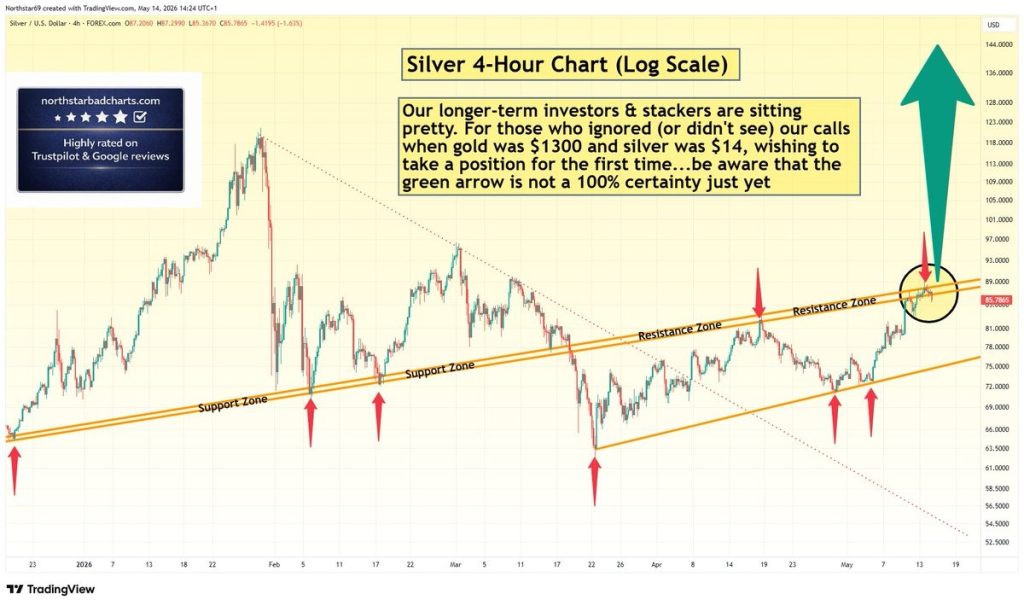
Silver Price Warning: Green Arrow Setup Is Not Confirmed – Wait for Clear Signal

Facebook spotlights African cinema in 6th ‘Made by Africa, loved by the world’ campaign