

Ghana Currency: Exploring the Cedi’s History & Value
Cryptsy - Latest Cryptocurrency News and Predictions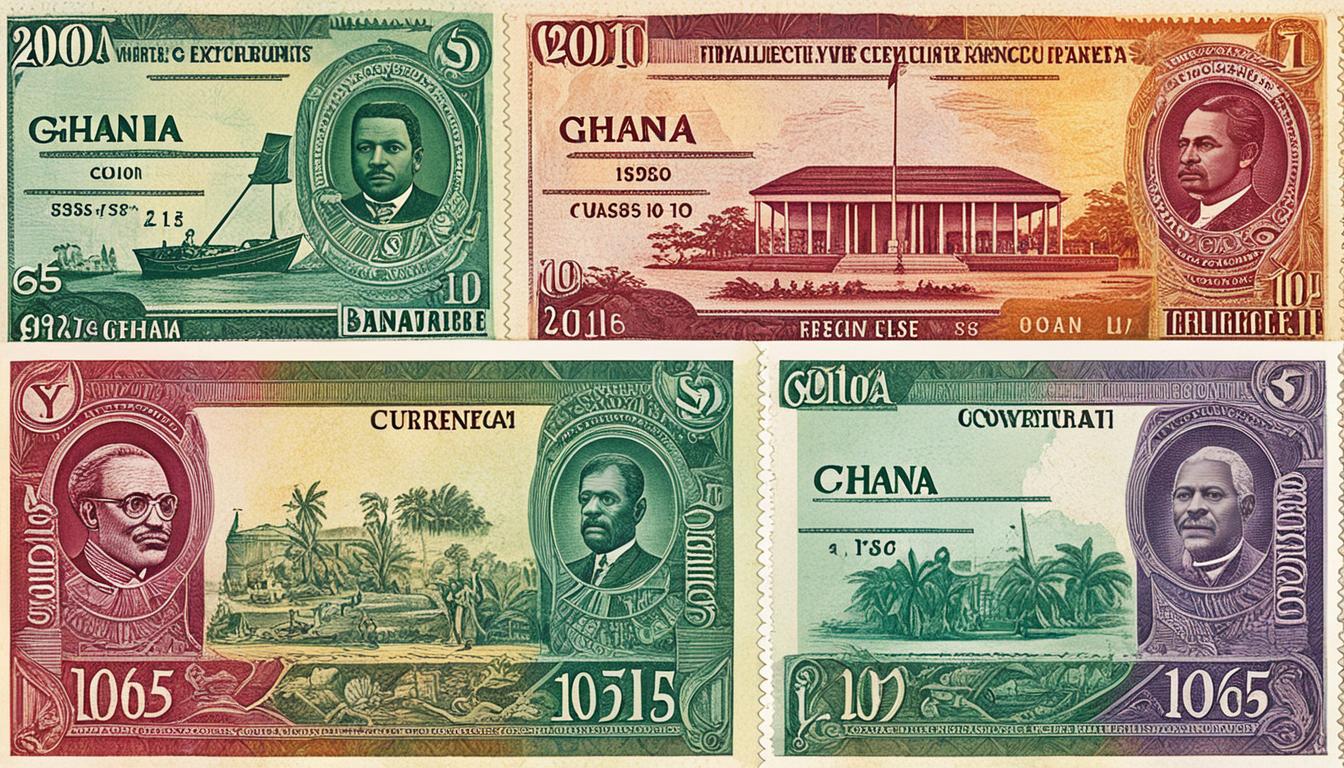
Cryptsy - Latest Cryptocurrency News and Predictions - Experts in Crypto Casinos
Did you know the Ghanaian cedi dropped over 55% against the U.S. dollar from January to October 2022? This big change shows how Ghana’s currency markets can really shift1. Ghana is known for its lively culture and wealth of natural resources. It deals with financial ups and downs. This makes the history of its currency very interesting1.
Your journey into the Ghana currency history shows how people have survived tough times. It also shows how smart choices have helped. Learning about the Cedi value lets us see Ghana’s money story unfold.
With a 40.4% inflation rate in October 2022, the cedi’s story is quite a tale. It shows how Ghana faces global economic challenges. Yet, Ghana keeps moving forward1.
Key Takeaways
- In January to October 2022, the cedi depreciated over 55% against the U.S. dollar1.
- Inflation spiked to 40.4% year-on-year in October 2022 due to rising food and fuel costs1.
- Locally produced items had 39.1% inflation, compared to 43.7% for imported goods in October 20221.
- The exchange rate of the cedi fluctuated between 0.065 and 0.064 USD in August 20252.
-
The Bank of Ghana has put limits on foreign exchange for some goods. This has really affected many areas1.
Ghana’s financial sector is strong, offering many trade and investment opportunities. Understanding the cedi’s history helps you navigate this exciting market. Learning about the Ghanaian currency’s past and changes gives you a deeper look at economic policies.
The Origins of the Ghanaian Currency
The origins of Ghana currency are tied to the country’s long history. It started with gold trade and then moved to post-independence economic plans. Before the cedi, Ghana had a complex system of currency exchanges.
Before the Cedi: Currency in Colonial Ghana
In colonial times, Ghana used pounds, shillings, and pence. These were issued by the West African Currency Board. This system lasted until Ghana became independent in 1957.
The Bank of Ghana started issuing its own currency in July 1958. This marked Ghana’s move toward controlling its finances3. During this time, people also used cowrie shells and gold dust. These items reflect Ghana’s natural wealth and trading past.
Introduction of the Cedi in 1965
On July 19, 1965, the Ghanaian cedi and pesewa made their debut. They took the place of the old British pounds, shillings, and pence3. This change was key for Ghana’s economic freedom. It helped the country to set monetary policy that met its goals.
The cedi’s start was crucial. It showed Ghana’s desire to have an independent economy.
The years that followed brought several cedi and pesewa notes and coins to make trading easier. There was a significant currency change on March 9, 1979. Then, new notes replaced old ones at a rate of 10 to 73.
These changes in the origins of Ghana currency paved the way for today’s monetary system. They mark Ghana’s journey from colonial rule to managing its own economy.
The Redenomination of the Cedi in 2007
In 2007, Ghana changed its money to make things easier4. This was a big step for its economy4. It made buying and selling simpler, saved banks money, and helped people trust Ghana’s money again4.
By removing four zeros, the new Ghana Cedi became like the US Dollar4. This made things easier for everyone4.
Reasons Behind the Redenomination
The change was needed to stop the money’s value from falling5. High inflation and instability made handling cash hard and risky5. Banks faced more costs and risks because of this5.
By removing four zeros, it was hoped that daily transactions would become easier5. This would make things cheaper and safer for everyone in Ghana5. Without this change, the exchange rate could have reached 140,000 cedis for one dollar by 20234.
Explore detailed insights on the cedi to dollar for a deeper understanding of the effects.
Impact on Financial Institutions
The change brought big improvements for Ghana’s banks5. They saw fewer risks in losing money and got better at collecting deposits5. Also, ATMs became more reliable and profitable after the currency change5.
This change made banking easier and more reliable5. It made people trust banks more. They started using more banking services in Ghana5.
But, the cedi’s value has dropped since the change. By March 2022, it was 7.02 cedis for one US dollar. This is a 630% drop since the change4.
The lowest point was when the cedi was 14 to the dollar. This was a huge 1,300% fall since 20074. This shows that while the redenomination fixed some problems, bigger challenges are coming.
The Current State of Ghana Currency
The Ghanaian cedi has seen big changes in value recently. Over the last month, its value against the dollar ranged from 0.0677 to 0.0643. This means it had an average value of 0.0663 USD and dropped by -4.73%6. These shifts in the exchange rate have posed problems for both the economy and people’s daily lives.
Exchange Rate Fluctuations
In the last 90 days, the cedi’s value against the dollar reached a high of 0.0718 and a low of 0.0643. This gives an average rate of 0.0684 USD and shows a -10.27% change6. Over this period, the exchange rate’s unpredictability was marked by 0.33%7. On August 23, 2025, it was 1 US Dollar to 15.6087 Ghanaian Cedis8.
Government Measures to Stabilize the Cedi
The government of Ghana and the Central Bank have taken steps to fix the cedi’s value. They got an Extended Credit Facility from the IMF to help with ongoing loss of value and high inflation6. On August 23, the cedi stood at 1 USD to 0.0640678. These actions by the government aim to improve the economy and make the cedi more stable.
Factors Affecting the Value of Ghana Currency
The cedi’s value in Ghana depends on various dynamic elements. These include economic indicators, natural resources, and how much the country relies on exports. This helps them adjust to changes in the economy. They can keep things stable even when the market is up and down.
Economic Indicators
Many things determine the cedi’s value, like the economy’s health. For example, Ghana’s inflation rate was very high at 42.5% in June 2023. This high inflation reduces the cedi’s buying power9. It challenges the country’s economic steadiness. Also, the Ghana cedi fell in value when compared to the US Dollar. It went from 9.1 billion USD in December 2021 to 5.6 billion USD in December 2022. This shows the currency’s significant loss in value9. High inflation and interest rates have made people spend and invest less. This has put more pressure on the economy9.
Natural Resources and Export Reliance
Ghana has lots of natural resources like gold, cocoa, and oil. These are crucial for its economy. A big part of the country’s income comes from selling these resources abroad. This makes the cedi sensitive to world market price changes9. Problems managing state companies and getting affordable capital also hurt the economy. The cedi’s value changes with the world prices of its natural resources10.
To sum up, the way Ghana looks after its economy and resources affects how much it depends on exports. This greatly influences the cedi’s value. Watching these factors closely and adapting to changes help keep the economy stable.
Ghana Cedi in the Context of the African Market
Ghana plays a big role in Africa’s market due to its trade. The Ghana Cedi’s performance impacts Ghana’s trade, affecting both what it buys and sells. Ghana uses its good location, diverse economy, and rich natural resources to trade well with nearby countries.
Trade Relations with Neighboring Countries
Ghana’s trade with its neighbors boosts its economy. This trade is key for the Ghana Cedi, as it can change the currency’s value. From 2017 to 2019, Ghana’s economy grew by about 7% each year, showing its trade strength11.
In 2020, the economy grew by only 0.5% because of COVID-19. This hurt trade and business11. But in 2021, things got better with a 5.4% growth.
This was thanks to better trade and exports11. However, high inflation and more imports than exports made the currency weaker. This has affected trade in the region12.
Ghana in the African Continental Free Trade Area
The African Continental Free Trade Area (AfCFTA) offers big chances for Ghana. Being part of AfCFTA helps Ghana because it makes trading easier and reduces costs. In 2022, important parts of Ghana’s economy saw growth. Gold mining grew 32%, information and communication 20%, and education 10%11. This growth means more trade opportunities with AfCFTA, helping not just Ghana but all of Africa. Also, Ghana’s trading of goods in and out of the country has increased, making it an important trade center in Africa11.
Ghana’s involvement in AfCFTA strengthens its economic influence in Africa. Better trade ties and being part of AfCFTA will help the Ghana Cedi. This will also boost Ghana’s wealth and its connections in the African market.
The Role of the Central Bank in Managing the Cedi
The Bank of Ghana is crucial in keeping the cedi stable with its policies. It works hard to keep the economy balanced and inflation in check.
Monetary Policies by the Bank of Ghana
The Bank of Ghana’s main job is to create and apply monetary policies. Since its start in 1957, it’s been key in keeping the cedi stable and the economy managed13. The Monetary Policy Committee (MPC) meets every two months. They review the economy and inflation, meeting six times a year to adjust plans as needed14.
To do this, they use a special system of interest rates and sell short-term bills for market operations14.
Interest Rates and Inflation Control
To fight inflation and keep the currency steady, the Bank of Ghana uses various tools14. It has an inflation goal of 8%, with a little wiggle room of 2% to steer its policy choices14. By managing interest rates, it aims to control inflation and maintain financial system stability.
Before setting interest rates, the Governor of the MPC shares important economic data14.
These policies keep overnight rates near the Policy Rate. This helps keep the market stable14. The Bank of Ghana works hard to balance the economy.
They also manage inflation and interest rates well.
Impact of the Cedi on the Ghanaian Economy
The cedi’s changing value greatly impacts Ghana’s economy, touching local businesses and how much locals can buy.
Influence on Local Businesses
Ghana’s businesses struggle when their currency falls in value. For example, the agriculture ministry has worked hard to move food from the countryside to cities. This helps fight the higher food prices caused by the weaker cedi15.
A printing company saw losses of over one million cedis ($73,000; £58,000) in just two months because of the cedi’s drop15.
Experts suggest that focusing on local businesses, cutting fuel taxes, and reorganizing the government could help. These steps aim to soften the blow on companies15.
Effect on Consumer Purchasing Power
The cedi’s ups and downs directly hit what people can afford. For example, inflation soared past 40% in October due to the falling cedi, making things harder for everyone15. This inflation spike means costs are way up, and now over 40%16.
Because of such high inflation, roughly 850,000 Ghanaians have fallen into poverty. This shows how serious the situation is16. With the government spending over 65% of its income on debt, people will feel even more pressure15.
Understanding Ghana Exchange Rate Mechanisms
Ghana’s exchange rate systems have changed over time. These shifts have greatly affected the country’s economy. It’s important to grasp how Ghana decides its exchange rates for those in international fields.
How Exchange Rates are Determined
Ghana’s currency, the cedi, has gone through different exchange rate strategies. It was once tied to big currencies like the British pound and the U.S. dollar. For a period, the cedi’s value was fixed to the dollar, specifically at 2.75 cedis per dollar from August 1978 to April 198317. This setup made the real exchange rate jump by 445 percent within five years17.
When Ghana moved toward a flexible exchange rate, the cedi’s value went down. By January 1992, it had fallen to 390 cedis per U.S. dollar from 2.75 cedis in 198318. The country also tried a managed float system where market forces set the rate, with occasional help from the central bank18. This caused the cedi to drop over 50% from 2013 to 201518.
Ghana’s Foreign Exchange Market
The forex market is key in setting the cedi’s price. It mixes official and parallel market rates. In 1982, there was a huge gap between these rates, reaching 2,100 percent17. By 1983, a unified rate cut the dollar value of the cedi by about 91 percent17.
In 2007, Ghana introduced a new cedi. This was to simplify the currency system, exchanging 1 new cedi for 10,000 old ones18. Yet, the cedi still sees swings, like moving from 3.24 to 4.05 per dollar in just months during 201518. These changes show the ongoing challenges and efforts to keep the cedi stable.
The Significance of Ghana Banknotes and Coins
Ghana’s banknotes and coins are key to its economy. In 2007, the government made a big change. They made 1 new Ghana Cedi equal 10,000 old Cedis19.
This change made money easier to carry but also brought problems. People lost money more often and faced fake money issues. Everything cost more too19. Yet, 40.8% of people were happy with the change19.
Ghana coins and banknotes also tell the country’s story and culture. There’s a huge collection of 3558 pictures in the Ghana Currency image dataset (GC3558)20. It shows everything from the 10 pesewas coin to the 200 cedis note20.
This collection helps everyone know which coins are which. It’s very useful for people who can’t see well and for banks20. It shows how important Ghana’s money is today.
Changing the currency made it easier to carry money around. This made buying things simpler19. A dataset with high-quality pictures helps recognize and sort currency through apps20.
The dataset includes important notes like the 5 and 100 cedi notes. This shows how crucial all denominations are for daily life20.
Key Moments in the History of Ghana Currency
Ghana has a rich history in money that mirrors its growth towards self-sufficiency and progress. Over time, its currency, the cedi, has had many big changes.
Major Devaluations and Revaluations
The Ghanaian cedi’s journey includes crucial drops and rises in value that helped shape the country’s economy. Launched in 1965, the cedi replaced the British West African pound, marking a huge step towards economic freedom21. It has gone through tough times, especially when the economy was down, seeing its value change often.
In 2007, a major change happened when the cedi was redenominated to remove extra zeros, making transactions easier21. Before this, you needed 10,000 cedis for just 1 new cedi. While it helped for a while, inflation kept causing trouble, leading to more drops in value21.
Historical Exchange Rates
Looking at the cedi’s past exchange rates helps us understand its drops in value and effects on the economy. It started off well but has seen a lot of ups and downs against currencies like the U.S. dollar. Changes in the world economy and policies have caused these shifts, showing times of both calm and turbulence22.
In the 1980s, efforts to fix the economy meant the cedi’s value dropped to match market rates, helping exports22. Later, things like oil prices and budget problems influenced its exchange rate. These events show how the cedi’s value has moved in interesting ways21.
The history of the cedi shows its ups and downs in value. These changes show Ghana’s efforts to keep its economy stable. Understanding these moments helps us see the cedi’s role in Ghana’s economic journey.
The Future of the Ghana Cedi
The Ghana Cedi’s future depends on key reforms and new ideas in finance. As we look ahead, digital finance and changing populations are guiding these big changes.
Potential Reforms and Innovations
Monetary reforms are key in the Ghana Cedi’s journey. The Bank of Ghana uses the Monetary Policy Rate (MPR) to fight inflation23. They also aim for a medium-term inflation goal of 8% with a 2% wiggle room23.
New tech and shifts in population are expected to boost the Ghana Cedi24.
Predictions by Economic Experts
Experts offer valuable forecasts based on current trends and data. This year, the Cedi dropped 56% against the dollar, making it the weakest currency globally25. They suggest it might gain to 13.69653 versus the dollar by year-end. But, it could weaken to 15.12885 next year25.
Last August, inflation hit 33.9%25. Despite this, the Bank of Ghana is working hard to meet its inflation goal. This supports long-term plans to stabilize the Cedi23. Trade and global trends will keep influencing these outlooks, shaping the Cedi’s future24.
Currency Conversion: Using a Ghana Currency Converter
Travelers and business folks often need to switch money from one form to another. A Ghana currency converter is key for accurate rates when using Ghanaian cedi.
Tips for Accurate Conversion
Keeping an eye on exchange rates is essential for precise conversions. Converting 1,000 Ghana Cedis (GHS) to CFA Francs (XOF) nets 38,013 XOF at a rate of GH¢1.000 = CFA38.01 XOF using a trusted converter26. Over the past 30 days, the highest rate for GHS to XOF was 40.9497, and the lowest was 37.8931, averaging at 39.7418 with a -7.17% change26. In the last 90 days, the highest rate hit 43.4450, the lowest was 37.8931, and the average stood at 41.3324, changing by -12.49%26.
Popular Apps and Online Tools
There are several apps and online platforms for getting spot-on exchange rates. Favorites include Wise, XE Currency, and OANDA. These apps provide live exchange rates which are perfect for transactions while on the move. Wise, for instance, keeps its rates up-to-date for accurate transactions26. In the past month, the average rate for 1 US Dollar to Ghana Cedi was 15.562, showing a small change of 0.33%8. This illustrates why it’s important to use reliable apps8.
- Monitor exchange rates regularly to avoid discrepancies.
- Use reputable online tools for up-to-date conversion rates.
- Beware of extra charges and hidden costs when converting currency.
Traveling to Ghana: Practical Money Tips
Understanding how to handle money in Ghana is key to a great trip. This includes exchanging currency and knowing about ATMs and credit cards. Being prepared will make your experience smoother.
Where to Exchange Money
It’s easy to exchange money in Ghana at airports, banks, and hotels, as they offer good rates. Forex Bureau exchange shops are best for large bills to get top rates27. Be aware of the current exchange rates and any fees involved.
Using ATMs and Credit Cards
ATMs are easy to find in Ghana’s cities, offering a convenient way to get cash. Always use ATMs in safe places to lower theft risk28. Credit cards are widely used, especially in big towns. However, watch out for fraud28. Most places accept major cards, making it easy to pay.
Pickpocketing can happen in busy spots like Osu, Madina, and Makola Market27. So, it’s important to keep an eye on your things while exploring the markets and city life.
Ghanaian Economy: Beyond the Currency
The Ghanaian economy is more than its currency. It is supported by key sectors like mining, agriculture, and digital services29. Ghana is Africa’s leading gold producer, with 138.7 tonnes recently. This shows how crucial mining is, alongside oil, gas, and construction, to the economy.
Key Sectors and Industries
Agriculture is crucial, employing many and boosting the GDP. Mining is a foundational economic element. The oil and gas sectors are growing fast, thanks to new investments.
Digital and financial services are becoming very important for growth. Infrastructure projects and urbanization are speeding up the construction industry’s growth.
Opportunities for Foreign Investors
Many foreign investment opportunities exist in Ghana. Its location in the African Continental Free Trade Area opens up options. Oil, gas, and mining are promising areas. Meanwhile, digital services and agriculture offer significant returns too.
Ghana is making it easier to do business and improving regulations. It’s working on being more diverse and resilient economically. These efforts make it inviting for investors.
About 33.3 million people live in Ghana as of 2023, creating a big market30. Its fiscal deficit should hit 4.6% of the GDP by year-end, showing recovery31. Growth has slowed to 2.9% in 2023 but should reach 5% by 202631.
Now is a great time for foreign investors to get into the Ghanaian market. The country’s economic base and plans offer a stable and promising environment for investments.
Conclusion
Ghana offers a vibrant economy full of challenges and opportunities. Its currency, the cedi, shows us the nation’s economic trends. Digital advances, smart resource use, and careful policy choices will shape its future finances. Over time, the Ghanaian financial scene has transformed. It moved from currency redenomination in 2007 to recent shifts in exchange rates. It’s crucial for those wanting to grasp Ghana’s economic direction.
For anyone dealing with Ghana, it’s vital to know how the cedi stands against other currencies. This means watching the exchange rates closely. With this knowledge, people can make smarter financial choices, from big investments to daily spending. A trusted currency converter tool ensures you get the right exchange rates. This leads to fair transactions and better money management.
Looking at Ghana’s economy, the future is looking good. The government and Bank of Ghana are working hard. They want to make Ghana’s money situation better.
It’s important to watch new news and remember the past. This helps us guess what will happen with Ghana’s money.
FAQ
What is the history behind Ghana’s currency?
Ghana’s currency history begins with its early people and the booming gold trade. This trade helped Ghana grow economically. When Ghana introduced the cedi in 1965, it was a big change. It moved from colonial currencies to its own, showing Ghana’s independence.
Why did Ghana redenominate the cedi in 2007?
In 2007, Ghana changed the cedi to solve issues like its dropping value. This made banking less costly and helped customers deal with too much cash.
How stable is the Ghanaian cedi today?
Lately, the Ghanaian cedi’s value often changes. The government and Central Bank have taken steps to make it stable. They got help from the IMF and changed some financial rules.
What factors influence the value of Ghana’s currency?
Several things affect the cedi’s value. This includes the economy’s health, how natural resources are managed, and Ghana’s exports. The government’s debt and how much things cost also matter.
How does Ghana’s currency fit into the African market?
The cedi is key in Africa due to Ghana’s trading with neighbors. Ghana being part of the AfCFTA greatly impacts the cedi.
What role does the Bank of Ghana play in managing the cedi?
The Bank of Ghana sets financial rules and manages interest rates. It does this to keep prices stable and help the cedi. The Bank changes its policies based on the economy’s needs.
How does the fluctuation of the cedi impact businesses and consumers in Ghana?
When the cedi’s value changes, it affects the cost of imported goods. This can make things pricier for people. But, if the cedi is strong, people can buy more, helping businesses grow.
How are exchange rates determined in Ghana?
Market forces within the foreign exchange market decide the exchange rates in Ghana. The supply and demand for the cedi play a big role. The Central Bank’s actions also have a big influence.
What is the significance of Ghana banknotes and coins?
Ghana’s money showcases its rich culture and history. The 2007 change made handling cash easier for everyone.
What are key moments in the history of Ghana’s currency?
Important times for Ghana’s currency include big changes in value, like in 2007. These moments show Ghana’s economic state and efforts to control inflation and the currency’s value over time.
What does the future hold for the Ghana cedi?
The future of the cedi could change with new financial plans. Experts look at government actions, global trends, and trade deals to guess its future.
How can I accurately convert currency when dealing with the Ghanaian cedi?
To convert currency correctly, look for the latest exchange rates. Use trusted apps and websites. They help travelers and business people swap currencies right.
What are some practical money tips for travelers to Ghana?
People visiting Ghana should change money at airports, hotels, or banks. Use ATMs and credit cards in cities for easy money access. Knowing exchange rates and fees helps save money.
What are the key sectors driving Ghana’s economy besides currency?
Ghana’s economy grows with help from farming, mining, oil and gas, and digital services. There’s lots of chances for outside investors, especially with Ghana’s part in the AfCFTA.
Read more
The post Ghana Currency: Exploring the Cedi’s History & Value first appeared on Cryptsy - Latest Cryptocurrency News and Predictions and is written by Ethan Blackburn


You May Also Like

BC Vault Review 2026: Features, Security & Supported Coins

South Korea Reviews Plan to Scrap 22% Crypto Tax After Petition Hits 50,000 Signatures

Q2 Market Insights: Bitcoin regains dominance in risk-averse environment, ETFs remain critical to market structure



