BitcoinWorld CFTC Digital Asset Regulation: Urgent Call as Commissioner Johnson Departs The landscape of CFTC digital asset regulation is at a pivotal juncture. Commissioner Kristin Johnson, a significant voice at the U.S. Commodity Futures Trading Commission (CFTC), will step down on September 3. Her departure marks a critical moment for the agency, especially as it navigates its evolving role in overseeing the rapidly expanding digital assets sector. Johnson’s exit leaves Acting Chair Caroline Pham as the sole leader, raising questions about the future direction of crypto oversight and the agency’s capacity to manage it effectively. What Does Commissioner Johnson’s Departure Mean for CFTC Digital Asset Regulation? Kristin Johnson’s role as the sole Democratic commissioner provided a crucial perspective within the CFTC. Her upcoming departure on September 3, as reported by Bloomberg, signifies a shift in the agency’s internal dynamics. This transition leaves Acting Chair Caroline Pham to lead the commission alone, at least temporarily. The immediate implication is a potential impact on the CFTC’s approach to various regulatory matters, including its growing responsibilities concerning digital assets. Johnson’s statement announcing her resignation highlighted a key concern: the CFTC needs more support to fulfill its expanded mandate. This includes its increasingly vital role in regulating the complex world of digital assets. Her call underscores the immense pressure and the significant resources required for effective oversight in this innovative, yet often volatile, market. Why is Enhanced CFTC Digital Asset Regulation So Crucial? The call for greater support for the CFTC’s expanded role, particularly in CFTC digital asset regulation, is not without merit. The digital asset space, encompassing cryptocurrencies, stablecoins, and NFTs, continues to grow in sophistication and market capitalization. Without clear and robust regulatory frameworks, investors and markets face heightened risks. Johnson’s advocacy emphasizes the need for proactive, well-resourced oversight to protect consumers and maintain market integrity. Effective regulation can offer several benefits: Investor Protection: Safeguarding individuals from fraud, manipulation, and opaque practices. Market Stability: Establishing clear rules helps prevent systemic risks and fosters a more predictable environment. Innovation Growth: A well-defined regulatory perimeter can actually encourage responsible innovation by providing certainty for businesses. Global Competitiveness: Clear frameworks can position the U.S. as a leader in the digital economy. The challenges in this area are substantial, ranging from defining which digital assets fall under CFTC jurisdiction to developing appropriate enforcement mechanisms for novel technologies. These complexities demand a well-supported and knowledgeable regulatory body. Navigating the Future of CFTC Digital Asset Regulation As the CFTC moves forward, the focus on CFTC digital asset regulation will undoubtedly intensify. Industry stakeholders, policymakers, and market participants will closely monitor how the agency adapts to this new leadership structure and addresses Johnson’s concerns. The dialogue around legislative clarity for digital assets is ongoing, and the CFTC’s stance will play a significant role in shaping these discussions. Actionable insights for the industry include: Staying informed about evolving CFTC guidance and enforcement actions. Engaging with regulators to provide constructive feedback on proposed rules. Prioritizing robust internal compliance frameworks that anticipate future regulatory demands. The agency’s capacity to effectively regulate digital assets depends not only on its internal leadership but also on the support it receives from Congress and the broader government to secure necessary funding and legislative authority. This period of transition highlights the urgent need for a cohesive and well-supported strategy for digital asset oversight. Conclusion: Commissioner Kristin Johnson’s impending departure from the CFTC underscores a critical juncture for CFTC digital asset regulation. Her final call for increased support for the agency’s expanded role in overseeing digital assets serves as a powerful reminder of the challenges and opportunities ahead. As the CFTC navigates this transition under Acting Chair Caroline Pham, the crypto industry and policymakers must recognize the imperative of robust, well-resourced regulation to foster a secure and innovative digital economy. The future of digital asset markets hinges on these crucial decisions. Frequently Asked Questions About CFTC Digital Asset Regulation Who is Kristin Johnson and what was her role at the CFTC?Kristin Johnson served as a Democratic Commissioner at the U.S. Commodity Futures Trading Commission (CFTC), a key agency overseeing derivatives markets, including certain digital assets. Why is Commissioner Johnson stepping down?Commissioner Johnson is stepping down on September 3. While her specific reasons for resignation were not fully detailed in the report, her departure statement emphasized the need for more support for the CFTC’s expanded role, particularly in digital asset regulation. What is the CFTC’s role in digital asset regulation?The CFTC primarily regulates commodity derivatives markets. It has asserted jurisdiction over certain digital assets deemed commodities, like Bitcoin and Ethereum, when they are traded in futures or other derivatives markets. What does her departure mean for the future of crypto regulation?Her departure leaves Acting Chair Caroline Pham as the sole leader, potentially impacting the agency’s internal dynamics and approach to digital asset oversight. It also highlights the ongoing need for increased resources and legislative clarity for effective CFTC digital asset regulation. Who will lead the CFTC after her departure?Upon Kristin Johnson’s departure, Acting Chair Caroline Pham will temporarily lead the U.S. Commodity Futures Trading Commission as the sole remaining commissioner. If you found this article insightful, please consider sharing it with your network on social media to spread awareness about the evolving landscape of digital asset regulation! To learn more about the latest crypto market trends, explore our article on key developments shaping digital assets regulatory frameworks. This post CFTC Digital Asset Regulation: Urgent Call as Commissioner Johnson Departs first appeared on BitcoinWorld and is written by Editorial TeamBitcoinWorld CFTC Digital Asset Regulation: Urgent Call as Commissioner Johnson Departs The landscape of CFTC digital asset regulation is at a pivotal juncture. Commissioner Kristin Johnson, a significant voice at the U.S. Commodity Futures Trading Commission (CFTC), will step down on September 3. Her departure marks a critical moment for the agency, especially as it navigates its evolving role in overseeing the rapidly expanding digital assets sector. Johnson’s exit leaves Acting Chair Caroline Pham as the sole leader, raising questions about the future direction of crypto oversight and the agency’s capacity to manage it effectively. What Does Commissioner Johnson’s Departure Mean for CFTC Digital Asset Regulation? Kristin Johnson’s role as the sole Democratic commissioner provided a crucial perspective within the CFTC. Her upcoming departure on September 3, as reported by Bloomberg, signifies a shift in the agency’s internal dynamics. This transition leaves Acting Chair Caroline Pham to lead the commission alone, at least temporarily. The immediate implication is a potential impact on the CFTC’s approach to various regulatory matters, including its growing responsibilities concerning digital assets. Johnson’s statement announcing her resignation highlighted a key concern: the CFTC needs more support to fulfill its expanded mandate. This includes its increasingly vital role in regulating the complex world of digital assets. Her call underscores the immense pressure and the significant resources required for effective oversight in this innovative, yet often volatile, market. Why is Enhanced CFTC Digital Asset Regulation So Crucial? The call for greater support for the CFTC’s expanded role, particularly in CFTC digital asset regulation, is not without merit. The digital asset space, encompassing cryptocurrencies, stablecoins, and NFTs, continues to grow in sophistication and market capitalization. Without clear and robust regulatory frameworks, investors and markets face heightened risks. Johnson’s advocacy emphasizes the need for proactive, well-resourced oversight to protect consumers and maintain market integrity. Effective regulation can offer several benefits: Investor Protection: Safeguarding individuals from fraud, manipulation, and opaque practices. Market Stability: Establishing clear rules helps prevent systemic risks and fosters a more predictable environment. Innovation Growth: A well-defined regulatory perimeter can actually encourage responsible innovation by providing certainty for businesses. Global Competitiveness: Clear frameworks can position the U.S. as a leader in the digital economy. The challenges in this area are substantial, ranging from defining which digital assets fall under CFTC jurisdiction to developing appropriate enforcement mechanisms for novel technologies. These complexities demand a well-supported and knowledgeable regulatory body. Navigating the Future of CFTC Digital Asset Regulation As the CFTC moves forward, the focus on CFTC digital asset regulation will undoubtedly intensify. Industry stakeholders, policymakers, and market participants will closely monitor how the agency adapts to this new leadership structure and addresses Johnson’s concerns. The dialogue around legislative clarity for digital assets is ongoing, and the CFTC’s stance will play a significant role in shaping these discussions. Actionable insights for the industry include: Staying informed about evolving CFTC guidance and enforcement actions. Engaging with regulators to provide constructive feedback on proposed rules. Prioritizing robust internal compliance frameworks that anticipate future regulatory demands. The agency’s capacity to effectively regulate digital assets depends not only on its internal leadership but also on the support it receives from Congress and the broader government to secure necessary funding and legislative authority. This period of transition highlights the urgent need for a cohesive and well-supported strategy for digital asset oversight. Conclusion: Commissioner Kristin Johnson’s impending departure from the CFTC underscores a critical juncture for CFTC digital asset regulation. Her final call for increased support for the agency’s expanded role in overseeing digital assets serves as a powerful reminder of the challenges and opportunities ahead. As the CFTC navigates this transition under Acting Chair Caroline Pham, the crypto industry and policymakers must recognize the imperative of robust, well-resourced regulation to foster a secure and innovative digital economy. The future of digital asset markets hinges on these crucial decisions. Frequently Asked Questions About CFTC Digital Asset Regulation Who is Kristin Johnson and what was her role at the CFTC?Kristin Johnson served as a Democratic Commissioner at the U.S. Commodity Futures Trading Commission (CFTC), a key agency overseeing derivatives markets, including certain digital assets. Why is Commissioner Johnson stepping down?Commissioner Johnson is stepping down on September 3. While her specific reasons for resignation were not fully detailed in the report, her departure statement emphasized the need for more support for the CFTC’s expanded role, particularly in digital asset regulation. What is the CFTC’s role in digital asset regulation?The CFTC primarily regulates commodity derivatives markets. It has asserted jurisdiction over certain digital assets deemed commodities, like Bitcoin and Ethereum, when they are traded in futures or other derivatives markets. What does her departure mean for the future of crypto regulation?Her departure leaves Acting Chair Caroline Pham as the sole leader, potentially impacting the agency’s internal dynamics and approach to digital asset oversight. It also highlights the ongoing need for increased resources and legislative clarity for effective CFTC digital asset regulation. Who will lead the CFTC after her departure?Upon Kristin Johnson’s departure, Acting Chair Caroline Pham will temporarily lead the U.S. Commodity Futures Trading Commission as the sole remaining commissioner. If you found this article insightful, please consider sharing it with your network on social media to spread awareness about the evolving landscape of digital asset regulation! To learn more about the latest crypto market trends, explore our article on key developments shaping digital assets regulatory frameworks. This post CFTC Digital Asset Regulation: Urgent Call as Commissioner Johnson Departs first appeared on BitcoinWorld and is written by Editorial Team

CFTC Digital Asset Regulation: Urgent Call as Commissioner Johnson Departs

BitcoinWorld
CFTC Digital Asset Regulation: Urgent Call as Commissioner Johnson Departs

The landscape of CFTC digital asset regulation is at a pivotal juncture. Commissioner Kristin Johnson, a significant voice at the U.S. Commodity Futures Trading Commission (CFTC), will step down on September 3. Her departure marks a critical moment for the agency, especially as it navigates its evolving role in overseeing the rapidly expanding digital assets sector. Johnson’s exit leaves Acting Chair Caroline Pham as the sole leader, raising questions about the future direction of crypto oversight and the agency’s capacity to manage it effectively.

What Does Commissioner Johnson’s Departure Mean for CFTC Digital Asset Regulation?

Kristin Johnson’s role as the sole Democratic commissioner provided a crucial perspective within the CFTC. Her upcoming departure on September 3, as reported by Bloomberg, signifies a shift in the agency’s internal dynamics. This transition leaves Acting Chair Caroline Pham to lead the commission alone, at least temporarily. The immediate implication is a potential impact on the CFTC’s approach to various regulatory matters, including its growing responsibilities concerning digital assets.

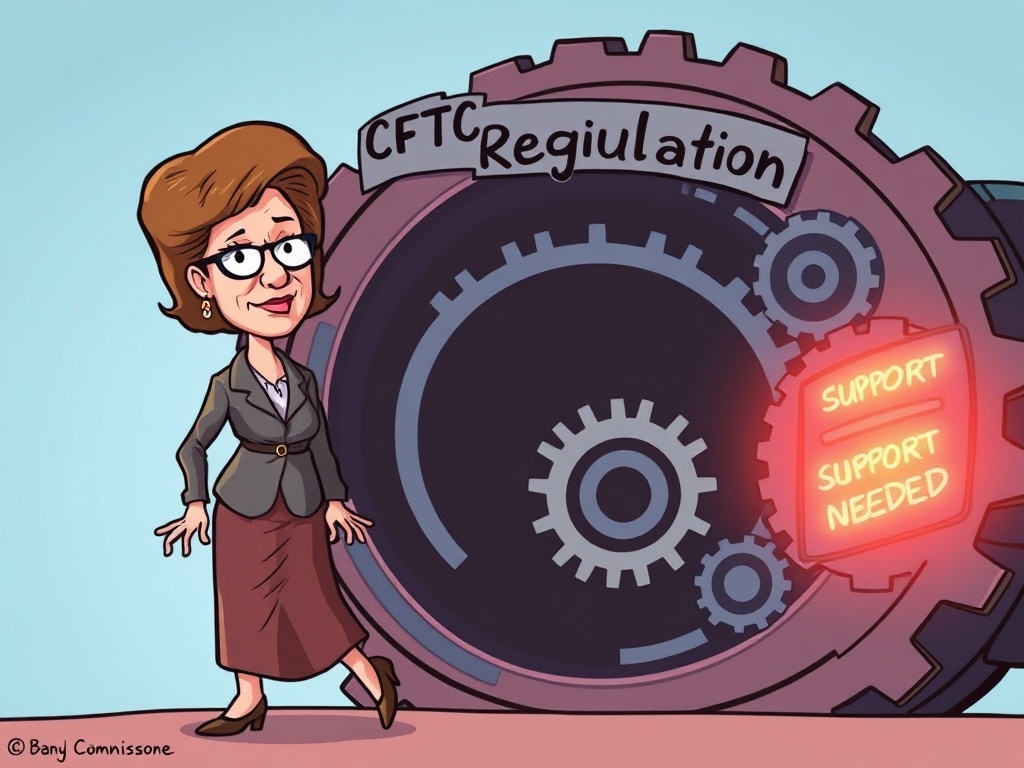
Johnson’s statement announcing her resignation highlighted a key concern: the CFTC needs more support to fulfill its expanded mandate. This includes its increasingly vital role in regulating the complex world of digital assets. Her call underscores the immense pressure and the significant resources required for effective oversight in this innovative, yet often volatile, market.

Why is Enhanced CFTC Digital Asset Regulation So Crucial?

The call for greater support for the CFTC’s expanded role, particularly in CFTC digital asset regulation, is not without merit. The digital asset space, encompassing cryptocurrencies, stablecoins, and NFTs, continues to grow in sophistication and market capitalization. Without clear and robust regulatory frameworks, investors and markets face heightened risks. Johnson’s advocacy emphasizes the need for proactive, well-resourced oversight to protect consumers and maintain market integrity.

Effective regulation can offer several benefits:

  • Investor Protection: Safeguarding individuals from fraud, manipulation, and opaque practices.
  • Market Stability: Establishing clear rules helps prevent systemic risks and fosters a more predictable environment.
  • Innovation Growth: A well-defined regulatory perimeter can actually encourage responsible innovation by providing certainty for businesses.
  • Global Competitiveness: Clear frameworks can position the U.S. as a leader in the digital economy.

The challenges in this area are substantial, ranging from defining which digital assets fall under CFTC jurisdiction to developing appropriate enforcement mechanisms for novel technologies. These complexities demand a well-supported and knowledgeable regulatory body.

As the CFTC moves forward, the focus on CFTC digital asset regulation will undoubtedly intensify. Industry stakeholders, policymakers, and market participants will closely monitor how the agency adapts to this new leadership structure and addresses Johnson’s concerns. The dialogue around legislative clarity for digital assets is ongoing, and the CFTC’s stance will play a significant role in shaping these discussions.

Actionable insights for the industry include:

  • Staying informed about evolving CFTC guidance and enforcement actions.
  • Engaging with regulators to provide constructive feedback on proposed rules.
  • Prioritizing robust internal compliance frameworks that anticipate future regulatory demands.

The agency’s capacity to effectively regulate digital assets depends not only on its internal leadership but also on the support it receives from Congress and the broader government to secure necessary funding and legislative authority. This period of transition highlights the urgent need for a cohesive and well-supported strategy for digital asset oversight.

Conclusion: Commissioner Kristin Johnson’s impending departure from the CFTC underscores a critical juncture for CFTC digital asset regulation. Her final call for increased support for the agency’s expanded role in overseeing digital assets serves as a powerful reminder of the challenges and opportunities ahead. As the CFTC navigates this transition under Acting Chair Caroline Pham, the crypto industry and policymakers must recognize the imperative of robust, well-resourced regulation to foster a secure and innovative digital economy. The future of digital asset markets hinges on these crucial decisions.

Frequently Asked Questions About CFTC Digital Asset Regulation

  • Who is Kristin Johnson and what was her role at the CFTC?
    Kristin Johnson served as a Democratic Commissioner at the U.S. Commodity Futures Trading Commission (CFTC), a key agency overseeing derivatives markets, including certain digital assets.
  • Why is Commissioner Johnson stepping down?
    Commissioner Johnson is stepping down on September 3. While her specific reasons for resignation were not fully detailed in the report, her departure statement emphasized the need for more support for the CFTC’s expanded role, particularly in digital asset regulation.
  • What is the CFTC’s role in digital asset regulation?
    The CFTC primarily regulates commodity derivatives markets. It has asserted jurisdiction over certain digital assets deemed commodities, like Bitcoin and Ethereum, when they are traded in futures or other derivatives markets.
  • What does her departure mean for the future of crypto regulation?
    Her departure leaves Acting Chair Caroline Pham as the sole leader, potentially impacting the agency’s internal dynamics and approach to digital asset oversight. It also highlights the ongoing need for increased resources and legislative clarity for effective CFTC digital asset regulation.
  • Who will lead the CFTC after her departure?
    Upon Kristin Johnson’s departure, Acting Chair Caroline Pham will temporarily lead the U.S. Commodity Futures Trading Commission as the sole remaining commissioner.

If you found this article insightful, please consider sharing it with your network on social media to spread awareness about the evolving landscape of digital asset regulation!

To learn more about the latest crypto market trends, explore our article on key developments shaping digital assets regulatory frameworks.

This post CFTC Digital Asset Regulation: Urgent Call as Commissioner Johnson Departs first appeared on BitcoinWorld and is written by Editorial Team


Market Opportunity
Brainedge Logo
Brainedge Price(LEARN)
$0.0091
$0.0091$0.0091
+0.11%
USD
Brainedge (LEARN) Live Price Chart
Disclaimer: The articles reposted on this site are sourced from public platforms and are provided for informational purposes only. They do not necessarily reflect the views of MEXC. All rights remain with the original authors. If you believe any content infringes on third-party rights, please contact service@support.mexc.com for removal. MEXC makes no guarantees regarding the accuracy, completeness, or timeliness of the content and is not responsible for any actions taken based on the information provided. The content does not constitute financial, legal, or other professional advice, nor should it be considered a recommendation or endorsement by MEXC.

You May Also Like

TD Cowen cuts Strategy price target to $440, cites lower bitcoin yield outlook

TD Cowen cuts Strategy price target to $440, cites lower bitcoin yield outlook

Despite the target cut, TD Cowen said Strategy remains an attractive vehicle for investors seeking bitcoin exposure.
Share
Coinstats2026/01/15 07:29
How to earn from cloud mining: IeByte’s upgraded auto-cloud mining platform unlocks genuine passive earnings

How to earn from cloud mining: IeByte’s upgraded auto-cloud mining platform unlocks genuine passive earnings

The post How to earn from cloud mining: IeByte’s upgraded auto-cloud mining platform unlocks genuine passive earnings appeared on BitcoinEthereumNews.com. contributor Posted: September 17, 2025 As digital assets continue to reshape global finance, cloud mining has become one of the most effective ways for investors to generate stable passive income. Addressing the growing demand for simplicity, security, and profitability, IeByte has officially upgraded its fully automated cloud mining platform, empowering both beginners and experienced investors to earn Bitcoin, Dogecoin, and other mainstream cryptocurrencies without the need for hardware or technical expertise. Why cloud mining in 2025? Traditional crypto mining requires expensive hardware, high electricity costs, and constant maintenance. In 2025, with blockchain networks becoming more competitive, these barriers have grown even higher. Cloud mining solves this by allowing users to lease professional mining power remotely, eliminating the upfront costs and complexity. IeByte stands at the forefront of this transformation, offering investors a transparent and seamless path to daily earnings. IeByte’s upgraded auto-cloud mining platform With its latest upgrade, IeByte introduces: Full Automation: Mining contracts can be activated in just one click, with all processes handled by IeByte’s servers. Enhanced Security: Bank-grade encryption, cold wallets, and real-time monitoring protect every transaction. Scalable Options: From starter packages to high-level investment contracts, investors can choose the plan that matches their goals. Global Reach: Already trusted by users in over 100 countries. Mining contracts for 2025 IeByte offers a wide range of contracts tailored for every investor level. From entry-level plans with daily returns to premium high-yield packages, the platform ensures maximum accessibility. Contract Type Duration Price Daily Reward Total Earnings (Principal + Profit) Starter Contract 1 Day $200 $6 $200 + $6 + $10 bonus Bronze Basic Contract 2 Days $500 $13.5 $500 + $27 Bronze Basic Contract 3 Days $1,200 $36 $1,200 + $108 Silver Advanced Contract 1 Day $5,000 $175 $5,000 + $175 Silver Advanced Contract 2 Days $8,000 $320 $8,000 + $640 Silver…
Share
BitcoinEthereumNews2025/09/17 23:48
BlackRock boosts AI and US equity exposure in $185 billion models

BlackRock boosts AI and US equity exposure in $185 billion models

The post BlackRock boosts AI and US equity exposure in $185 billion models appeared on BitcoinEthereumNews.com. BlackRock is steering $185 billion worth of model portfolios deeper into US stocks and artificial intelligence. The decision came this week as the asset manager adjusted its entire model suite, increasing its equity allocation and dumping exposure to international developed markets. The firm now sits 2% overweight on stocks, after money moved between several of its biggest exchange-traded funds. This wasn’t a slow shuffle. Billions flowed across multiple ETFs on Tuesday as BlackRock executed the realignment. The iShares S&P 100 ETF (OEF) alone brought in $3.4 billion, the largest single-day haul in its history. The iShares Core S&P 500 ETF (IVV) collected $2.3 billion, while the iShares US Equity Factor Rotation Active ETF (DYNF) added nearly $2 billion. The rebalancing triggered swift inflows and outflows that realigned investor exposure on the back of performance data and macroeconomic outlooks. BlackRock raises equities on strong US earnings The model updates come as BlackRock backs the rally in American stocks, fueled by strong earnings and optimism around rate cuts. In an investment letter obtained by Bloomberg, the firm said US companies have delivered 11% earnings growth since the third quarter of 2024. Meanwhile, earnings across other developed markets barely touched 2%. That gap helped push the decision to drop international holdings in favor of American ones. Michael Gates, lead portfolio manager for BlackRock’s Target Allocation ETF model portfolio suite, said the US market is the only one showing consistency in sales growth, profit delivery, and revisions in analyst forecasts. “The US equity market continues to stand alone in terms of earnings delivery, sales growth and sustainable trends in analyst estimates and revisions,” Michael wrote. He added that non-US developed markets lagged far behind, especially when it came to sales. This week’s changes reflect that position. The move was made ahead of the Federal…
Share
BitcoinEthereumNews2025/09/18 01:44