BitcoinWorld Hyperliquid Short Squeeze: Explosive 200% Surge Creates Million-Dollar Opportunity The cryptocurrency world is no stranger to dramatic market movements, but recent events on Hyperliquid have truly captivated traders. Imagine a scenario where two tokens, XPL and WLFI, suddenly skyrocket over 200% in mere minutes. This wasn’t just a random pump; it was the direct result of a massive Hyperliquid short squeeze, an event that saw a single whale address trigger an unprecedented wave of liquidations and multi-million dollar profits. Understanding the Hyperliquid Short Squeeze Phenomenon What exactly is a Hyperliquid short squeeze, and why does it lead to such explosive price action? In simple terms, a short squeeze occurs when the price of an asset suddenly increases, forcing traders who bet against it (short sellers) to buy it back to cover their positions. This frantic buying further drives the price up, creating a vicious cycle. On platforms like Hyperliquid, with its perpetual futures trading, these events can be particularly intense due to high leverage. Short Selling: Traders borrow an asset, sell it, and hope to buy it back at a lower price to profit from the difference. Liquidation: If the price moves against a short seller significantly, their position is automatically closed by the exchange to prevent further losses, often at a substantial loss. Thin Order Book: A limited number of buy and sell orders available at various price points, making it easier for large orders to move the price dramatically. The Anatomy of XPL and WLFI’s Explosive Surge The recent incident on Hyperliquid unfolded rapidly overnight. A single, savvy whale address initiated a multi-million dollar long position in XPL. This means they were betting on the price to go up. Crucially, they exploited a “thin order book,” meaning there weren’t many sellers willing to offload XPL at current prices. As the whale’s large buy orders hit the market, the price of XPL had nowhere to go but up. This rapid price increase immediately put immense pressure on existing short sellers. Their positions began to bleed, and many were forced into liquidation. This forced buying from liquidations acted as fuel, propelling XPL’s price over 200% in just two minutes. The whale then strategically began to partially close their position, locking in an astonishing $16 million in profit. Industry observers, including mlmabc, described this as one of the most extreme and unusual liquidation incidents ever seen on the platform. Remarkably, a similar dramatic event, also involving a significant Hyperliquid short squeeze, reportedly impacted WLFI around the same time. This suggests a broader vulnerability or a coordinated strategy targeting illiquid assets on the platform. What Lessons Can We Learn from this Hyperliquid Short Squeeze? Such extreme market events offer valuable insights for all participants in the crypto space. They highlight both the immense opportunities and the significant risks involved in leveraged trading, especially on platforms with deep liquidity challenges. What can traders take away from the XPL and WLFI surges? Market Volatility is Real: Even established platforms can experience sudden, dramatic price swings. Order Book Awareness: Understanding the depth and liquidity of an asset’s order book is crucial, particularly for altcoins. Thin order books are ripe for manipulation or large-scale market impact. Risk Management: Leveraged trading amplifies both gains and losses. Setting stop-loss orders and managing position sizes are paramount to surviving a sudden Hyperliquid short squeeze. Whale Activity: Monitoring significant whale movements can sometimes provide early indicators of potential market shifts, though predicting their exact impact remains challenging. This incident serves as a stark reminder that while the crypto market offers incredible potential for profit, it also demands vigilance and a robust understanding of market dynamics. The speed and scale of the XPL and WLFI surges underscore the unique challenges and opportunities present in decentralized finance. In conclusion, the recent Hyperliquid short squeeze involving XPL and WLFI was a truly spectacular event, showcasing the power of concentrated capital against a thin order book. A single whale’s calculated move led to a 200% price surge, multi-million dollar profits, and widespread liquidations. This dramatic episode provides a powerful lesson in market mechanics, risk management, and the inherent volatility of the crypto landscape. It underscores the need for traders to be acutely aware of liquidity, leverage, and the potential for rapid market shifts. Frequently Asked Questions (FAQs) 1. What is a short squeeze in crypto? A short squeeze happens when the price of a cryptocurrency rapidly increases, forcing short sellers (who bet on price drops) to buy back the asset to limit losses, which further drives the price up. 2. How did the whale profit from the Hyperliquid short squeeze? The whale opened a large ‘long’ position, betting on the price to rise. By exploiting a thin order book, their massive buy orders quickly pushed the price up, leading to short sellers’ liquidations and allowing the whale to sell for a significant profit. 3. What is a “thin order book” and why does it matter? A thin order book means there are few buy or sell orders at various price levels. This lack of liquidity makes an asset’s price highly susceptible to large trades, allowing a single large order to cause significant price movements. 4. How can traders protect themselves from a sudden short squeeze? Traders can protect themselves by using stop-loss orders, managing their leverage carefully, diversifying their portfolios, and being aware of the liquidity of the assets they are trading. 5. Is Hyperliquid a safe platform for trading? Hyperliquid, like other decentralized perpetual exchanges, offers high leverage and unique market dynamics. While it provides opportunities, traders must understand its risks, including the potential for rapid liquidations due to events like a Hyperliquid short squeeze. Did this article shed light on the incredible volatility and potential profits in crypto trading? Share this insight with your fellow traders and crypto enthusiasts on social media! Let’s keep the conversation going about market dynamics and smart trading strategies. To learn more about the latest crypto market trends, explore our article on key developments shaping cryptocurrency price action. This post Hyperliquid Short Squeeze: Explosive 200% Surge Creates Million-Dollar Opportunity first appeared on BitcoinWorld and is written by Editorial TeamBitcoinWorld Hyperliquid Short Squeeze: Explosive 200% Surge Creates Million-Dollar Opportunity The cryptocurrency world is no stranger to dramatic market movements, but recent events on Hyperliquid have truly captivated traders. Imagine a scenario where two tokens, XPL and WLFI, suddenly skyrocket over 200% in mere minutes. This wasn’t just a random pump; it was the direct result of a massive Hyperliquid short squeeze, an event that saw a single whale address trigger an unprecedented wave of liquidations and multi-million dollar profits. Understanding the Hyperliquid Short Squeeze Phenomenon What exactly is a Hyperliquid short squeeze, and why does it lead to such explosive price action? In simple terms, a short squeeze occurs when the price of an asset suddenly increases, forcing traders who bet against it (short sellers) to buy it back to cover their positions. This frantic buying further drives the price up, creating a vicious cycle. On platforms like Hyperliquid, with its perpetual futures trading, these events can be particularly intense due to high leverage. Short Selling: Traders borrow an asset, sell it, and hope to buy it back at a lower price to profit from the difference. Liquidation: If the price moves against a short seller significantly, their position is automatically closed by the exchange to prevent further losses, often at a substantial loss. Thin Order Book: A limited number of buy and sell orders available at various price points, making it easier for large orders to move the price dramatically. The Anatomy of XPL and WLFI’s Explosive Surge The recent incident on Hyperliquid unfolded rapidly overnight. A single, savvy whale address initiated a multi-million dollar long position in XPL. This means they were betting on the price to go up. Crucially, they exploited a “thin order book,” meaning there weren’t many sellers willing to offload XPL at current prices. As the whale’s large buy orders hit the market, the price of XPL had nowhere to go but up. This rapid price increase immediately put immense pressure on existing short sellers. Their positions began to bleed, and many were forced into liquidation. This forced buying from liquidations acted as fuel, propelling XPL’s price over 200% in just two minutes. The whale then strategically began to partially close their position, locking in an astonishing $16 million in profit. Industry observers, including mlmabc, described this as one of the most extreme and unusual liquidation incidents ever seen on the platform. Remarkably, a similar dramatic event, also involving a significant Hyperliquid short squeeze, reportedly impacted WLFI around the same time. This suggests a broader vulnerability or a coordinated strategy targeting illiquid assets on the platform. What Lessons Can We Learn from this Hyperliquid Short Squeeze? Such extreme market events offer valuable insights for all participants in the crypto space. They highlight both the immense opportunities and the significant risks involved in leveraged trading, especially on platforms with deep liquidity challenges. What can traders take away from the XPL and WLFI surges? Market Volatility is Real: Even established platforms can experience sudden, dramatic price swings. Order Book Awareness: Understanding the depth and liquidity of an asset’s order book is crucial, particularly for altcoins. Thin order books are ripe for manipulation or large-scale market impact. Risk Management: Leveraged trading amplifies both gains and losses. Setting stop-loss orders and managing position sizes are paramount to surviving a sudden Hyperliquid short squeeze. Whale Activity: Monitoring significant whale movements can sometimes provide early indicators of potential market shifts, though predicting their exact impact remains challenging. This incident serves as a stark reminder that while the crypto market offers incredible potential for profit, it also demands vigilance and a robust understanding of market dynamics. The speed and scale of the XPL and WLFI surges underscore the unique challenges and opportunities present in decentralized finance. In conclusion, the recent Hyperliquid short squeeze involving XPL and WLFI was a truly spectacular event, showcasing the power of concentrated capital against a thin order book. A single whale’s calculated move led to a 200% price surge, multi-million dollar profits, and widespread liquidations. This dramatic episode provides a powerful lesson in market mechanics, risk management, and the inherent volatility of the crypto landscape. It underscores the need for traders to be acutely aware of liquidity, leverage, and the potential for rapid market shifts. Frequently Asked Questions (FAQs) 1. What is a short squeeze in crypto? A short squeeze happens when the price of a cryptocurrency rapidly increases, forcing short sellers (who bet on price drops) to buy back the asset to limit losses, which further drives the price up. 2. How did the whale profit from the Hyperliquid short squeeze? The whale opened a large ‘long’ position, betting on the price to rise. By exploiting a thin order book, their massive buy orders quickly pushed the price up, leading to short sellers’ liquidations and allowing the whale to sell for a significant profit. 3. What is a “thin order book” and why does it matter? A thin order book means there are few buy or sell orders at various price levels. This lack of liquidity makes an asset’s price highly susceptible to large trades, allowing a single large order to cause significant price movements. 4. How can traders protect themselves from a sudden short squeeze? Traders can protect themselves by using stop-loss orders, managing their leverage carefully, diversifying their portfolios, and being aware of the liquidity of the assets they are trading. 5. Is Hyperliquid a safe platform for trading? Hyperliquid, like other decentralized perpetual exchanges, offers high leverage and unique market dynamics. While it provides opportunities, traders must understand its risks, including the potential for rapid liquidations due to events like a Hyperliquid short squeeze. Did this article shed light on the incredible volatility and potential profits in crypto trading? Share this insight with your fellow traders and crypto enthusiasts on social media! Let’s keep the conversation going about market dynamics and smart trading strategies. To learn more about the latest crypto market trends, explore our article on key developments shaping cryptocurrency price action. This post Hyperliquid Short Squeeze: Explosive 200% Surge Creates Million-Dollar Opportunity first appeared on BitcoinWorld and is written by Editorial Team

Hyperliquid Short Squeeze: Explosive 200% Surge Creates Million-Dollar Opportunity

BitcoinWorld
Hyperliquid Short Squeeze: Explosive 200% Surge Creates Million-Dollar Opportunity

The cryptocurrency world is no stranger to dramatic market movements, but recent events on Hyperliquid have truly captivated traders. Imagine a scenario where two tokens, XPL and WLFI, suddenly skyrocket over 200% in mere minutes. This wasn’t just a random pump; it was the direct result of a massive Hyperliquid short squeeze, an event that saw a single whale address trigger an unprecedented wave of liquidations and multi-million dollar profits.

Understanding the Hyperliquid Short Squeeze Phenomenon

What exactly is a Hyperliquid short squeeze, and why does it lead to such explosive price action? In simple terms, a short squeeze occurs when the price of an asset suddenly increases, forcing traders who bet against it (short sellers) to buy it back to cover their positions. This frantic buying further drives the price up, creating a vicious cycle. On platforms like Hyperliquid, with its perpetual futures trading, these events can be particularly intense due to high leverage.

  • Short Selling: Traders borrow an asset, sell it, and hope to buy it back at a lower price to profit from the difference.
  • Liquidation: If the price moves against a short seller significantly, their position is automatically closed by the exchange to prevent further losses, often at a substantial loss.
  • Thin Order Book: A limited number of buy and sell orders available at various price points, making it easier for large orders to move the price dramatically.

The Anatomy of XPL and WLFI’s Explosive Surge

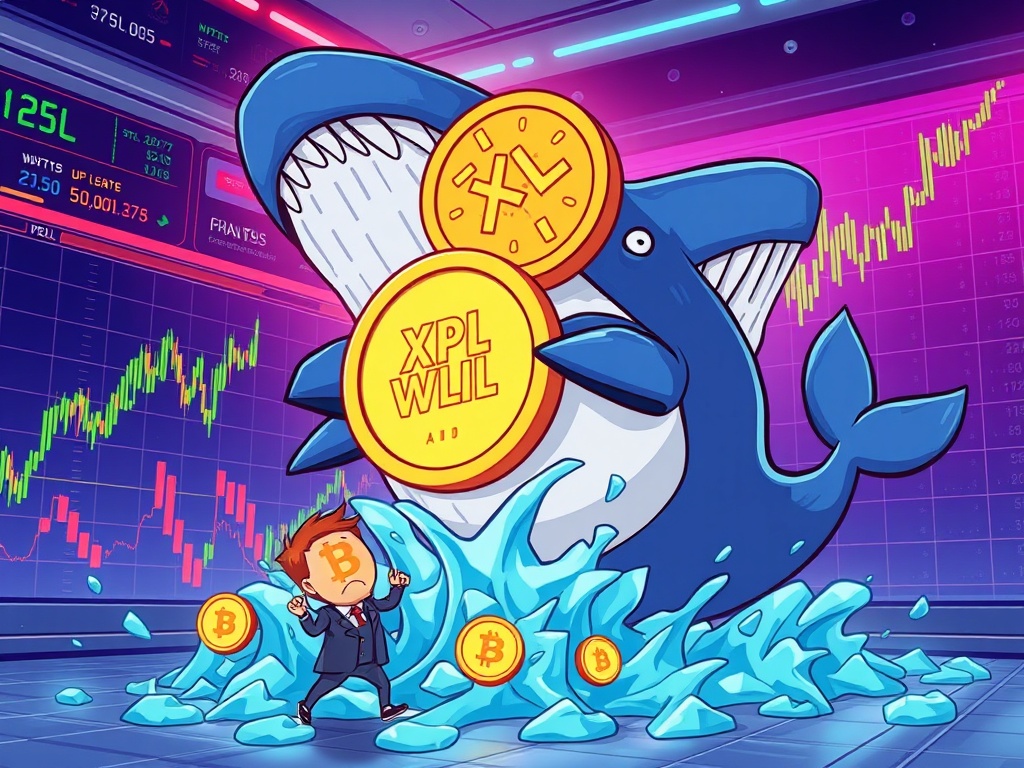
The recent incident on Hyperliquid unfolded rapidly overnight. A single, savvy whale address initiated a multi-million dollar long position in XPL. This means they were betting on the price to go up. Crucially, they exploited a “thin order book,” meaning there weren’t many sellers willing to offload XPL at current prices. As the whale’s large buy orders hit the market, the price of XPL had nowhere to go but up.

This rapid price increase immediately put immense pressure on existing short sellers. Their positions began to bleed, and many were forced into liquidation. This forced buying from liquidations acted as fuel, propelling XPL’s price over 200% in just two minutes. The whale then strategically began to partially close their position, locking in an astonishing $16 million in profit. Industry observers, including mlmabc, described this as one of the most extreme and unusual liquidation incidents ever seen on the platform.

Remarkably, a similar dramatic event, also involving a significant Hyperliquid short squeeze, reportedly impacted WLFI around the same time. This suggests a broader vulnerability or a coordinated strategy targeting illiquid assets on the platform.

What Lessons Can We Learn from this Hyperliquid Short Squeeze?

Such extreme market events offer valuable insights for all participants in the crypto space. They highlight both the immense opportunities and the significant risks involved in leveraged trading, especially on platforms with deep liquidity challenges. What can traders take away from the XPL and WLFI surges?

  • Market Volatility is Real: Even established platforms can experience sudden, dramatic price swings.
  • Order Book Awareness: Understanding the depth and liquidity of an asset’s order book is crucial, particularly for altcoins. Thin order books are ripe for manipulation or large-scale market impact.
  • Risk Management: Leveraged trading amplifies both gains and losses. Setting stop-loss orders and managing position sizes are paramount to surviving a sudden Hyperliquid short squeeze.
  • Whale Activity: Monitoring significant whale movements can sometimes provide early indicators of potential market shifts, though predicting their exact impact remains challenging.

This incident serves as a stark reminder that while the crypto market offers incredible potential for profit, it also demands vigilance and a robust understanding of market dynamics. The speed and scale of the XPL and WLFI surges underscore the unique challenges and opportunities present in decentralized finance.

In conclusion, the recent Hyperliquid short squeeze involving XPL and WLFI was a truly spectacular event, showcasing the power of concentrated capital against a thin order book. A single whale’s calculated move led to a 200% price surge, multi-million dollar profits, and widespread liquidations. This dramatic episode provides a powerful lesson in market mechanics, risk management, and the inherent volatility of the crypto landscape. It underscores the need for traders to be acutely aware of liquidity, leverage, and the potential for rapid market shifts.

Frequently Asked Questions (FAQs)

1. What is a short squeeze in crypto?
A short squeeze happens when the price of a cryptocurrency rapidly increases, forcing short sellers (who bet on price drops) to buy back the asset to limit losses, which further drives the price up.

2. How did the whale profit from the Hyperliquid short squeeze?
The whale opened a large ‘long’ position, betting on the price to rise. By exploiting a thin order book, their massive buy orders quickly pushed the price up, leading to short sellers’ liquidations and allowing the whale to sell for a significant profit.

3. What is a “thin order book” and why does it matter?
A thin order book means there are few buy or sell orders at various price levels. This lack of liquidity makes an asset’s price highly susceptible to large trades, allowing a single large order to cause significant price movements.

4. How can traders protect themselves from a sudden short squeeze?
Traders can protect themselves by using stop-loss orders, managing their leverage carefully, diversifying their portfolios, and being aware of the liquidity of the assets they are trading.

5. Is Hyperliquid a safe platform for trading?
Hyperliquid, like other decentralized perpetual exchanges, offers high leverage and unique market dynamics. While it provides opportunities, traders must understand its risks, including the potential for rapid liquidations due to events like a Hyperliquid short squeeze.

Did this article shed light on the incredible volatility and potential profits in crypto trading? Share this insight with your fellow traders and crypto enthusiasts on social media! Let’s keep the conversation going about market dynamics and smart trading strategies.

To learn more about the latest crypto market trends, explore our article on key developments shaping cryptocurrency price action.

This post Hyperliquid Short Squeeze: Explosive 200% Surge Creates Million-Dollar Opportunity first appeared on BitcoinWorld and is written by Editorial Team


Market Opportunity
LETSTOP Logo
LETSTOP Price(STOP)
$0.01543
$0.01543$0.01543
+0.65%
USD
LETSTOP (STOP) Live Price Chart
Disclaimer: The articles reposted on this site are sourced from public platforms and are provided for informational purposes only. They do not necessarily reflect the views of MEXC. All rights remain with the original authors. If you believe any content infringes on third-party rights, please contact service@support.mexc.com for removal. MEXC makes no guarantees regarding the accuracy, completeness, or timeliness of the content and is not responsible for any actions taken based on the information provided. The content does not constitute financial, legal, or other professional advice, nor should it be considered a recommendation or endorsement by MEXC.

You May Also Like

Crypto News: Donald Trump-Aligned Fed Governor To Speed Up Fed Rate Cuts?

Crypto News: Donald Trump-Aligned Fed Governor To Speed Up Fed Rate Cuts?

The post Crypto News: Donald Trump-Aligned Fed Governor To Speed Up Fed Rate Cuts? appeared on BitcoinEthereumNews.com. In recent crypto news, Stephen Miran swore in as the latest Federal Reserve governor on September 16, 2025, slipping into the board’s last open spot right before the Federal Open Market Committee kicks off its two-day rate discussion. Traders are betting heavily on a 25-basis-point trim, which would bring the federal funds rate down to 4.00%-4.25%, based on CME FedWatch Tool figures from September 15, 2025. Miran, who’s been Trump’s top economic advisor and a supporter of his trade ideas, joins a seven-member board where just three governors come from Democratic picks, according to the Fed’s records updated that same day. Crypto News: Miran’s Background and Quick Path to Confirmation The Senate greenlit Miran on September 15, 2025, with a tight 48-47 vote, following his nomination on September 2, 2025, as per a recent crypto news update. His stint runs only until January 31, 2026, stepping in for Adriana D. Kugler, who stepped down in August 2025 for reasons not made public. Miran earned his economics Ph.D. from Harvard and worked at the Treasury back in Trump’s first go-around. Afterward, he moved to Hudson Bay Capital Management as an economist, then looped back to the White House in December 2024 to head the Council of Economic Advisers. There, he helped craft Trump’s “reciprocal tariffs” approach, aimed at fixing trade gaps with China and the EU. He wouldn’t quit his White House gig, which irked Senator Elizabeth Warren at the September 7, 2025, confirmation hearings. That limited time frame means Miran gets to cast a vote straight away at the FOMC session starting September 16, 2025. The full board now features Chair Jerome H. Powell (Trump pick, term ends 2026), Vice Chair Philip N. Jefferson (Biden, to 2036), and folks like Lisa D. Cook (Biden, to 2028) and Michael S. Barr…
Share
BitcoinEthereumNews2025/09/18 03:14
What John Harbaugh And Mike Tomlin’s Departures Mean For NFL Coaching

What John Harbaugh And Mike Tomlin’s Departures Mean For NFL Coaching

The post What John Harbaugh And Mike Tomlin’s Departures Mean For NFL Coaching appeared on BitcoinEthereumNews.com. Baltimore Ravens head coach John Harbaugh (L
Share
BitcoinEthereumNews2026/01/15 10:56
Twitter founder's "weekend experiment": Bitchat encryption software becomes a "communication Noah's Ark"

Twitter founder's "weekend experiment": Bitchat encryption software becomes a "communication Noah's Ark"

Author: Nancy, PANews In the crypto world, both assets and technologies are gradually taking center stage with greater practical significance. In the past few months
Share
PANews2026/01/15 11:00