

Payoneer Joins Fintech Race for US Bank Charters

Payoneer, a global payments platform known for its cross-border capabilities, has taken a formal step toward regulated crypto services by filing with the Office of the Comptroller of the Currency (OCC) to form PAYO Digital Bank, a US national trust bank charter. The move would unlock a regulated pathway for the company to issue a GENIUS Act-compliant stablecoin and expand custody, settlement, and other crypto services for its nearly two million business-focused customers. The filing comes hot on the heels of a strategic partnership with Bridge, a stablecoin infrastructure provider, aimed at embedding stablecoin capabilities into Payoneer’s cross-border payment flows. Central to the plan is PAYO-USD, a stablecoin intended to act as the holding currency in Payoneer wallets and to enable customers to pay and receive stablecoins as part of daily transactions.
Key takeaways
- Payoneer has submitted an application to the OCC to create PAYO Digital Bank, a national trust charter that would enable regulated crypto services and stablecoin issuance.
- The proposed stablecoin PAYO-USD (CRYPTO: PAYO-USD) would anchor Payoneer wallets, allowing customers to hold, pay with, and convert stablecoins within the platform.
- Approval would empower Payoneer to manage PAYO-USD reserves, provide custodial services, and convert between PAYO-USD and local currencies for users and partners.
- The filing aligns with a broader regulatory expansion, as Crypto.com received conditional charter approval, joining a wave of crypto firms already granted or pursuing national bank charters (Circle, Ripple, Fidelity Digital Assets, BitGo, Paxos) in recent months.
- Other large players are pursuing similar routes (e.g., World Liberty Financial’s USD1 stablecoin, Laser Platform, and Coinbase’s ongoing review), signaling a shift toward regulated on-ramps for digital assets in mainstream finance.
Tickers mentioned:
Market context: The OCC’s evolving stance on national bank charters for crypto-related businesses reflects a regulatory approach that seeks to balance consumer protections with access to regulated crypto services, particularly for cross-border commerce and wholesale payments. The broader market backdrop—rising demand for stablecoins in trade, evolving custody models, and the ongoing integration of crypto rails into traditional financial infrastructure—frames Payoneer’s move as part of a wider industry trend.
Why it matters
The potential arrival of a fully regulated stablecoin and digital banking service within a trusted payments platform could alter the calculus for small and medium-sized businesses engaged in cross-border trade. Stablecoins, by design, aim to reduce settlement times and volatility when moving funds across borders. If PAYO-USD becomes the wallet’s native currency under a federally regulated umbrella, Payoneer could offer its users faster, more predictable settlement options with built-in compliance and reserve oversight, addressing common pain points in cross-border transactions.
For Payoneer, the OCC charter would extend its reach beyond a processor of international payments to a regulated crypto-enabled financial services provider. The company’s leadership, including CEO John Caplan, has signaled belief in stablecoins’ role in future global trade: “We believe stablecoins will play a meaningful role in the future of global trade.” The promise is not merely technological but regulatory—providing a trustworthy framework for reserve management, customer protections, and interoperability with traditional financial systems.
The regulatory arc surrounding stablecoins and charters has been accelerating. The OCC’s recent actions show a willingness to entertain crypto-enabled bank models, albeit within a cautious, risk-managed framework. This stance comes after a December wave of charter approvals for major crypto-focused players, underscoring a period of regulatory experimentation with centralized, compliant crypto rails. As fintechs and crypto-native firms seek scalable, regulated platforms to deliver cross-border value, Payoneer’s approach could set a precedent for how stablecoins are deployed within enterprise-grade payments ecosystems.
Beyond Payoneer, other market participants are testing the waters in the same regulatory waters. World Liberty Financial has applied for a charter to extend its USD1 stablecoin use, aiming to broaden the token’s adoption in payments. Meanwhile, Laser Platform has also submitted an application, and Coinbase has been awaiting a decision since late last year. Taken together, the sequence of filings highlights a broader industry push to convert stablecoins and crypto-backed services from niche offerings into regulated, bank-grade products that can scale with business demand.
What to watch next
- OCC decision timeline on Payoneer’s PAYO Digital Bank charter and any conditions tied to PAYO-USD issuance.
- Details of the reserve-custody framework for PAYO-USD and the governance structure governing the asset’s backing and conversions.
- Implementation milestones for the Bridge collaboration, including wallet integrations and cross-border settlement capabilities.
- Regulatory updates following Crypto.com’s conditional charter, and any additional charters granted or denied to other crypto-leaning firms.
- Rollout timing for PAYO-USD features within Payoneer’s platform, including wallet support, merchant onboarding, and fiat-on/off ramps.
Sources & verification
- Payoneer files application for US national trust bank charter with OCC (Payoneer press release).
- Payoneer announces stablecoin capabilities powered by Bridge integration (press release).
- Crypto.com receives conditional approval for national bank charter (Cointelegraph report).
- December charter approvals for Circle, Ripple, Fidelity Digital Assets, BitGo, and Paxos (Cointelegraph report).
- World Liberty Financial’s USD1 stablecoin charter application (Cointelegraph report).
Payoneer’s bid for a regulated stablecoin and digital bank: what changes for cross-border payments
Payoneer’s filing with the OCC marks a deliberate step toward integrating regulated crypto rails into a mainstream payments platform. By pursuing a national trust charter, the company aims to combine traditional banking discipline with digital asset functionality, enabling a stabilized, regulated environment for cross-border transactions. The centerpiece is PAYO-USD (CRYPTO: PAYO-USD), a stablecoin designed to operate as the platform’s holding currency, with the goal of reducing settlement frictions and smoothing currency conversions for Payoneer’s business clients. The plan envisions wallets where PAYO-USD can be used for both pay-ins and pay-outs, and where users can convert to their local currencies within a supervised framework.
The collaboration with Bridge, announced prior to the charter application, is a key accelerant. Bridge’s infrastructure is intended to support stablecoin issuance, redemption, and on-chain settlement within a regulated, enterprise-facing platform. If approved, Payoneer would gain a direct on-ramp for stablecoins into its cross-border payment network, potentially offering a more predictable cost structure for businesses shipping goods and services globally. The GENIUS Act-compliant design of PAYO-USD signals a compliance-driven approach to stablecoin issuance, aligning with a regulatory environment that increasingly calls for clear reserve custody, transparent governance, and user protections in crypto-enabled products.
Even as Payoneer advances this plan, the OCC’s broader policy stance is under scrutiny and evolution. Crypto firms eyeing national charters have seen both caution and momentum: Crypto.com received conditional approval, a sign that the agency is willing to greenlight regulated crypto banking models while maintaining rigorous oversight. The market context is further shaped by a string of December approvals granted to banks associated with the crypto space—Circle, Ripple, Fidelity Digital Assets, BitGo, and Paxos—broadening the example set for what a crypto-enabled bank charter can look like in practice.
In parallel, other entities are pursuing similar avenues to leverage stablecoins for business use cases. World Liberty Financial’s USD1 stablecoin aims to expand its footprint in cross-border workflows, while Coinbase and Laser Platform explore their own regulatory paths. Taken together, these developments illustrate a broader shift toward regulated, institution-grade deployments of crypto-enabled payments and stablecoins, moving beyond niche pilots toward scalable, enterprise-grade offerings that can participate in regulated financial rails.
The regulatory, technological, and market factors converge around a central question: can a conventional payments platform safely and effectively integrate a stablecoin into its core product stack under federal supervision? If Payoneer succeeds, it could demonstrate a replicable model for large-scale, compliant crypto-enabled payments that preserves user protections, ensures reserve adequacy, and delivers the speed and efficiency gains that stablecoins are intended to provide. Stakeholders—business customers, developers building cross-border payment solutions, and regulators—will be watching closely for how governance, reserve management, and customer protections are implemented in practice as the OCC deliberates on PAYO Digital Bank.
This article was originally published as Payoneer Joins Fintech Race for US Bank Charters on Crypto Breaking News – your trusted source for crypto news, Bitcoin news, and blockchain updates.


You May Also Like

Strategy CEO Says Company Plans to Grow Bitcoin and Bitcoin Per Share
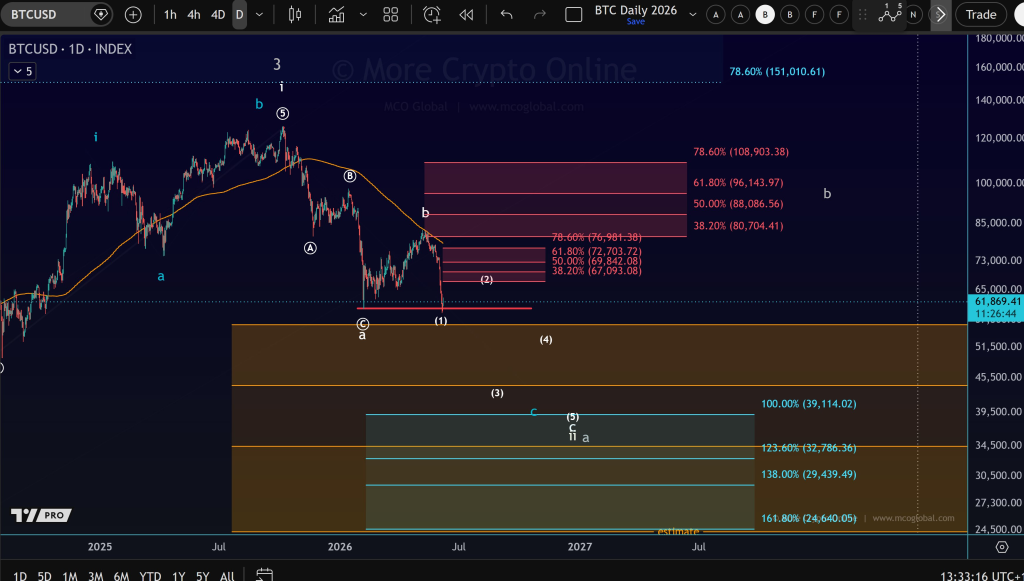
Bitcoin Price News: Worst Week Since FTX for BTC, but Crypto Analyst Warns of C‑Wave Lower to $50K

Bitcoin Breaks $63,000 as Market Momentum Continues



