

Pump.fun Spends $62 Million on Token Buybacks Amid Legal Challenges

The Solana-based memecoin platform is using daily purchases to stabilize its token price while facing mounting legal pressure and revenue challenges.
Massive Buyback Program Shows Results
The platform has repurchased over 16.5 billion PUMP tokens at an average cost of $0.003785 each. Daily buybacks have ranged between $1.3 million and $2.3 million over the past week, funded directly by fees from users who launch memecoins on the platform.
This strategy appears to be working. PUMP has gained 12% over the past month and climbed 54% from its August low of $0.002282. The token currently trades around $0.003522, with trading volume exceeding $331 million in 24 hours.
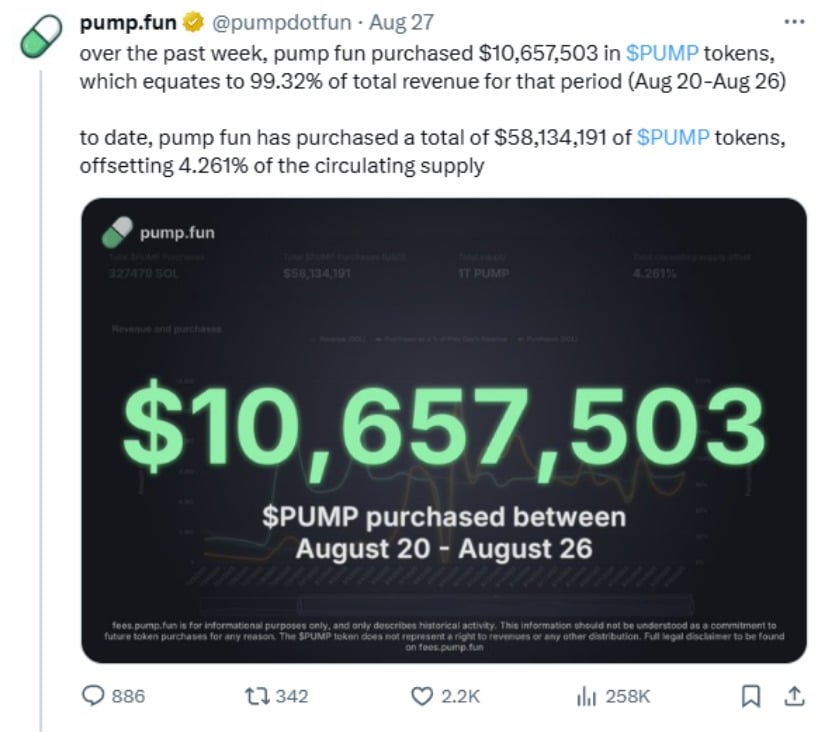
Source: @pumpdotfun
The buyback program allocates 30% of platform revenue to token repurchases. Of these bought-back tokens, 60% get burned (permanently removed from circulation) while 40% go toward staking rewards for holders. This creates ongoing demand while reducing the total supply available for trading.
Platform Dominance Despite Competition
Pump.fun has reclaimed its position as the top Solana memecoin launchpad after briefly losing ground to competitor LetsBonk in July. The platform now holds 73% of the market share with $4.5 billion in seven-day trading volume, while LetsBonk has fallen to just 9% market share.
Since launching in January 2024, Pump.fun has generated over $775 million in total revenue. The platform’s success stems from its simple model: users pay under $2 to create tokens and the platform takes a 1% transaction fee on trades.
The PUMP token holder base continues growing, with over 70,800 unique wallet addresses now holding the token. Smaller wallets holding under 10,000 PUMP tokens represent 46% of all holders, showing broad retail participation rather than concentration among large investors.
Revenue Drops Create Sustainability Questions
Despite the buyback success, Pump.fun faces significant challenges. Platform revenue dropped sharply between July 28 and August 3, bringing in only $1.72 million for the week—the lowest figure since March 2024.
This revenue decline raises questions about the buyback program’s sustainability. In one extreme case, a single $12 million buyback day in August represented 99.32% of the platform’s entire weekly revenue of $10.66 million, highlighting the financial strain of maintaining such aggressive repurchase rates.
The platform previously generated over $13 million in daily fees during peak memecoin activity periods. Current daily fees have fallen to around $1.34 million, with occasional drops below $1 million per day.
Legal Storm Brewing
Pump.fun faces serious legal challenges that could impact its future operations. A class-action lawsuit filed in January and amended in July accuses the platform of operating like an “unlicensed casino” and using aggressive marketing tactics to create artificial hype around volatile tokens.
The lawsuit claims the platform’s structure resembles a “rigged slot machine” where early participants profit by selling tokens to later buyers. Plaintiffs allege total investor losses have reached $5.5 billion, seeking remedies under consumer protection and securities laws.
These legal challenges come alongside regulatory restrictions that already excluded U.S. and U.K. buyers from participating in Pump.fun’s $600 million token sale that sold out in 12 minutes in July.
Strategic Initiatives Beyond Buybacks
Pump.fun has launched additional programs to support its ecosystem. The Glass Full Foundation channels buyback funds into promising memecoin projects, providing liquidity support and reinforcing investor confidence in the broader platform ecosystem.
The platform also operates PumpSwap, a decentralized exchange that generated $5 million in revenue last month with $10 billion in trading volume. This helps diversify revenue streams beyond just token creation fees.
Looking ahead, Pump.fun plans to use funds from its massive token sale to build a decentralized social network competing with platforms like Facebook and TikTok—a significant expansion beyond memecoins.
What This Means for Investors
The buyback program demonstrates Pump.fun’s commitment to supporting its token price, but several risk factors remain. The platform must reverse its revenue decline while managing legal challenges and increasing competition.
Technical analysis shows PUMP has established support around current levels, with potential resistance at previous highs. However, the token’s performance remains closely tied to overall memecoin market sentiment and Pump.fun’s ability to maintain its platform dominance.
The combination of aggressive buybacks, growing holder numbers, and market leadership provides some positive signals. Yet the sustainability of this approach depends on whether Pump.fun can restore revenue growth while navigating regulatory pressures and legal proceedings that could reshape its operations.


You May Also Like

Mark Cuban Says He Sold Most of His Bitcoin, Calling It a Failed Hedge

Blockchain.com Submits Confidential IPO Filing to SEC Amid Crypto Market Revival
What Trump’s 'utterly bonkers' turn of phrase reveals: analysis



