Nvidia (NVDA) Stock; US China Tensions Push Shift from H200 to Vera Rubin and Stock Lifts Slightly
TLDRs;
- Nvidia reallocates older H200 chip production to Vera Rubin processors amid stalled China approvals.
- US export restrictions and potential Chinese import limits disrupt Nvidia’s H200 sales strategy.
- Freed TSMC capacity strengthens US tech groups’ access to Nvidia’s latest AI architecture.
- Nvidia’s pivot highlights widening AI hardware gap between US and China through 2027.
Nvidia has reportedly shifted production capacity at Taiwan Semiconductor Manufacturing Company (TSMC) from its H200 AI chips intended for China to its newest Vera Rubin processors.
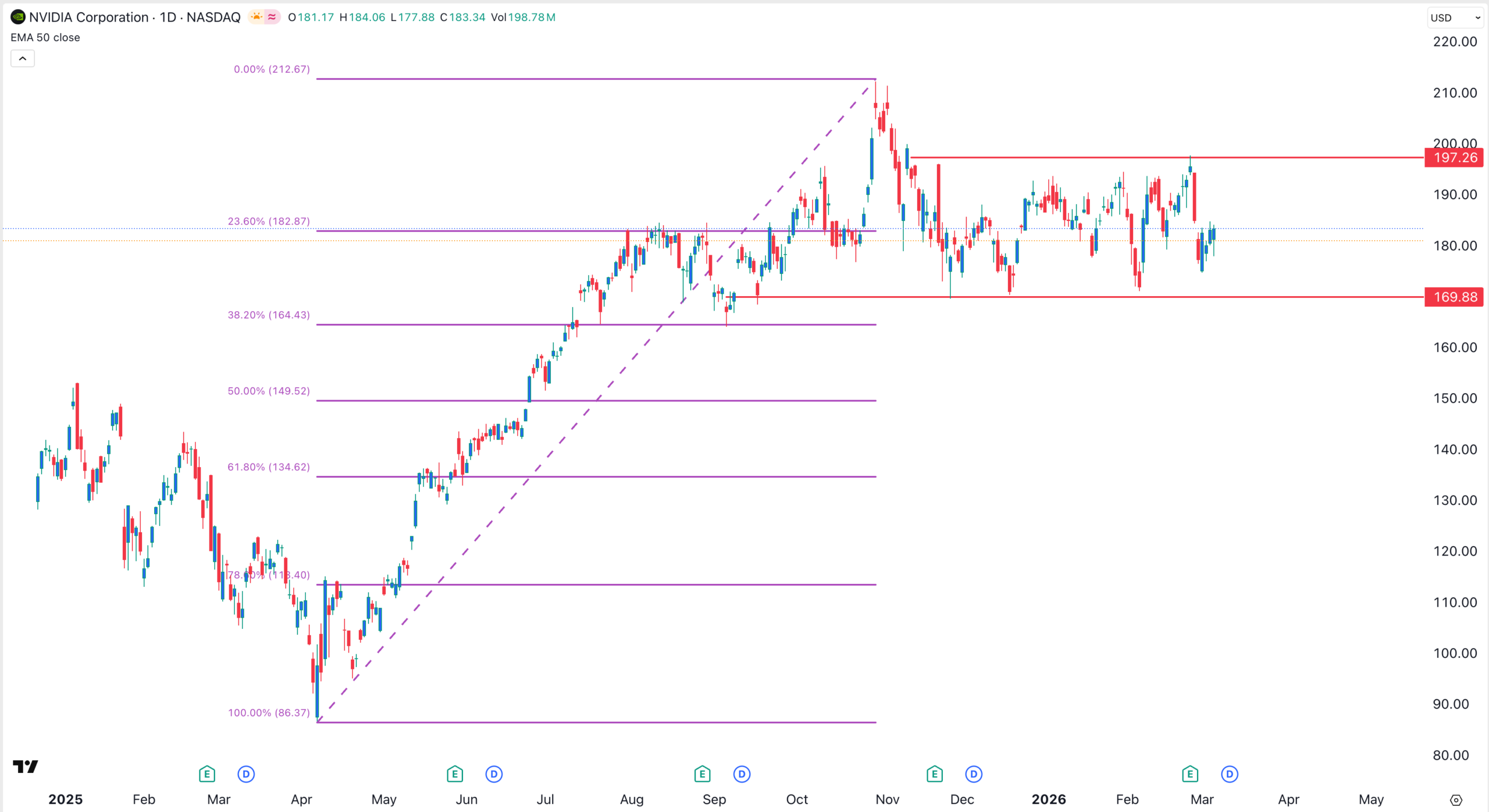
Sources familiar with the matter indicate that US export controls, coupled with potential Chinese import restrictions, have stalled approvals for the H200 chips, prompting the move. Following the announcement, Nvidia (NVDA) stock lifted slightly in early trading.
The redirection signals that Nvidia no longer anticipates substantial near-term H200 sales in China after months of uncertainty surrounding both Washington’s export approvals and Beijing’s regulatory stance. H200, an older processor designed to comply with US export regulations, had been positioned to serve Chinese data centers.
Vera Rubin, by contrast, represents Nvidia’s most advanced AI architecture and is in high demand among US-based tech companies such as OpenAI and Google.
H200 Sales Disrupted by US-China Policy Tensions
The H200 production push initially followed lobbying efforts by Nvidia in both the US and China. After former President Donald Trump indicated in December that sales could proceed, Nvidia reportedly expected over one million H200 orders.
Yet, only about 250,000 chips were produced, according to sources cited by the Financial Times, and Nvidia’s CFO Colette Kress confirmed that approvals granted so far had generated minimal revenue, leaving future imports uncertain.
NVIDIA Corporation, NVDA
The stalled approval process stems from the complex interplay of US export licenses and potential Chinese import limits. Legal analysis suggests that a disputed US policy could require a 25% payment to the US government based on H200 revenue from China, adding further hurdles to sales.
The uncertainty has already cost Nvidia significantly, including a $4.5 billion charge tied to surplus H200 inventory and related purchase commitments, and the company excluded China data center revenue from its upcoming guidance.
Vera Rubin Receives Production Priority
With H200 sales in limbo, Nvidia has freed TSMC capacity for Vera Rubin chips, a move that benefits US technology groups eager to adopt the latest AI processors. By shifting resources to newer hardware, Nvidia is not only supporting its domestic customers but also strengthening its competitive edge in frontier AI technology.
Analysts suggest that controlling scarce leading-edge foundry capacity gives Nvidia strategic leverage over AI performance globally.
The pivot reflects a broader strategic calculation: older AI chips such as H200 are unlikely to generate meaningful revenue in China under current geopolitical constraints, while Vera Rubin chips are poised to accelerate AI adoption in the US.
US-China AI Gap Widens
This shift could also have long-term implications for the global AI hardware landscape. Estimates indicate that the top US AI chips already outperform Chinese equivalents by a factor of five, with the lead projected to grow to seventeen times by 2027.
As Nvidia reallocates production to its latest architecture, China’s access to high-performance AI chips will remain limited, potentially widening the technology gap.
Investors responded positively to the announcement, with Nvidia shares rising modestly in early trading. While the H200 setback underscores the financial and operational risks of geopolitical tensions, the Vera Rubin pivot highlights Nvidia’s ability to adapt its production strategy to changing global conditions and maintain leadership in AI hardware.
The post Nvidia (NVDA) Stock; US China Tensions Push Shift from H200 to Vera Rubin and Stock Lifts Slightly appeared first on CoinCentral.
You May Also Like

V20.2 Upgrade Sparks Break Above $0.23 Trendline
Nvidia Stock Analysis as a Fresh Headwind Emerges