

SEC and CFTC Building Move: Strategic Collaboration Signals Major Regulatory Shift for Crypto Markets
BitcoinWorld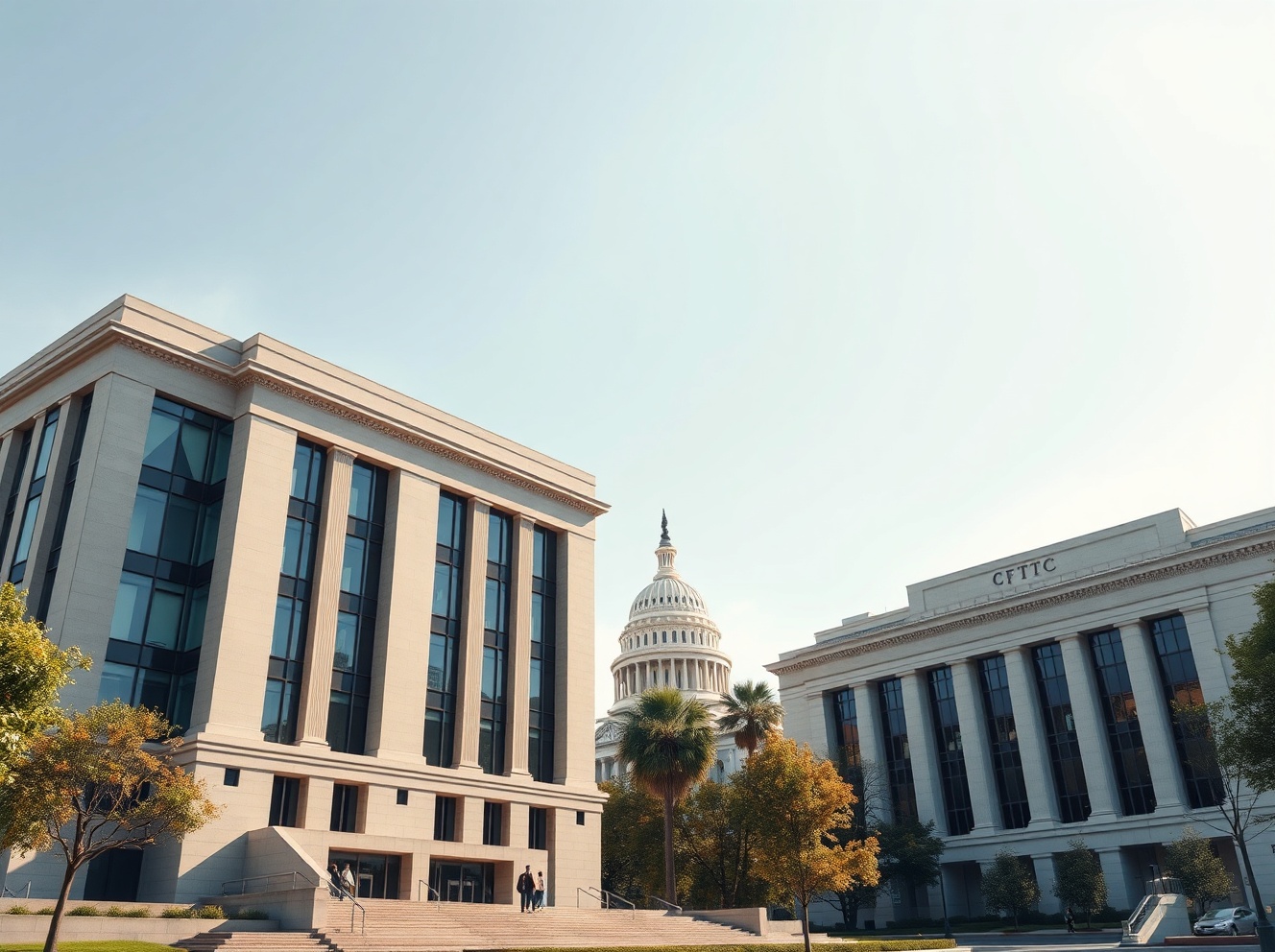
SEC and CFTC Building Move: Strategic Collaboration Signals Major Regulatory Shift for Crypto Markets
WASHINGTON, D.C. – March 2025 – The U.S. Securities and Exchange Commission (SEC) and Commodity Futures Trading Commission (CFTC) are reportedly discussing a significant operational shift that could reshape financial regulation. According to Bloomberg senior ETF analyst Eric Balchunas, the two powerful agencies are negotiating to occupy the same building in Washington D.C. This potential SEC and CFTC building move represents a notable development in regulatory coordination, particularly for cryptocurrency markets where jurisdictional boundaries have created persistent challenges.
SEC and CFTC Building Move Details and Context
Bloomberg’s Eric Balchunas first reported the discussions on social media platform X. He clarified that the agencies are not pursuing a full merger. However, he characterized the potential co-location as “good news” for market participants. The SEC and CFTC currently maintain separate headquarters in Washington D.C.’s financial district. Consequently, this proposed physical consolidation would mark their closest operational relationship in decades.
Historically, the SEC oversees securities markets and public companies. Meanwhile, the CFTC regulates derivatives, including futures, options, and swaps. Their jurisdictions sometimes overlap, especially with innovative financial products. Cryptocurrency assets frequently fall into regulatory gray areas between these agencies. Therefore, improved communication through shared facilities could streamline oversight.
Regulatory Implications for Cryptocurrency Markets
The potential SEC and CFTC collaboration arrives during a critical period for digital asset regulation. Both agencies have actively pursued enforcement actions against cryptocurrency firms. However, their approaches sometimes diverge, creating compliance uncertainty. A shared physical workspace could facilitate more consistent regulatory frameworks.
Several key areas might benefit from enhanced coordination:
- Token Classification: Clearer guidelines on whether specific cryptocurrencies constitute securities or commodities
- Exchange Oversight: More unified standards for trading platforms offering both spot and derivatives products
- Stablecoin Regulation: Coordinated approaches to dollar-pegged digital assets that function across multiple markets
- Enforcement Priorities: Better alignment on investigation targets and settlement standards
Expert Perspectives on Regulatory Evolution
Financial regulation experts note that physical proximity often improves interagency cooperation. “When regulators share buildings, informal conversations replace formal memos,” explains Georgetown University regulatory studies professor Dr. Amanda Chen. “This proximity typically accelerates decision-making and reduces bureaucratic friction.”
The cryptocurrency industry has long advocated for clearer regulatory boundaries. Many executives welcome potential SEC and CFTC collaboration. “Physical co-location could help resolve the jurisdictional ambiguity that plagues our industry,” states Maya Rodriguez, CEO of Digital Asset Advisors. “When regulators communicate better, compliance becomes more predictable.”
Historical Context of Financial Regulatory Structure
The current separation between the SEC and CFTC dates to their founding eras. Congress established the SEC in 1934 following the stock market crash. Subsequently, lawmakers created the CFTC in 1974 to oversee growing derivatives markets. This structural division reflected different regulatory philosophies for distinct market segments.
However, financial innovation has increasingly blurred traditional boundaries. The 2008 financial crisis prompted calls for regulatory consolidation. The Dodd-Frank Act of 2010 enhanced coordination requirements. Nevertheless, the agencies maintained separate physical operations. The current discussions represent the most tangible step toward operational integration since those reforms.
Potential Impacts on Enforcement and Compliance
Shared facilities could transform enforcement dynamics. Currently, companies sometimes face simultaneous investigations from both agencies. Improved coordination might reduce duplicate efforts. Additionally, compliance standards could become more consistent across regulatory domains.
A comparative analysis reveals potential benefits:
| Aspect | Current Separate Operations | Potential Co-Location Benefits |
|---|---|---|
| Communication | Formal channels, scheduled meetings | Informal discussions, spontaneous collaboration |
| Response Time | Weeks for interagency coordination | Potentially days or hours for urgent matters |
| Policy Development | Separate rulemaking processes | More integrated approach to emerging issues |
| Enforcement | Parallel investigations possible | Better coordinated case selection and resolution |
Broader Financial Market Implications
Beyond cryptocurrency, the SEC and CFTC building move could affect traditional markets. Derivatives and securities markets increasingly interconnect. Therefore, regulatory silos sometimes hinder comprehensive oversight. Physical proximity might help regulators address systemic risks more effectively.
Market participants across asset classes monitor these developments closely. “Any move toward regulatory harmony benefits market efficiency,” notes veteran Wall Street analyst Robert Takahashi. “Reduced jurisdictional confusion typically lowers compliance costs and improves capital allocation.”
Conclusion
The reported discussions about an SEC and CFTC building move represent more than logistical planning. This potential co-location signals evolving regulatory approaches to complex financial markets. While not a formal merger, physical proximity could enhance coordination, particularly for cryptocurrency regulation. Market participants should monitor these developments closely as they could significantly impact compliance requirements and enforcement priorities across financial sectors.
FAQs
Q1: Are the SEC and CFTC merging into a single agency?
No, according to reports, the agencies are discussing sharing a building but maintaining separate organizational structures, leadership, and statutory authorities.
Q2: How would this move affect cryptocurrency regulation?
Improved physical proximity could enhance communication between regulators, potentially leading to more consistent approaches to token classification, exchange oversight, and enforcement actions.
Q3: When might this building move occur?
No timeline has been officially announced. Such interagency moves typically require extensive planning, budgeting, and potentially congressional notification.
Q4: Have regulators shared facilities before?
While the SEC and CFTC have collaborated on joint task forces and working groups, they have maintained separate headquarters throughout their histories.
Q5: What challenges might this co-location face?
Potential challenges include logistical coordination, budget allocation, maintaining distinct agency cultures, and ensuring appropriate information barriers where necessary.
This post SEC and CFTC Building Move: Strategic Collaboration Signals Major Regulatory Shift for Crypto Markets first appeared on BitcoinWorld.


You May Also Like

Ethereum Review: Can ETH Hold $2,100 as Mutuum Finance (MUTM) Raises $21M?

IronWallet vs Coinbase Wallet: Two Approaches to Multi-Chain Self-Custody




