Michael B. Jordan Tops Polymarket for Oscars Best Actor
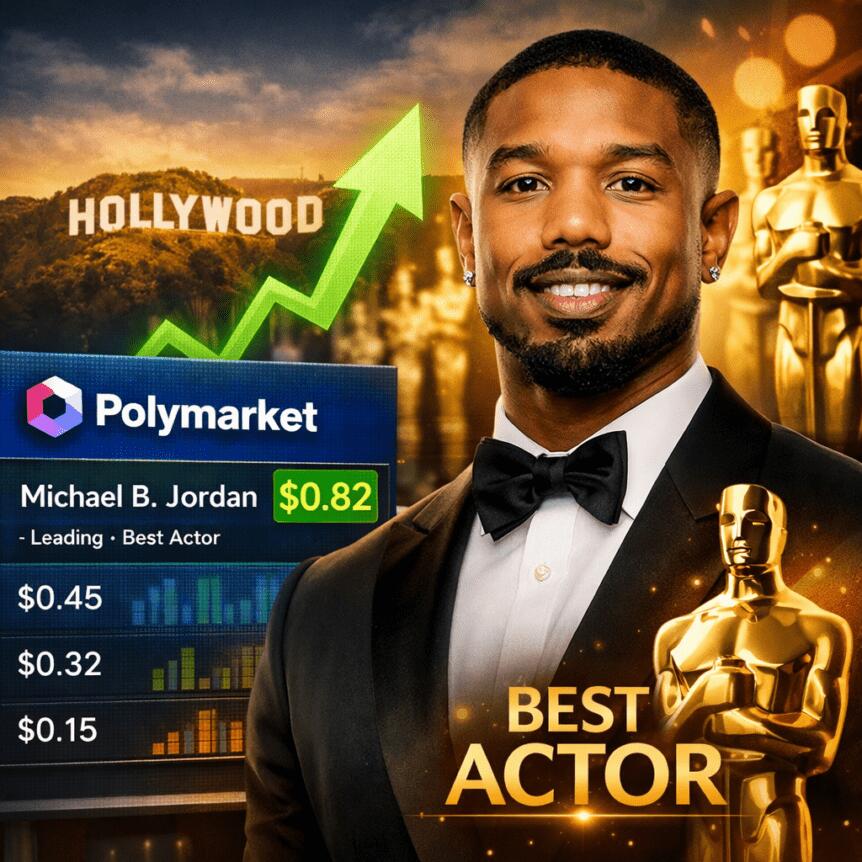
Polymarket’s Oscar markets are drawing attention again as Michael B. Jordan climbs to the forefront of the Best Actor bets just ahead of the 2026 Academy Awards. After a SAG victory last week, the actor’s odds on the prediction market have surged more than fourfold since March 1, signaling how real-time sentiment on high-stakes entertainment awards can move on crypto-linked platforms. With the Oscars set for March 15, traders are parsing every nomination and performance cue, turning a traditional awards night into a live, data-driven betting event that blends film discourse with decentralized markets.
Jordan’s win at the Actor Awards — the ceremony formerly known as the SAG Awards — helped buoy his odds on Polymarket to roughly 47% as of the latest trading window. Timothée Chalamet sits a close second at about 45%, with Leonardo DiCaprio, Wagner Moura, and Ethan Hawke trailing in the single-digit range. The shift comes even as both actors earned nominations for distinct roles in 2025 releases: Jordan for Sinners, a vampire horror that cast him in a dual-lead role as Smoke and Stack Moore, and Chalamet for Marty Supreme, a fictional drama centered on a table tennis prodigy. The dynamic shows how prediction markets are increasingly reflecting campaigning momentum, industry chatter, and award-season surprise developments in near real-time.
The volume picture reinforces the market’s scale. Polymarket reported more than $5.6 million in trading volume surrounding the Oscars Best Actor market at the time of publication, underscoring the sustained interest in event-contract markets that blend entertainment narratives with crypto-native liquidity. The platform’s oscillating odds and the sheer level of activity illustrate why prediction markets have evolved from niche experiments to a mainstream curiosity among crypto enthusiasts and traditional traders alike. A decade after their rise during the 2024 U.S. elections, these markets are advancing into more culturally charged events, while drawing scrutiny from regulators who question event-contract oversight and licensing frameworks.
As the electoral-turned-entertainment trend unfolds, Polymarket’s position in the broader market context remains notable. The platform has pursued regulatory clarity amid a shifting legal landscape in the United States, where state regulators claim jurisdiction over event contracts, even as some federal questions linger about who should oversee prediction markets. The ongoing regulatory conversations intersect with a separate, high-stakes dispute in Massachusetts, where Polymarket filed suit challenging the state’s gambling regulator’s reach and arguing that federal authorities — namely the CFTC — should bear the primary responsibility for prediction-market oversight. The outcome of that suit could influence where these platforms can operate and how they structure products in the U.S. market.
Beyond the U.S., the regulatory environment remains unsettled in other jurisdictions as well. In Nevada, a federal court ruling this year has spotlighted the tension between state regulators’ appetite to police prediction markets and the federal framework that many platforms say should govern them. While that ruling has not settled every question, it signals heightened regulatory attention to how event contracts are offered across state lines and what protections traders should expect. In parallel, Wall Street circles have reported that Kalshi and Polymarket are pursuing new fundraising talks aimed at around $20 billion valuations for each firm — a level that underscores the capital markets’ appetite for platform-scale prediction networks even as deal momentum remains in early stages.
For now, the Oscars market remains a vivid case study in how prediction platforms translate narrative momentum into odds and liquidity. The reaction on Polymarket captures a broader tension between entertainment industry dynamics, regulatory developments, and the evolving appetite among crypto-native platforms to offer real-money, event-based contracts that hinge on real-world outcomes. The platform’s public-facing data, coupled with news about the Academy Awards show and related regulatory actions, helps illustrate why these markets have become a persistent feature of the crypto- and risk-aware investor ecosystems.
As the industry watches the run-up to the March 15 ceremony, Polymarket’s ongoing rollout phases in the United States and its legal tussles with state authorities will help determine how widely such markets can operate domestically. The company opened up its application to select, waitlisted U.S. users in December 2025, with a broader, regulated rollout anticipated later in 2026. Yet that timetable remains subject to regulatory approval and potential courtroom outcomes that could reshape the product roadmap for prediction-market platforms in the near term. Meanwhile, the broader market narrative for prediction markets continues to attract both crypto enthusiasts seeking new liquidity venues and institutional participants curious about how event-driven contracts might diversify risk and add new data streams to market research and sentiment analytics. The convergence of entertainment, law, and live markets remains a defining trend for a space that blends technology with real-world outcomes in an increasingly regulated environment.
Why it matters
For investors and builders in the crypto space, the Oscars betting market demonstrates how real-world events can drive liquidity and user engagement on prediction platforms. The near-term odds movement around Michael B. Jordan and Timothée Chalamet illustrates how sentiment shifts around award-season momentum can be instantly monetized, creating a live feedback loop between media coverage, fan discourse, and financial instruments native to the crypto ecosystem. The sustained trading volume underscores the growing willingness of market participants to deploy capital into event-based contracts, even as the regulatory baseline remains unsettled in several jurisdictions.
From a regulatory perspective, the Massachusetts suit and the Nevada court development highlight a critical inflection point for prediction markets. The central question — whether state or federal authorities should regulate event contracts — has significant implications for platform strategies, licensing requirements, and product design. A broader settlement or clarification could unlock more streamlined access for users and developers while preserving consumer protections. The industry’s push for clearer rules also intersects with traditional financial players’ interest in producing or partnering on prediction-market-style products, suggesting a potential pathway for more robust, regulated ecosystems that still retain the core UX and liquidity advantages that drew participants to these platforms in the first place.
Finally, the valuations discussed by mainstream outlets suggest a broader market appetite for platform-level prediction networks. If Polymarket and Kalshi can secure funding at elevated valuations, it could catalyze a wave of similar ventures seeking to combine blockchain-enabled market mechanics with real-world information streams. That potential gain comes with commensurate risk, as regulatory outcomes and user adoption will ultimately determine whether these markets scale sustainably or remain episodic curiosities tied to particular events. As the Oscars approach and legal questions continue to unfold, the long-term trajectory of prediction markets will hinge on how well they navigate governance, compliance, and the practical realities of risk-taking in a rapidly evolving regulatory and technological landscape.
What to watch next
- The U.S. rollout of Polymarket’s platform in 2026 — timeline refinements and regulatory approvals could shape user access and product features.
- Regulatory outcomes in the Massachusetts lawsuit and related state-level actions that could influence whether prediction markets remain federally focused or gain broader state oversight.
- Nevada’s regulatory stance and any subsequent court decisions that might affect both Polymarket and Kalshi’s operations in other states.
- Funding discussions around a potential $20 billion valuation for Polymarket and Kalshi, as reported by major outlets, and whether those negotiations lead to new rounds of capital.
Sources & verification
- Polymarket’s event page for the Oscars 2026 Best Actor market, detailing odds and trading volume.
- Variety coverage of Michael B. Jordan’s SAG Award win and its implications for Oscar odds on Polymarket.
- Award-season timeline confirming the March 15 Oscars ceremony date.
- Polymarket’s lawsuit against the Commonwealth of Massachusetts regarding regulatory authority over prediction markets.
- Nevada court developments related to state oversight of prediction markets and CFTC authority.
- Wall Street Journal reporting on potential fundraising and valuations for Polymarket and Kalshi.
This article was originally published as Michael B. Jordan Tops Polymarket for Oscars Best Actor on Crypto Breaking News – your trusted source for crypto news, Bitcoin news, and blockchain updates.


You May Also Like

B2i Digital Named Official Marketing Partner for Centurion One Capital’s Miami Summit

Talaria Triple X: What Makes It Unique?