Strait of Hormuz Crisis: US Defense Secretary Issues Dire Warning to Iran Over Oil Blockade
BitcoinWorld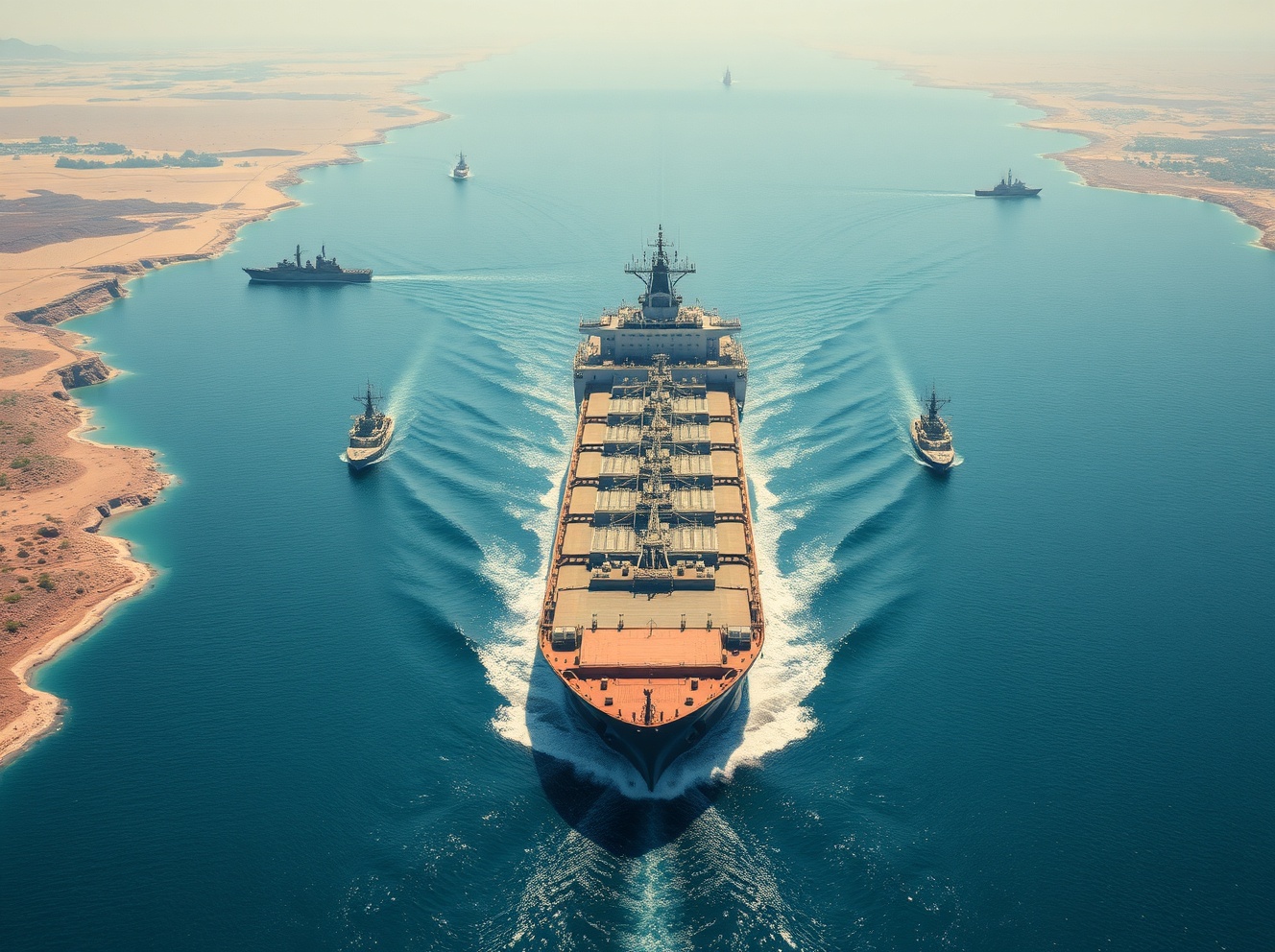
Strait of Hormuz Crisis: US Defense Secretary Issues Dire Warning to Iran Over Oil Blockade
WASHINGTON, D.C., March 11, 2025 – U.S. Secretary of Defense Pete Hegseth delivered a stark warning to Iran during a Pentagon press conference on Tuesday, stating that any Iranian action to block the Strait of Hormuz would trigger a response “much more severe” than any previous confrontation. This statement immediately escalated concerns over the security of the world’s most critical oil transit chokepoint, through which roughly 21 million barrels of oil flow daily.
Strait of Hormuz Standoff Escalates
Secretary Hegseth’s remarks represent a significant hardening of the U.S. diplomatic and military posture. Consequently, analysts are scrutinizing the potential for miscalculation in the region. The Strait of Hormuz serves as the sole maritime passage from the Persian Gulf to the open ocean. Furthermore, it facilitates nearly a third of the world’s seaborne traded oil. Therefore, any disruption would have immediate and catastrophic effects on global energy markets. The U.S. Fifth Fleet, based in Bahrain, maintains a constant presence in the area to ensure freedom of navigation. However, Iranian forces have repeatedly conducted provocative exercises and harassed commercial shipping in these waters.
Historical context is crucial for understanding the current tension. Iran has threatened to close the strait multiple times during periods of heightened sanctions. For instance, in 2019, Tehran was implicated in attacks on tankers near the Fujairah port. Additionally, it seized a British-flagged tanker. The U.S. military has previously deployed additional assets, including aircraft carriers and B-52 bombers, to deter aggression. Secretary Hegseth’s warning suggests the Biden administration’s threshold for response is now lower, and the planned retaliation would be more comprehensive.
Analyzing the US Military Posture
The Pentagon’s statement was deliberate and public. Military experts note that public warnings of this nature often precede visible force deployments. Currently, the U.S. naval presence in the Persian Gulf includes guided-missile destroyers and coastal patrol ships. The U.S. Air Force also maintains fighter squadrons at bases in Qatar and the UAE. A “severe blow,” as described by Hegseth, could encompass a range of actions. These actions might include:
- Precision strikes on Iranian naval bases and missile sites along the coast.
- Enhanced naval blockades to intercept weapons shipments.
- Cyber operations targeting Iran’s command and control infrastructure.
- Significant reinforcement of regional air and missile defense systems.
This table outlines recent major U.S. force deployments to the Persian Gulf region following Iranian threats:
| Year | Trigger Event | U.S. Military Response |
|---|---|---|
| 2019 | Tanker attacks & drone shootdown | Deployment of USS Abraham Lincoln carrier group; B-52 bombers |
| 2020 | Heightened tensions after Soleimani strike | Dispatch of USS Nimitz carrier; additional Patriot batteries |
| 2023 | Iranian seizures of commercial vessels | Increased patrols by guided-missile destroyers and maritime patrol aircraft |
Expert Perspectives on Regional Stability
Dr. Anya Roberts, a senior fellow at the Center for Strategic and International Studies, provided analysis. “The Secretary’s language is unambiguous,” Roberts stated. “It moves beyond deterrence through presence to explicit pre-warning. The goal is to remove any ambiguity in Tehran about the cost of closure. However, it also raises the stakes diplomatically, potentially limiting off-ramps for de-escalation.” Meanwhile, global oil prices reacted with volatility. Brent crude futures jumped over 3% following the announcement. Energy market analysts immediately began modeling scenarios for supply disruption. The International Energy Agency (IEA) holds strategic petroleum reserves. These reserves could temporarily offset a short-term disruption. Nevertheless, a prolonged closure would overwhelm global storage and shipping logistics.
Global Economic and Energy Security Impacts
The potential consequences extend far beyond military engagement. A closure of the Strait of Hormuz would instantly sever the supply lines for major economies. Japan, South Korea, India, and China are particularly reliant on Gulf oil. Consequently, shipping insurance premiums would skyrocket. Alternate routes are severely limited. For example, the Saudi-led East-West Petroline pipeline can redirect only a fraction of the volume. The UAE’s Habshan-Fujairah pipeline also offers limited bypass capacity. Therefore, global spare oil production capacity, primarily held by Saudi Arabia, would be tested immediately. Financial markets would likely see a flight to safety, impacting currencies and bonds.
European nations, already navigating an energy landscape reshaped by recent conflicts, would face renewed pressure. Diplomatically, Hegseth’s warning aligns with ongoing efforts to strengthen the International Maritime Security Construct (IMSC). This U.S.-led coalition patrols the region. However, it also places partner nations in the Gulf in a difficult position. They must balance their security ties to Washington with their geographic and economic realities vis-à-vis Iran. Regional leaders have long advocated for direct dialogue between the U.S. and Iran to reduce the risk of accidental conflict. This latest warning may complicate those efforts.
Conclusion
Defense Secretary Pete Hegseth’s public warning marks a pivotal moment in the long-standing tension over the Strait of Hormuz. The statement clearly outlines an elevated risk of military conflict should Iran attempt to execute its long-threatened blockade. The immediate effects are visible in nervous energy markets and recalculated geopolitical risk assessments. Ultimately, the security of this narrow waterway remains a linchpin of global economic stability. The international community will now watch closely for any movement of U.S. or Iranian forces. The coming weeks will be critical in determining whether this rhetoric leads to de-escalation or becomes a prelude to a more severe confrontation in the world’s most important oil chokepoint.
FAQs
Q1: Why is the Strait of Hormuz so important?
The Strait of Hormuz is a narrow chokepoint between the Persian Gulf and the Gulf of Oman. It is the world’s most important oil transit route, with about 21 million barrels per day—or one-fifth of global oil consumption—passing through it. Major producers like Saudi Arabia, Iraq, the UAE, and Kuwait rely on it for exports.
Q2: What did US Defense Secretary Pete Hegseth actually say?
At a Pentagon press conference on March 11, 2025, Hegseth stated that Iran would face a “much more severe blow than in the past” if it took any action to block the flow of oil through the Strait of Hormuz. This was a direct and public warning aimed at deterring Iranian aggression.
Q3: Has Iran blocked the strait before?
Iran has never successfully implemented a full, prolonged closure of the strait. However, it has repeatedly threatened to do so and has engaged in hostile acts within the waterway, including mining, attacking tankers, and seizing vessels. These actions have caused temporary disruptions and heightened insurance costs.
Q4: What would a “severe blow” from the US likely involve?
While not specified, military analysts suggest options could range from targeted strikes on Iranian naval assets and coastal defense systems to a comprehensive naval and air campaign designed to degrade Iran’s ability to project power into the strait. It would almost certainly be a multi-domain response involving cyber and electronic warfare.
Q5: How would a closure affect global oil prices?
The impact would be immediate and severe. Analysts estimate prices could spike by 50% or more within days, potentially exceeding historic highs. This would trigger global inflation, slow economic growth, and cause significant market volatility, even if strategic reserves were released.
Q6: What is the US military’s current presence in the region?
The U.S. Navy’s Fifth Fleet, headquartered in Bahrain, maintains a continuous presence. This typically includes several guided-missile destroyers, coastal patrol ships, and support vessels. The U.S. also has significant air force assets at bases in Qatar, the UAE, and other Gulf Cooperation Council countries.
This post Strait of Hormuz Crisis: US Defense Secretary Issues Dire Warning to Iran Over Oil Blockade first appeared on BitcoinWorld.


You May Also Like

How To Time The Dogecoin Bottom And When The Price Will Reach $2

South Korean Banking Giant Enters Stablecoin Race with Kaia Pilot