

Aave Unveils Aave Shield After $50M Token Swap Mishap
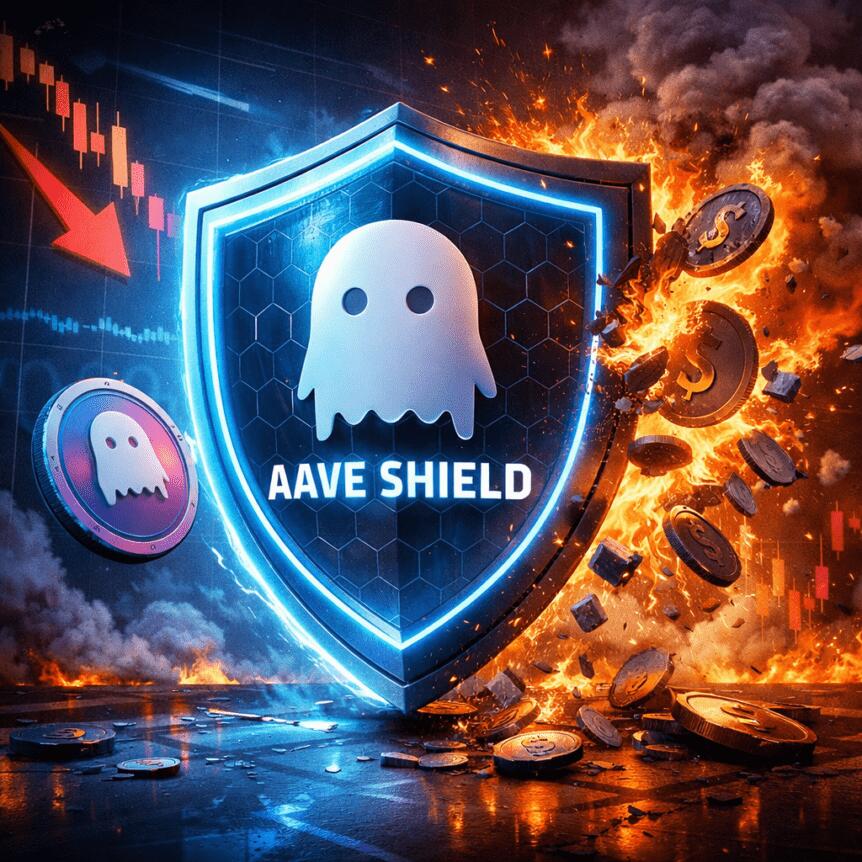
Decentralized finance protocol Aave is moving to tighten protections after a dramatic interaction on the CoW Swap interface led to a roughly $50 million loss in a single trade. The proposed safeguard, still described as a forthcoming feature, aims to cap price impact on swaps executed through Aave’s own interface, reflecting ongoing concerns about liquidity fragmentation and the risks that automated market-making can pose in stressed markets. The incident centered on a trader who attempted to swap about $50.4 million worth of USDt for Aave’s native token through CoW Swap but received only around $36,500 of the token, underscoring the fragility of routing in an illiquid environment. A substantial portion of the loss was magnified by a Maximal Extractable Value bot that executed a sandwich sequence, capturing nearly $10 million in the process.
Key takeaways
- Aave plans to deploy a feature called Aave Shield that blocks swaps with a price impact above 25% when using the Aave interface, addressing a recent large-value trade failure.
- The high-stakes trade involved converting USDt for AAVE via CoW Swap, where liquidity gaps produced a final payout of only a fraction of the intended amount, illustrating liquidity fragmentation concerns.
- A MEV bot executed a sandwich attack in the same event, contributing roughly $10 million to the total loss and highlighting incentive structures that attackers leverage in DeFi trades.
- A user reportedly saw multiple warnings on the platform, including notes that a route might return less due to low liquidity or small order size, and explicitly confirmed a potential 100% value loss before finalizing the swap.
- CoW DAO attributed the extreme price impact to liquidity deficiencies and several infrastructure failures, including an outdated gas limit that hindered better-priced quotes.
Tickers mentioned: $AAVE, $USDT
Price impact: Negative — the trade exceeded a 25% price-improvement threshold, contributing to a loss of about $50 million and underscoring liquidity-driven risk in cross-exchange routing.
Market context: The episode underscores ongoing fragility in DeFi trading infrastructure amid liquidity fragmentation, MEV-driven risks, and the need for clearer risk disclosures and guardrails as users navigate multiple on-chain venues.
Why it matters
In decentralized finance, liquidity is the lifeblood that enables large swaps to execute without slippage. When liquidity pockets are thin or misaligned, even sophisticated routing engines can deliver outcomes far from the expected fair value, especially on trades of tens of millions of dollars. The Aave Shield proposal signals a shift toward user protections that don’t necessarily rely on post-trade refunds or off-chain interventions. By setting a 25% price-impact guardrail, the protocol aims to prevent users from unintentionally triggering extreme slippage, a feature that could reduce the likelihood of catastrophic outcomes in high-volume trades conducted on Aave’s interface.
The incident also spotlights the persistent incentives for attackers within DeFi ecosystems. A MEV bot earned an estimated $10 million through a sandwich attack tied to the same trade, illustrating how opportunistic front-running and optimization strategies can exploit routing inefficiencies. This reality reinforces the argument that security and risk controls in DeFi must address both the mechanics of on-chain order execution and the broader economic incentives that shape mempool activity and liquidity provisioning. For builders and investors, the event emphasizes the value of robust monitoring, greater transparency around routing logic, and the potential benefits of standardized safeguards that reduce the chance of outsized losses in complex transactions.
CoW DAO’s assessment adds nuance to the discussion by pointing to infrastructure gaps, not just liquidity depth. It noted that an outdated gas limit in a solver used by CoW Swap hindered better-priced quotes from being submitted, leaving users with inferior options. A possible mempool leak was also discussed as a contributing factor to the outsized quote that informed the loss. The joint acknowledgment from Aave and CoW DAO that “not all issues are fully resolved” underscores the collaborative path ahead—fixes, audits, and perhaps new safeguards—needed to improve resilience in cross-ecosystem swaps that lean on multiple on-chain participants.
As the ecosystem matures, projects that overlap between lending protocols and decentralized exchanges increasingly rely on layered protections. Aave Shield, if implemented as described, would add a proactive defense rather than a reactive one, potentially reducing users’ exposure to price impact during volatile periods. The broader takeaway is that users must remain vigilant about routing expectations, price impact disclosures, and the liquidity conditions of the venues they choose for substantial trades. The episode serves as a litmus test for how DeFi platforms balance safety features with user autonomy, especially when dealing with high-value, cross-chain liquidity movements.
What to watch next
- Deployment timeline for Aave Shield and its configurable toggle, with a focus on whether it will be opt-in by default and how users can adjust risk settings.
- Formal updates from Aave and CoW DAO detailing findings from the incident and any roadmap shifts for liquidity provisioning, solver updates, or mempool protections.
- Any governance actions or community discussions about routing heuristics, price impact thresholds, and UX warnings on swap interfaces.
- Further investigations into MEV defense mechanisms and whether new protections integrate with CoW Swap’s routing logic or other DEX aggregators.
- Monitoring of liquidity depth changes across major stablecoins and DeFi venues during periods of market stress to gauge resilience improvements.
Sources & verification
- Aave post-mortem statement on X
- MEV bot article: sandwich attack profits
- CoW DAO notes on liquidity and infrastructure factors
- Solving ETH MEV proposals (context)
Aave Shield aims to curb high-impact swaps after a $50 million loss
Aave Shield is designed to block swaps with a price impact above a defined threshold for trades conducted via the Aave interface. The feature, described in a post-mortem by the team, represents an attempt to introduce a guardrail before trades are signed, reducing the likelihood that users are exposed to extreme slippage in low-liquidity scenarios. The proposed guardrail is anchored to a 25% price impact limit and would be activated automatically for standard route options, with the option for users to disable Shield if they accept higher risk channels. The incident that prompted the plan involved a trader who moved USDt to AAVE on CoW Swap and encountered a dramatic discrepancy between expected and actual takedown values, highlighting how quickly liquidity conditions can shift in high-value trades.
The interaction underscores a broader challenge for DeFi—balancing user freedom with protective barriers that do not stifle legitimate, sophisticated trading strategies. While shield features cannot eliminate all forms of risk, they can help prevent traders from signing away too much value in a moment of liquidity stress, potentially safeguarding both retail and institutional participants. The ongoing collaboration between Aave and CoW DAO signals an intent to address root causes—ranging from liquidity provisioning to on-chain quote accuracy and gas-limit governance—that contribute to extreme price disclosures in real-world trades.
As the ecosystem continues to adapt, the industry will watch closely how these protections perform in live markets, especially during periods of volatility. If Aave Shield proves effective, it could set a precedent for more proactive risk controls across DeFi interfaces, encouraging exchanges and aggregators to refine their pricing models and warning systems. For users, the episode reinforces the importance of reading on-screen risk disclosures, understanding the consequences of high-impact routes, and considering the broader liquidity landscape when executing multi-million-dollar swaps.
This article was originally published as Aave Unveils Aave Shield After $50M Token Swap Mishap on Crypto Breaking News – your trusted source for crypto news, Bitcoin news, and blockchain updates.


You May Also Like
Wedbush Just Raised Oracle (ORCL) Stock’s Target Twice in Three Weeks. Here’s Why

E-Estate Announces 1 Year Live: Washington DC Summit as Real Estate Tokenization Enters Its Next Phase




