Beyond The Badge: Why Experience Will Define Automotive Loyalty In South Africa
The rise of Chinese and Indian automotive brands in South Africa is no longer incremental. It is visible, measurable, and accelerating. BYD, Chery, Jetour and Mahindra are expanding dealership networks at speed and putting feature-rich SUVs into the market at highly competitive price points. Hybrid and EV models are becoming more accessible, often positioned below what buyers have historically accepted as “premium” territory.
At the same time, established luxury marques such as Volvo Cars and Jaguar are consolidating and refining their portfolios, leaning into tighter ranges, clearer positioning and, in many cases, electrification strategies.
The contrast is striking. But the real story is not simply about products entering at a lower price. It’s about what “value” now means to the South African buyer, and what loyalty will cost dealerships going forward.
Price matters. Value matters more.
In a strained economic environment, it is tempting to conclude that customers will simply buy with their wallets. That is the obvious narrative: a price war is unfolding, and the lowest price wins. But consumer behaviour – particularly in the luxury segment – rarely follows purely rational scripts.
The new entrants understand perceived value extremely well. High specification as standard. Contemporary SUV design. Generous warranties. Increasing electrification options. When functionality appears comparable and design feels current, the rational case becomes compelling. The buyer’s internal calculator starts asking: “What exactly am I paying extra for?”
That question lands differently today because specification inflation has changed the reference point. Once customers experience a high spec cabin, strong infotainment, driver-assist features and modern styling at a lower price, the “baseline expectation” shifts upward. This doesn’t only affect the volume segment. It raises expectations everywhere.
 Liezel Jonkheid – Consumer Psychology Lab
Luxury was never purely rational
Luxury purchasing has never been about mobility alone. It is about identity, reassurance, emotional reward, scarcity, engineering confidence, and the quality of the driving experience itself. In luxury, the brand promise is not “more features”. It is “a better life experience around the product”, from the way it feels on the road to the way you feel owning it.
A recent conversation sharpened this point. A friend replaced his luxury SUV with a high-specification, volume-based SUV. On paper, the decision made perfect sense. The technology was all there. The screens. The driver-assist systems. The perceived value looked undeniable. The price difference was significant.
But it wasn’t a feature gap that surfaced. It was a driving experience gap. The refinement, the handling, the overall feel did not compare. He moved back into the luxury segment.
And then came the real signal: he did not return to the original brand.
That is the competitive threat most dealerships underestimate. The risk is not merely that customers leave for price. It is that when they return for experience, they may not return to you. That means the battleground is no longer only product specification. It is the total ownership value proposition – and the dealership experience is central to that.
Convergence changes the rules of differentiation
Entry-level and mid-market segments will feel the impact of price substitution most directly. In luxury, the pressure is different. Cross-shopping will increase. Customers will scrutinise not only the vehicle but the justification for the premium. When functionality converges and design standards improve across the board, differentiation must shift elsewhere.
That “elsewhere” is experience: the end-to-end journey from digital engagement to showroom, from purchase to servicing, from problem resolution to the small moments that either build trust or quietly erode it.
And this is where complacency becomes dangerous. In a market where many dealerships still operate with similar showroom rituals, bells-and-whistles handovers, near-identical finance scripts, and service processes that feel inherited rather than designed, the customer’s experience becomes interchangeable. When everything feels the same, switching becomes easier.
South African loyalty is strong – but not unconditional
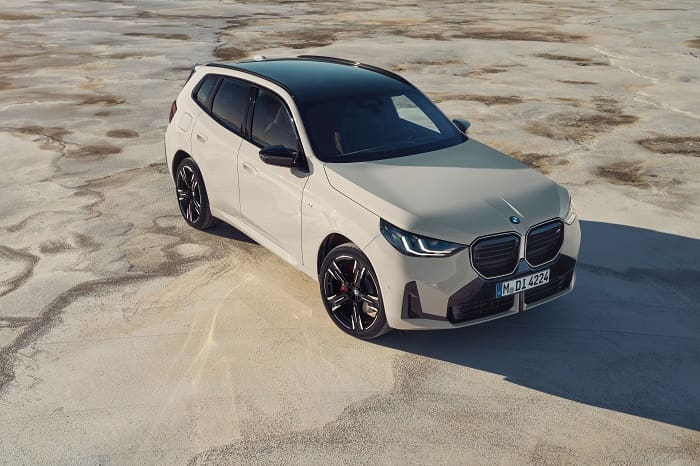 The new BMW X3
Brand loyalty in South Africa remains real. But loyalty only survives when it is continually reinforced.
Customers stay loyal when they feel recognised, when issues are resolved decisively, when their needs are anticipated, when customer effort is removed, when service experiences are predictable, and when communication is proactive and honest. Loyalty erodes when friction accumulates – unreturned calls, vague timelines, inconsistent service quality, reactive communication, and a sense that the relationship only matters at point of sale.
The influx of affordable, feature-rich vehicles does not necessarily signal the erosion of the luxury segment. It signals a recalibration of expectations. Exposure to high specification at lower price points will raise standards for transparency, responsiveness, convenience, certainty and after-sales confidence, across every brand.
In this environment, luxury dealerships must ask harder questions than “Are we competitive on offer?” The real questions are operational and behavioural:
- Is the digital-to-showroom transition seamless, or does it break trust before a customer even arrives?
- Is service turnaround time measured and actively managed, or left to chance and capacity constraints?
- How well are customers supported to make the journey effortless – booking, updates, approvals, collections, replacements?
Is the ownership journey deliberately designed, or simply inherited from tradition?
This is not cosmetic work. This is commercial work. Because the next era of competition is not about who has the newest model on the floor. It is about who removes the most friction across the lifecycle of ownership.
What will keep customers when the badge is no longer enough?
When confronted with similar functionality and acceptable design, why would a customer stay loyal?
They will stay when the experience consistently reinforces the decision to pay more. They will stay when effortlessness becomes tangible. They will stay when the dealership relationship feels personal, reliable, and emotionally intelligent.
Price may attract attention. Driving experience may pull them back. Ownership value is what ultimately keeps them.
The question for South African motor dealerships, particularly in the luxury segment, is simple: are you ready for a playing field where the badge is no longer enough?
Because the brands entering now are not only competing on price. They’re competing on what customers think is “enough” – and they are steadily raising that bar.
If luxury dealerships want to keep loyalty in an era of convergence, they will need to earn it with every interaction, not assume it with every badge.
- Liezel Jonkheid, Founder and Director of the Consumer Psychology Lab


You May Also Like
Republicans deploy ground troops in the states to execute 'the plan'
GOP Senate hopeful under fire over ties to church rocked by child sex abuse scandal