FOMC Maintains Flexible Stance Amid Escalating Conflict Risks – MUFG Analysis
BitcoinWorld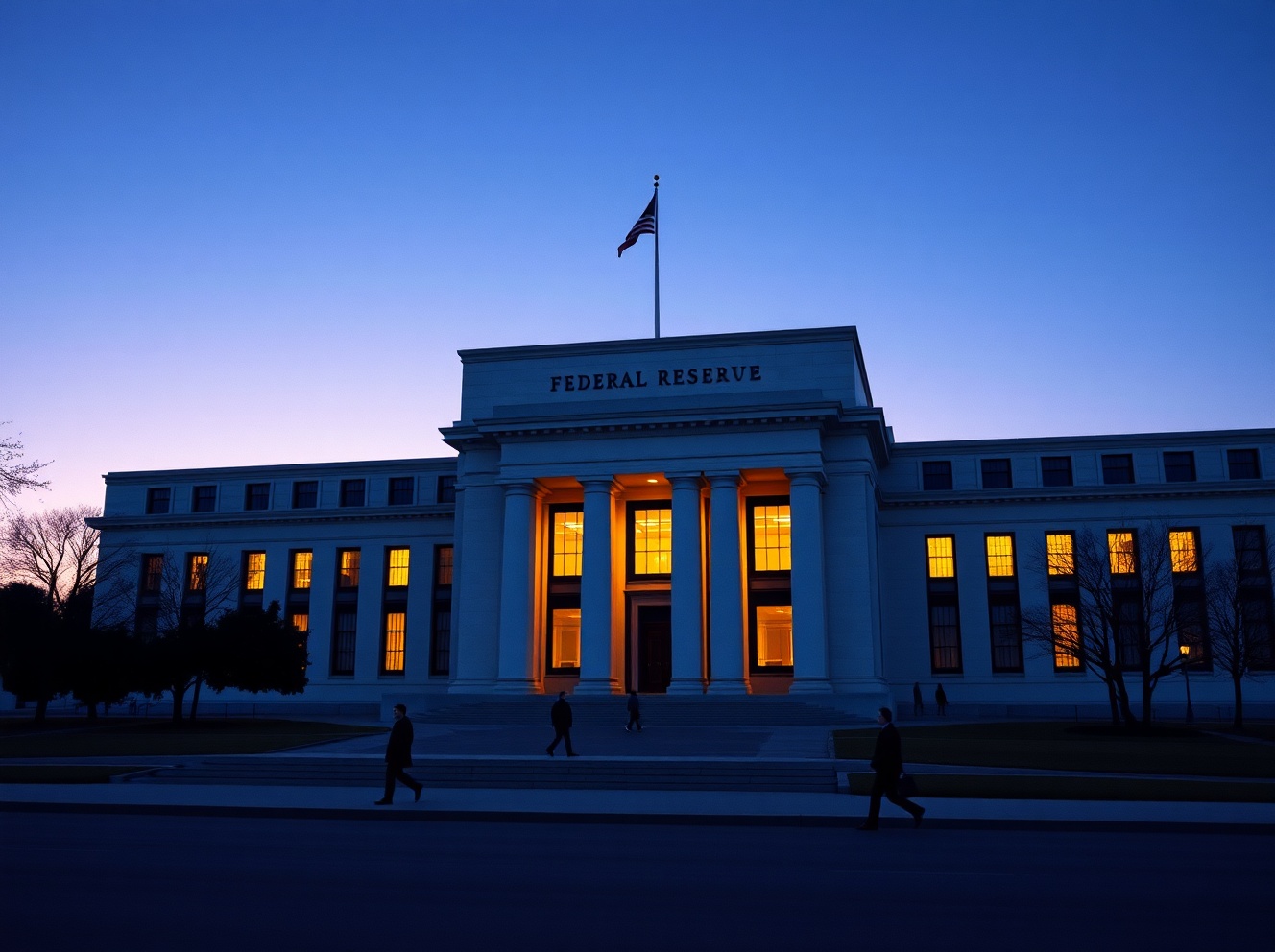
FOMC Maintains Flexible Stance Amid Escalating Conflict Risks – MUFG Analysis
The Federal Open Market Committee continues to maintain maximum policy flexibility as geopolitical tensions create unprecedented uncertainty for the global economic outlook in 2025, according to recent analysis from Mitsubishi UFJ Financial Group. This strategic approach allows the central bank to respond dynamically to evolving conflict risks that could significantly impact inflation trajectories and growth projections.
FOMC Policy Framework in a Volatile Geopolitical Landscape
Federal Reserve officials consistently emphasize their data-dependent approach to monetary policy decisions. However, recent statements reveal increased attention to geopolitical developments that could disrupt global supply chains and commodity markets. The FOMC’s current framework balances traditional economic indicators with emerging risk assessments from conflict zones worldwide.
MUFG analysts highlight several key considerations shaping the Fed’s cautious stance. First, energy price volatility remains a primary concern given ongoing tensions in major oil-producing regions. Second, supply chain disruptions could reignite inflationary pressures that had shown signs of moderating. Third, financial market stability requires careful monitoring as investors navigate heightened uncertainty.
The central bank’s commitment to policy flexibility represents a strategic evolution. Previously, the Fed focused primarily on domestic economic indicators. Now, global developments receive equal consideration in policy deliberations. This shift acknowledges the interconnected nature of modern financial systems and trade networks.
Historical Context of Monetary Policy During Geopolitical Crises
Federal Reserve responses to previous geopolitical events provide valuable context for current policy discussions. During the 1990 Gulf War, the Fed maintained accommodative policies to support economic stability. Similarly, following the September 2001 attacks, aggressive rate cuts helped stabilize financial markets. More recently, the initial response to Russia’s 2022 invasion of Ukraine combined rate increases with careful monitoring of spillover effects.
Current circumstances present unique challenges that differ from previous crises. Multiple simultaneous conflicts across different regions create complex risk matrices. Additionally, elevated baseline inflation limits the Fed’s traditional crisis-response toolkit. These factors necessitate unprecedented policy flexibility and contingency planning.
Expert Analysis from MUFG’s Research Division
MUFG’s global research team provides detailed assessments of how conflict risks influence monetary policy trajectories. Their analysis identifies three primary transmission channels through which geopolitical tensions affect Federal Reserve decisions:
- Commodity Price Volatility: Energy and agricultural markets react sharply to supply disruptions
- Financial Market Stress: Risk premium adjustments and capital flow reversals create stability concerns
- Confidence Effects: Business and consumer sentiment deteriorates amid uncertainty
The research indicates that the Fed’s reaction function has evolved to incorporate these channels more explicitly. Policy statements now regularly reference global developments alongside domestic data. This represents a significant shift from previous decades when international considerations played secondary roles in FOMC deliberations.
Implications for Financial Markets and Economic Outlook
Market participants closely monitor the Fed’s evolving risk assessment framework. The central bank’s emphasis on policy flexibility creates both challenges and opportunities for investors. On one hand, reduced predictability increases hedging costs and complicates portfolio positioning. On the other hand, clear communication about risk scenarios helps markets price uncertainty more efficiently.
The following table illustrates how different conflict scenarios could influence Fed policy responses:
| Scenario | Primary Impact | Likely Fed Response |
|---|---|---|
| Regional conflict containment | Moderate commodity price pressure | Continued data dependence with heightened monitoring |
| Major supply chain disruption | Renewed inflationary pressures | Extended pause or slower easing cycle |
| Global financial contagion | Market instability and liquidity concerns | Potential emergency facilities activation |
Market pricing currently reflects expectations for cautious policy normalization. However, these expectations remain highly sensitive to geopolitical developments. The Fed’s commitment to maintaining optionality helps prevent disruptive repricing events while allowing for appropriate responses to changing circumstances.
Comparative Analysis with Other Central Banks
The Federal Reserve’s approach contrasts with and complements strategies employed by other major central banks. The European Central Bank faces similar challenges but must also consider energy security implications for member states. Meanwhile, emerging market central banks often have less policy space to respond to external shocks, making international coordination increasingly important.
Recent G20 and IMF discussions have emphasized the need for policy coordination during periods of heightened geopolitical risk. While central banks maintain operational independence, information sharing and contingency planning have become more structured. This collaborative approach helps mitigate cross-border spillovers and enhances global financial stability.
Technical Implementation of Flexible Policy Framework
The Fed’s operational framework supports maximum policy flexibility through several mechanisms. First, the balance sheet remains an active tool for managing financial conditions. Second, communication strategies emphasize conditional forward guidance rather than unconditional commitments. Third, stress testing exercises incorporate increasingly sophisticated geopolitical scenarios.
These technical capabilities allow the FOMC to respond rapidly to changing circumstances. For example, the Fed can adjust the pace of balance sheet runoff or implement targeted liquidity operations if market dysfunction emerges. Similarly, communication can shift quickly to address emerging risks without compromising credibility.
Conclusion
The Federal Reserve maintains essential policy flexibility amid escalating global conflict risks, according to comprehensive analysis from MUFG. This approach reflects the complex interplay between geopolitical developments and economic fundamentals in 2025. The FOMC’s evolving framework balances traditional inflation mandates with emerging stability concerns, creating a nuanced policy posture that prioritizes optionality and data responsiveness. As geopolitical tensions continue to shape the global economic landscape, the Fed’s commitment to adaptive policymaking remains crucial for maintaining stability and supporting sustainable growth.
FAQs
Q1: What does “keeping policy options open” mean for the Federal Reserve?
The phrase indicates the FOMC avoids pre-committing to specific policy paths, maintaining flexibility to respond to unexpected economic developments or geopolitical shocks. This approach allows rapid adjustment if conflict risks materialize significantly.
Q2: How do conflict risks specifically influence Fed policy decisions?
Geopolitical tensions affect monetary policy through three main channels: commodity price volatility (especially energy), supply chain disruptions that impact inflation, and financial market stress that could require liquidity interventions.
Q3: What historical precedents exist for Fed policy during geopolitical crises?
The Federal Reserve has responded to multiple crises including the 1990 Gulf War, September 2001 attacks, and 2022 Russia-Ukraine conflict. Responses typically combine rate adjustments, liquidity provisions, and enhanced communication to maintain stability.
Q4: How does MUFG’s analysis differ from other financial institution research?
MUFG provides particularly detailed assessments of transmission mechanisms between geopolitical events and monetary policy, drawing on their global network and expertise in international finance and cross-border capital flows.
Q5: What indicators should investors monitor regarding Fed policy and conflict risks?
Key indicators include energy price movements, supply chain pressure indices, financial market volatility measures, and official statements from FOMC members about risk assessments and policy flexibility.
This post FOMC Maintains Flexible Stance Amid Escalating Conflict Risks – MUFG Analysis first appeared on BitcoinWorld.


You May Also Like
Republicans deploy ground troops in the states to execute 'the plan'
GOP Senate hopeful under fire over ties to church rocked by child sex abuse scandal