Bitcoin Whales and Sharks Accumulated 61,568 BTC in One Month, Santiment Data Shows
Bitcoin whale and shark addresses holding between 10 and 10,000 BTC collectively accumulated 61,568 BTC over the past month, according to on-chain analytics firm Santiment. The buying spree, representing a 0.45% increase in total large-holder holdings, comes as small retail wallets added just 213 BTC in the same period, a divergence of roughly 291 to 1 that analysts flag as a historically bullish signal.
Whales and Sharks Quietly Added 61,568 BTC While Retail Sold
Santiment’s on-chain data, published in late March 2026, shows addresses in the 10 to 10,000 BTC range have been steadily increasing their positions. The 61,568 BTC accumulated translates to roughly $4.2 billion at current prices.
Bitcoin exchange outflows persisted throughout March, reinforcing the accumulation thesis. When coins move off exchanges, it typically signals holders are transferring to cold storage rather than preparing to sell.
The pattern mirrors behavior seen during previous consolidation phases, where large holders used sideways or declining price action to build positions. This latest round of accumulation coincides with broader macroeconomic uncertainty tied to geopolitical tensions and risk-off sentiment across financial markets.
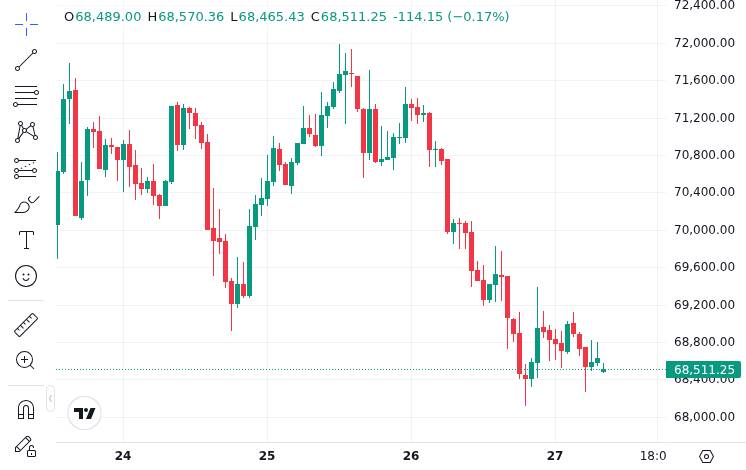 Bitcoin price action over recent weeks as whale and shark addresses accumulated over 61,000 BTC. Source: CoinMarketCap
Small Wallets Added Just 213 BTC, a 291x Gap That Analysts Call a Bull Signal
While large holders aggressively accumulated, wallets holding less than 0.01 BTC added only 213 BTC during the same 30-day window. In percentage terms, small wallets grew by 0.42%, nearly matching the 0.45% growth rate of whale and shark addresses, but the absolute scale difference is stark.
That 291x gap between large and small holder accumulation is precisely the type of divergence Santiment has historically flagged as meaningful. The firm stated that “the ranging pattern will break upwards when large wallets are accumulating, while retail is dumping,” calling it “a very reliable pattern to signal the start of bull cycles.”
Dominick John of Zeus Research offered a similar view, telling CoinTelegraph that “whales are scooping up BTC because they’re positioning ahead of a potential breakout, quietly stacking during consolidation periods.” The comment aligns with the broader on-chain picture, though it remains a single analyst’s interpretation.
The divergence pattern has drawn comparisons to earlier accumulation phases. In previous cycles, sustained whale buying during periods of extreme retail fear preceded significant price recoveries, though past patterns do not guarantee future outcomes.
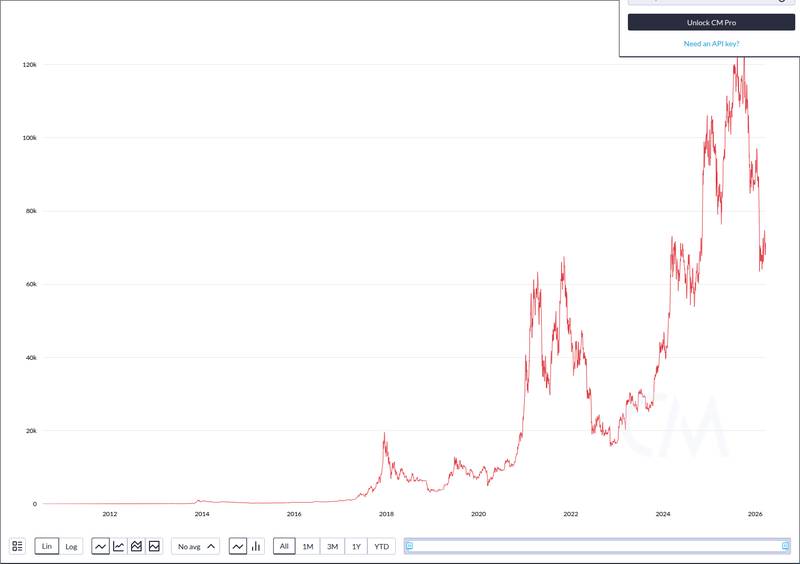 On-chain metrics for Bitcoin during the March 2026 accumulation period. Source: CoinMetrics
Bitcoin Trades Near $68,500 Amid Extreme Fear
Bitcoin traded at $68,549 as of March 27, down 2.15% over the prior 24 hours. The asset’s market capitalization stands at $1.37 trillion with $47.6 billion in daily trading volume.
Despite the negative short-term price action, Bitcoin is up 5.43% over the past 30 days. The disconnect between a rising 30-day trend and deeply negative sentiment underscores the tension at the heart of this accumulation story.
The Crypto Fear & Greed Index sits at 13, firmly in “Extreme Fear” territory. That reading reflects broad retail caution amid macroeconomic headwinds, including the same pressures driving outflows from Ethereum spot ETFs in recent weeks.
With 20,003,043 BTC in circulation, representing 95.3% of the maximum supply already mined, the supply dynamics add another layer to the accumulation narrative. Every bitcoin absorbed by long-term holders during fear-driven markets reduces the liquid supply available when sentiment eventually shifts.
Whether this whale accumulation cycle leads to the kind of breakout Santiment’s historical data suggests remains an open question. What the on-chain data confirms is that large holders are betting with conviction at a moment when most of the market is not.
Disclaimer: This article is for informational purposes only and does not constitute financial or investment advice. Cryptocurrency and digital asset markets carry significant risk. Always do your own research before making decisions.


You May Also Like

Bitcoin, Gold, and U.S. Stocks Dive as Trump Pledges to Hit Iran ‘Extremely Hard’

One Kash Patel comment 'made the hair on the back of my neck stand up': ex-FBI deputy