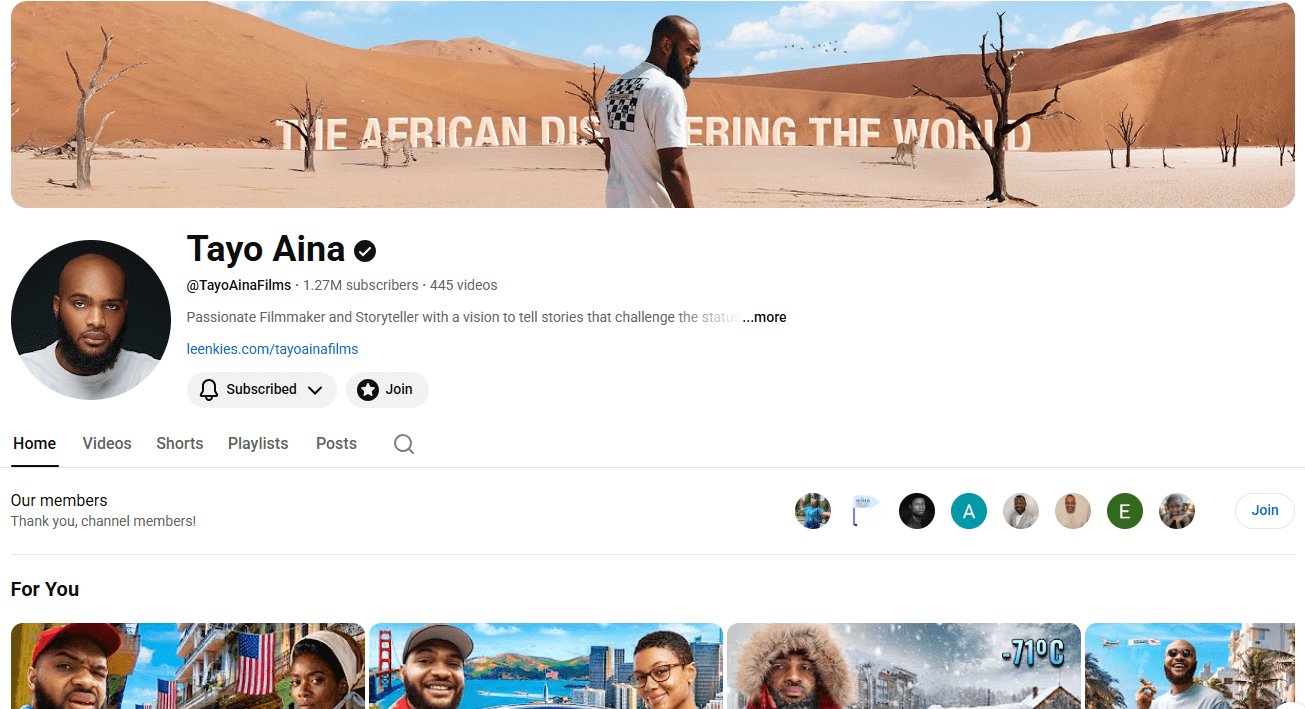
Tayo Aina waited 8 years to make real money from YouTube. Now he’s building the tool he wished existed when he started
When Tayo Aina launched Spacebook.ng nearly a decade ago, he had a vision: build Africa’s Airbnb. The startup did not work out. So he pivoted to making videos about travel across Africa, and that decision changed everything.
Over the next seven years, he built one of the continent’s most recognizable creator brands, trained thousands through his YouTube Academy, and proved that African creators could build global audiences without leaving the continent.
But the whole time, he was watching the same problem play out over and over again.
Creators were building massive followings on Instagram, TikTok, and YouTube, but they couldn’t turn those audiences into income until the platforms decided to pay them. They were stuck waiting for monetization thresholds, approval emails, and revenue-sharing programs that often never came.
Even when they did get paid, the platforms took significant cuts, leaving creators with a fraction of what their work generated.
“It took me a very long time to start making money from YouTube,” Tayo Aina told Technext in an interview.
“If products like this had existed back then that were enabled for the African ecosystem, maybe I wouldn’t have waited for my YouTube to grow before I could start making money. Maybe I could have been able to launch products with Instagram alone.”
That realization led to Leenkies, Tayo Aina’s first creator startup, which launched in March 2026 with a bold promise: give creators a single link that handles distribution, monetization, and business management, without taking a commission.
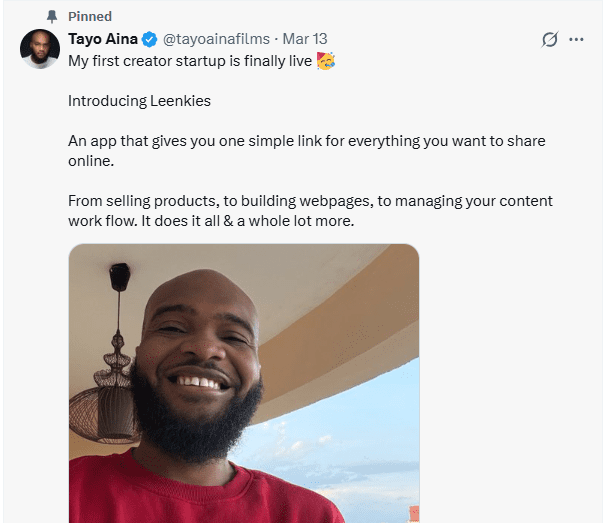
Leenkies: more than just another link-in-bio tool
At first glance, Leenkies sounds familiar. Link-in-bio tools like Linktree have existed for years. Platforms like Selar, Mainstack, and Teachable help creators sell courses and products. So what makes Leenkies different?
According to Tayo Aina, everything.
“Leenkies is a distribution platform,” he explained. “It’s not just something about sales. It’s like, how do you want to present yourself on the internet? You want to manage bookings, receive calls, and set up consultations. Whatever it is you want, however you want to represent yourself online, it’s a single link that allows you to do that.”
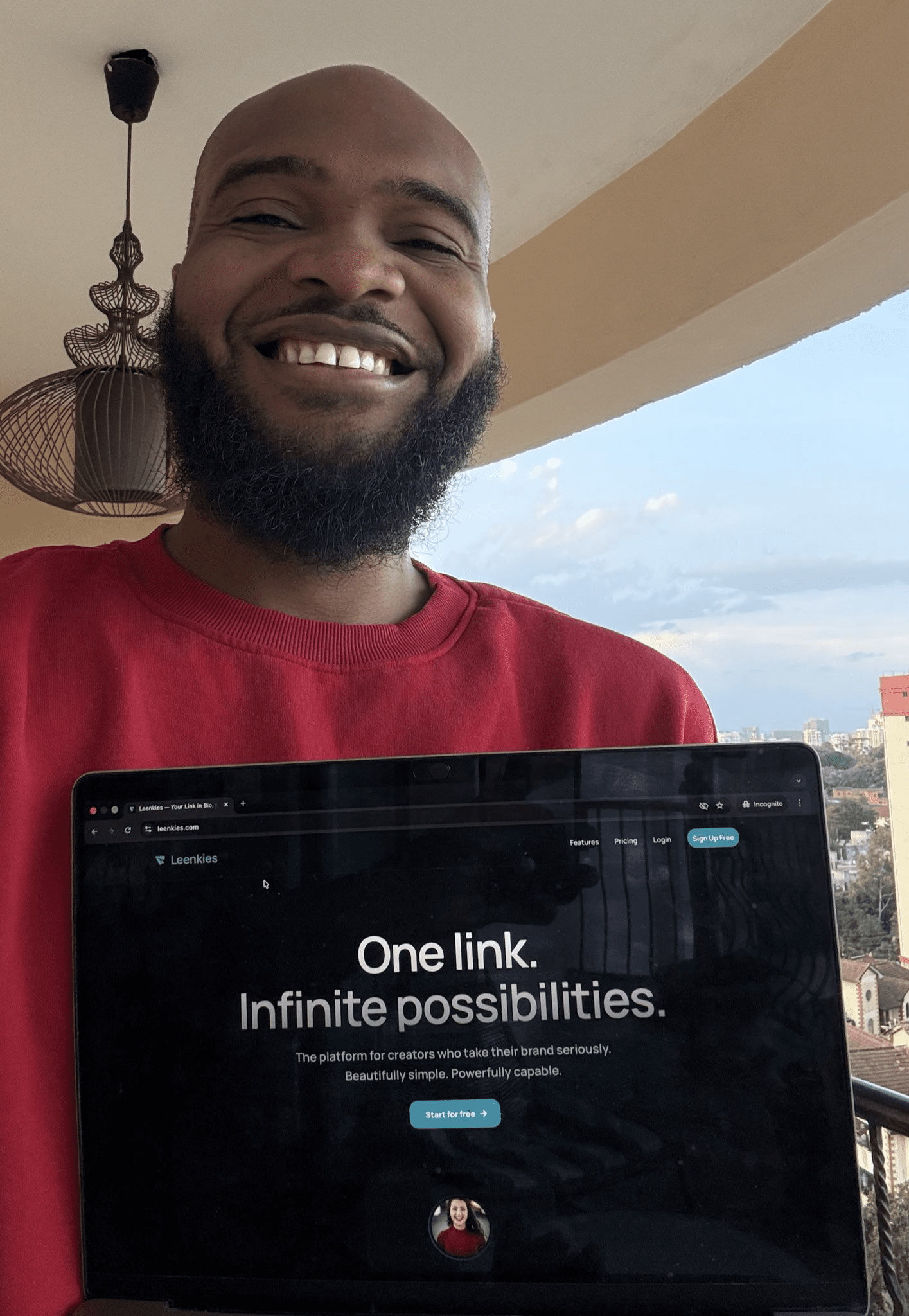
The platform goes beyond static links. Creators can build full webpages and showcase their YouTube content (the platform automatically pulls stats and videos). They can also sell products and services, manage client projects, send invoices, and handle bookings, all from one dashboard.
It’s designed to sit at the intersection of social media and business, turning followers into customers without requiring creators to juggle five different tools.
Tayo Aina calls it “turning your social media platform into a fully monetizable sales funnel.”
That vision led to features that existing platforms don’t offer. Leenkies includes a built-in project management tool so creators who land brand deals can track deliverables, timelines, and payments without subscribing to Notion or Asana.
It has invoicing, so creators don’t need Wave. It integrates YouTube stats so creators don’t have to manually update their bio every time they post a video.
“We’re bundling everything into one space and charging a single fee of ₦999,” Aina said. “That way, creators can literally process and do all the things they need to do much easier, much more cheaply.”
The zero-commission bet
But the most radical feature isn’t what Leenkies does, it’s what it doesn’t take.
Most creator monetization platforms charge commissions on sales. Selar takes 3.5% plus payment gateway fees. Gumroad charges 10% on the free plan. Teachable takes up to 10%, depending on the pricing tier. These fees add up quickly, especially for creators just starting to earn.
Leenkies is betting on a different model: subscriptions instead of commissions.
“We don’t want to take money out of a creator’s earnings,” Aina said. “I know it’s very bold, because everybody charges a commission on whatever sales are made on the platform. But we’re trying just a subscription model because we want to make sure that whenever the creator earns on our platform, they keep most of it.”
The only fees creators pay are standard payment gateway charges from Stripe, Paystack, or whichever processor handles the transaction. Leenkies doesn’t touch the rest.
It’s a risky strategy. Commission-based models scale naturally; the more creators earn, the more the platform earns. Subscription models require constant user growth to increase revenue. But Tayo Aina is confident the team can pull it off.
“We’re a small team. We’re very knowledgeable in this space. As a creator myself, I also have a co-founder who is really good at building products. We’re going to keep ourselves lean, keep innovating, and find cheaper ways to do stuff so we can build our platform without charging people commission.”
That co-founder brings technical expertise, while Tayo Aina brings deep knowledge of what creators actually need. The combination matters because most creator tools are built by people who’ve never tried to make a living creating content.
Leenkies is built by someone who’s lived the struggle.
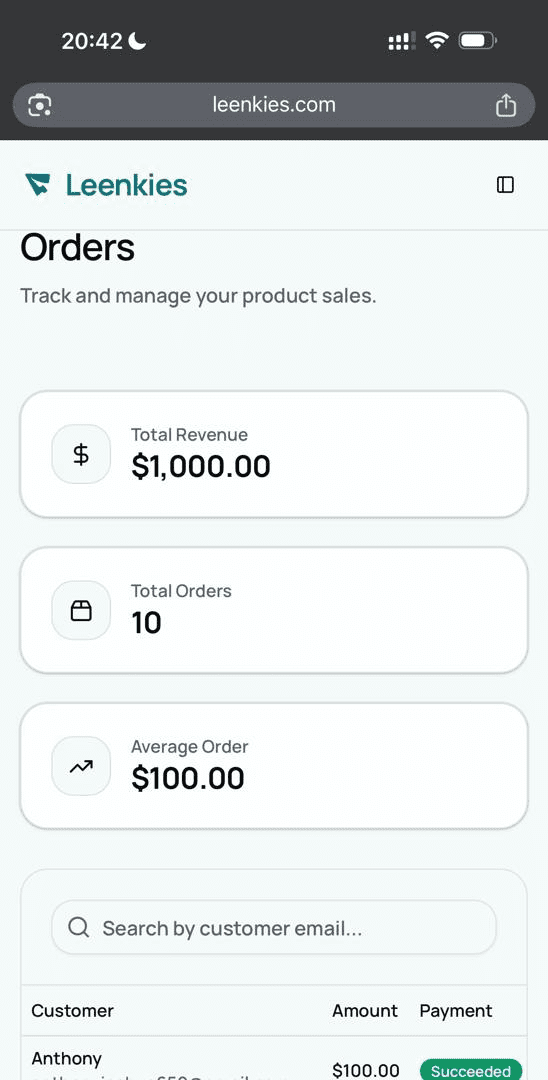
Solving Africa’s payment infrastructure nightmare
If zero commissions are Leenkies’ boldest bet, payment infrastructure is its biggest technical challenge.
Anyone who’s tried to sell digital products across Africa knows the nightmare: fragmented payment systems, failed transactions, currencies that don’t convert smoothly, and customers who can’t complete purchases because their preferred payment method isn’t supported.
Leenkies’ solution is integration overkill.
The platform supports Stripe for global payments, Paystack for Nigeria, M-Pesa for Kenya, and mobile money for Ghana, with plans to add more. The goal is simple: if a customer wants to pay with whatever payment service they have, they can access the product.
“We’re not just using only one payment company,” Tayo Aina said. “We’re using a lot of other African payment companies because we know that payment is a big problem. Our goal is to make sure that whatever product any creator wants to sell, or any service they want to sell, they can easily sell it, and the customers can easily access it wherever they might be across the globe, not just in Africa.”
That multi-integration approach adds complexity, but it solves a real problem. A Nigerian creator selling a course to a Kenyan customer shouldn’t fail because of payment infrastructure. Leenkies is betting that solving this friction is worth the technical headache.

What comes next for Leenkies: AI and customization
Leenkies launched with a core set of features, but Tayo Aina’s roadmap is ambitious.
The team is currently building AI functionality designed to help creators set up profiles faster and optimize them for monetization. While Aina wouldn’t share specifics, he hinted that the AI tool will help creators understand how to arrange and design their pages to increase conversions.
“It’s gonna change how quickly people can set up their profile,” he said. “It’s gonna give creators more power, help them with their profile, help them in building it, also help them in marketing it, and also help them to understand how to arrange or design their pages to increase monetization.”
The platform will also add more customization tools and continue listening to customer feedback to identify what creators need most. Tayo Aina emphasized that Leenkies isn’t a finished product; it’s a platform that will evolve based on what users actually want.
“Our goal is to make sure that our platform becomes a one-stop shop for whatever you might need when it comes to distribution and marketing yourself through your single link in your bio and also selling products,” he said.
Why this is important for African creators
Tayo Aina sees Leenkies as part of a much bigger movement: the African creator economy is just getting started.
“We’re still at the early stages,” he said. “I’m one of the OGs when it comes to YouTube in Africa, and I’m just one of the few people on it. There’s still a lot of space. There are a lot of creators that are going to be coming into the system over the next five years.”
He’s right. AI tools are lowering the barriers to content creation. Smartphone penetration is rising. Internet access is expanding. Platforms like TikTok are creating new pathways to audiences. The number of African creators is about to explode.
But those creators face the same problem Aina faced years ago: how do you turn attention into income when the platforms won’t pay you yet?
Leenkies is betting it can be the bridge. If a creator has 10,000 Instagram followers but doesn’t qualify for Instagram’s monetization program, they can still sell products, services, or consultations through their Leenkies link. They don’t have to wait for the platform to decide they’re worthy of payment.
“If Leenkies succeeds at scale, it’s more prosperity for creators, monetarily, in distribution, in growth,” Tayo Aina said.
Tayo Aina, the builder who never stopped building
Tayo Aina’s journey from failed startup founder to successful YouTuber to tech entrepreneur isn’t linear, but it makes sense.
After eight years of building that platform, he’s using it to solve the problems he wishes someone had solved for him when he started. Leenkies is the product Tayo Aina needed in 2017 when he was struggling to monetize his early audience.
Now he’s building it for the next generation of African creators so they do not have to wait seven years to start earning.
Whether Leenkies succeeds depends on execution: Can the team keep the platform running smoothly while adding features? Can they scale without raising prices or adding commissions? Can they compete with established players who have bigger teams and more resources?
But Tayo Aina isn’t worried about competition. He’s focused on building.
“People are talking about this creator company versus that creator company,” he said. “But we are just literally starting.
For African creators tired of waiting for platforms to pay them, Leenkies offers a different path: monetise now, keep more of what you earn, and build your business on your own terms.
The question isn’t whether African creators need better tools. The question is whether Leenkies can deliver them, and whether creators will trust a ₦999 monthly subscription over the commission models they’re used to.
Tayo Aina is betting they will. And this time, he’s building the infrastructure to make sure they don’t have to wait eight years to find out.
Similar read: Stepping out of the shadows: Taofik ‘Oladimeji’ Abubakar on championing AI and marketing analytics
The post Tayo Aina waited 8 years to make real money from YouTube. Now he’s building the tool he wished existed when he started first appeared on Technext.


You May Also Like

Trump tells right-wing host he’ll 'stop' car companies from removing AM radio
Top 3 Meme Coins To Watch Now, With One New Token Leading the 15,000% Growth Narrative