

Web3 Antivirus: Protect Your Wallet as Crypto Scam Losses Hit $3.1B
Web3 scam losses have already surpassed $3.1 billion in the first half of 2025, and the Web3 Antivirus Dashboard is positioning itself as a free, browser-based defense layer that lets crypto users audit wallet health, revoke risky token approvals, and flag threats before signing a single transaction.
Crypto Scam Losses Already Exceeded $3.1 Billion in the First Half of 2025
The scale of crypto theft in 2025 is accelerating. Web3 scams and hacks drained $3.1 billion in H1 2025 alone, already exceeding the full-year 2024 total. The single largest incident was the Bybit hack, which accounted for $1.46 billion and stands as the biggest crypto hack in history.
The 2024 numbers were already severe. The crypto sector lost an estimated $9.9 billion to scams and hacking attacks that year, with CertiK independently confirming $2.3 billion lost across 760 on-chain security incidents. Roughly 1 in 8 Web3 users has been affected by scams.
The threat is not slowing down. Scammers create approximately 350 scam tokens every day, flooding decentralized exchanges and wallet interfaces with fraudulent assets designed to steal funds on interaction.
The current market environment amplifies the urgency. The Fear & Greed Index sits at 13, deep in Extreme Fear territory. Anxious markets tend to drive impulsive decisions, and impulsive decisions are exactly what scammers exploit. As crypto payment infrastructure expands across regions, the attack surface for wallet-targeting scams grows with it.
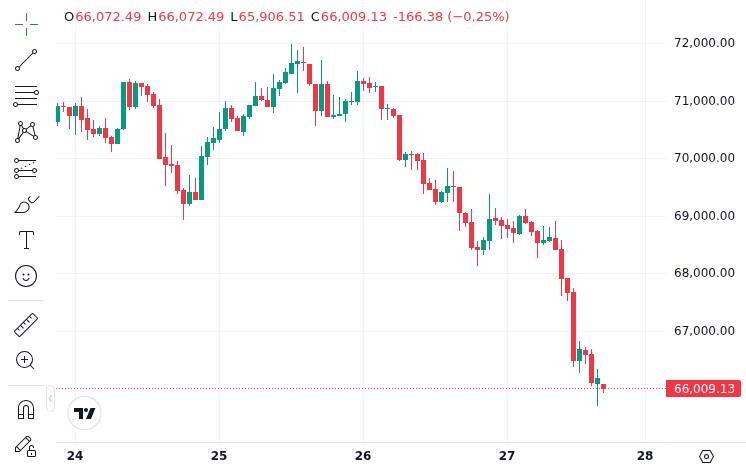 CoinMarketCap chart illustrating the price backdrop referenced in this article on Web3 Antivirus.
What the Web3 Antivirus Dashboard Actually Shows You
The Web3 Antivirus Dashboard provides four core modules in a unified interface: wallet health scoring (called Toxic Score), token approval management with one-click revocation, full transaction history review, and a potential risks panel. The entire system is enhanced with AML compliance checks.
The token approval module deserves particular attention. Many wallets carry stale or overly broad token approvals from months-old DeFi interactions. Each one is a potential attack vector. The dashboard surfaces these approvals and lets users revoke them in a single click, closing entry points that most users forget exist.
Web3 Antivirus is available as a free browser extension on Chrome, Brave, Firefox, and Edge, with over 100,000 active users. It integrates with MetaMask (which serves 30 million monthly active users), 1inch, OpenSea, DeBank, and Etherscan, giving it reach across the most commonly used Web3 infrastructure.
The tool detects more than 60 types of scams, including honeypots, wallet drainers, fake tokens, address poisoning, phishing dApps, and rug pulls. A pre-trade token validation API, integrated with 1inch, adds another layer by screening tokens before users execute trades.
For users tracking large Bitcoin accumulation patterns or managing multi-asset portfolios, the dashboard’s transaction history view provides a consolidated audit trail that highlights suspicious interactions across connected wallets.
Address Poisoning and Fake Approvals: The Threats Most Users Miss
Address poisoning is one of the most deceptive attack vectors in crypto. Attackers send tiny “dust” transactions from a wallet address that closely mimics a legitimate one, polluting the victim’s transaction history. When the victim later copies an address from their history to send funds, they unknowingly paste the attacker’s near-identical address instead.
The losses from address poisoning are not theoretical. In April 2024, a single incident resulted in 1,155 BTC (approximately $126 million) stolen. In September 2024, another attack drained 410 ETH (roughly $26 million). A $100,000 USDC loss from address poisoning was reported in 2025.
Phishing campaigns targeting Web3 users are growing more sophisticated as well. Fake airdrops and “daily rewards” promotions lure users to wallet-draining sites that look legitimate until the moment they execute a malicious signature. Web3 Antivirus flags these traps in real time, displaying warnings before users sign.
Source: @web3_antivirus on X
With geopolitical disruptions adding macro uncertainty to an already fearful market, the incentive for scammers to exploit confused and anxious users is at a peak. Tools that provide pre-signature verification, not just post-incident forensics, address the gap where most losses actually occur.
The Web3 Antivirus Dashboard is free to use and available at web3antivirus.io. For users holding any amount of crypto in a self-custodial wallet, auditing token approvals and checking wallet health scores takes minutes and costs nothing.
Disclaimer: This article is for informational purposes only and does not constitute financial or investment advice. Cryptocurrency and digital asset markets carry significant risk. Always do your own research before making decisions.


You May Also Like

Globalstar (GSAT) Stock Surges 15% on Amazon Acquisition Report
‘Effectively Over’: Trader James Wynn Calls Time on the Memecoin Market

Vitalik Buterin Breaks Silence On Ethereum Foundation Future, Here Is What Is Coming



