The post Google Quantum Computing Warns 6.9 Million Bitcoin Could Be at Risk appeared first on Coinpedia Fintech News Google’s latest Quantum AI research has raisedThe post Google Quantum Computing Warns 6.9 Million Bitcoin Could Be at Risk appeared first on Coinpedia Fintech News Google’s latest Quantum AI research has raised

Google Quantum Computing Warns 6.9 Million Bitcoin Could Be at Risk
2026/03/31 18:12
3 min read
For feedback or concerns regarding this content, please contact us at crypto.news@mexc.com
quantum

The post Google Quantum Computing Warns 6.9 Million Bitcoin Could Be at Risk appeared first on Coinpedia Fintech News

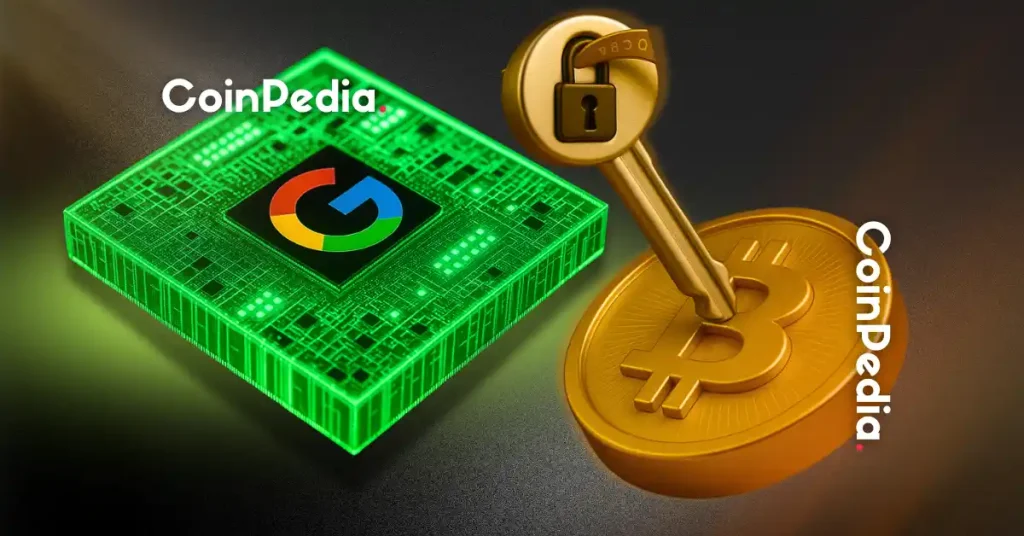
Google’s latest Quantum AI research has raised concerns about Bitcoin’s long-term security, warning that around 6.9 million BTC could become vulnerable when quantum computers grow powerful enough. The report highlights risks tied to exposed public keys and suggests the timeline for potential attacks may be shorter than previously expected.

Google Flags Quantum Risk to Millions of Bitcoin

According to the Google Quantum AI whitepaper, roughly 6.9 million Bitcoin may be exposed to future “quantum at-rest” attacks. About 1.7 million BTC are stored in older Pay-to-Public-Key (P2PK) addresses, where public keys are already visible on-chain. These include coins widely believed to belong to Bitcoin’s creator, Satoshi Nakamoto.

The concern is that once quantum computers become strong enough, attackers could derive private keys directly from public data. This would allow them to access dormant wallets without any transaction broadcast, creating a silent security risk.

Quantum Computers Could Break Keys Within Minutes

Google researchers estimate that a superconducting quantum computer could calculate a Bitcoin private key in around nine minutes. This falls just within Bitcoin’s average 10-minute block time, meaning attackers could potentially redirect transactions before confirmation.

The report also suggests the hardware requirements may be lower than expected. Earlier estimates required millions of qubits, but new models show attacks may be possible with fewer than 500,000 physical qubits. Some projections even indicate that 1,200–1,450 high-performance qubits could make such attacks feasible.

This significantly compresses the threat timeline and increases urgency for quantum-resistant solutions.

Massive Value at Risk if No Protocol Changes

The vulnerable pool represents nearly one-third of Bitcoin’s total supply, making it a major financial target. Google described these coins as a “fixed, multibillion-dollar target” if upgrades are not implemented before quantum breakthroughs arrive.

The paper also suggests governments may need legal frameworks for “digital salvage.” This would allow dormant coins to be protected before malicious actors gain access.

Analyst Says Bitcoin Can Adapt to Quantum Threat

Responding to the ongoing Quantum Threat, CryptoQuant analyst Darkfost said the risk is exaggerated. He explained that Bitcoin has improved over time with many address upgrades that made it more secure. 

Today, about 78% of Bitcoin addresses use newer formats that hide public keys until the coins are spent, which adds extra protection.

He also said that each wallet would need to be hacked separately, so a large-scale attack would be very difficult. Even if some wallets were hacked, the overall Bitcoin network would likely still remain strong and continue working.

Darkfost also explained that quantum computing would not only affect Bitcoin. It could also threaten bank systems, government systems, and many other encrypted systems around the world.

Quantum Debate Adds Concern on Bitcoin Future Outlook

Meanwhile, Bitcoin, which is already struggling to build momentum around $66,000 after dropping from its all-time high. This growing quantum computing threat is now adding fresh concerns about Bitcoin’s long-term security and stability.

While no quantum computer capable of breaking Bitcoin exists today, the updated estimates suggest the industry may need to prepare sooner.

Market Opportunity
QUANTUM Logo
QUANTUM Price(QUANTUM)
$0.002687
$0.002687$0.002687
-0.70%
USD
QUANTUM (QUANTUM) Live Price Chart
Disclaimer: The articles reposted on this site are sourced from public platforms and are provided for informational purposes only. They do not necessarily reflect the views of MEXC. All rights remain with the original authors. If you believe any content infringes on third-party rights, please contact crypto.news@mexc.com for removal. MEXC makes no guarantees regarding the accuracy, completeness, or timeliness of the content and is not responsible for any actions taken based on the information provided. The content does not constitute financial, legal, or other professional advice, nor should it be considered a recommendation or endorsement by MEXC.

You May Also Like

UK Reform Party argues stablecoin limits stifle innovation

UK Reform Party argues stablecoin limits stifle innovation

The post UK Reform Party argues stablecoin limits stifle innovation appeared on BitcoinEthereumNews.com. The United Kingdom’s minority party Reform has formally rejected the Bank of England’s proposal to cap stablecoin holdings and its broader plan to introduce a central bank digital currency (CBDC). In a Sept. 18 statement on X, the party’s head of policy, Zia Yusuf, alongside party figurehead Nigel Farage, warned that the measures would damage Britain’s competitiveness in the global digital economy. Last week, the Bank of England proposed restricting stablecoin exposure for individuals and businesses. Under the draft proposal, citizens would be limited to holding between £10,000 and £20,000 in systemic stablecoins, while businesses would face a maximum cap of £10 million. The regulator argues that the plan aims to reduce financial risks as digital assets become more mainstream. However, the Reform party leaders framed the proposal as an attack on innovation rather than a safeguard. They argued that limiting the use of stablecoins risks choking off demand for British government debt while strengthening the position of global rivals. According to the statement, dollar–pegged stablecoins like USDC and USDT funnel significant liquidity into US Treasuries, reinforcing the dollar’s dominance in digital finance. By contrast, the UK lacks any mechanism equivalent to a backstop demand for gilts. Yusuf wrote: “Now ask yourself: where is the British equivalent? Where is the pound-backed stablecoin with deep liquidity, one that global markets can trust, one that channels fresh demand into UK gilts? It doesn’t exist, because policymakers here have been openly hostile to innovators. Instead of building the future, Britain’s regulators have smothered it.” Considering this, Yusuf argued that “stablecoins are not a danger to financial stability.” Instead, he described the assets as: “[A] bridge between the digital world and the traditional banking system. A bridge between entrepreneurs and customers, between investors and opportunity. They are simply new wrappers around money – safer,…
Share
BitcoinEthereumNews2025/09/18 22:55
Metaplanet raises $1.4B to fuel BTC purchases and U.S. subsidiary launch

Metaplanet raises $1.4B to fuel BTC purchases and U.S. subsidiary launch

Metaplanet Inc. has formalized the subsidiary in Miami, Florida, naming it Metaplanet Income Corp.
Share
Cryptopolitan2025/09/17 23:34
New Crypto Investors Are Backing Layer Brett Over Dogecoin After Topping The Meme Coin Charts This Month

New Crypto Investors Are Backing Layer Brett Over Dogecoin After Topping The Meme Coin Charts This Month

Climbing to the top of the meme coin charts takes more than a viral mascot or celebrity tweets. Hype may spark attention, but only momentum, utility, and adaptability keep it alive. That’s why the latest debate among crypto enthusiasts is catching attention. While Dogecoin remains a household name, a new player has entered the arena […] The post New Crypto Investors Are Backing Layer Brett Over Dogecoin After Topping The Meme Coin Charts This Month appeared first on Live Bitcoin News.
Share
LiveBitcoinNews2025/09/18 00:30
