

How to View the USD1 Stablecoin Audit Report: Complete Guide and Transparency Analysis

Key Takeaways
- USD1 is a US dollar stablecoin issued by World Liberty Financial (WLFI), backed 1:1 by US short-term treasury bonds, US dollar deposits, and other cash equivalents
- Since August 2025, the globally renowned accounting firm Crowe LLP has been conducting regular third-party audits of USD1, following American Institute of Certified Public Accountants (AICPA) standards
- USD1's reserve assets are custodied by BitGo, a leading global digital asset custody institution, providing multiple layers of security for asset protection
- Investors can view the latest audit reports and reserve asset proofs through the WLFI official website and the USD1/USDT trading pair
- Regular audits and transparency are key measures for the stablecoin industry to meet regulatory requirements and establish market trust
1. USD1 Stablecoin Overview
USD1 is a US dollar stablecoin launched by World Liberty Financial (abbreviated as WLFI) in April 2025, designed to provide compliant and transparent digital asset solutions for institutional investors and sovereign funds. According to a report by Yicai, USD1 is backed by US short-term treasury bonds, US dollar deposits, and other cash equivalents, ensuring that each USD1 can be exchanged for 1 US dollar at a 1:1 ratio at any time.
The launch of USD1 is closely related to the digital asset strategy of US President Donald Trump's family. WLFI's parent company, WLF Holdco, is 60% owned by Trump family-affiliated entities, with Trump's sons Eric Trump and Barron Trump both playing important roles in the project. Additionally, Zach Witkoff as co-founder has also contributed significantly to USD1's development.
Unlike traditional retail-oriented stablecoins like USDT and USDC, USD1 primarily targets institutional clients, adopting a "high-profile" market strategy. Understanding the operating mechanism of USD1 stablecoin in detail can help investors better understand its value positioning.
2. Why Audit Reports Are Crucial for Stablecoins
2.1 The Transparency Crisis in the Stablecoin Industry
As stablecoins serve as a bridge connecting traditional finance and the cryptocurrency market, their transparency and credibility directly affect the healthy development of the entire digital asset ecosystem. Several historical stablecoin crisis events have highlighted the importance of audits and transparency:
The 2022 TerraUSD (UST) collapse was one of the most severe stablecoin crises in cryptocurrency history. This algorithmic stablecoin, due to lack of actual asset backing and transparent audit mechanisms, fell into a death spiral during market panic, resulting in over $40 billion in market capitalization evaporation and causing significant losses for millions of investors.
Additionally, some stablecoin issuers have been questioned for non-transparent reserve asset disclosures. The market had doubts about the composition, custody methods, and actual value of reserve assets, leading to trust crises and regulatory intervention.
2.2 Evolution of the Regulatory Environment
Global regulators are strengthening regulatory requirements for stablecoins. The US Commodity Futures Trading Commission (CFTC) and legislative proposals like the GENIUS Act all emphasize the necessity of regular audits and transparency disclosures.
The GENIUS Act requires stablecoin issuers to obtain approval from federal or state regulatory agencies, conduct regular third-party audits, and publicly disclose the composition and value of reserve assets. These regulatory measures aim to protect investor interests and prevent systemic risks similar to the UST collapse from occurring again.
2.3 Core Value of Audit Reports
Regular independent audit reports provide the following key values for stablecoins:
- Asset authenticity verification: Confirm that the reserve assets claimed by the issuer actually exist and are of sufficient value
- Risk management assessment: Evaluate the quality, liquidity, and risk exposure of reserve assets
- Compliance confirmation: Verify whether the issuer complies with relevant laws, regulations, and industry standards
- Market confidence building: Enhance trust among investors and regulators through transparent third-party verification
For USD1, a stablecoin targeting institutional clients, audit reports are an indispensable foundation of trust, as institutional investors have higher requirements for compliance and risk management.
3. Detailed Explanation of USD1 Audit Mechanism
3.1 Audit Institution: Crowe LLP
USD1 has selected the globally renowned accounting firm Crowe LLP as its independent auditor. Crowe LLP is one of the top ten accounting firms in the United States, with a business network in over 130 countries worldwide, and possesses extensive experience in financial services and digital asset auditing.
Choosing an internationally recognized audit institution like Crowe LLP reflects USD1's emphasis on audit quality and credibility. Compared to some smaller audit firms, Crowe LLP's professional capabilities and independence are more likely to gain market recognition.
3.2 Audit Standards and Process
According to public information, Crowe LLP's audit of USD1 follows the professional standards of the American Institute of Certified Public Accountants (AICPA). The specific audit process includes:
- Reserve asset verification: Verify whether the assets in custody accounts are consistent with the claimed reserve amounts
- Asset valuation: Assess the market value and liquidity of reserve assets
- Internal control review: Examine the issuer's internal control systems and risk management procedures
- Compliance check: Confirm that operational activities comply with relevant laws and regulations
Since August 2025, Crowe LLP has begun conducting regular audits of USD1, issuing attestation reports. This regular audit mechanism helps continuously monitor USD1's operational status and identify and correct potential issues in a timely manner.
3.3 Custody Institution: BitGo
USD1's reserve assets are custodied by BitGo. BitGo is a leading global digital asset solutions and infrastructure provider, providing security for approximately 20% of Bitcoin transactions and serving over 2,500 institutional clients.
Services provided by BitGo include:
- Multi-signature wallet technology
- Hot and cold wallet separation management
- Insurance coverage
- Compliance monitoring
BitGo CEO Mike Belshe stated that once the USD1 project goes live, the company's 2,500 institutional clients will immediately be able to trade USD1 stablecoin. This collaboration with a mature custody institution provides additional safeguards for USD1's asset security.
4. How to View USD1 Audit Reports
4.1 Through WLFI Official Website
The primary channel to view USD1 audit reports is the World Liberty Financial official website. Typically, stablecoin issuers establish dedicated "Transparency" or "Proof of Reserves" pages on their official websites, publishing the latest audit reports and asset proofs.
After visiting the WLFI official website, you can:
- Look for pages related to "Transparency," "Attestations," or "Audit Reports"
- Download complete audit reports in PDF format
- View detailed composition of reserve assets with real-time or periodic updates
- Learn about information related to custody institutions and audit institutions
4.2 Through Third-Party Data Platforms
Besides official channels, investors can also obtain USD1-related information through third-party data platforms:
CoinMarketCap is the world's leading cryptocurrency data platform. Visiting USD1's CoinMarketCap page allows you to view:
- Real-time market cap and circulation
- Price trend charts
- Trading volume data
- Official links and social media
While data provided by third-party platforms is not the audit report itself, it can help investors evaluate USD1's market performance and credibility from multiple perspectives.
4.3 Through MEXC Trading Platform
As a mainstream cryptocurrency exchange listing USD1, MEXC provides users with convenient access:
- View trading information: Visit the USD1/USDT trading pair page to view real-time prices, trading depth, and market dynamics
- Get project information: MEXC platform timely updates important announcements and audit report release information about USD1
- Participate in staking activities: MEXC is hosting an activity to stake USD1 and share 15 million WLFI, allowing users to learn about the latest project developments while enjoying returns
To learn how to purchase USD1, refer to the 2-minute quick tutorial on buying USD1 on MEXC.
4.4 Contact Customer Support
If you encounter difficulties in finding audit reports, you can seek help through the following methods:
- WLFI customer support: Inquire about the release time and access methods for USD1 audit reports through contact information on the official website
- MEXC customer service: Ask whether the platform provides access links or relevant information for USD1 audit reports
5. Interpretation of Key Content in Audit Reports
5.1 Reserve Asset Composition
The core content of audit reports is the detailed composition of reserve assets. According to USD1's design, its reserve assets mainly include:
- US short-term treasury bonds: Government bonds with high liquidity and low risk
- US dollar deposits: Cash deposited in regulated financial institutions
- Other cash equivalents: Short-term, highly liquid financial instruments
Investors should pay attention to:
- Specific proportions of various asset types
- Credit ratings and maturity date distributions of assets
- Information about custody institutions and accounts
5.2 Asset Coverage Ratio
Audit reports verify the ratio between USD1's circulation and the value of reserve assets. Ideally, this ratio should be at least 1:1, meaning each $1 of USD1 in circulation corresponds to at least $1 in reserve assets.
Some high-quality stablecoins even maintain reserve ratios exceeding 100%, providing an additional safety margin for sudden market volatility.
5.3 Internal Control Assessment
Auditors evaluate USD1 issuer's internal control systems, including:
- Asset management processes
- Minting and redemption mechanisms
- Risk monitoring systems
- Compliance management
Strong internal controls are key to ensuring stable long-term operation of stablecoins.
5.4 Compliance Statement
Audit reports confirm whether USD1's operations comply with:
- Relevant legal and regulatory requirements
- Industry best practices
- Regulatory agency guidance
Especially in the context of the US advancing stablecoin regulatory legislation, compliance statements are crucial for USD1 to secure regulatory approval and market access.
6. USD1 Transparency Comparison with Other Major Stablecoins
6.1 USDC's Transparency Practices
USDC, issued by Circle, is regarded as an industry benchmark in transparency:
- Monthly audit reports: Attestation reports issued monthly by renowned audit firms like Grant Thornton
- Reserve asset details: Real-time updates on the detailed composition of reserve assets on the official website, including specific types of treasury bonds held
- Regulatory compliance: Has obtained money services and money transmission business licenses in multiple US states
Circle's high transparency strategy helped USDC's market share increase from 20% in mid-2024 to around 27.5% in early 2025, demonstrating the market's emphasis on transparency.
6.2 USDT's Transparency Challenges
As the largest stablecoin by market cap, USDT's transparency has always been questioned:
- Audit frequency: Although Tether releases quarterly attestation reports, the update frequency is lower than USDC
- Reserve asset disclosure: Specific composition of reserve assets is not disclosed in sufficient detail and has included controversial assets like commercial paper
- Registration location: Tether is registered in non-US regions, with relatively weaker regulatory compliance
Due to transparency and compliance issues, USDT faces delisting pressure in regions with strong regulations like Europe, with market share declining from around 70% in mid-2024 to approximately 62.5% in early 2025.
6.3 Lessons from Algorithmic Stablecoins
The collapse of TerraUSD (UST) provides profound lessons. As an algorithmic stablecoin, UST did not rely on actual asset reserves but maintained price stability through complex algorithms and token economic models.
Due to lack of transparent asset backing and effective audit mechanisms, when market confidence collapsed, UST quickly depegged and fell into a death spiral, ultimately becoming worthless. This incident highlighted the importance of physical asset backing and regular audits for stablecoins.
6.4 USD1's Transparency Positioning
USD1 adopts a high transparency strategy similar to USDC:
- Regular independent audits: Regular audits by internationally renowned audit firms like Crowe LLP
- Reputable custody institution: Reserve assets custodied by BitGo
- Emphasis on regulatory compliance: WLFI states it will actively apply for regulatory licenses and comply with upcoming stablecoin regulatory legislation
Combined with the Trump family's brand effect and institutional client positioning, USD1's investment in transparency and compliance aims to establish market trust similar to USDC, challenging USDT's dominant position in the stablecoin market.
7. Limitations of Audit Reports and Risk Warnings
7.1 Point-in-Time Nature of Audits
Audit reports reflect the asset status at a specific point in time, not continuous real-time monitoring. Between two audits, the value and composition of reserve assets may change.
Investors should note:
- Publication date of audit reports
- Specific time period covered by the audit
- Volatility risk of asset market values
7.2 Limitations of Audit Scope
Auditors typically only verify the existence and value of reserve assets, without providing assurance on the following aspects:
- Issuer's future solvency
- Long-term risk exposure of assets
- Continued effectiveness of operational management
Therefore, audit reports should be used in combination with other information (such as market performance, regulatory dynamics, industry evaluations) to form a comprehensive risk assessment.
7.3 Potential Conflicts of Interest
Although USD1 emphasizes independent auditing, its close association with the Trump family has also raised some concerns:
- Political influence: Trump as US President, his family business issuing stablecoins may involve conflicts of interest
- Regulatory advantages: USD1 may receive preferential treatment in license applications and regulatory approvals
- Market fairness: Competitors worry that USD1 enjoys unfair competitive advantages
Congressional members and regulatory agencies have begun paying attention to the Trump family's commercial activities in the cryptocurrency space, demanding enhanced transparency and conflict of interest management.
7.4 Market Risks and Regulatory Uncertainty
Even if audit reports show USD1's reserves are sufficient, investors still need to pay attention to:
- Market acceptance: Whether USD1 can establish a foothold in the highly competitive stablecoin market
- Regulatory changes: Future regulatory policies may affect USD1's operational model and market access
- Liquidity risk: As an emerging stablecoin, USD1's trading depth and redemption convenience still need observation
8. How to Use Audit Reports to Make Investment Decisions
8.1 Evaluate Asset Quality
Carefully read the reserve asset composition in audit reports and evaluate asset quality and risk:
- High-quality asset proportion: The higher the proportion of US short-term treasury bonds and cash deposits, the lower the risk
- Asset liquidity: Ensure reserve assets can be quickly liquidated to meet redemption demands
- Diversification level: Avoid excessive concentration in a single asset class or custody institution
8.2 Compare with Competitors
Compare USD1's audit reports with competitors like USDC and USDT:
- Transparency level: Audit frequency, level of disclosure detail
- Auditor reputation: Choose more reputable and independent audit institutions
- Compliance progress: Whether regulatory approval and relevant licenses have been obtained
8.3 Monitor Dynamic Changes
Regularly review USD1's latest audit reports and market performance:
- Market cap changes: Track circulation and market cap through platforms like CoinMarketCap
- Price stability: Observe whether USD1 can maintain the $1 peg price over the long term
- Trading activity: View trading volume and market depth on the USD1/USDT trading pair
8.4 Diversify Risks
Even if USD1's audit report is satisfactory, investors are advised to:
- Avoid excessive concentration: Diversify funds across multiple stablecoins to avoid single-point risk
- Set position limits: Limit investment proportion in a single stablecoin based on personal risk tolerance
- Pay attention to exit mechanisms: Understand USD1's redemption process and timeline to ensure timely liquidation when needed
9. Future Development and Challenges for USD1
9.1 Compliance and Regulatory Applications
According to public information, WLFI plans to apply for regulatory licenses for USD1 to comply with upcoming US stablecoin regulations. Legislative proposals like the GENIUS Act require stablecoin issuers to obtain approval from federal or state regulatory agencies, which will be a critical step in USD1's long-term development.
9.2 Market Expansion Strategy
USD1 adopts an institutional client-first strategy, expanding the market through the following methods:
- B2B services: Targeting institutional investors like sovereign funds and asset management companies
- DeFi ecosystem integration: Collaborating with decentralized finance protocols like Aave and Compound
- Cross-border payment applications: Providing efficient, low-cost solutions for international trade and cross-border settlement
WLFI also plans to collaborate with Sui, Ondo Finance, Chainlink, and other projects to explore deep integration of traditional finance and blockchain finance.
9.3 Competitive Pressures Faced
USD1 enters a mature and highly competitive market:
- USDT's first-mover advantage: Has established a widespread business ecosystem across mainstream exchanges and DeFi protocols
- USDC's compliance advantage: Has obtained multiple regulatory licenses and is continuously expanding use cases
- Emerging competitors: New stablecoins like USDS are also actively expanding the market
Whether USD1 can convert brand advantages and political resources into actual market share remains highly uncertain.
9.4 Technological Innovation Directions
Future technological innovations USD1 may explore include:
- Liquidity mining: Attracting users to provide liquidity through token incentives
- Cross-chain deployment: Issuing USD1 on multiple blockchains to expand use cases
- Smart contract integration: Developing more financial products and services based on USD1
WLFI states that USD1 has already been issued on Ethereum and Binance Smart Chain (BSC), and may expand to more mainstream public chains in the future.
10. Frequently Asked Questions (FAQ)
10.1 How often is USD1's audit report updated?
According to public information, USD1 has been undergoing regular audits by Crowe LLP since August 2025. Although the specific audit frequency has not been explicitly published, industry practice is typically quarterly or monthly audits. Investors can check the latest audit report release schedule through the World Liberty Financial official website.
10.2 Where can ordinary investors purchase USD1?
USD1 has been listed for trading on multiple mainstream cryptocurrency exchanges, including platforms like MEXC. You can purchase through the following steps:
- Register an account on MEXC and complete KYC verification
- Deposit fiat currency or other cryptocurrencies (such as USDT)
- Visit the USD1/USDT trading pair to trade
For detailed tutorials, refer to how to buy USD1 on MEXC.
10.3 What advantages does USD1 have compared to USDC and USDT?
USD1's main differentiating features include:
- Institutional client positioning: Designed specifically for sovereign funds and large institutions, not the retail market
- Trump family brand: Association with the US presidential family brings political resources and media attention
- Compliance commitment: Commits to actively applying for regulatory licenses and complying with the latest stablecoin regulations
- Transparency assurance: Regular audits by reputable audit firms, reserve assets custodied by BitGo
However, as a new entrant, USD1 still needs time to accumulate market share, ecosystem building, and liquidity.
10.4 What will USD1's reserve assets be invested in?
According to the design, USD1's reserve assets mainly include:
- US short-term treasury bonds: Government bonds with the highest credit rating
- US dollar deposits: Cash deposited in regulated banks
- Other cash equivalents: Highly liquid, low-risk financial instruments
How the investment returns from these assets (such as treasury bond interest) will be distributed has not been clearly disclosed yet. Some stablecoin issuers return earnings to holders or use them for protocol development.
10.5 Does USD1 have depeg risk?
Although USD1 promises 1:1 US dollar backing and regular audits, theoretically any stablecoin has depeg risk, possible reasons include:
- Bank run risk: Large-scale redemptions leading to insufficient liquidity of reserve assets
- Reserve asset depreciation: Market volatility causing reserve asset value to decline
- Confidence crisis: Negative news or regulatory actions triggering market panic
Investors should continuously monitor USD1's audit reports, market performance, and regulatory dynamics, and assess risks in a timely manner.
10.6 How to verify the authenticity of USD1 audit reports?
To ensure the authenticity of audit reports, investors should:
- Obtain through official channels: Only download audit reports from the WLFI official website or officially announced channels
- Verify auditor information: Visit the Crowe LLP official website to confirm whether it indeed provides audit services for USD1
- Check digital signatures: Formal audit reports typically include digital signatures or certification marks from the audit institution
- Cross-verify: Compare information from multiple sources, such as third-party data platforms and news reports
If you have questions, you can contact MEXC customer service or WLFI official customer service for assistance.
10.7 Does USD1 support DeFi protocols?
According to WLFI's plans, USD1 will actively integrate into the DeFi ecosystem. WLFI has announced plans to collaborate with mainstream DeFi protocols like Aave, Compound, and Curve Finance, enabling users to:
- Deposit USD1 on lending platforms to earn returns
- Trade USD1 on decentralized exchanges
- Use USD1 as collateral to participate in liquidity mining
However, specific integration progress needs to be monitored through WLFI's official announcements.
10.8 What USD1-related activities are available on MEXC?
MEXC provides multiple participation opportunities for USD1 users:
- Spot trading: Buy and sell on the USD1/USDT trading pair
- Launchpool staking activities: Participate in the stake USD1 and share 15 million WLFI activity to earn additional returns
- Educational resources: View learning materials like the USD1 complete guide
It is recommended to download the MEXC mobile app to manage your USD1 assets anytime, anywhere.
11. Conclusion
As a new stablecoin supported by the Trump family, USD1 demonstrates determination to establish market trust by selecting the reputable audit firm Crowe LLP, partnering with leading custodian BitGo, and committing to high transparency and compliance. Regular independent audit reports are the core of USD1's transparency strategy, providing investors with an important tool to verify the authenticity of reserve assets and assess risks.
Investors can obtain USD1's audit reports and related information through multiple channels including the World Liberty Financial official website, CoinMarketCap, and the MEXC trading platform. When evaluating USD1, audit reports should be comprehensively considered along with market performance, competitor comparisons, regulatory dynamics, and other factors to make rational investment decisions.
Although USD1 has some differentiating advantages, as a new entrant, it still needs to face fierce competition in market share, ecosystem building, and liquidity accumulation. Investors should remain cautious, diversify risks, and continuously monitor USD1's development dynamics and audit report updates.
For users who want to participate in the USD1 ecosystem, MEXC provides convenient trading and staking services. You can visit the USD1/USDT trading pair to start trading, or participate in USD1 staking activities to earn additional returns. If you have any questions, feel free to contact MEXC customer service for assistance.
人気記事
もっと見る
MEXCでSpaceX IPO前にSpaceXを購入する方法
SpaceXは公開市場への上場を控えており、多くの個人投資家は上場前に公募価格でアクセスする手段がないと考えています。 その認識は誤りです。 MEXC LaunchpadはSPCXxを提供しています。これはトークン化株式プロダクトで、個人の暗号資産ユーザーがIPO公募価格でSpaceXへのエクスポージャーを得られる仕組みです。各トークンはxStocksフレームワークを通じた規制準拠のカストディによ
ステーブルコインのデペッグの歴史:USTからUSD1へ、より安全な進化
暗号資産市場の発展史において、ステーブルコインのデペッグ事件は鏡のような存在であり、デジタル資産空間におけるイノベーションの追求と安全性の確保の間の難しいバランスを反映しています。2022年5月のTerraUSD(UST)の衝撃的な崩壊から2023年のUSDCの短期危機まで、各デペッグ事件は市場参加者に対し、安定性を決して当然のものと考えてはならないことを警告しています。本記事では、ステーブルコイ
MEXC 8周年記念イベント開始!手数料0のUSD1取引ペア完全ガイド
2026年4月、世界有数の暗号資産取引プラットフォームであるMEXCは、重要な節目となる8周年を迎えました。祝賀テーマ「Eight Years Strong • Infinite Horizons(8年間の歩み・無限の可能性)」のもと、MEXCは過去8年間にわたり世界中のユーザーと共に成長してきた輝かしい歩みを振り返ると同時に、これまでにない周年記念イベントを開始しました。中でも最も注目すべき点は
人気暗号資産情報
もっと見る
ジェネラック株が18%急急上昇!アマゾン「24億ドル」データセンター契約の真相
概要 生成AIインフラストラクチャの電力ボトルネックが本格的に発生するにつれて、ウォール街の投資の焦点は、チップコンピューティング能力から基盤となる電力供給に急速にシフトしています。バックアップ電源とマイクログリッド製造のリーダーであるGenerac Holdingsの株式は、ニューヨーク証券取引所で1日で18%以上急騰し、日中の取引量は1日の平均の3倍以上に拡大しました。この評価の再構築を推進す

SECのトークン化株式免除とは?「5年ルール」がRobinhoodとCoinbaseに与える影響
概要 世界の金融市場のインフラストラクチャは、数十年で最も深刻な制度的解体と技術的再編成を経験しています。米国証券取引委員会がデジタル資産証券およびブロックチェーン清算ネットワークのための5年間の条件付き免除フレームワークを導入したことで、米国の資本市場は、24時間年中無休のプログラム可能な株式取引への規制移行を正式に開始しました。この制度的取り決めにより、適格なブローカーおよびオルタナティブトレ

FRBが政策金利を3.75%~4.00%へ引き上げ、2023年以来初:ドットチャートは2026年中の追加利上げを示唆
知っておくべきこと FRBは政策金利の誘導目標を25ベーシスポイント引き上げ、2025年12月以来維持してきた3.50%~3.75%から3.75%~4.00%としました。 決定は12対0の全会一致でした。Kevin Warsh議長にとって、議長就任後初の利上げ票となりました。 2026年末のフェデラルファンド金利の予想中央値は、6月時点の3.8%から4.1%へ上昇しました。 18人の当局者のうち1

トレンドニュース
もっと見る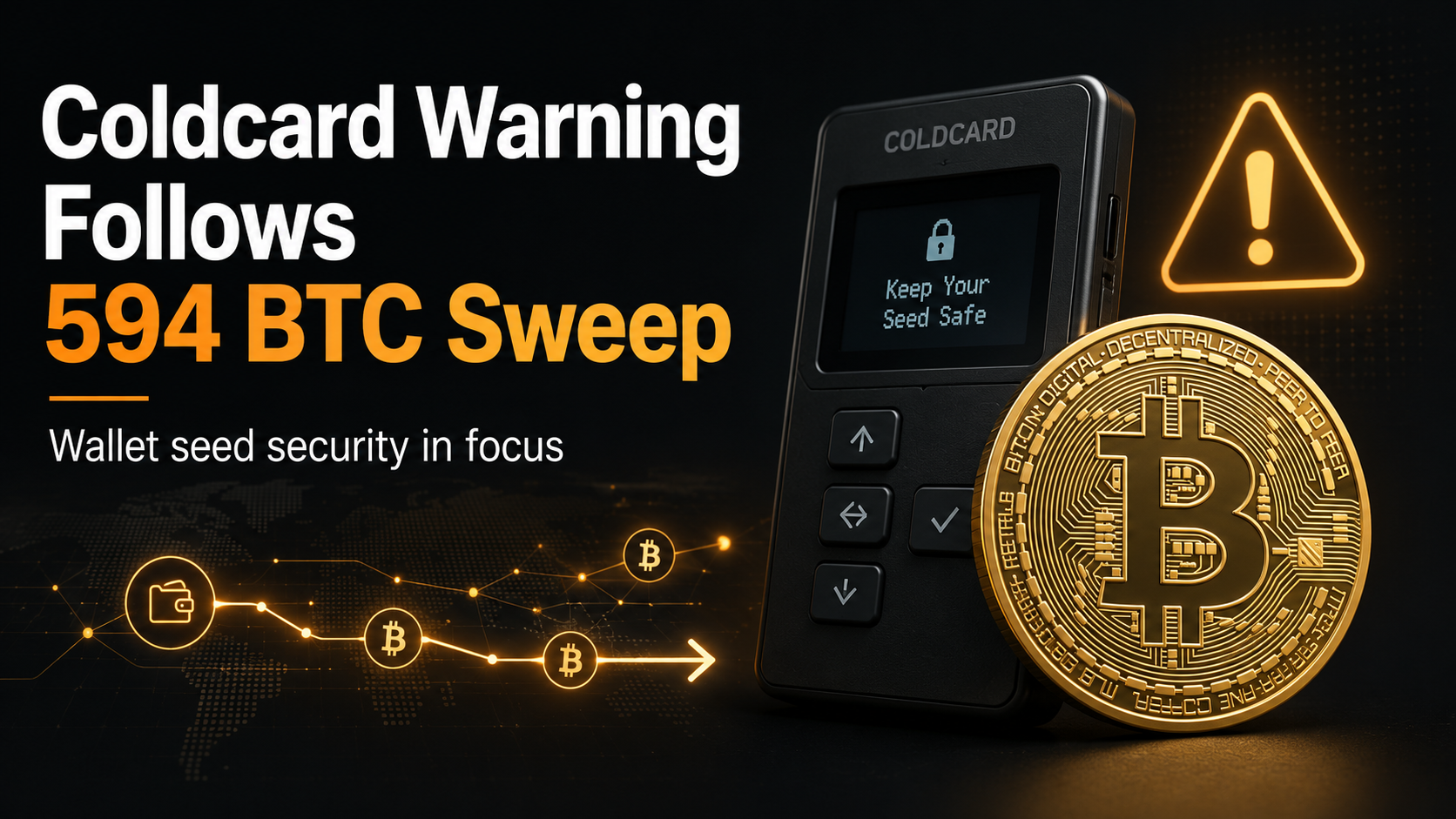
Coldcard Mk3の警告、3800万ドル相当のBitcoin掃討後に発生、原因は未確認
ビットコインハードウェアウォレットメーカーのCoinkiteは、4.0.1以降のすべてのMk3ファームウェアバージョンを含むColdcardデバイスに影響を与えるシード生成の問題についてユーザーに警告しました。この警告は、セキュリティ研究者が約3,800万ドル相当の594.48 BTCの組織的な移転を調査している中で出されました。しかし、Coldcardの問題がこれらの送金を引き起こしたことを確認

Bitget、日本市場撤退へ 12月末に未決済ポジション強制決済
Bitgetが2026年8月3日に日本居住者向けサービス終了を発表。12月31日までに未決済ポジションを決済しないと強制決済されるため、資産保有者は期限までの対応が必要です。


関連記事
もっと見る
CPIが急上昇し、利上げ懸念が強まる中、米国債利回りが5%を突破、19年ぶりの高水準に:市場は何を織り込んでいるのか? | MEXC Alpha Trader 週間分析
2026年9月 第2週報告期間:2026年9月9日~9月15日データ基準日:2026年9月15日市場概況先週の暗号資産市場は、市場予想を上回るインフレデータ、利上げ観測の強まり、地政学的リスクの高まりという複数の下落要因が重なり、持続的な圧力を受けました。BTC は期間開始時点で$78,000付近からスタートしましたが、CPIが市場予想を上回り、米国債利回りが5%の節目を突破する中で下落基調となり
トークン化預金は本当の銀行預金か?カナダのOSFIが銀行に明確な回答を示す
銀行が従来の顧客預金を受け入れ、それをブロックチェーン基盤上でトークンとして表現した場合、顧客が実際に所有するものは何でしょうか?暗号資産トークン?ステーブルコイン?それとも、異なる技術形態での同じ銀行預金?カナダの連邦銀行規制当局は、金融機関に対して非常に直接的な回答を示しました。2026年9月10日、カナダの金融機関監督庁(OSFI)は、トークン化された預金およびその他のデジタル表現された預金
デマット2.0とは?インド、デジタル・ルピー決済による1億700万ドルのトークン化債券パイロットを開始
インドはトークン化債券を規制計画から実運用の金融インフラへと移行させた。2026年9月、インドの3社が合計1,025億ルピー(約1億700万ドル)の社債をDemat 2.0を通じて発行した。これは、従来型の社債をデジタルトークンとして表し、現金側をインド準備銀行のホールセールデジタルルピーで決済する、新たな規制インフラである。発行体は以下の通り:RECリミテッド — 500億ルピーラーセン



