The post USD/JPY hovers below 160 amid intervention fears and Middle-East tensions appeared on BitcoinEthereumNews.com. The Japanese Yen (JPY) trades under pressureThe post USD/JPY hovers below 160 amid intervention fears and Middle-East tensions appeared on BitcoinEthereumNews.com. The Japanese Yen (JPY) trades under pressure

USD/JPY hovers below 160 amid intervention fears and Middle-East tensions

For feedback or concerns regarding this content, please contact us at crypto.news@mexc.com

The Japanese Yen (JPY) trades under pressure against the US Dollar (USD) on Friday, with USD/JPY trimming most of its losses from earlier in the week as ongoing Oil supply disruptions linked to Middle East tensions keep a lid on the Yen’s recovery despite a softer Greenback.

At the time of writing, the pair is trading around 159.30, remaining confined within a one-month trading range as traders stay cautious near the 160.00 handle, a level that previously triggered intervention from Japanese authorities. Recent comments from Japanese officials have reinforced expectations that authorities may step in to curb excessive moves, keeping upside attempts in check.

Meanwhile, traders continue to monitor developments surrounding the US-Iran ceasefire, with attention turning to upcoming negotiations scheduled to take place in Pakistan over the weekend. However, the outlook remains uncertain, as conflicting signals from the United States and Iran continue to cloud the diplomatic path.

Iran’s Parliament Speaker Mohammad Bagher Ghalibaf said a ceasefire in Lebanon and the release of Iranian blocked assets must be secured before negotiations can proceed.

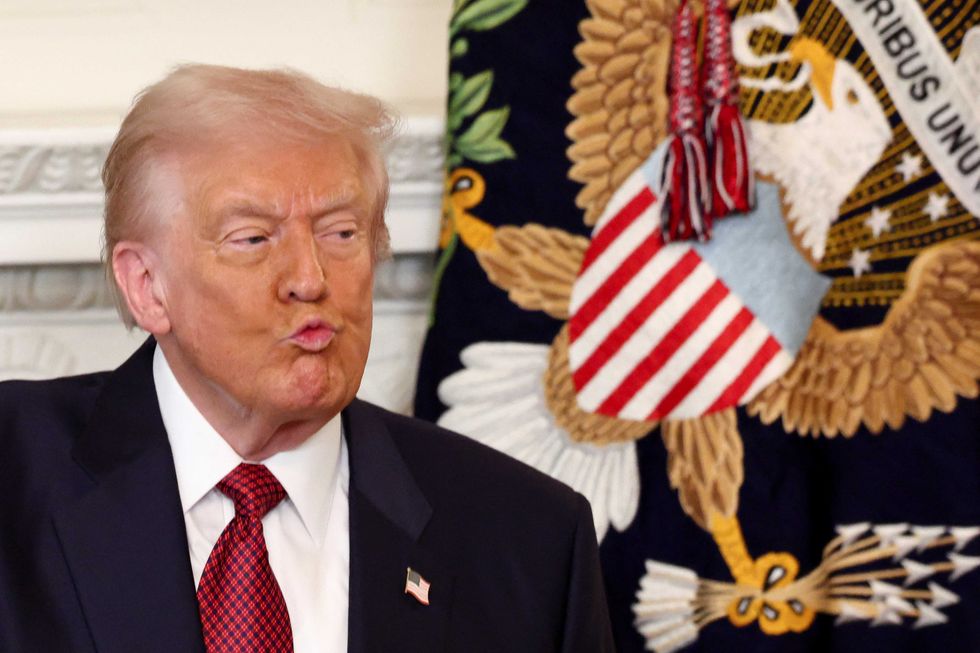
At the same time, US President Donald Trump told The New York Post that US warships are being reloaded with “the best ammunition” to resume strikes on Iran if peace talks fail, underscoring the fragile nature of the situation.

This backdrop is helping limit further downside in the US Dollar, which had weakened sharply to one-month lows following the initial ceasefire announcement. The US Dollar Index (DXY), which tracks the Greenback’s value against a basket of six major currencies, is trading around 98.67 after touching an intraday low near 98.50, though it remains on track for its biggest decline since January.

On the data front, rising Oil prices pushed US inflation higher in March, with headline CPI rising 0.9% MoM, up sharply from 0.3% in the previous month, while annual inflation accelerated to 3.3% from 2.4%, with both readings matching expectations. The firm print reinforces the view that the Federal Reserve (Fed) is likely to remain on hold in the near term, as both sides of its dual mandate face risks.

In Japan, Bank of Japan Deputy Governor Ryozo Himino said on Friday that he does not believe the economy is in stagflation, but acknowledged a policy dilemma if a prolonged Middle East conflict were to slow growth while accelerating inflation.

Inflation FAQs

Inflation measures the rise in the price of a representative basket of goods and services. Headline inflation is usually expressed as a percentage change on a month-on-month (MoM) and year-on-year (YoY) basis. Core inflation excludes more volatile elements such as food and fuel which can fluctuate because of geopolitical and seasonal factors. Core inflation is the figure economists focus on and is the level targeted by central banks, which are mandated to keep inflation at a manageable level, usually around 2%.

The Consumer Price Index (CPI) measures the change in prices of a basket of goods and services over a period of time. It is usually expressed as a percentage change on a month-on-month (MoM) and year-on-year (YoY) basis. Core CPI is the figure targeted by central banks as it excludes volatile food and fuel inputs. When Core CPI rises above 2% it usually results in higher interest rates and vice versa when it falls below 2%. Since higher interest rates are positive for a currency, higher inflation usually results in a stronger currency. The opposite is true when inflation falls.

Although it may seem counter-intuitive, high inflation in a country pushes up the value of its currency and vice versa for lower inflation. This is because the central bank will normally raise interest rates to combat the higher inflation, which attract more global capital inflows from investors looking for a lucrative place to park their money.

Formerly, Gold was the asset investors turned to in times of high inflation because it preserved its value, and whilst investors will often still buy Gold for its safe-haven properties in times of extreme market turmoil, this is not the case most of the time. This is because when inflation is high, central banks will put up interest rates to combat it.
Higher interest rates are negative for Gold because they increase the opportunity-cost of holding Gold vis-a-vis an interest-bearing asset or placing the money in a cash deposit account. On the flipside, lower inflation tends to be positive for Gold as it brings interest rates down, making the bright metal a more viable investment alternative.

Source: https://www.fxstreet.com/news/usd-jpy-hovers-below-160-amid-intervention-fears-and-middle-east-tensions-202604101827


Market Opportunity
NEAR Logo
NEAR Price(NEAR)
$1.3574
$1.3574$1.3574
-1.35%
USD
NEAR (NEAR) Live Price Chart
Disclaimer: The articles reposted on this site are sourced from public platforms and are provided for informational purposes only. They do not necessarily reflect the views of MEXC. All rights remain with the original authors. If you believe any content infringes on third-party rights, please contact crypto.news@mexc.com for removal. MEXC makes no guarantees regarding the accuracy, completeness, or timeliness of the content and is not responsible for any actions taken based on the information provided. The content does not constitute financial, legal, or other professional advice, nor should it be considered a recommendation or endorsement by MEXC.

You May Also Like

Trump promising mass White House pardons: report

Trump promising mass White House pardons: report

President Donald Trump is promising mass pardons to White House staff, and has done so repeatedly, the Wall Street Journal reports.“I’ll pardon everyone who has
Share
Alternet2026/04/11 04:34
Kaspa Gained 10.02% in Last Month and is Predicted to Drop to $0.028204 By Apr 06, 2026

Kaspa Gained 10.02% in Last Month and is Predicted to Drop to $0.028204 By Apr 06, 2026

The post Kaspa Gained 10.02% in Last Month and is Predicted to Drop to $0.028204 By Apr 06, 2026 appeared on BitcoinEthereumNews.com. Disclaimer: This is not investment
Share
BitcoinEthereumNews2026/04/02 18:13
Vitalik Buterin Reveals Ethereum’s Bold Plan to Stay Quantum-Secure and Simple!

Vitalik Buterin Reveals Ethereum’s Bold Plan to Stay Quantum-Secure and Simple!

Buterin unveils Ethereum’s strategy to tackle quantum security challenges ahead. Ethereum focuses on simplifying architecture while boosting security for users. Ethereum’s market stability grows as Buterin’s roadmap gains investor confidence. Ethereum founder Vitalik Buterin has unveiled his long-term vision for the blockchain, focusing on making Ethereum quantum-secure while maintaining its simplicity for users. Buterin presented his roadmap at the Japanese Developer Conference, and splits the future of Ethereum into three phases: short-term, mid-term, and long-term. Buterin’s most ambitious goal for Ethereum is to safeguard the blockchain against the threats posed by quantum computing.  The danger of such future developments is that the future may call into question the cryptographic security of most blockchain systems, and Ethereum will be able to remain ahead thanks to more sophisticated mathematical techniques to ensure the safety and integrity of its protocols. Buterin is committed to ensuring that Ethereum evolves in a way that not only meets today’s security challenges but also prepares for the unknowns of tomorrow. Also Read: Ethereum Giant The Ether Machine Takes Major Step Toward Going Public! However, in spite of such high ambitions, Buterin insisted that Ethereum also needed to simplify its architecture. An important aspect of this vision is to remove unnecessary complexity and make Ethereum more accessible and maintainable without losing its strong security capabilities. Security and simplicity form the core of Buterin’s strategy, as they guarantee that the users of Ethereum experience both security and smooth processes. Focus on Speed and Efficiency in the Short-Term In the short term, Buterin aims to enhance Ethereum’s transaction efficiency, a crucial step toward improving scalability and reducing transaction costs. These advantages are attributed to the fact that, within the mid-term, Ethereum is planning to enhance the speed of transactions in layer-2 networks. According to Butterin, this is part of Ethereum’s expansion, particularly because there is still more need to use blockchain technology to date. The other important aspect of Ethereum’s development is the layer-2 solutions. Buterin supports an approach in which the layer-2 networks are dependent on layer-1 to perform some essential tasks like data security, proof, and censorship resistance. This will enable the layer-2 systems of Ethereum to be concerned with verifying and sequencing transactions, which will improve the overall speed and efficiency of the network. Ethereum’s Market Stability Reflects Confidence in Long-Term Strategy Ethereum’s market performance has remained solid, with the cryptocurrency holding steady above $4,000. Currently priced at $4,492.15, Ethereum has experienced a slight 0.93% increase over the last 24 hours, while its trading volume surged by 8.72%, reaching $34.14 billion. These figures point to growing investor confidence in Ethereum’s long-term vision. The crypto community remains optimistic about Ethereum’s future, with many predicting the price could rise to $5,500 by mid-October. Buterin’s clear, forward-thinking strategy continues to build trust in Ethereum as one of the most secure and scalable blockchain platforms in the market. Also Read: Whales Dump 200 Million XRP in Just 2 Weeks – Is XRP’s Price on the Verge of Collapse? The post Vitalik Buterin Reveals Ethereum’s Bold Plan to Stay Quantum-Secure and Simple! appeared first on 36Crypto.
Share
Coinstats2025/09/18 01:22

USD1 Genesis: 0 Fees + 12% APR

USD1 Genesis: 0 Fees + 12% APRUSD1 Genesis: 0 Fees + 12% APR

New users: stake for up to 600% APR. Limited time!