Pi Network Long-Term Vision Gains Attention as Community Emphasizes Patience and Ecosystem Building
Pi Network Long-Term Vision Gains Attention as Community Emphasizes Patience and Ecosystem Building
In the fast-moving world of cryptocurrency, where prices can shift dramatically within hours and narratives evolve just as quickly, long-term thinking has become a defining principle for many blockchain communities. Within the Pi Network ecosystem, this mindset is increasingly being highlighted as users and supporters emphasize patience, ecosystem development, and real-world application over short-term market speculation.
The idea of “building for the long term” has become a central theme in discussions surrounding Pi Network. It reflects a broader philosophy that value in decentralized ecosystems is not created instantly, but rather through gradual development, sustained participation, and the continuous expansion of real use cases.
Unlike traditional financial markets, where short-term trading often dominates attention, blockchain ecosystems operate on a different developmental timeline. Early-stage networks typically undergo multiple phases of growth, including infrastructure building, user onboarding, developer engagement, and application deployment. Each phase contributes incrementally to the overall strength and utility of the ecosystem.
Within this context, Pi Network is often described by its community as a long-term project focused on building trust and practical utility. Rather than prioritizing immediate market outcomes, the emphasis is placed on creating a functional ecosystem where users can eventually interact through real-world applications and services powered by Picoin.
A key element of this long-term vision is patience. In emerging technologies, especially within Web3 and blockchain development, patience is not simply a passive waiting period but an active process of participation and learning. Users who engage early often contribute to ecosystem growth by supporting adoption, testing applications, and participating in network activities that help shape future functionality.
This approach contrasts with short-term speculative behavior, which focuses primarily on rapid gains driven by market fluctuations. While speculation can play a role in liquidity and price discovery, it does not necessarily contribute to the development of underlying infrastructure or long-term utility.
The Pi Network community narrative frequently emphasizes the importance of preparing rather than waiting. This distinction highlights a shift in mindset from passive observation to active engagement. In this framework, users are encouraged to familiarize themselves with ecosystem developments, explore available tools, and understand the evolving structure of the network.
Preparation in this sense is closely tied to ecosystem readiness. As blockchain projects evolve, opportunities for participation often expand beyond simple asset holding into areas such as application usage, development, governance participation, and digital commerce. Being prepared means being ready to engage with these evolving opportunities as they emerge.
Another important aspect of this long-term perspective is the role of real-world applications. In the broader Web3 ecosystem, the success of any blockchain network is increasingly measured by its ability to support practical use cases. These include digital payments, decentralized applications, identity systems, and peer-to-peer services.
Without real-world utility, digital assets risk remaining purely speculative instruments. With utility, however, they become integrated into broader economic systems, increasing their relevance and sustainability over time. This is why many blockchain projects place strong emphasis on ecosystem development rather than short-term market performance.
Pi Network’s positioning within this landscape reflects a similar approach. The focus on ecosystem growth suggests a strategy aimed at gradually building functional infrastructure that can support meaningful economic activity. This includes enabling developers to build applications, encouraging user participation, and fostering environments where Picoin can potentially be used in practical scenarios.
However, long-term strategies in blockchain ecosystems are not without challenges. One of the primary difficulties lies in maintaining user engagement over extended development periods. Without immediate external validation in the form of market pricing or liquidity, sustaining interest requires consistent communication, visible progress, and incremental delivery of features.
 |
| Source: Xpost |
Another challenge is managing expectations. In decentralized communities, narratives can spread quickly, and expectations about future outcomes may vary widely among participants. Aligning these expectations with actual development progress is an ongoing process that requires transparency and steady ecosystem advancement.
Despite these challenges, long-term focused communities often demonstrate resilience. Historical patterns in the cryptocurrency industry show that projects with sustained development efforts and strong community support are more likely to achieve meaningful adoption over time, even if initial phases appear uncertain or slow.
The idea that true value takes time to build is particularly relevant in blockchain ecosystems. Unlike traditional assets, where valuation may be based on established financial metrics, digital ecosystems often require time to develop network effects. These effects occur when the value of a system increases as more users participate, creating a self-reinforcing cycle of adoption and utility.
In the case of Pi Network, the concept of network effects is closely tied to user participation and ecosystem expansion. As more users engage with the platform and more applications are developed, the potential utility of the network increases. Over time, this can contribute to stronger ecosystem integration and broader adoption.
From an analytical perspective, long-term blockchain success is typically determined by several key factors: technological stability, developer activity, user engagement, and real-world use cases. Each of these elements contributes to the overall sustainability of the ecosystem.
In conclusion, the emphasis on long-term thinking within the Pi Network community reflects a broader shift in how blockchain projects are perceived and evaluated. Rather than focusing solely on short-term outcomes, attention is increasingly directed toward ecosystem development, practical utility, and sustained participation.
While markets may fluctuate daily, the underlying message remains consistent: building meaningful digital economies takes time, and those who remain engaged throughout the development process are often positioned to benefit from the eventual maturation of the ecosystem.
hokanews – Not Just Crypto News. It’s Crypto Culture.
Writer @Victoria
Victoria Hale is a pioneering force in the Pi Network and a passionate blockchain enthusiast. With firsthand experience in shaping and understanding the Pi ecosystem, Victoria has a unique talent for breaking down complex developments in Pi Network into engaging and easy-to-understand stories. She highlights the latest innovations, growth strategies, and emerging opportunities within the Pi community, bringing readers closer to the heart of the evolving crypto revolution. From new features to user trend analysis, Victoria ensures every story is not only informative but also inspiring for Pi Network enthusiasts everywhere.
Disclaimer:
The articles on HOKANEWS are here to keep you updated on the latest buzz in crypto, tech, and beyond—but they’re not financial advice. We’re sharing info, trends, and insights, not telling you to buy, sell, or invest. Always do your own homework before making any money moves.
HOKANEWS isn’t responsible for any losses, gains, or chaos that might happen if you act on what you read here. Investment decisions should come from your own research—and, ideally, guidance from a qualified financial advisor. Remember: crypto and tech move fast, info changes in a blink, and while we aim for accuracy, we can’t promise it’s 100% complete or up-to-date.
Stay curious, stay safe, and enjoy the ride!


You May Also Like
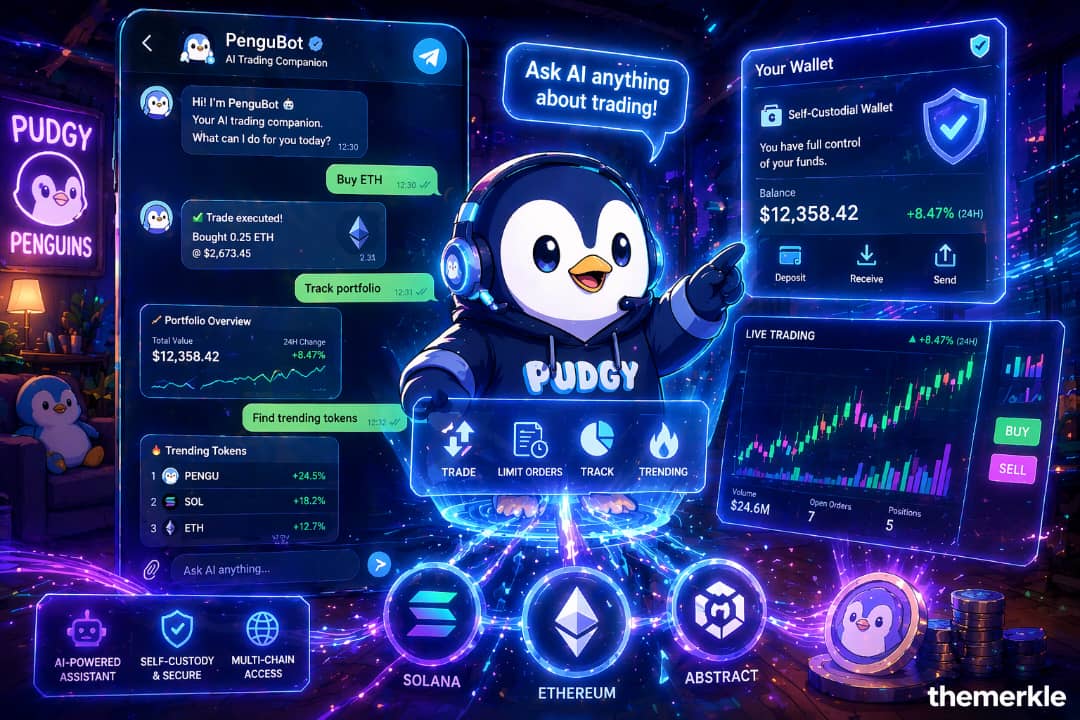
Pudgy Penguins Launches PenguBot: The AI-Powered Trading Companion Making Crypto More Accessible via Telegram
MEXC Spot Market Adds Ondo Tokenized Plug Power, iShares MSCI South Korea and Japan ETFs