

KuCoin Appoints AML Chief in EU Following Austria’s MiCA Ban
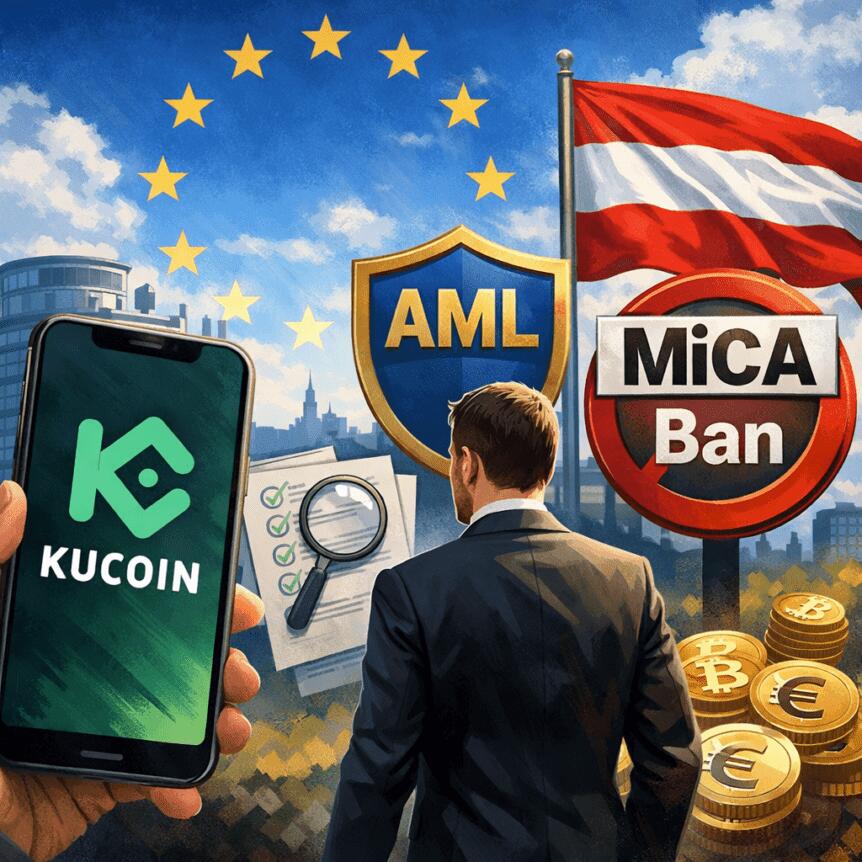
KuCoin EU, the MiCA-licensed arm of the exchange operating within Austria, has appointed Carmen Kleinhans as Anti-Money Laundering (AML) officer and expanded its Vienna-based compliance team with two deputy AML officers drawn from former Austrian regulators and bank compliance leadership. The staffing overhaul comes weeks after Austria’s Financial Market Authority (FMA) barred KuCoin EU from onboarding new clients and signing new contracts, citing deficiencies in key AML/CTF and sanctions controls. The move underscores a broader regulatory push in the European Union toward stronger governance, risk management, and regulatory engagement as MiCA supervision tightens.
According to Cointelegraph, the FMA’s decision reflected concerns that KuCoin EU did not have adequately staffed control functions, a finding that triggered the onboarding ban while regulators assessed the exchange’s readiness to operate under the MiCA framework. The hiring spree in Vienna is meant to align KuCoin EU with conventional financial-services compliance expectations and to bolster institutional credibility with regulators and banking partners alike.
Key takeaways
- KuCoin EU appoints Carmen Kleinhans as AML officer and adds two deputy AML officers sourced from Austrian regulatory and banking compliance backgrounds, expanding the exchange’s governance and risk-capability footprint in Vienna.
- The personnel move follows the FMA’s February action prohibiting KuCoin EU from onboarding new clients or signing new contracts, citing gaps in AML/CTF and sanctions staffing.
- The broader crypto enforcement environment is sharpening its focus on governance and controls, with regulators increasingly willing to suspend or constrain operations over organizational deficiencies rather than solely pursuing technical rule breaches.
- Cross-border actions against KuCoin and its parent entity illustrate the growing enforcement risk profile for crypto firms, spanning the United States, the Middle East, and other jurisdictions.
- The effectiveness of KuCoin EU’s restored control framework will depend on the FMA’s assessment of whether the new governance and risk-management functions are fully operational and compliant under Austrian authorization and MiCA supervision.
Regulatory backdrop: MiCA enforcement and the FMA action
The European Union’s MiCA framework places substantial emphasis on governance, risk management, AML/CTF controls, sanctions screening, and licensing readiness for crypto-asset service providers. In this context, national supervisors retain substantial oversight authority to ensure that licensees meet organizational and internal-control standards necessary for ongoing operations. Austria’s FMA acted in February to prevent KuCoin EU from onboarding new clients or entering into new contracts, a move that regulators described as necessary to address identified staffing gaps in critical compliance roles. The decision signals that, under MiCA, regulators are prepared to take tangible steps to curb operations until governance functions are demonstrably sound—even when the technical aspects of a platform remain intact.
For market participants and institutional observers, the FMA action illustrates a shift toward governance-centered enforcement. Rather than focusing solely on whether a platform offers a particular token or security, authorities are prioritizing whether firms maintain robust, verifiable control environments capable of preventing money movement that could finance illicit activity. This aligns with a broader, multijurisdictional trend toward tightening AML/CTF regimes in crypto, with regulators scrutinizing corporate structure, compliance staffing, risk-management processes, and formal regulatory engagement capabilities as prerequisites for continued operation.
KuCoin EU governance expansion: leadership and scope
The newly announced leadership changes place a seat at the helm of KuCoin EU’s AML program with Carmen Kleinhans, who will lead the entity’s AML, CTF, and sanctions controls. She will be supported by two deputy AML officers—professionals with backgrounds in Austrian regulatory authorities and banking compliance leadership—who will contribute to enterprise-wide risk management and ongoing regulatory engagement. The collective mandate encompasses not only the traditional AML/CTF and sanctions screening functions but also governance oversight across the organization and comprehensive risk reporting to Austrian authorities and, by extension, MiCA supervisory structures.
These hires are intended to rectify the staffing gaps cited by the FMA and to bring KuCoin EU into closer alignment with established financial-services compliance standards. By strengthening governance and control frameworks, KuCoin aims to reduce regulatory uncertainty and improve collaboration with supervisors, auditors, and prospective banking partners. The emphasis on enterprise-wide risk management signals a holistic approach to regulatory compliance that goes beyond ticking technical compliance boxes to address organizational design, reporting lines, and oversight mechanisms that influence day-to-day operations and strategic decision-making.
Enforcement landscape: trends shaping risk for global crypto firms
Enforcement in the crypto sector has increasingly prioritized governance and controls. A regulatory-compliance narrative supported by independent audits and enforcement data shows that firms are being penalized for weaknesses in anti-financial-crime controls as much as for securities or licensing missteps. A CertiK report published on a recent Tuesday highlighted that KuCoin and OKX were among exchanges facing some of the largest AML-related penalties in 2025, underscoring a shift in focus toward financial-crime prevention and control deficiencies rather than solely toward securities-law concerns.
Beyond the EU-specific actions, KuCoin has faced broader regulatory actions across other jurisdictions that amplify the systemic risk profile for cross-border crypto operators. In January 2025, KuCoin agreed to pay nearly $300 million and exit the U.S. market for two years in a criminal resolution related to unlicensed money transmission and AML failures, according to The Wall Street Journal. Later in March 2025, KuCoin’s parent company agreed to pay a $500,000 civil penalty to settle a CFTC action alleging it operated an unregistered offshore commodities exchange. In the same month, Dubai’s Virtual Assets Regulatory Authority issued a warning over allegedly unlicensed activity in the emirate. Taken together, these actions illustrate a broad, multi-jurisdictional enforcement posture that heightens regulatory risk for crypto firms pursuing global operations.
Whether KuCoin EU’s expanded compliance cadre will reconcile the Austrian authorization with MiCA expectations remains contingent on the FMA’s assessment of whether the new control functions have been fully and suitably restored. The timing of such an assessment will influence KuCoin’s ability to re-open or expand its European footprint under the MiCA regime, and could affect licensing timelines, bank onboarding, and ongoing regulatory reporting obligations. Cointelegraph reached out to KuCoin EU for comment, but did not receive a response by publication, underscoring the sensitivity and ongoing nature of regulatory reconciliations in this case.
These developments have practical implications for financial institutions, exchanges, and investors operating across Europe and beyond. For crypto firms, the case reinforces the imperative to institutionalize governance, formalize risk-management frameworks, and maintain ongoing regulatory dialogue as prerequisites for licensure and operational continuity. For regulators, the KuCoin EU episode exemplifies how MiCA and national supervisory regimes are converging toward governance-focused enforcement that scrutinizes organizational design, staff competence, and cross-border compliance programs as core risk-mitigating levers.
Closing perspective
Looking ahead, the key question is whether KuCoin EU’s strengthened compliance structure will satisfy the FMA and enable a durable path to reauthorization under MiCA. In a regulatory environment where governance and controls are increasingly seen as central to operational legitimacy, the Vienna-based initiative represents a critical test case for how crypto firms translate high-level regulatory expectations into enforceable, day-to-day governance practices across multi-jurisdictional operations.
This article was originally published as KuCoin Appoints AML Chief in EU Following Austria’s MiCA Ban on Crypto Breaking News – your trusted source for crypto news, Bitcoin news, and blockchain updates.


You May Also Like
Altseason Outlook Begins to Build on Strong Support From ALTSZN in Rotation

'Pretty shocking stuff': Alex Jones aghast as Trump likened to Jesus at White House event

How America can stage a 'remarkable comeback' after Trump’s 'bread and circuses'



