[OPINION] Karma or consequences? When the wheels turn for politicians and vloggers
Things we set in motion always quietly return, whether through words or deeds, whether born of cruelty or kindness. As the Filipino saying goes, bilog ang mundo. Those at the top today may find themselves humbled tomorrow, while those once silenced may eventually be heard.
Some call it karma, which is often imagined as punishment. For others, it is simply consequence unfolding over time. It does not arrive in fury or vengeance. It merely brings back what people themselves have released into the world. The insults, humiliations, and violence we give away rarely disappear completely. They linger, and sometimes they return when least expected.
Kahlil Gibran wrote about this in The Prophet through the image of children building sand towers by the sea. The towers stand briefly, proud and imposing, before they are washed away. Meanwhile, the ocean remains, unmoved and endless, carrying on its rhythm long after the towers disappear:
You delight in laying down laws,
Yet you delight more in breaking them.
Like children playing by the ocean who build sand-towers with constancy and then destroy them with laughter.
The passage is not only about hypocrisy. It is also about impermanence. Power has a way of making people believe they are untouchable, that their voices would never tremble, their influence would never fade, their names would never be questioned. But history has a habit of reminding people otherwise.
At the peak of his power, former president Rodrigo Duterte mocked almost everyone who displeased him — from God, whom he called “stupid”; to the Pope, whom he cursed; to judges of the International Criminal Court (ICC), whom he threatened to slap; to political opponents, whom he openly threatened with death. Many laughed along because power seemed permanent.
Some of his allies adopted the same tone. Harry Roque once told Senator Leila de Lima, “May you rot in jail.”
In 2019, Franco Mabanta, a social media strategist and founder of Peanut Gallery Media Network, mocked vlogger Jover Laurio, asking in his post: “Should we parade around the block and yell ‘shame, shame, shame’…while she is being escorted to jail in handcuffs? I mean aside from [Maria] Ressa, if ANYONE in politics deserves this, isn’t it her?”
For many in their circle, ridicule became part of political theater, rewarded by supporters and amplified on social media.
But power rarely lasts forever.
Today, Duterte is detained in Scheveningen prison in The Hague. During his initial appearance before the ICC, his voice trembled as he was asked to identify himself; lost was the swagger that once dominated his appearances.
Roque is now a fugitive in Europe. He is accused of qualified human trafficking that carries a penalty of life imprisonment if convicted.
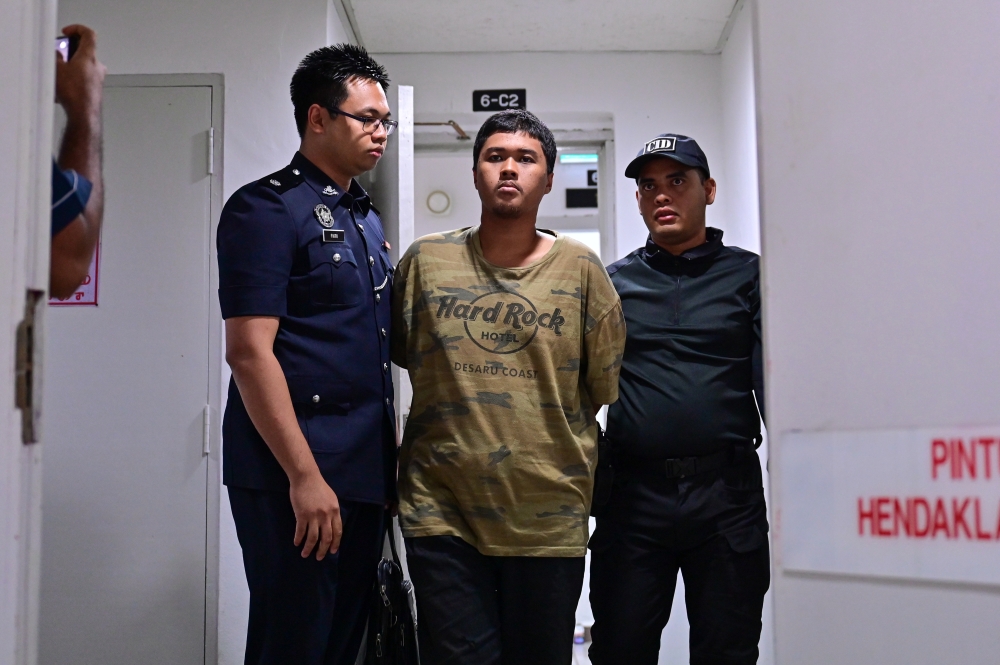
On May 6, Franco Mabanta was arrested by the National Bureau of Investigation for extortion and was escorted to jail in handcuffs.
None of this should be a source of celebration. Misfortune, even when deserved, should not become spectacle. The point is not revenge. The point is humility.
People in power often speak as though their influence is permanent, as though they will never be held accountable for their words or actions, never experience the same vulnerability they once dismissed in others. But public life changes quickly. The wheel turns. And, sooner or later, people will confront the consequences of the kind of world they helped shape.
Continued Gibran:
But while you build your sand-towers the ocean brings more sand to the shore,
And when you destroy them the ocean laughs with you.
Verily the ocean laughs always with the innocent.
Indeed, the ocean does not hate the sand tower. It simply outlasts it. – Rappler.com


You May Also Like

Ken Griffin Just Sold 40% of His Palantir (PLTR) Stock — Should You?

Binance Perpetual Futures Revolution: QQQ and Major US Stocks Enter Crypto Derivatives Market with 10x Leverage