Intesa Sanpaolo Boosts Crypto Exposure to $235 Million as Italy’s Largest Bank Deepens Digital Asset Bet
The Q1 Disclosure: A Steady Accumulation
Intesa Sanpaolo, Italy’s largest bank by assets, has quietly raised its crypto exposure to $235 million during the first quarter, according to the original report. The figure itself is not headline-grabbing in an era of billion-dollar ETF flows, but the signal is. Banks of this size do not add digital assets to their books on a whim. The move points to a deliberate, if still cautious, allocation decision inside one of Europe’s most systematically important lenders.
This is not an isolated episode. As traditional finance steadily absorbs digital asset infrastructure, the line between banking and crypto keeps blurring. Intesa’s exposure increase is less about speculation and more about positioning.
Why a $235M Position Matters for European Banking
In absolute terms, $235 million is a rounding error for a bank with a balance sheet exceeding €900 billion. But in the context of European banking conservatism, it is a notable step. Most large European banks still treat crypto as a reputational risk, not an asset class. Intesa’s willingness to show even a modest allocation suggests internal risk frameworks have evolved.
The bank has not disclosed whether the exposure is through spot assets, ETPs, or custody for clients. But the mere fact that it is reported as “crypto exposure” on its books matters. It indicates a shift from exploratory blockchain experiments to holding actual digital assets, however indirect. That is the threshold that many peers have refused to cross.
The Institutional Rotation Hidden in Plain Sight
While retail traders chase memecoins and leverage, pension funds, sovereign wealth funds, and now commercial banks are gradually adding crypto to their portfolios. Major U.S. investment banks have already disclosed multi-billion-dollar ETF positions, but in Europe the pace has been slower. Intesa’s move narrows that gap.
What is unfolding is a quiet institutional rotation. It is not driven by hype cycles but by asset-liability committees slowly recalibrating five-year views. The presence of regulated vehicles in Europe—such as German crypto ETPs and Swiss crypto products—gives banks a path to exposure without direct custody complexity. Intesa likely used such instruments.
What Intesa Sanpaolo’s Move Says About Eurozone Regulatory Comfort
Italian regulators have not been openly hostile to digital assets, but they have also not created a bespoke framework like Germany’s. Intesa’s decision to report crypto exposure publicly—rather than bury it in a note—indicates a level of regulatory comfort that other banks may take as a green light. The European Banking Authority’s gradually clearer stance on crypto asset classification under CRR/CRD rules reduces ambiguity, and banks like Intesa are now acting on that clarity.
The timing is also significant. It comes as the Markets in Crypto-Assets (MiCA) regulation moves into full application, providing a licensing regime that will make bank involvement more straightforward. Intesa’s positioning ahead of this full rollout suggests a strategic, not tactical, move.
Second-Order Effects: Liquidity, Custody, and Balance-Sheet Strategy
A bank increasing crypto exposure is not just a portfolio decision. It forces the institution to solve custody, liquidity reporting, and asset-liability matching for a volatile new asset. Even if the exposure is through ETPs, the bank must mark positions daily and hold capital against them under Basel rules. Intesa will have run those calculations.
Over time, if more European banks follow, the aggregate demand for compliant crypto vehicles will expand, further closing the gap between TradFi infrastructure and digital asset markets. Wall Street brokerages are already building direct ownership rails, and the next phase will be European universal banks doing the same. Intesa’s move is an early step in that normalization.
BTCUSA Insight
Intesa Sanpaolo’s disclosure is not a bullish call on Bitcoin’s next 10% move. It is a structural signal that institutional adoption in Europe is moving from conference panels to balance sheets. The amount is small enough to be a test, large enough to be material, and public enough to force a conversation inside every other large European bank. What matters now is not whether Intesa adds another $50 million next quarter, but whether six months from now, we see four other systemic European banks quietly replicating the same allocation. That would mark a genuine portfolio standard shift, not a one-off curiosity.
<p>The post Intesa Sanpaolo Boosts Crypto Exposure to $235 Million as Italy’s Largest Bank Deepens Digital Asset Bet first appeared on Crypto News And Market Updates | BTCUSA.</p>


You May Also Like
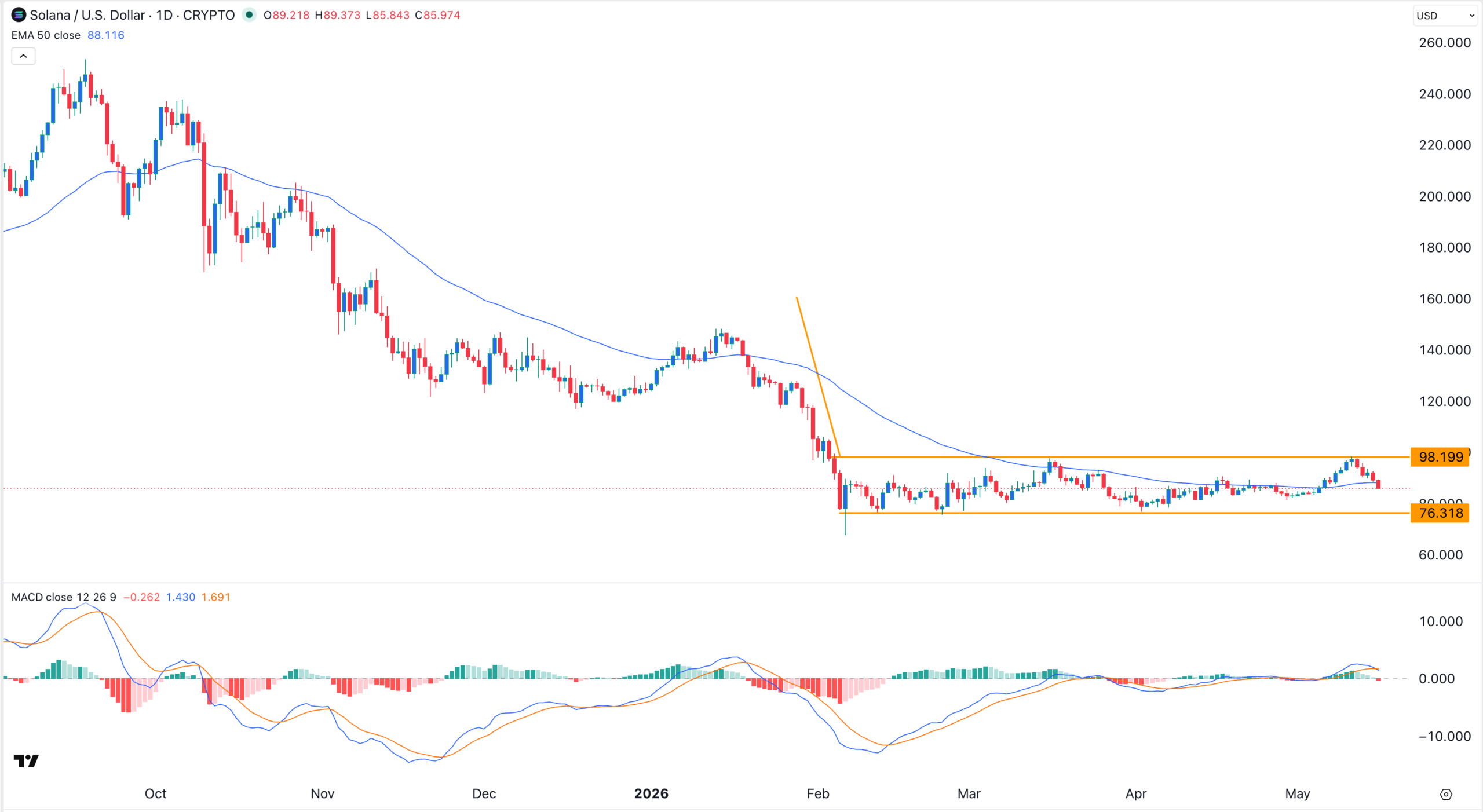
Solana Price is Hanging on a Thread as Crypto Fear and Greed Index Falls

House Agriculture Leaders Urge Trump to Nominate Full CFTC Commission as CLARITY Act Moves Forward