Push, the joint operation of Aave Labs’ UK-based entities Push Labs Ltd. and Push Virtual Assets Ltd., has secured registration from the Financial Conduct AuthorityPush, the joint operation of Aave Labs’ UK-based entities Push Labs Ltd. and Push Virtual Assets Ltd., has secured registration from the Financial Conduct Authority

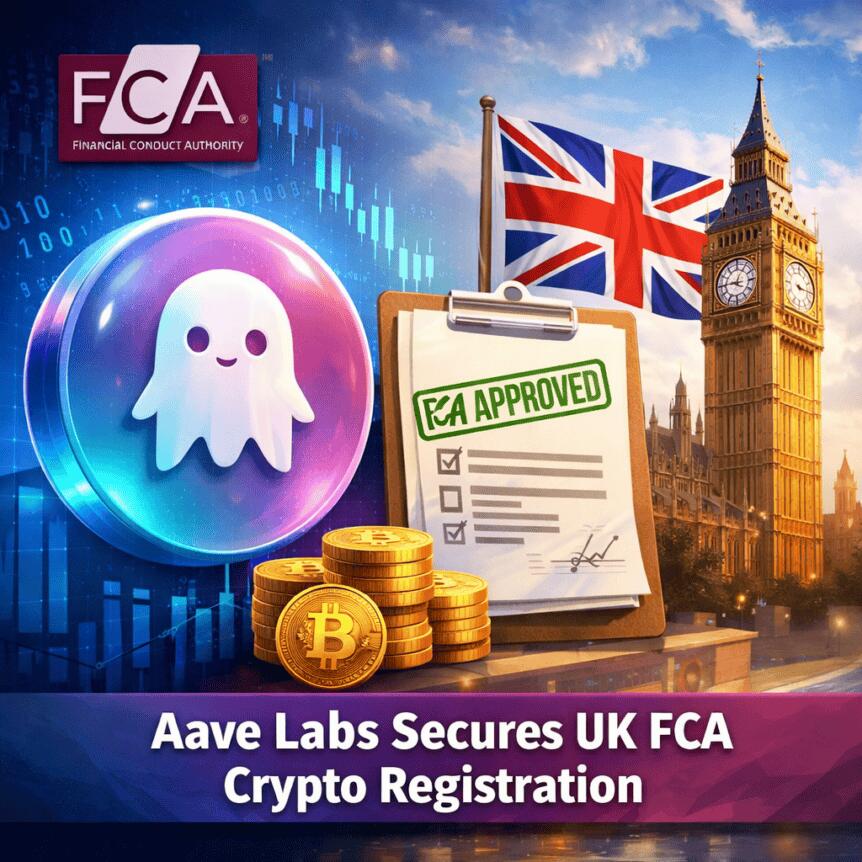
Aave Labs Secures UK FCA Crypto Registration
For feedback or concerns regarding this content, please contact us at crypto.news@mexc.com
Aave Labs Secures Uk Fca Crypto Registration

Push, the joint operation of Aave Labs’ UK-based entities Push Labs Ltd. and Push Virtual Assets Ltd., has secured registration from the Financial Conduct Authority as a cryptoasset exchange provider under the current anti-money-laundering regime. The FCA registration covers “certain cryptoasset activities” and is positioned to support the DeFi-focused project’s plan to build regulated stablecoin on- and off-ramping infrastructure in the United Kingdom. According to Cointelegraph, the move signals a concrete regulatory pathway for DeFi-native infrastructure within the UK’s evolving crypto regime.

Push describes itself as a “simple way to move between Euros and stablecoins” on its homepage, with the FCA online registry indicating the London-based company has been registered since May 12. The approval enables Push to pursue on- and off-ramping activities for stablecoins under regulatory permission in the UK, marking a notable milestone for the largest decentralized lending protocol in terms of community and developer ecosystem growth.

The broader regulatory backdrop matters here. The UK is advancing toward a comprehensive crypto regime under the Financial Services and Markets Act (FSMA), with full authorization requirements for crypto activities anticipated to take effect in October 2027. The FCA has previously stated that authorization under the forthcoming regime will not be automatically granted to firms registered under the existing Money Laundering Regulations, underscoring a staged and rigorous licensing path for crypto businesses operating in the country.

Key takeaways

  • Push Labs Ltd. and Push Virtual Assets Ltd. are registered with the UK FCA as cryptoasset exchange providers under the current AML regime, covering specific cryptoasset activities.
  • The registration supports Push’s plan to deploy regulated euro-stablecoin on/off-ramping infrastructure in the UK, expanding the DeFi ecosystem’s regulatory-compliant plumbing.
  • UK regulatory developments under FSMA 2027 will require full FCA authorization for crypto activities, and existing registrations under the Money Laundering Regulations are not guaranteed to transfer automatically.
  • Push offers non-custodial ramping between euros and stablecoins, with claims of zero-fee on/off-ramping between bank accounts and crypto wallets; the service currently targets Ireland residents and is rolling out across Europe.
  • The registration and Push’s positioning occur alongside broader market activity, including onramps from competitors such as Coinbase on Base, Ramp Network, Bleap, and Alchemy Pay.
  • Aave Labs’ broader ecosystem activity includes a recent DAO-funded infusion of stablecoins and AAVE token incentives to accelerate development, illustrating strategic alignment between regulatory-compliant infrastructure and ecosystem growth.

Regulatory context and Push’s FCA registration

The FCA’s registration of Push under the UK’s current anti-money-laundering framework indicates a careful calibration of DeFi infrastructure within the country’s evolving policy regime. The agency’s stance that authorization under the upcoming FSMA regime will not be automatic for firms previously registered under the Money Laundering Regulations reinforces a two-tier transition: firms can operate under existing AML rules, but must secure full authorization as the new regime takes effect. For Push, the registration serves as a formal green light to pursue regulated stablecoin on/off-ramping capabilities in the UK while the broader licensing framework is finalized.

According to Cointelegraph’s coverage of the development, the UK government and regulators are moving toward a more holistic crypto framework that balances innovation with consumer protection, market integrity, and cross-border compliance considerations. The FSMA 2027 implementation is expected to shape licensing, ongoing supervision, and regulatory expectations for exchanges, custodians, payment services, and related crypto activities across the UK financial system.

Non-custodial euro-stablecoin ramping and regulatory implications

Push markets itself as a non-custodial ramping solution that enables users to convert between euros and stablecoins, with on- and off-ramping capabilities linked to traditional bank accounts and crypto wallets. The non-custodial design implies that Push does not hold custody of user funds as stablecoins are transferred directly to users’ wallets, a structure that can influence how due diligence, KYC, and AML obligations are carried out by both the provider and participating financial institutions.

In practice, the registration enables Push to experiment with regulated stablecoin infrastructure in a jurisdiction known for a converging approach to crypto policy. For banks and other regulated entities, such on/off ramps could entail defined risk controls, compliance reporting, and ongoing oversight to satisfy both UK AML requirements and anticipated FSMA stipulations. The UK’s regulatory trajectory, including potential alignment with broader EU policies such as MiCA, may also shape how such on/off-ramping facilities are integrated into cross-border payment and settlement flows, as well as into stablecoin governance and custody expectations.

Push’s current footprint includes availability for residents in Ireland, with plans to extend services across Europe and into additional EEA markets. The European expansion strategy places Push within a competitive landscape of onramp providers aiming to offer low- or zero-fee experiences for euro-to-stablecoin conversions, while navigating a patchwork of national regulations and future EU-level harmonization efforts.

Market landscape, competition, and ecosystem financing

In the broader onramp ecosystem, Push competes with several providers offering low- or zero-fee transfers of stablecoins to and from fiat currencies. Coinbase’s onramp for USDC on the Base network has highlighted zero-fee transfers in certain corridors, while Ramp Network, Bleap, and Alchemy Pay are also active participants in the stablecoin onboarding and offboarding space. The regulatory clearance for Push reinforces ongoing policy-driven diversification of the onramp landscape, particularly for EU-UK cross-border activity that may be shaped by evolving licensing regimes and supervision standards.

Push’s emergence occurs alongside a broader strategic initiative within Aave Labs, the research and development arm behind Aave’s DeFi infrastructure. In a recent development, Aave Labs received $25 million in stablecoins from the protocol’s DAO under the “Aave Will Win” framework, aimed at accelerating growth and operations. In addition, the DAO allocated 75,000 Aave (AAVE) tokens to incentivize developers to contribute to the protocol’s expansion. This funding signal underscores a concerted push to scale regulated, standards-aligned DeFi infrastructure, including compliant on-/off-ramping capabilities that can operate within or alongside traditional financial rails.

As a reference point, Aave sits as the largest decentralized lending protocol by user activity and is among the top DeFi protocols by total value locked (TVL), with data from DefiLlama placing its TVL in the billions of dollars range. The regulatory registration of Push and the related ecosystem funding reflect a broader industry shift toward formalized regulatory engagement, increased institutional oversight, and a more orderly integration of DeFi services with traditional financial markets.

Closing perspective

Push’s FCA registration represents a meaningful step in the maturation of DeFi infrastructure within the UK and across Europe, signaling regulatory tolerance for regulated, non-custodial on-/off-ramping services that tie into euro-denominated stablecoins. As the FSMA framework unfolds, operators like Push will be evaluated against stricter licensing criteria and ongoing supervision, with potential implications for how exchanges, wallets, and stablecoins interact with the broader banking and payments ecosystem. Monitoring how Push and similar providers navigate licensing, KYC/AML expectations, and cross-border compliance will be essential for regulators, financial institutions, and institutional users seeking clarity on operational requirements and risk controls in this evolving regulatory landscape.

This article was originally published as Aave Labs Secures UK FCA Crypto Registration on Crypto Breaking News – your trusted source for crypto news, Bitcoin news, and blockchain updates.


Market Opportunity
AaveToken Logo
AaveToken Price(AAVE)
$98.19
$98.19$98.19
+2.06%
USD
AaveToken (AAVE) Live Price Chart

Get Covered, Share 1M USDT

Get Covered, Share 1M USDTGet Covered, Share 1M USDT

Higher VVIP tiers, higher compensation odds.

Disclaimer: The articles reposted on this site are sourced from public platforms and are provided for informational purposes only. They do not necessarily reflect the views of MEXC. All rights remain with the original authors. If you believe any content infringes on third-party rights, please contact crypto.news@mexc.com for removal. MEXC makes no guarantees regarding the accuracy, completeness, or timeliness of the content and is not responsible for any actions taken based on the information provided. The content does not constitute financial, legal, or other professional advice, nor should it be considered a recommendation or endorsement by MEXC.

You May Also Like

The changing face of elder care in Malaysia — Sayed Mohammad Reza Yamani Sayed Umar

The changing face of elder care in Malaysia — Sayed Mohammad Reza Yamani Sayed Umar

JULY 10 — An elderly society is becoming increasingly prevalent in Malaysia at present. It is projected that the p...
Share
Malaymail2026/07/10 15:24
Not a loophole: Singapore AI export controls let China tap US AI legally

Not a loophole: Singapore AI export controls let China tap US AI legally

American AI technology is reaching Chinese tech giants through a route that US export controls were never designed to close: Singapore. The city-state sits outside
Share
The Cryptonomist2026/07/10 14:46
Unlocking Massive Value: Curve Finance Revenue Sharing Proposal for CRV Holders

Unlocking Massive Value: Curve Finance Revenue Sharing Proposal for CRV Holders

BitcoinWorld Unlocking Massive Value: Curve Finance Revenue Sharing Proposal for CRV Holders The dynamic world of decentralized finance (DeFi) is constantly evolving, bringing forth new opportunities and innovations. A significant development is currently unfolding at Curve Finance, a leading decentralized exchange (DEX). Its founder, Michael Egorov, has put forth an exciting proposal designed to offer a more direct path for token holders to earn revenue. This initiative, centered around a new Curve Finance revenue sharing model, aims to bolster the value for those actively participating in the protocol’s governance. What is the “Yield Basis” Proposal and How Does it Work? At the core of this forward-thinking initiative is a new protocol dubbed Yield Basis. Michael Egorov introduced this concept on the CurveDAO governance forum, outlining a mechanism to distribute sustainable profits directly to CRV holders. Specifically, it targets those who stake their CRV tokens to gain veCRV, which are essential for governance participation within the Curve ecosystem. Let’s break down the initial steps of this innovative proposal: crvUSD Issuance: Before the Yield Basis protocol goes live, $60 million in crvUSD will be issued. Strategic Fund Allocation: The funds generated from the sale of these crvUSD tokens will be strategically deployed into three distinct Bitcoin-based liquidity pools: WBTC, cbBTC, and tBTC. Pool Capping: To ensure balanced risk and diversified exposure, each of these pools will be capped at $10 million. This carefully designed structure aims to establish a robust and consistent income stream, forming the bedrock of a sustainable Curve Finance revenue sharing mechanism. Why is This Curve Finance Revenue Sharing Significant for CRV Holders? This proposal marks a pivotal moment for CRV holders, particularly those dedicated to the long-term health and governance of Curve Finance. Historically, generating revenue for token holders in the DeFi space can often be complex. The Yield Basis proposal simplifies this by offering a more direct and transparent pathway to earnings. By staking CRV for veCRV, holders are not merely engaging in governance; they are now directly positioned to benefit from the protocol’s overall success. The significance of this development is multifaceted: Direct Profit Distribution: veCRV holders are set to receive a substantial share of the profits generated by the Yield Basis protocol. Incentivized Governance: This direct financial incentive encourages more users to stake their CRV, which in turn strengthens the protocol’s decentralized governance structure. Enhanced Value Proposition: The promise of sustainable revenue sharing could significantly boost the inherent value of holding and staking CRV tokens. Ultimately, this move underscores Curve Finance’s dedication to rewarding its committed community and ensuring the long-term vitality of its ecosystem through effective Curve Finance revenue sharing. Understanding the Mechanics: Profit Distribution and Ecosystem Support The distribution model for Yield Basis has been thoughtfully crafted to strike a balance between rewarding veCRV holders and supporting the wider Curve ecosystem. Under the terms of the proposal, a substantial portion of the value generated by Yield Basis will flow back to those who contribute to the protocol’s governance. Returns for veCRV Holders: A significant share, specifically between 35% and 65% of the value generated by Yield Basis, will be distributed to veCRV holders. This flexible range allows for dynamic adjustments based on market conditions and the protocol’s performance. Ecosystem Reserve: Crucially, 25% of the Yield Basis tokens will be reserved exclusively for the Curve ecosystem. This allocation can be utilized for various strategic purposes, such as funding ongoing development, issuing grants, or further incentivizing liquidity providers. This ensures the continuous growth and innovation of the platform. The proposal is currently undergoing a democratic vote on the CurveDAO governance forum, giving the community a direct voice in shaping the future of Curve Finance revenue sharing. The voting period is scheduled to conclude on September 24th. What’s Next for Curve Finance and CRV Holders? The proposed Yield Basis protocol represents a pioneering approach to sustainable revenue generation and community incentivization within the DeFi landscape. If approved by the community, this Curve Finance revenue sharing model has the potential to establish a new benchmark for how decentralized exchanges reward their most dedicated participants. It aims to foster a more robust and engaged community by directly linking governance participation with tangible financial benefits. This strategic move by Michael Egorov and the Curve Finance team highlights a strong commitment to innovation and strengthening the decentralized nature of the protocol. For CRV holders, a thorough understanding of this proposal is crucial for making informed decisions regarding their staking strategies and overall engagement with one of DeFi’s foundational platforms. FAQs about Curve Finance Revenue Sharing Q1: What is the main goal of the Yield Basis proposal? A1: The primary goal is to establish a more direct and sustainable way for CRV token holders who stake their tokens (receiving veCRV) to earn revenue from the Curve Finance protocol. Q2: How will funds be generated for the Yield Basis protocol? A2: Initially, $60 million in crvUSD will be issued and sold. The funds from this sale will then be allocated to three Bitcoin-based pools (WBTC, cbBTC, and tBTC), with each pool capped at $10 million, to generate profits. Q3: Who benefits from the Yield Basis revenue sharing? A3: The proposal states that between 35% and 65% of the value generated by Yield Basis will be returned to veCRV holders, who are CRV stakers participating in governance. Q4: What is the purpose of the 25% reserve for the Curve ecosystem? A4: This 25% reserve of Yield Basis tokens is intended to support the broader Curve ecosystem, potentially funding development, grants, or other initiatives that contribute to the platform’s growth and sustainability. Q5: When is the vote on the Yield Basis proposal? A5: A vote on the proposal is currently underway on the CurveDAO governance forum and is scheduled to run until September 24th. If you found this article insightful and valuable, please consider sharing it with your friends, colleagues, and followers on social media! Your support helps us continue to deliver important DeFi insights and analysis to a wider audience. To learn more about the latest DeFi market trends, explore our article on key developments shaping decentralized finance institutional adoption. This post Unlocking Massive Value: Curve Finance Revenue Sharing Proposal for CRV Holders first appeared on BitcoinWorld.


Share
Coinstats2025/09/18 00:35

Record Ads, Stock Down 7%

Record Ads, Stock Down 7%Record Ads, Stock Down 7%

Jul 29: Meta earnings face the market's question.
