

Ripple XRPL AI Starter Kit Joins Mastercard’s 30-Company Payment Push
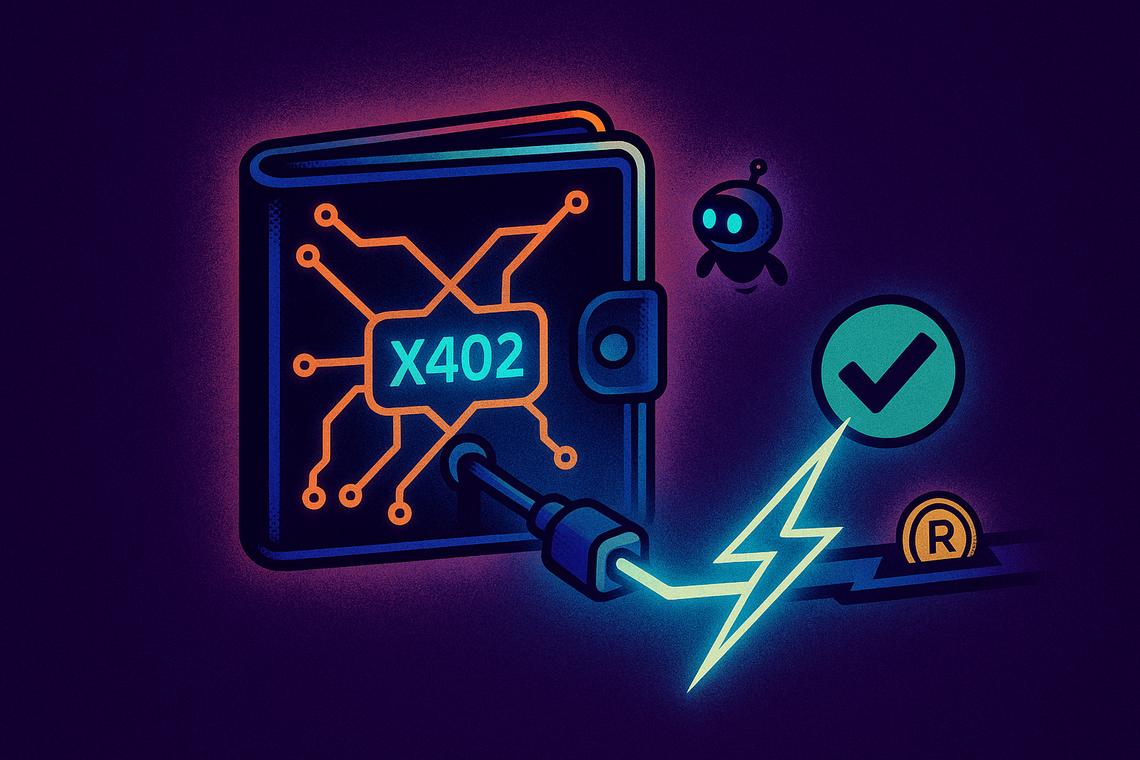
Ripple quietly made a significant move on June 11th, 2026, releasing the Ripple XRPL AI Starter Kit — a developer toolkit built to let AI agents send and receive payments on their own, without a human in the loop. If that sounds like science fiction, it is much closer to shipping code than most people realize.
The kit runs on the XRP Ledger and supports transactions in both XRP and the Ripple RLUSD stablecoin. At its technical core is the X402 payment protocol, which lets software agents make payments programmatically in real time. In practice, an AI agent could automatically pay for cloud computing resources, API access, or digital content the moment it needs them — with no approval, no delay, and no human intervention required.
That is a different way of thinking about payments, and Ripple is not building it alone.
Ripple launches the XRPL AI Starter Kit for autonomous payments
The Ripple XRPL AI Starter Kit arrives with a clear purpose: give developers everything they need to build applications where machines handle financial transactions independently. The toolkit bundles wallets, payment integrations, and technical documentation into a single package, lowering the barrier for teams looking to build what the industry is starting to call agentic payments applications.
Ripple was direct about why speed alone is not enough for this emerging category. “As AI agents begin transacting on behalf of businesses, payments need more than speed. They need trust, controls, and clear rules for how value moves,” the company stated.
That framing matters because the issue is not just whether a payment clears quickly. It is whether the entire system can be trusted when no human is watching the transaction happen.
What the XRPL AI Starter Kit can do
The practical reach of the kit is broad. By leveraging the X402 payment protocol, AI agents can execute payments across a range of use cases:
- Paying for data access or API calls in real time
- Settling cloud computing charges automatically
- Purchasing digital content without manual authorization
Both XRP and RLUSD are supported, giving developers flexibility between a native crypto asset and a dollar-pegged stablecoin depending on what their application needs.
How the X402 payment protocol works
The X402 protocol is what makes the autonomous flow possible. It functions as a machine-readable payment layer, allowing software to initiate and complete transactions programmatically. Rather than triggering a human payment approval at each step, the protocol embeds payment logic directly into how agents interact with services and resources. It is infrastructure designed for a world where machines, not people, are the primary transactors.
Ripple joins Mastercard Agent Pay for Machines
One day before the starter kit launch, on June 10th, Ripple joined Mastercard’s newly unveiled Agent Pay for Machines program, a framework built specifically to support high-volume, low-cost machine-to-machine payments at scale.
The coalition Mastercard assembled is notable. More than 30 companies have signed on, including Stripe, Coinbase, Cloudflare, and OKX alongside Ripple. The breadth of that list — spanning payments, crypto, cloud infrastructure, and fintech — suggests the industry sees agentic payments not as a niche experiment but as a serious infrastructure priority.
Ripple’s contribution to the initiative comes through its XRP Ledger technology and the Ripple RLUSD stablecoin, while the company works with partners to test new use cases and develop shared standards for machine-driven payments. The collaboration positions Ripple not just as a participant but as a foundational infrastructure provider within the Mastercard-led framework.
That is strategically significant. Being embedded in a standard-setting effort at this early stage gives Ripple influence over how the rules of agentic commerce get written.
Why agentic payments matter for AI-powered commerce
Mastercard’s broader vision for the Agent Pay program points to something that does not fully exist yet: a new category of commerce built around continuous, low-value transactions happening at internet scale. If AI agents become regular economic participants — buying services, managing subscriptions, and accessing resources dynamically — the payment infrastructure underneath them needs to handle enormous volumes with minimal friction and cost.
For blockchain networks, that is a potentially enormous opportunity. Traditional payment rails were not designed for millions of micro-transactions initiated by software. Decentralized ledgers, by contrast, can handle programmable, near-instant settlements at a fraction of the cost, which is precisely the pitch Ripple is making with the XRP Ledger.
What developers gain from the Ripple XRPL AI Starter Kit
For developers, the Ripple XRPL AI Starter Kit removes a genuinely painful barrier. Building payment infrastructure from scratch is expensive, time-consuming, and technically demanding. Ripple’s ready-made toolkit lets teams integrate XRP and RLUSD payment capabilities directly into their agentic applications without reinventing the wheel.
The strategic picture for Ripple extends well beyond developer convenience, though. By releasing this toolkit now and aligning with Mastercard’s initiative, Ripple is making a clear bet that XRP and RLUSD will be embedded in the plumbing of AI-powered commerce before the market fully matures. That kind of early infrastructure positioning, if it holds, could prove far more durable than competing on transaction speed or fees alone.
The XRP Ledger has long been positioned as a high-speed, low-cost settlement network. Agentic payments may be the use case that finally puts that infrastructure in front of an entirely new category of builders and enterprises — ones who have never thought of themselves as crypto users, but who need exactly what blockchain-native payment rails can offer.
FAQ
What is the XRPL AI Starter Kit?
The XRPL AI Starter Kit is a developer toolkit launched by Ripple on June 11th, 2026, designed to help teams build applications where AI agents can send and receive payments autonomously on the XRP Ledger, using XRP and the Ripple RLUSD stablecoin.
How does the XRPL AI Starter Kit enable autonomous payments?
The kit uses the X402 payment protocol, which allows AI agents to initiate and complete payments programmatically without human approval. It provides developers with wallets, payment integrations, and documentation to build agentic payment applications.
Which cryptocurrencies are supported by the XRPL AI Starter Kit?
The XRPL AI Starter Kit supports transactions in both XRP and the Ripple RLUSD stablecoin.
What is Mastercard’s Agent Pay for Machines program?
Agent Pay for Machines is a Mastercard initiative unveiled on June 10th, 2026, designed to support high-volume, low-cost machine-to-machine payments at scale. More than 30 companies joined the program, including Stripe, Coinbase, Cloudflare, OKX, and Ripple.
How does Ripple’s collaboration with Mastercard impact AI-powered payments?
Ripple is contributing its XRP Ledger technology and Ripple RLUSD stablecoin to the Mastercard Agent Pay framework, helping test new use cases and develop shared standards for machine-driven payments. The partnership positions Ripple as a foundational infrastructure provider in the emerging agentic payments space.


You May Also Like

Crypto Hack: Drift Protocol Drained Over $200M in Private Key Breach

Metaplanet Stock Passes MARA to Become Third-Largest BTC Holder — Stock Slips Anyway

StakeStone (STO) Rockets 125%: What $981M Trading Volume Reveals



