

U.S.-Iran Talks, Oil Prices, and Fed Rate Fears: What’s Moving Gold Right Now
TLDR
- Spot gold rose around 0.4% to ~$4,088 on Thursday after hitting a six-month low earlier in the session
- A pullback in Brent crude eased some inflation fears, giving gold a modest lift
- U.S. and Iran continued peace talks overnight despite exchanging air strikes for a second straight day
- U.S. consumer prices rose at their fastest pace in years, driven by higher gasoline costs
- Markets now expect the Federal Reserve to raise rates before end of 2026, which weighs on gold
Gold prices climbed modestly on Thursday after oil prices pulled back, reducing some concerns about inflation running higher. Spot gold was up around 0.4% at $4,088 per ounce by mid-morning. Earlier in the session, prices had dropped to their lowest point in more than six months.
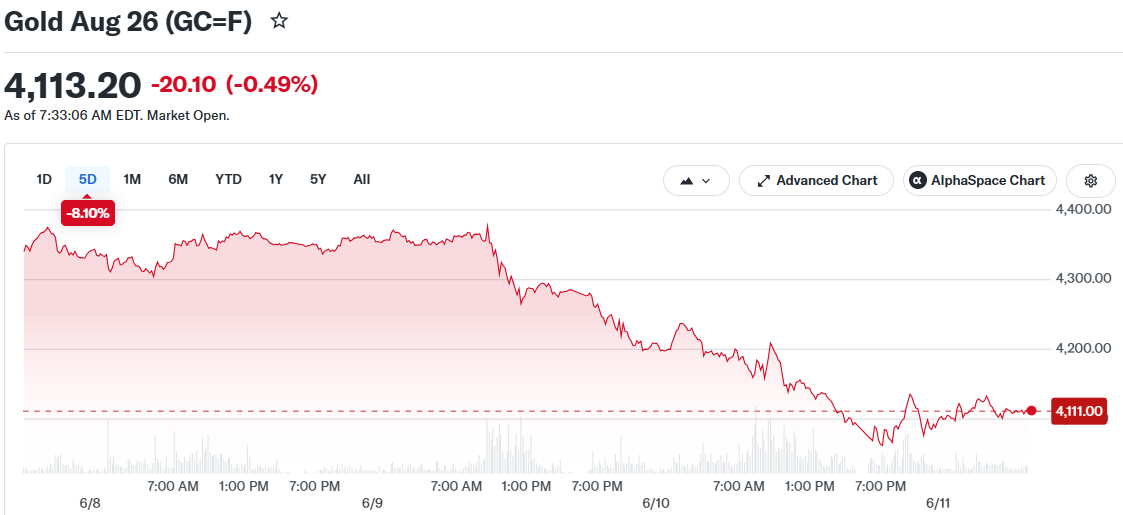 Gold Aug 26 (GC=F)
Gold futures moved in the opposite direction, falling around 0.6% to $4,107 per ounce.
Oil Retreat Gives Gold Some Room
Brent crude edged lower on Thursday, reversing part of the gains made after the latest round of U.S.-Iran military strikes. Oil prices remain well above pre-conflict levels, but the dip helped calm some fears of a fresh inflation spike.
Higher energy costs have been pushing up consumer prices. Data released Wednesday showed U.S. consumer price inflation running at its hottest rate in years, largely driven by gasoline. Investors are now watching U.S. producer price data, due later Thursday, for more clues.
When inflation rises, central banks tend to lift interest rates. That is a headwind for gold, which pays no interest or dividends.
Markets are now pricing in a Federal Reserve rate hike before the end of 2026, according to CME’s FedWatch Tool. The European Central Bank was also expected to raise rates at the end of its two-day policy meeting Thursday, as it works to control inflation across the eurozone.
U.S.-Iran Tensions Remain High
U.S. and Iranian officials continued peace negotiations overnight, even as both sides launched air strikes for a second consecutive day. CNN reported talks were still active. Reuters, citing Iranian sources, said discussions included a possible mechanism to unfreeze Iranian assets.
President Trump warned of further military action if Iran did not immediately accept a deal.
U.S. Central Command said American forces struck multiple targets in Iran overnight, describing the attacks as self-defense following the downing of a U.S. helicopter near the Strait of Hormuz.
Iran retaliated with strikes on U.S. military bases and allied positions in the Gulf. Explosions were reported in Kuwait, Bahrain, and Jordan, though these reports have not been independently confirmed.
Iran claimed it had halted all ship traffic through the Strait of Hormuz. U.S. Central Command denied that claim.
Iran has also continued exchanging strikes with Israel over Israeli operations against Hezbollah forces in Lebanon.
The U.S. dollar strengthened since the conflict began in late February, which can make gold more expensive for buyers outside the U.S. The Dollar Index was last up 0.1% at 100.09 on Thursday.
Investors are watching both the pace of diplomacy and central bank decisions closely as key factors that will shape gold’s direction in the weeks ahead.
The post U.S.-Iran Talks, Oil Prices, and Fed Rate Fears: What’s Moving Gold Right Now appeared first on CoinCentral.


You May Also Like

LIST: Bayanihan initiatives amid soaring oil prices

Crypto Hack: Drift Protocol Drained Over $200M in Private Key Breach

Metaplanet Stock Passes MARA to Become Third-Largest BTC Holder — Stock Slips Anyway



