BitcoinWorld AWS re:Invent 2025: The Revolutionary Shift to Autonomous AI Agents and Enterprise Control The curtains have closed on AWS re:Invent 2025, but the message is crystal clear: the future of enterprise technology is autonomous, agentic, and firmly in the hands of developers. This year’s flagship event in Las Vegas moved beyond simple AI assistants, declaring a new era where AI agents work independently for days, learn from your […] This post AWS re:Invent 2025: The Revolutionary Shift to Autonomous AI Agents and Enterprise Control first appeared on BitcoinWorld.BitcoinWorld AWS re:Invent 2025: The Revolutionary Shift to Autonomous AI Agents and Enterprise Control The curtains have closed on AWS re:Invent 2025, but the message is crystal clear: the future of enterprise technology is autonomous, agentic, and firmly in the hands of developers. This year’s flagship event in Las Vegas moved beyond simple AI assistants, declaring a new era where AI agents work independently for days, learn from your […] This post AWS re:Invent 2025: The Revolutionary Shift to Autonomous AI Agents and Enterprise Control first appeared on BitcoinWorld.

AWS re:Invent 2025: The Revolutionary Shift to Autonomous AI Agents and Enterprise Control

2025/12/05 09:50
AWS re:Invent 2025: The Revolutionary Shift to Autonomous AI Agents and Enterprise Control

BitcoinWorld
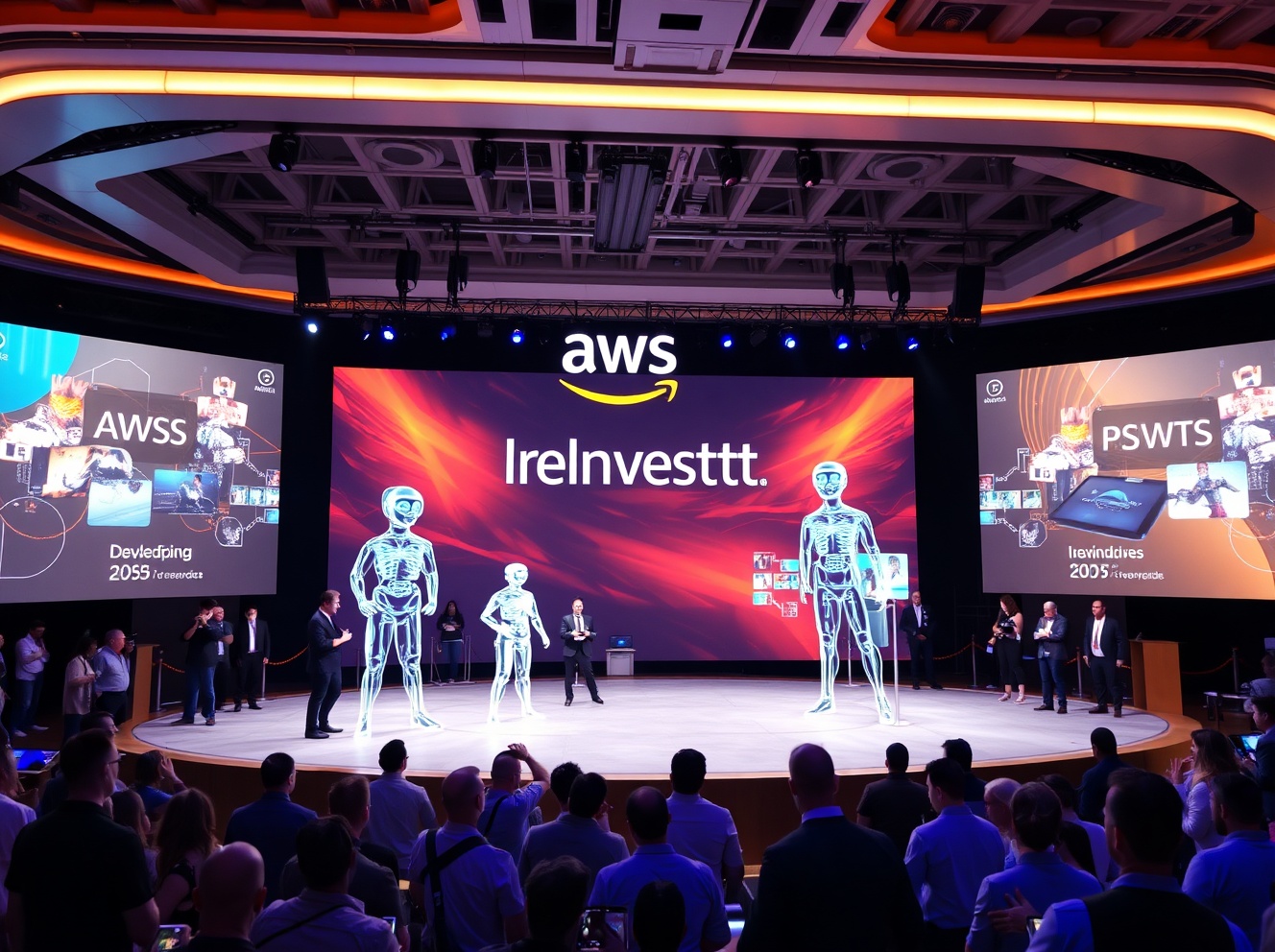
AWS re:Invent 2025: The Revolutionary Shift to Autonomous AI Agents and Enterprise Control

The curtains have closed on AWS re:Invent 2025, but the message is crystal clear: the future of enterprise technology is autonomous, agentic, and firmly in the hands of developers. This year’s flagship event in Las Vegas moved beyond simple AI assistants, declaring a new era where AI agents work independently for days, learn from your team, and drive tangible business returns. For the crypto and tech communities watching, the implications are profound, signaling a massive infrastructure shift that could power the next generation of decentralized applications and intelligent platforms. The focus was squarely on giving enterprise AI customers unprecedented control and customization.

AWS re:Invent 2025 Declares the Age of the AI Agent

The opening keynote from AWS CEO Matt Garman set the tone, asserting that AI agents represent the “true value” of artificial intelligence investments. “AI assistants are starting to give way to AI agents that can perform tasks and automate on your behalf,” Garman stated. This wasn’t just theoretical; the conference was packed with product announcements designed to make this a reality. Swami Sivasubramanian, VP of Agentic AI at AWS, captured the bullish sentiment: “Agents give you the freedom to build without limits, accelerating how quickly you can go from idea to impact.” The core promise of AWS re:Invent 2025 was to provide the tools that turn this promise into a daily operational reality for businesses worldwide.

Frontier Agents: Your New Autonomous Teammates

AWS introduced three groundbreaking “Frontier agents,” designed to operate with significant autonomy. The standout is the Kiro autonomous agent, a coding assistant that learns a team’s patterns and can then work independently for hours or even days. This moves far beyond code completion into the realm of a persistent, learning software engineer. The other agents target critical enterprise functions:

  • Security Agent: Automates code reviews and security audits.
  • DevOps Agent: Manages deployments and works to prevent incidents when pushing new code live.

These agents are available in preview, marking a concrete step toward the agentic future AWS is championing.

Supercharging Enterprise AI with New Chips and Systems

Underpinning these advanced AI capabilities is a new generation of hardware. AWS made significant announcements on the AI chips front, crucial for anyone building compute-intensive applications like AI model training or blockchain validation.

Chip/SystemKey FeaturePerformance Claim
Graviton5 CPU192 processor cores, reduced inter-core latencyHighest performance and efficiency yet for general compute
Trainium3 AI ChipNext-gen training & inference chip4x performance gain, 40% lower energy use
UltraServer AI SystemRuns Trainium3 chipsDesigned for massive-scale AI workloads
AI FactoryOn-premises AWS AI system (with Nvidia/ Trainium3)Addresses data sovereignty for governments & corporations

A critical teaser was that the already-in-development Trainium4 will feature compatibility with Nvidia’s chips, a strategic move acknowledging the heterogeneous reality of modern enterprise AI infrastructure.

Building Smarter: Tools for Custom LLMs and Agent Control

For enterprises wanting to build their own intelligence, AWS unveiled major upgrades to its developer platforms. The goal is to simplify the creation of custom LLMs and governable agents.

  • Amazon SageMaker AI: Now includes serverless model customization, allowing developers to start building without managing underlying infrastructure.
  • Amazon Bedrock: Introduced Reinforcement Fine Tuning, offering preset workflows to automate the customization process from start to finish.
  • AgentCore Platform: Enhanced with “Policy” features for setting agent boundaries, memory capabilities for user context, and 13 prebuilt evaluation systems.

These tools lower the barrier to entry for creating specialized, secure, and effective AI solutions tailored to unique business data and processes.

The Human Element: Werner Vogels’ Final Bow and the Job Question

In an emotional closing keynote, Amazon CTO Dr. Werner Vogels announced this would be his final re:Invent presentation after 14 years. He directly addressed the elephant in the room: “Will AI take my job? Maybe… We should rephrase… Will AI make me obsolete? Absolutely not, if you evolve.” His message was one of empowerment, urging developers to see AI as a tool for augmentation rather than replacement. This human-centric perspective was a vital counterbalance to the wave of automation news, emphasizing that the future belongs to those who learn to collaborate with these new AI agents.

Real Impact and Cost Savings

The conference wasn’t just about future promises. Customer stories and immediate cost-saving measures highlighted present-day value:

  • Lyft reported using an AI agent built with Anthropic’s Claude on Bedrock to handle driver/rider issues, cutting average resolution time by 87% and increasing driver usage by 70%.
  • AWS launched Database Savings Plans, offering up to 35% cost reduction for committed database usage, a move hailed by cloud economists after years of customer requests.
  • Amazon is offering a year of free credits for its Kiro coding agent to eligible early-stage startups, aiming to win developer mindshare.

Conclusion: A Foundation for the Next Decade of Innovation

AWS re:Invent 2025 was a definitive pivot from talking about AI to building the operational framework for it. By focusing on autonomous agents, powerful and efficient AI chips, and tools for creating custom LLMs, AWS is providing the building blocks for the next wave of enterprise AI applications. For the tech and crypto ecosystems, these advancements mean more accessible, powerful, and sovereign compute resources. The ability to run AI factories on-premises and train models on proprietary data securely opens new doors for innovation in fintech, DeFi, and beyond. The message from Las Vegas is clear: the agentic future is here, and it’s built on AWS.

To learn more about the latest trends in AI and cloud infrastructure, explore our dedicated coverage on key developments shaping the future of enterprise technology and decentralized innovation.

Frequently Asked Questions (FAQs)

What was the main theme of AWS re:Invent 2025?
The dominant theme was the transition from AI assistants to autonomous AI agents that can perform complex tasks over extended periods, with a strong emphasis on giving enterprises control and customization tools.

What are “Frontier agents” announced at AWS re:Invent?
Frontier agents are a new class of autonomous AI workers from AWS. They include the Kiro agent for coding, an agent for security code reviews, and an agent for DevOps tasks, all designed to learn and operate independently.

What new AI chips did AWS announce?
AWS unveiled the Graviton5 CPU for general compute and the Trainium3 chip for AI training and inference, claiming 4x performance gains and 40% lower energy use. They also teased Trainium4, which will be compatible with Nvidia GPUs.

Is Amazon CTO Werner Vogels leaving Amazon?
No. During his final re:Invent keynote, Werner Vogels clarified he is not leaving Amazon. He stated it was time for “young, fresh, new voices” to take the keynote stage after 14 years.

How are companies like Lyft using AWS AI?
Lyft shared that it uses an AI agent built with Anthropic’s Claude model via Amazon Bedrock to handle customer support, reducing resolution time by 87% and increasing driver engagement with the tool by 70% this year.

This post AWS re:Invent 2025: The Revolutionary Shift to Autonomous AI Agents and Enterprise Control first appeared on BitcoinWorld.


Disclaimer: The articles reposted on this site are sourced from public platforms and are provided for informational purposes only. They do not necessarily reflect the views of MEXC. All rights remain with the original authors. If you believe any content infringes on third-party rights, please contact service@support.mexc.com for removal. MEXC makes no guarantees regarding the accuracy, completeness, or timeliness of the content and is not responsible for any actions taken based on the information provided. The content does not constitute financial, legal, or other professional advice, nor should it be considered a recommendation or endorsement by MEXC.

You May Also Like

SSP Stock Surges 11% On FY25 Earnings And European Rail Review

SSP Stock Surges 11% On FY25 Earnings And European Rail Review

The post SSP Stock Surges 11% On FY25 Earnings And European Rail Review appeared on BitcoinEthereumNews.com. SSP Group stock rebounded strongly today. (Photo Illustration by Pavlo Gonchar/SOPA Images/LightRocket via Getty Images) SOPA Images/LightRocket via Getty Images Shares in travel food retailer SSP Group rose sharply today after the company posted solid FY25 results, highlighting good growth in two of its four regional divisions, and a decision to review its under‑performing Continental European rail business. The food and beverage (F&B) company’s stock closed 11.3% up in London on the back of a revenue rise of 7.8% (at constant currency) to £3.6 billion ($4.8 billion) in the 12 months to September. Operating profit jumped by 12.7% to £223 million ($298 million). Under statutory IFRS reporting, however, operating profit fell 58% to £86 million, which SSP said in a statement “reflected £183 million of non‑underlying expenses and impairment charges.” The decision to review its rail business in Continental Europe—the biggest of the F&B giant’s four divisions by revenue at £1,205 million ($1,607 million)—was welcomed by the market, given its weak performance of 2% like-for-like (LFL) growth. A carrot was also dangled— a reward to shareholders arising from the July IPO of SSP’s Indian joint venture Travel Food Services (TFS) with K Hospitality, India’s largest privately held F&B company. SSP Group CEO Patrick Coveney said in a statement: “We acknowledge there is more to do to strengthen our operational performance, most notably in Continental Europe, where we have now reset our team, model, and balance sheet, and have a range of initiatives underway. In addition, we are launching a wide-ranging review of our rail business in Continental Europe. We are also considering options to realise value for our shareholders in line with the delivery of the TFS free float requirement.” SSP currently retains a 50.01% stake in TFS and said: “We believe that India’s market potential, combined with TFS’s attractive…
Share
BitcoinEthereumNews2025/12/05 13:37
Hong Kong Backs Commercial Bank Tokenized Deposits in 2025

Hong Kong Backs Commercial Bank Tokenized Deposits in 2025

The post Hong Kong Backs Commercial Bank Tokenized Deposits in 2025 appeared on BitcoinEthereumNews.com. HKMA to support tokenized deposits and regular issuance of digital bonds. SFC drafting licensing framework for trading, custody, and stablecoin issuers. New rules will cover stablecoin issuers, digital asset trading, and custody services. Hong Kong is stepping up its digital finance ambitions with a policy blueprint that places tokenization at the core of banking innovation.  In the 2025 Policy Address, Chief Executive John Lee outlined measures that will see the Hong Kong Monetary Authority (HKMA) encourage commercial banks to roll out tokenized deposits and expand the city’s live tokenized-asset transactions. Hong Kong’s Project Ensemble to Drive Tokenized Deposits Lee confirmed that the HKMA will “continue to take forward Project Ensemble, including encouraging commercial banks to introduce tokenised deposits, and promoting live transactions of tokenised assets, such as the settlement of tokenised money market funds with tokenised deposits.” The initiative aims to embed tokenized deposits, bank liabilities represented as blockchain-based tokens, into mainstream financial operations. These deposits could facilitate the settlement of money-market funds and other financial instruments more quickly and efficiently. To ensure a controlled rollout, the HKMA will utilize its regulatory sandbox to enable banks to test tokenized products while enhancing risk management. Tokenized Bonds to Become a Regular Feature Beyond deposits, the government intends to make tokenized bond issuance a permanent element of Hong Kong’s financial markets. After successful pilots, including green bonds, the HKMA will help regularize the issuance process to build deep and liquid markets for digital bonds accessible to both local and international investors. Related: Beijing Blocks State-Owned Firms From Stablecoin Businesses in Hong Kong Hong Kong’s Global Financial Role The policy address also set out a comprehensive regulatory framework for digital assets. Hong Kong is implementing a regime for stablecoin issuers and drafting licensing rules for digital asset trading and custody services. The Securities…
Share
BitcoinEthereumNews2025/09/18 07:10
Headwind Helps Best Wallet Token

Headwind Helps Best Wallet Token

The post Headwind Helps Best Wallet Token appeared on BitcoinEthereumNews.com. Google has announced the launch of a new open-source protocol called Agent Payments Protocol (AP2) in partnership with Coinbase, the Ethereum Foundation, and 60 other organizations. This allows AI agents to make payments on behalf of users using various methods such as real-time bank transfers, credit and debit cards, and, most importantly, stablecoins. Let’s explore in detail what this could mean for the broader cryptocurrency markets, and also highlight a presale crypto (Best Wallet Token) that could explode as a result of this development. Google’s Push for Stablecoins Agent Payments Protocol (AP2) uses digital contracts known as ‘Intent Mandates’ and ‘Verifiable Credentials’ to ensure that AI agents undertake only those payments authorized by the user. Mandates, by the way, are cryptographically signed, tamper-proof digital contracts that act as verifiable proof of a user’s instruction. For example, let’s say you instruct an AI agent to never spend more than $200 in a single transaction. This instruction is written into an Intent Mandate, which serves as a digital contract. Now, whenever the AI agent tries to make a payment, it must present this mandate as proof of authorization, which will then be verified via the AP2 protocol. Alongside this, Google has also launched the A2A x402 extension to accelerate support for the Web3 ecosystem. This production-ready solution enables agent-based crypto payments and will help reshape the growth of cryptocurrency integration within the AP2 protocol. Google’s inclusion of stablecoins in AP2 is a massive vote of confidence in dollar-pegged cryptocurrencies and a huge step toward making them a mainstream payment option. This widens stablecoin usage beyond trading and speculation, positioning them at the center of the consumption economy. The recent enactment of the GENIUS Act in the U.S. gives stablecoins more structure and legal support. Imagine paying for things like data crawls, per-task…
Share
BitcoinEthereumNews2025/09/18 01:27