The post Buyers remain in control despite near-term consolidation appeared on BitcoinEthereumNews.com. The British Pound (GBP) ticks lower against the Japanese The post Buyers remain in control despite near-term consolidation appeared on BitcoinEthereumNews.com. The British Pound (GBP) ticks lower against the Japanese

Buyers remain in control despite near-term consolidation

For feedback or concerns regarding this content, please contact us at crypto.news@mexc.com

The British Pound (GBP) ticks lower against the Japanese Yen (JPY) on Wednesday, extending losses for a second straight day. At the time of writing, GBP/JPY trades around the 211.00 psychological mark, down nearly 0.20%.

The pullback has so far remained contained, with the wide UK–Japan interest-rate differential continuing to underpin the cross near levels last seen in 2008. GBP/JPY climbed nearly 7% last year, underpinned by lingering fiscal concerns in Japan and the Bank of Japan’s (BoJ) cautious approach to policy normalisation, which has kept the Yen on the defensive.

Meanwhile, the Bank of England’s (BoE) gradual easing cycle has allowed the Pound to preserve its relative yield advantage, sustaining underlying demand for the cross.

From a technical perspective, GBP/JPY continues to trade within a well-defined uptrend, with the daily chart showing a clear sequence of higher highs and higher lows, reinforcing the broader bullish structure.

The 20-day Simple Moving Average (SMA), which also forms the middle Bollinger Band, continues to slope higher, with the pair holding above it and preserving a constructive near-term tone.

Momentum remains supportive, though signs of moderation are emerging. The Relative Strength Index (RSI) stands near 63.7, holding well above the neutral 50 mark, suggesting buyers remain in control despite easing from overbought levels. The Average Directional Index (ADX) at 32.83 reflects a firm trend environment, suggesting dips could remain contained.

On the upside, immediate resistance aligns with the upper band near 212.90. A daily close above the upper band would open room for an extension of the rally.

On the downside, initial support is seen around the middle band near 210.15, with a deeper pullback likely to find interest closer to the lower band in the 207.40 region.

Japanese Yen FAQs

The Japanese Yen (JPY) is one of the world’s most traded currencies. Its value is broadly determined by the performance of the Japanese economy, but more specifically by the Bank of Japan’s policy, the differential between Japanese and US bond yields, or risk sentiment among traders, among other factors.

One of the Bank of Japan’s mandates is currency control, so its moves are key for the Yen. The BoJ has directly intervened in currency markets sometimes, generally to lower the value of the Yen, although it refrains from doing it often due to political concerns of its main trading partners. The BoJ ultra-loose monetary policy between 2013 and 2024 caused the Yen to depreciate against its main currency peers due to an increasing policy divergence between the Bank of Japan and other main central banks. More recently, the gradually unwinding of this ultra-loose policy has given some support to the Yen.

Over the last decade, the BoJ’s stance of sticking to ultra-loose monetary policy has led to a widening policy divergence with other central banks, particularly with the US Federal Reserve. This supported a widening of the differential between the 10-year US and Japanese bonds, which favored the US Dollar against the Japanese Yen. The BoJ decision in 2024 to gradually abandon the ultra-loose policy, coupled with interest-rate cuts in other major central banks, is narrowing this differential.

The Japanese Yen is often seen as a safe-haven investment. This means that in times of market stress, investors are more likely to put their money in the Japanese currency due to its supposed reliability and stability. Turbulent times are likely to strengthen the Yen’s value against other currencies seen as more risky to invest in.

Source: https://www.fxstreet.com/news/gbp-jpy-price-forecast-buyers-remain-in-control-despite-near-term-consolidation-202601071356


Market Opportunity
NEAR Logo
NEAR Price(NEAR)
$1,4993
$1,4993$1,4993
+0,42%
USD
NEAR (NEAR) Live Price Chart
Disclaimer: The articles reposted on this site are sourced from public platforms and are provided for informational purposes only. They do not necessarily reflect the views of MEXC. All rights remain with the original authors. If you believe any content infringes on third-party rights, please contact crypto.news@mexc.com for removal. MEXC makes no guarantees regarding the accuracy, completeness, or timeliness of the content and is not responsible for any actions taken based on the information provided. The content does not constitute financial, legal, or other professional advice, nor should it be considered a recommendation or endorsement by MEXC.

You May Also Like

Big U.S. banks cut prime rate to 7.25% after Fed’s interest rate cut

Big U.S. banks cut prime rate to 7.25% after Fed’s interest rate cut

The post Big U.S. banks cut prime rate to 7.25% after Fed’s interest rate cut appeared on BitcoinEthereumNews.com. Big U.S. banks have lowered their prime lending rate to 7.25%, down from 7.50%, after the Federal Reserve announced a 25 basis point rate cut on Wednesday, the first adjustment since December. The change directly affects consumer and business loans across the country. According to Reuters, JPMorgan Chase, Citigroup, Wells Fargo, and Bank of America all implemented the new rate immediately following the Fed’s announcement. The prime rate is what banks charge their most trusted borrowers, usually large companies. But it’s also the base for what everyone else pays; mortgages, small business loans, credit cards, and personal loans. With this cut, borrowing gets slightly cheaper across the board. Inflation still isn’t under control. It’s above the 2% goal, and the impact of President Donald Trump’s tariffs remains uncertain. Fed reacts to rising unemployment concerns Richard Flynn, managing director at Charles Schwab UK, said jobless claims are at their highest in almost four years, despite the Fed originally planning to keep rates unchanged through the summer. “Although the summer began with expectations of holding rates steady, the labor market has shown more signs of weakness than anticipated,” Flynn said. Hiring has slowed because of uncertainty around Trump’s trade policy. Companies are hesitating to add staff, which is why job growth has nearly stalled. As fewer people are hired, spending starts to shrink. And that’s when things start to unravel. That’s what the Fed is trying to get ahead of with this rate cut. The cut also helps banks directly. Lower rates mean more people may qualify for loans again. During the previous rate hikes, lending standards got tighter. Now, with cheaper credit, smaller businesses could get approved again. If well-funded businesses feel confident, they may hire again. That could eventually help the consumer side of the economy bounce back, but that’s…
Share
BitcoinEthereumNews2025/09/18 16:32
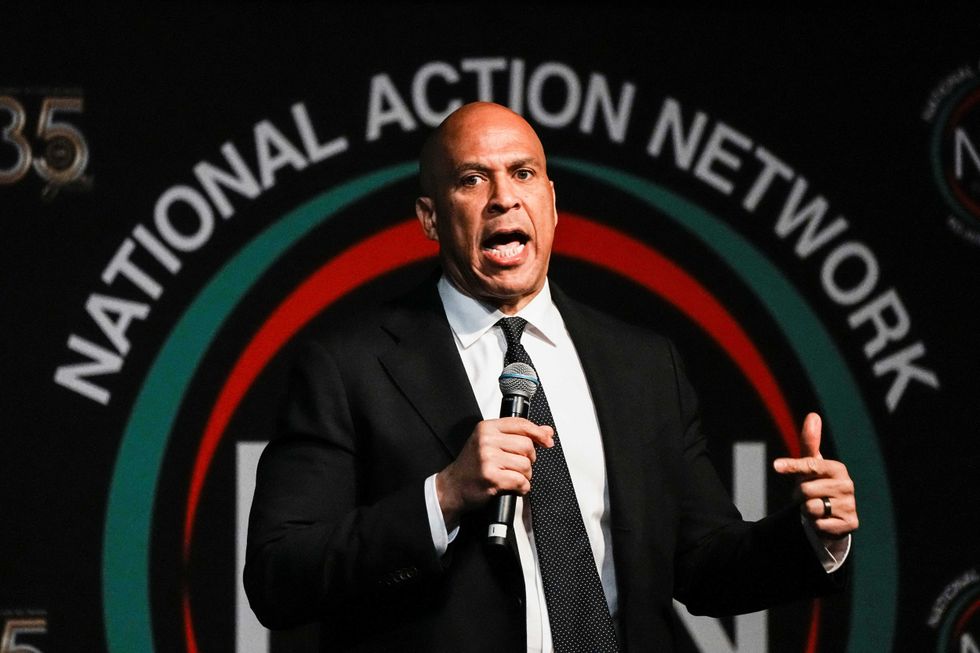
MAGA supporters enraged over Cory Booker's call to action in Michigan

MAGA supporters enraged over Cory Booker's call to action in Michigan

Sen. Cory Booker (D-NJ) delivered a passionate speech at the Michigan Democratic Women's Caucus, telling a crowd, "What we need is foot soldiers for our democracy
Share
Rawstory2026/04/22 08:45
Putin Set for State Visit to China This Week

Putin Set for State Visit to China This Week

Putin Set for State Visit to China Amid Rising Global Geopolitical Tensions Vladimir Putin is reportedly expected to make a state visit to China this week, a cl
Share
Hokanews2026/05/16 22:41

No Chart Skills? Still Profit

No Chart Skills? Still ProfitNo Chart Skills? Still Profit

Copy top traders in 3s with auto trading!