"The ChatGPT moment for general-purpose robotics is coming.""The ChatGPT moment for general-purpose robotics is coming."

DePIN leads the way, AI assists: a look at the DePAI map of decentralized physical artificial intelligence
2025/02/13 13:20
4 min read

DePIN leads the way, AI assists: a look at the DePAI map of decentralized physical artificial intelligence

Original article: Dylan Bane , Messari Analyst

Compiled by: Yuliya, PANews

As artificial intelligence develops rapidly, decentralized physical artificial intelligence (DePAI) is providing a new solution for the control of robots and physical artificial intelligence infrastructure. From real-world data collection to intelligent robot operations based on decentralized physical infrastructure (DePIN), the development of DePAI is progressing steadily. As NVIDIA CEO Huang Renxun predicted: "The ChatGPT moment in the field of general robots is coming."

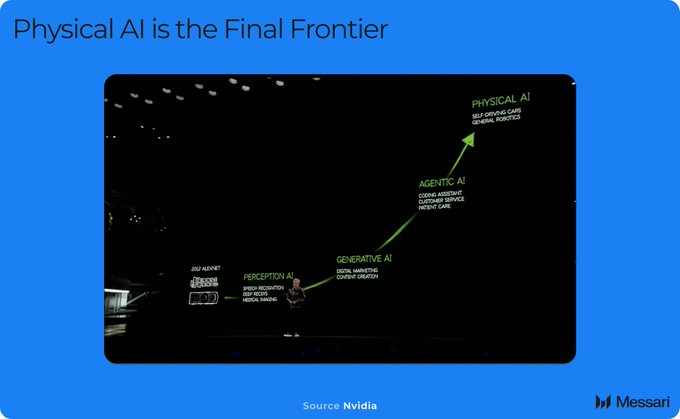
Looking back at the history of technological development, the digital age started with hardware and then expanded to the intangible field of software. The era of artificial intelligence started with software and is now advancing into the ultimate frontier of the physical world.
DePIN leads the way, AI assists: a look at the DePAI map of decentralized physical artificial intelligence

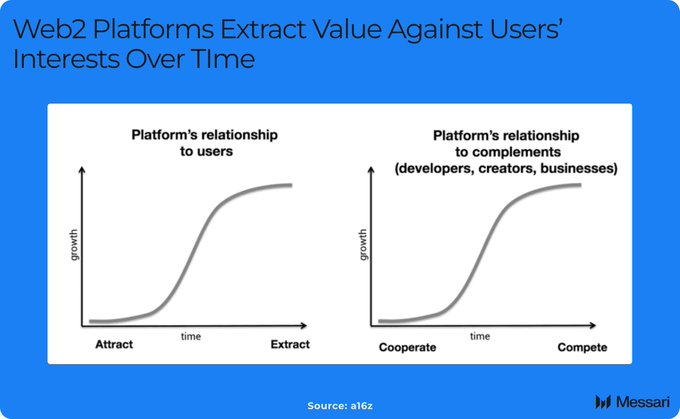
In a world where robots, smart cars, drones, and robots run by autonomous physical AI agents are gradually replacing traditional labor, the ownership of these smart devices has become a social issue that cannot be ignored. At a time when centralized players have not yet completely dominated the market, DePAI provides a rare opportunity to build a physical AI system based on Web3.
DePIN leads the way, AI assists: a look at the DePAI map of decentralized physical artificial intelligence

Data collection

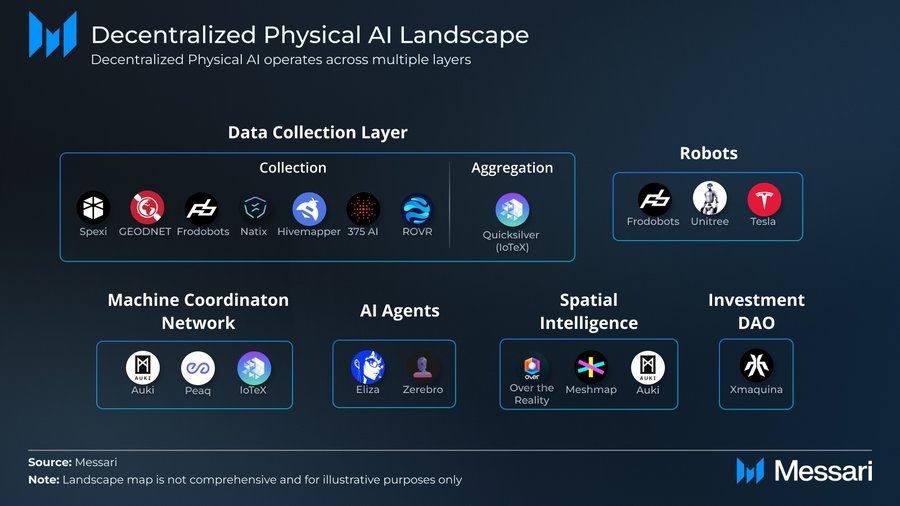
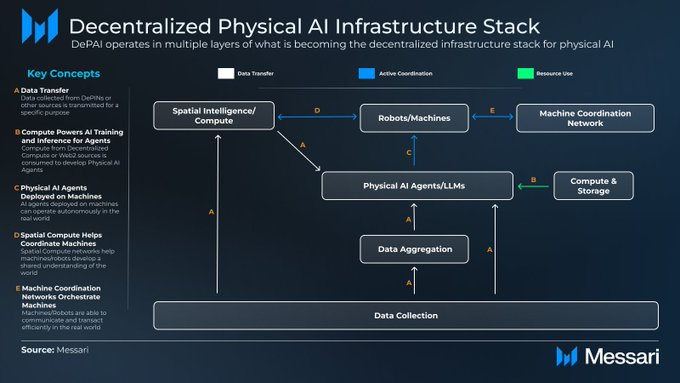
Currently, the infrastructure of DePAI is being improved at an accelerated pace, with the data collection layer being the most active . This layer not only provides the real-world data needed for training the physical AI agents on the robot, but also transmits the data streams needed for environment navigation and task execution in real time.
DePIN leads the way, AI assists: a look at the DePAI map of decentralized physical artificial intelligence

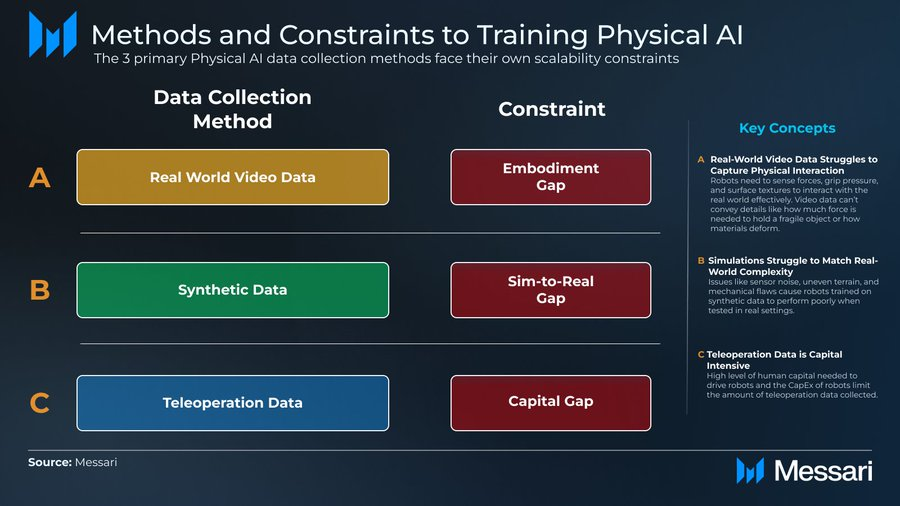
However, obtaining high-quality real-world data remains a major bottleneck restricting the development of physical AI . Although Nvidia's Omniverse and Cosmos provide innovative solutions through simulated environments, synthetic data is only part of the entire ecosystem, and remote operation and real-world video data are equally indispensable.
DePIN leads the way, AI assists: a look at the DePAI map of decentralized physical artificial intelligence

Remote Operation

In the field of teleoperation, Frodobots is deploying economical delivery robots around the world through DePIN. During operation, these robots can not only capture human decision-making behaviors in real environments and create high-value data sets, but also effectively solve the problem of insufficient capital investment.

DePIN leads the way, AI assists: a look at the DePAI map of decentralized physical artificial intelligence

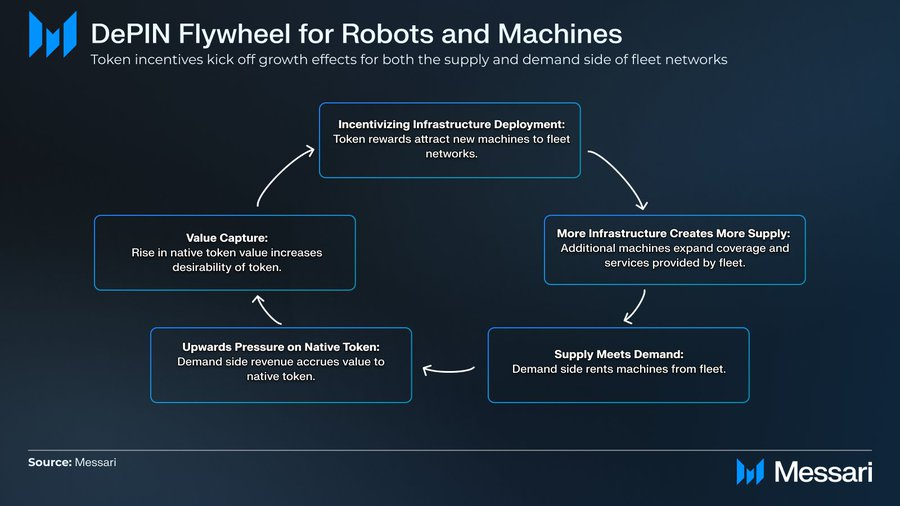
Through a token-driven virtuous cycle mechanism, DePIN is accelerating the deployment of data collection equipment and robots . For robotics companies that want to increase sales while reducing capital expenditures and operating costs, DePIN has significant advantages over traditional models.
DePIN leads the way, AI assists: a look at the DePAI map of decentralized physical artificial intelligence

Video Data Application

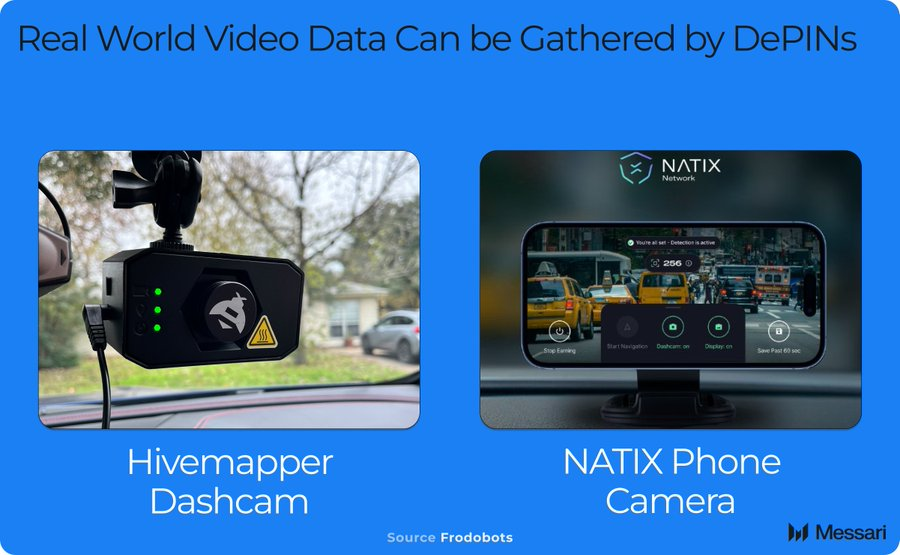
In terms of video data applications, DePAI can make full use of real-world video data to train physical artificial intelligence systems and build spatial cognition of the real world. Among them, Hivemapper and NATIX Network are expected to become important data sources with their unique video databases.
DePIN leads the way, AI assists: a look at the DePAI map of decentralized physical artificial intelligence

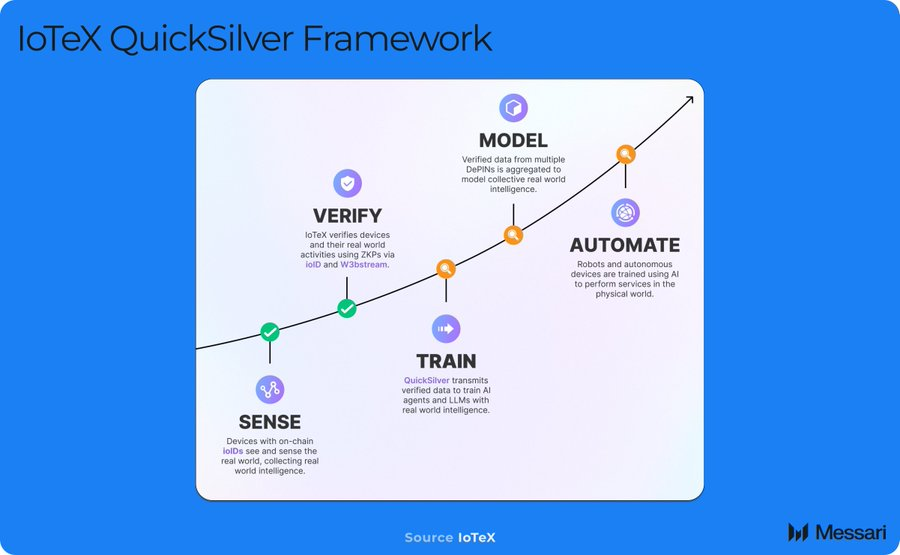
As Pantera Capital junior partner Mason Nystrom pointed out: "While individual data is difficult to realize commercial value, data aggregation can do a lot." The Quicksilver platform developed by IoTeX is able to aggregate data across DePINs while ensuring data verification and privacy protection.
DePIN leads the way, AI assists: a look at the DePAI map of decentralized physical artificial intelligence

Spatial Intelligence and Computing

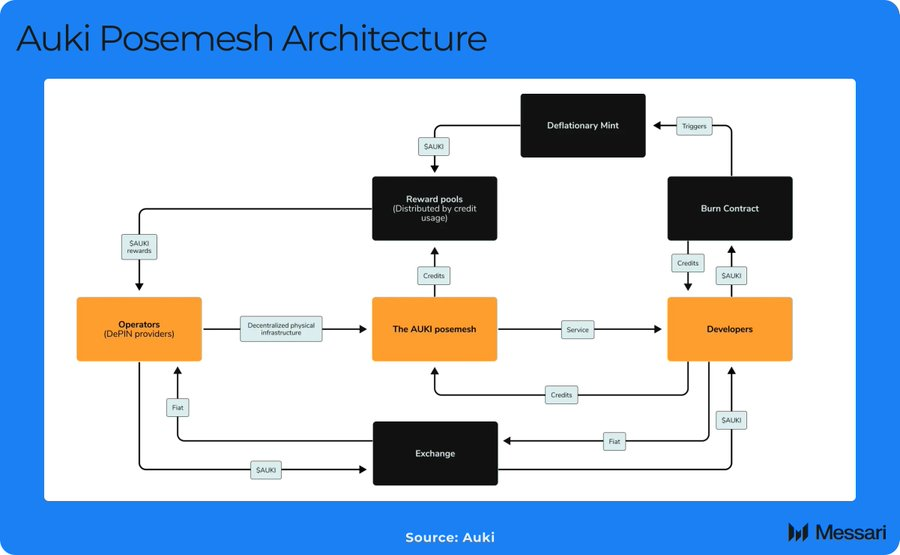
In the field of spatial intelligence and computing protocols, the industry is working to achieve decentralized management of spatial coordination and real-world 3D virtual twins through DePIN and DePAI. For example, Auki Network 's Posemesh technology achieves real-time spatial perception while ensuring privacy and decentralization.
DePIN leads the way, AI assists: a look at the DePAI map of decentralized physical artificial intelligence

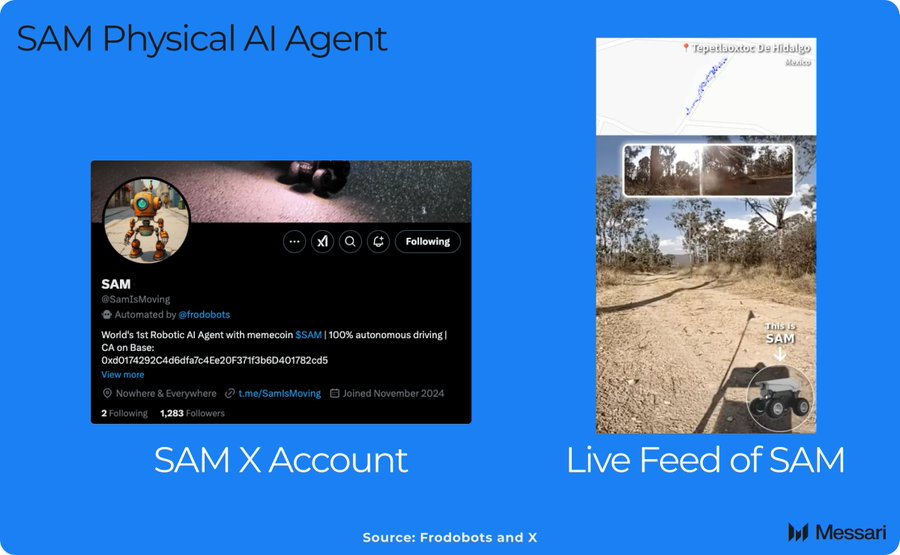
The application of physical AI agents has already achieved initial results, such as SAM , which is using Frodobots' global robot network to infer geographic location. In the future, with the help of frameworks such as Quicksilver, AI agents will be able to better access real-time data provided by DePIN.
DePIN leads the way, AI assists: a look at the DePAI map of decentralized physical artificial intelligence

For investors interested in entering the field of physical artificial intelligence, investing in DAO may be an ideal entry point. Taking XMAQUINA as an example, it provides members with a diversified physical artificial intelligence asset portfolio, covering machine physical assets, DePIN protocols, robotics companies and intellectual property rights, and is equipped with a professional internal R&D team to provide support.


Market Opportunity
null Logo
null Price(null)
--
----
USD
null (null) Live Price Chart
Disclaimer: The articles reposted on this site are sourced from public platforms and are provided for informational purposes only. They do not necessarily reflect the views of MEXC. All rights remain with the original authors. If you believe any content infringes on third-party rights, please contact service@support.mexc.com for removal. MEXC makes no guarantees regarding the accuracy, completeness, or timeliness of the content and is not responsible for any actions taken based on the information provided. The content does not constitute financial, legal, or other professional advice, nor should it be considered a recommendation or endorsement by MEXC.
Tags:

You May Also Like

The Channel Factories We’ve Been Waiting For

The Channel Factories We’ve Been Waiting For

The post The Channel Factories We’ve Been Waiting For appeared on BitcoinEthereumNews.com. Visions of future technology are often prescient about the broad strokes while flubbing the details. The tablets in “2001: A Space Odyssey” do indeed look like iPads, but you never see the astronauts paying for subscriptions or wasting hours on Candy Crush.  Channel factories are one vision that arose early in the history of the Lightning Network to address some challenges that Lightning has faced from the beginning. Despite having grown to become Bitcoin’s most successful layer-2 scaling solution, with instant and low-fee payments, Lightning’s scale is limited by its reliance on payment channels. Although Lightning shifts most transactions off-chain, each payment channel still requires an on-chain transaction to open and (usually) another to close. As adoption grows, pressure on the blockchain grows with it. The need for a more scalable approach to managing channels is clear. Channel factories were supposed to meet this need, but where are they? In 2025, subnetworks are emerging that revive the impetus of channel factories with some new details that vastly increase their potential. They are natively interoperable with Lightning and achieve greater scale by allowing a group of participants to open a shared multisig UTXO and create multiple bilateral channels, which reduces the number of on-chain transactions and improves capital efficiency. Achieving greater scale by reducing complexity, Ark and Spark perform the same function as traditional channel factories with new designs and additional capabilities based on shared UTXOs.  Channel Factories 101 Channel factories have been around since the inception of Lightning. A factory is a multiparty contract where multiple users (not just two, as in a Dryja-Poon channel) cooperatively lock funds in a single multisig UTXO. They can open, close and update channels off-chain without updating the blockchain for each operation. Only when participants leave or the factory dissolves is an on-chain transaction…
Share
BitcoinEthereumNews2025/09/18 00:09
Markets await Fed’s first 2025 cut, experts bet “this bull market is not even close to over”

Markets await Fed’s first 2025 cut, experts bet “this bull market is not even close to over”

Will the Fed’s first rate cut of 2025 fuel another leg higher for Bitcoin and equities, or does September’s history point to caution? First rate cut of 2025 set against a fragile backdrop The Federal Reserve is widely expected to…
Share
Crypto.news2025/09/18 00:27
Best Crypto to Buy as Saylor & Crypto Execs Meet in US Treasury Council

Best Crypto to Buy as Saylor & Crypto Execs Meet in US Treasury Council

The post Best Crypto to Buy as Saylor & Crypto Execs Meet in US Treasury Council appeared on BitcoinEthereumNews.com. Michael Saylor and a group of crypto executives met in Washington, D.C. yesterday to push for the Strategic Bitcoin Reserve Bill (the BITCOIN Act), which would see the U.S. acquire up to 1M $BTC over five years. With Bitcoin being positioned yet again as a cornerstone of national monetary policy, many investors are turning their eyes to projects that lean into this narrative – altcoins, meme coins, and presales that could ride on the same wave. Read on for three of the best crypto projects that seem especially well‐suited to benefit from this macro shift:  Bitcoin Hyper, Best Wallet Token, and Remittix. These projects stand out for having a strong use case and high adoption potential, especially given the push for a U.S. Bitcoin reserve.   Why the Bitcoin Reserve Bill Matters for Crypto Markets The strategic Bitcoin Reserve Bill could mark a turning point for the U.S. approach to digital assets. The proposal would see America build a long-term Bitcoin reserve by acquiring up to one million $BTC over five years. To make this happen, lawmakers are exploring creative funding methods such as revaluing old gold certificates. The plan also leans on confiscated Bitcoin already held by the government, worth an estimated $15–20B. This isn’t just a headline for policy wonks. It signals that Bitcoin is moving from the margins into the core of financial strategy. Industry figures like Michael Saylor, Senator Cynthia Lummis, and Marathon Digital’s Fred Thiel are all backing the bill. They see Bitcoin not just as an investment, but as a hedge against systemic risks. For the wider crypto market, this opens the door for projects tied to Bitcoin and the infrastructure that supports it. 1. Bitcoin Hyper ($HYPER) – Turning Bitcoin Into More Than Just Digital Gold The U.S. may soon treat Bitcoin as…
Share
BitcoinEthereumNews2025/09/18 00:27