Slackbot AI Agent: Salesforce’s Revolutionary Bet to Dominate the Enterprise Workplace
BitcoinWorld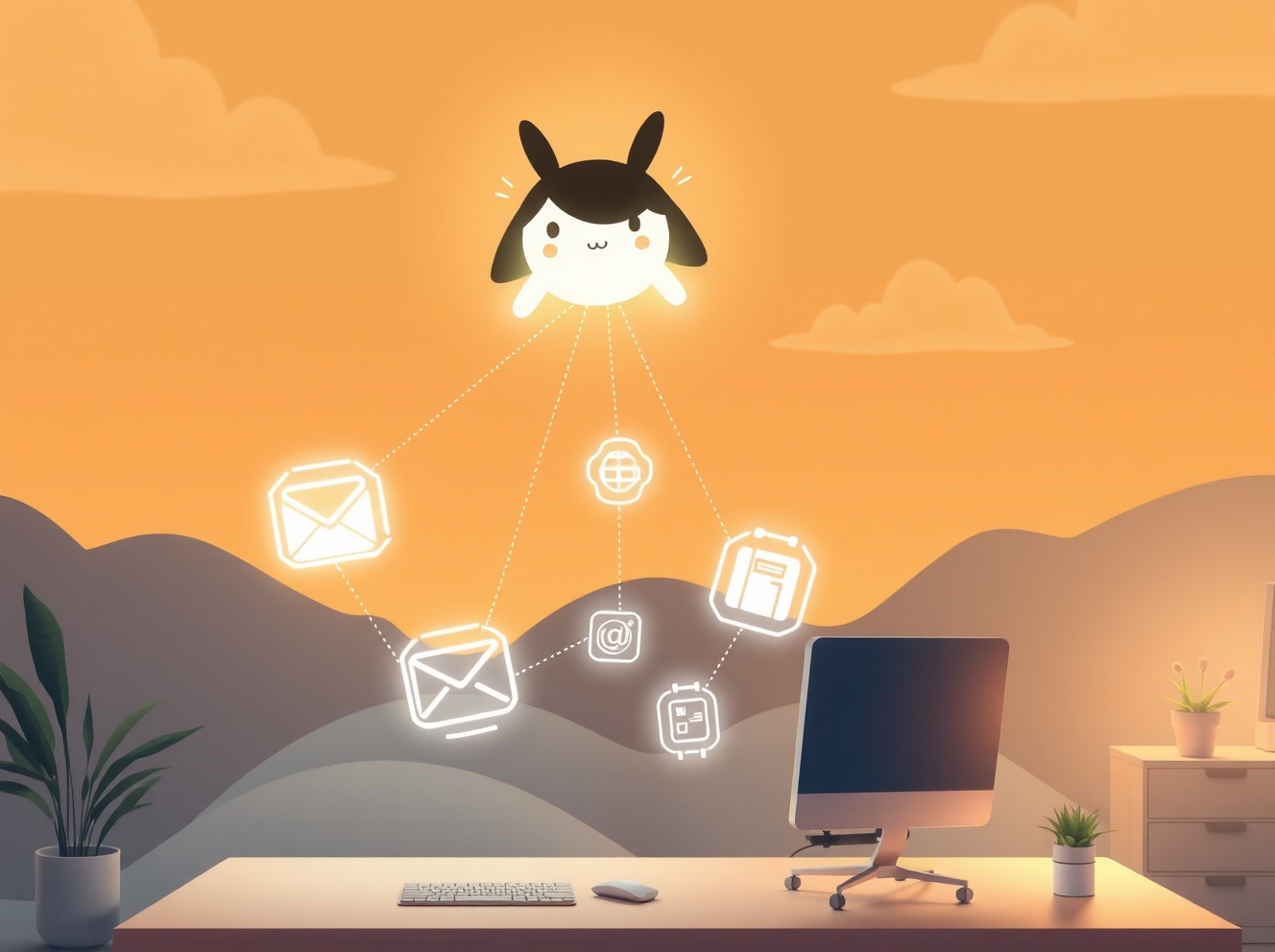
Slackbot AI Agent: Salesforce’s Revolutionary Bet to Dominate the Enterprise Workplace
In a strategic move to capture the evolving enterprise software landscape, Salesforce has fundamentally reinvented Slackbot, transforming the familiar helper into a powerful, generative AI agent. Announced on Tuesday and now available for Business+ and Enterprise+ customers, this overhaul represents more than an update; it signifies a core shift in how Salesforce envisions AI integrating into daily workflows. The company’s leadership, including CTO Parker Harris, explicitly aims for this tool to achieve the widespread, viral adoption seen with consumer AI phenomena, but within the corporate environment.
Slackbot AI Agent: From Simple Helper to Autonomous Employee
The new Slackbot AI agent operates as an autonomous assistant capable of executing multi-step tasks. Unlike its predecessor, which primarily answered simple queries, the agent can now find specific information across connected platforms, draft professional emails, and schedule meetings directly within Slack’s interface. This functionality hinges on a critical new capability: cross-application integration. With user permission, the agent can connect to external systems like Microsoft Teams and Google Drive, effectively allowing users to manage workflows across a fragmented software ecosystem without constant context switching.
This development occurs within a fiercely competitive market. Major enterprise software vendors are aggressively investing in AI to protect and expand their market share. Salesforce’s AI-heavy product roadmap, highlighted at its Dreamforce conference, positions the new Slackbot as a central pillar. Harris emphasized to Bitcoin World that this is not a typical feature release but the launch of a fundamentally different product—an “employee agent” powered by generative AI and designed for an “agentic experience.” The decision to retain the “Slackbot” name leverages existing brand recognition while signaling a dramatic upgrade in capability.
The Enterprise AI Arms Race and Product-Market Fit
Salesforce’s approach underscores a broader industry trend where AI is becoming the primary battleground for enterprise customers. The company employed a rigorous internal testing phase, using its own employees as the first line of validation—a practice Harris referred to as “drinking their own champagne.” The internal adoption metrics provided a strong signal; Harris reported that the new Slackbot became the most adopted internal tool the company has released, achieving what he described as “adopted not mandated” status—a key indicator of genuine product-market fit in the enterprise sector.
Strategic Differentiation and Future Roadmap
While many competitors focus on standalone AI copilots, Salesforce is betting on deep integration within a ubiquitous communication platform. The strategy aims to make advanced AI assistance a natural, contextual part of the workday rather than a separate application. Looking ahead, Harris revealed ambitions to move beyond text. Future iterations may include voice interaction capabilities and the ability for Slackbot to browse the web alongside users, further blurring the line between human and machine-assisted work. “Investing in Slackbot is not only good for Slack, it will be incredibly good for the entire company,” Harris stated, highlighting the feature’s strategic importance.
The rollout also reflects careful commercial planning. By limiting initial general availability to higher-tier Business+ and Enterprise+ plans, Salesforce targets its most valuable customers first, ensuring scalability and refining the model based on sophisticated use cases. This tiered approach is common in enterprise software, allowing vendors to demonstrate value to key accounts before a broader release.
Comparative Analysis: Slackbot AI vs. Market Alternatives
To understand the Slackbot AI agent’s position, it’s useful to compare its stated capabilities against the broader market landscape for workplace AI.
| AI Assistant | Primary Platform | Key Capabilities | Integration Focus |
|---|---|---|---|
| Slackbot AI Agent | Slack | Information retrieval, email drafting, meeting scheduling, cross-app workflows | Deep within Slack; connects to external apps (Teams, Drive) |
| Microsoft Copilot | Microsoft 365 Suite | Content creation, data analysis, summarization in Word, Excel, Outlook | Native across Microsoft’s ecosystem |
| Google Duet AI | Google Workspace | Writing assistance in Docs, Gmail, slide generation in Slides | Native across Google’s ecosystem |
| Standalone AI Tools (e.g., ChatGPT) | Web/Independent App | Broad content generation, coding, analysis | Limited; often requires manual copy-paste between apps |
This comparison shows Slackbot’s unique proposition: orchestration. Its potential strength lies not in being the best at creating a single document, but in seamlessly connecting information and actions across multiple, often competing, software platforms that businesses actually use.
Implications for the Future of Work and Enterprise Software
The evolution of Slackbot into an AI agent carries significant implications. Firstly, it pushes the platform beyond messaging into becoming a central workflow command center. Secondly, it raises important considerations around data privacy, permission models, and the potential for AI to access sensitive information across multiple corporate systems. Salesforce’s implementation, requiring explicit user permission for cross-app access, appears designed to address these concerns proactively.
Furthermore, the focus on an “agentic experience” suggests a move towards AI that can take goal-oriented initiative rather than just respond to prompts. This could eventually lead to assistants that proactively prepare for meetings, highlight potential conflicts in schedules, or draft follow-up emails based on the sentiment of a conversation—all within the flow of work.
Conclusion
The launch of the Slackbot AI agent marks a pivotal moment for Salesforce and the enterprise software industry. It is a direct, integrated response to the generative AI revolution, aiming to embed powerful automation within the daily communication hub for millions of workers. By focusing on cross-platform orchestration and internal validation, Salesforce is betting that the future of enterprise AI lies not in isolated tools, but in connected, contextual assistants that reduce friction across the entire digital workplace. The success of this Slackbot AI agent will be closely watched as a bellwether for adoption of sophisticated, agentic AI in the corporate world.
FAQs
Q1: What exactly can the new Slackbot AI agent do?
The agent can perform tasks like searching for information across connected apps (Slack, Google Drive, Microsoft Teams with permission), drafting emails, and scheduling meetings—all through natural language commands within Slack.
Q2: Who has access to the AI-powered Slackbot?
As of its initial rollout, the new Slackbot AI agent is generally available for customers on Slack’s paid Business+ and Enterprise+ subscription plans.
Q3: How is this different from using ChatGPT or Copilot at work?
While ChatGPT is a general-purpose tool, the Slackbot AI agent is specifically designed and integrated to act within the Slack environment and connected workplace apps. It focuses on executing tasks (like scheduling) and finding work-specific information, rather than open-ended content creation.
Q4: What are the data privacy implications?
According to Salesforce, the AI agent only accesses information from external applications like Google Drive or Microsoft Teams when a user explicitly grants it permission to do so for a specific task, aiming to keep data control in the user’s hands.
Q5: What future features are planned for Slackbot?
Salesforce CTO Parker Harris has indicated plans to explore adding voice interaction capabilities and enabling the agent to browse the web alongside users, expanding its functionality beyond text-based commands within Slack.
This post Slackbot AI Agent: Salesforce’s Revolutionary Bet to Dominate the Enterprise Workplace first appeared on BitcoinWorld.


You May Also Like

edgeX (EDGE) Surges 44.9% to All-Time High: Volume Spike Analysis

Governor gives thousands of prisoners commutation hope for first time since 1990s