BitcoinWorld Asian Currencies Face Turbulent Times: Decoding Fed Caution and Rupee’s Crucial Decline In the interconnected world of finance, shifts in traditional markets often ripple into the nascent but rapidly growing cryptocurrency ecosystem. Today, we turn our gaze to the East, where Asian Currencies are navigating a particularly turbulent period. For those invested in digital assets, understanding these macro-economic pressures is crucial, as they can influence capital flows, risk sentiment, and even the demand for stablecoins. Let’s unravel the forces at play and their potential implications for the broader financial landscape. Unpacking the Current State of Asian Currencies The forex markets across Asia have been experiencing a noticeable downturn, with several key currencies weakening against the US dollar. This broad-based depreciation is not an isolated event but rather a confluence of global and regional factors. Investors are exercising caution, leading to a flight of capital from emerging markets and a preference for safer assets. The sentiment is palpable, reflecting a complex interplay of monetary policy expectations, geopolitical tensions, and domestic economic challenges. Many Asian Currencies, from the Japanese Yen to the Korean Won and the Indonesian Rupiah, are feeling the pressure. While each currency has its unique domestic drivers, the overarching theme is one of external headwinds. This environment makes it challenging for regional central banks to maintain stability, often forcing them to intervene or consider tighter monetary policies themselves, potentially slowing economic growth. The Shadow of Federal Reserve Policy on Global Markets One of the primary architects of the current global financial climate is the United States’ central bank, the Federal Reserve. Its aggressive stance on inflation, characterized by a series of interest rate hikes and quantitative tightening, has significantly strengthened the US dollar. This strengthening dollar has a direct and often detrimental impact on Asian Currencies and other emerging market economies. When the Fed raises interest rates, it makes dollar-denominated assets more attractive to global investors. This encourages capital to flow out of riskier emerging markets and into the US, putting downward pressure on local currencies. Furthermore, a strong dollar makes dollar-denominated debt more expensive to service for countries and corporations that have borrowed in US dollars, creating financial strain. The market’s anticipation of future Federal Reserve Policy moves keeps investors on edge, leading to volatility and uncertainty across global forex markets. Here’s a simplified look at how Fed policy impacts Asian economies: Capital Outflow: Higher US rates draw money away from Asia. Currency Depreciation: Weaker local currencies make imports more expensive. Debt Servicing Costs: Dollar-denominated debt becomes harder to repay. Inflationary Pressure: Imported goods inflation rises due to weaker currency. Navigating the Complexities of Trade Tariffs Adding another layer of complexity to the already fragile market sentiment is the persistent uncertainty surrounding Trade Tariffs. Global trade tensions, particularly between major economic blocs, continue to cast a long shadow over international commerce. Tariffs, or taxes on imported goods, disrupt established supply chains, increase costs for businesses, and ultimately impact consumer prices. For export-oriented Asian economies, these tariffs can significantly curb demand for their products, hurting their economic output and, consequently, their currencies. The unpredictability of tariff impositions and retaliations makes long-term planning difficult for businesses and governments alike. This uncertainty discourages foreign direct investment and can lead to a slowdown in global trade, which is a vital engine for growth in many Asian nations. The impact is not just on the directly targeted goods but also on broader economic confidence, which can further depress currency values. Consider the ripple effect of trade tensions: Impact Area Description Consequence for Asia Supply Chains Disruptions and re-routing of production. Increased operational costs, reduced efficiency. Export Demand Reduced international appetite for goods. Lower economic growth, pressure on local industries. Investment Hesitation from foreign investors due to uncertainty. Slower capital inflow, limited job creation. Why is the Indian Rupee Decline a Key Concern? Among the various Asian Currencies, the Indian Rupee Decline has drawn particular attention, nearing record lows against the US dollar. India, as a major emerging economy, plays a significant role in the regional and global financial landscape. The rupee’s weakness is influenced by a combination of global factors and specific domestic vulnerabilities. One primary driver is India’s reliance on imported crude oil. As global oil prices remain elevated, India’s import bill swells, leading to a larger current account deficit. This deficit needs to be financed, often through foreign capital, but with global risk aversion, capital outflows have intensified. Additionally, the strengthening dollar, driven by the aggressive Federal Reserve Policy, further exacerbates the rupee’s woes. The implications of a weaker rupee are far-reaching for India. It makes imports more expensive, potentially fueling domestic inflation. For Indian companies with foreign debt, repayment costs increase, impacting their profitability. While a weaker currency can boost exports by making them cheaper for foreign buyers, the current global economic slowdown and Trade Tariffs may limit this benefit. The Reserve Bank of India (RBI) faces a delicate balancing act, attempting to support the currency without stifling economic growth. Decoding Broader Forex Market Trends in Asia Beyond the Indian Rupee, several other Asian Currencies are reflecting broader Forex Market Trends. The Japanese Yen, for instance, has also seen significant depreciation, largely due to the Bank of Japan’s continued ultra-loose monetary policy, which stands in stark contrast to the tightening policies of other major central banks. This divergence creates a substantial interest rate differential, making the Yen less attractive. Similarly, the Chinese Yuan has experienced fluctuations, influenced by domestic economic challenges, including property market woes and the lingering impact of strict pandemic policies, alongside global trade dynamics. Other currencies like the Korean Won and the Malaysian Ringgit are also under pressure, sensitive to global commodity prices, export demand, and capital flows. The overall trend suggests that while domestic factors are always at play, the global macro environment, dominated by inflation concerns, central bank actions, and geopolitical risks, is currently the most significant determinant of currency performance in the region. Key Factors Shaping Asian Forex Markets: Interest Rate Differentials: The gap between local interest rates and those in major economies (especially the US). Commodity Prices: Many Asian economies are net importers or exporters of commodities, impacting trade balances. Global Risk Sentiment: Investor appetite for riskier assets versus safe havens. Capital Flows: Movement of investment money into or out of the region. Geopolitical Developments: Regional conflicts or trade disputes. Challenges and Opportunities for Asian Economies The current environment presents both significant challenges and potential opportunities for Asian economies. The immediate challenge is managing currency depreciation, controlling inflation, and mitigating the impact of global slowdowns. Central banks are walking a tightrope, trying to support their currencies without unduly harming economic growth. However, there are also opportunities. A weaker currency can make exports more competitive, provided global demand holds up. It can also attract foreign direct investment seeking lower costs. Furthermore, this period of external pressure might compel governments to implement structural reforms that enhance economic resilience and reduce vulnerabilities. Diversification of trade partners and strengthening domestic demand are crucial long-term strategies. Actionable Insights for Investors For investors, especially those with exposure to both traditional and digital assets, understanding these dynamics is key. Here are some actionable insights: Monitor Central Bank Communications: Keep a close eye on statements from the Federal Reserve, the European Central Bank, and major Asian central banks for clues on future monetary policy. Track Economic Indicators: Pay attention to inflation rates, GDP growth, and trade balances in key Asian economies. Assess Risk Appetite: Understand global risk sentiment. During periods of high risk aversion, safe-haven assets (like the US dollar or even certain stablecoins) tend to perform better. Diversify Portfolios: Consider diversification across different asset classes and geographies to mitigate currency-specific risks. Evaluate Stablecoin Demand: In times of significant fiat currency volatility, demand for stablecoins pegged to stronger currencies might increase among local populations. Conclusion: Navigating the Waves of Global Finance The current downturn in Asian Currencies is a vivid illustration of the complex and interconnected nature of global finance. Driven by the assertive Federal Reserve Policy, exacerbated by lingering Trade Tariffs, and highlighted by the significant Indian Rupee Decline, these movements are more than just numbers on a screen. They represent real economic pressures on nations and individuals alike. For anyone observing Forex Market Trends, it’s clear that the path ahead is filled with challenges, requiring careful navigation and strategic foresight. As global economies continue to grapple with inflation and geopolitical uncertainties, the resilience of Asian markets will be tested, shaping not just their future but also influencing the broader financial world, including the evolving crypto landscape. To learn more about the latest Forex market trends, explore our article on key developments shaping Asian Currencies and global liquidity. This post Asian Currencies Face Turbulent Times: Decoding Fed Caution and Rupee’s Crucial Decline first appeared on BitcoinWorld and is written by Editorial TeamBitcoinWorld Asian Currencies Face Turbulent Times: Decoding Fed Caution and Rupee’s Crucial Decline In the interconnected world of finance, shifts in traditional markets often ripple into the nascent but rapidly growing cryptocurrency ecosystem. Today, we turn our gaze to the East, where Asian Currencies are navigating a particularly turbulent period. For those invested in digital assets, understanding these macro-economic pressures is crucial, as they can influence capital flows, risk sentiment, and even the demand for stablecoins. Let’s unravel the forces at play and their potential implications for the broader financial landscape. Unpacking the Current State of Asian Currencies The forex markets across Asia have been experiencing a noticeable downturn, with several key currencies weakening against the US dollar. This broad-based depreciation is not an isolated event but rather a confluence of global and regional factors. Investors are exercising caution, leading to a flight of capital from emerging markets and a preference for safer assets. The sentiment is palpable, reflecting a complex interplay of monetary policy expectations, geopolitical tensions, and domestic economic challenges. Many Asian Currencies, from the Japanese Yen to the Korean Won and the Indonesian Rupiah, are feeling the pressure. While each currency has its unique domestic drivers, the overarching theme is one of external headwinds. This environment makes it challenging for regional central banks to maintain stability, often forcing them to intervene or consider tighter monetary policies themselves, potentially slowing economic growth. The Shadow of Federal Reserve Policy on Global Markets One of the primary architects of the current global financial climate is the United States’ central bank, the Federal Reserve. Its aggressive stance on inflation, characterized by a series of interest rate hikes and quantitative tightening, has significantly strengthened the US dollar. This strengthening dollar has a direct and often detrimental impact on Asian Currencies and other emerging market economies. When the Fed raises interest rates, it makes dollar-denominated assets more attractive to global investors. This encourages capital to flow out of riskier emerging markets and into the US, putting downward pressure on local currencies. Furthermore, a strong dollar makes dollar-denominated debt more expensive to service for countries and corporations that have borrowed in US dollars, creating financial strain. The market’s anticipation of future Federal Reserve Policy moves keeps investors on edge, leading to volatility and uncertainty across global forex markets. Here’s a simplified look at how Fed policy impacts Asian economies: Capital Outflow: Higher US rates draw money away from Asia. Currency Depreciation: Weaker local currencies make imports more expensive. Debt Servicing Costs: Dollar-denominated debt becomes harder to repay. Inflationary Pressure: Imported goods inflation rises due to weaker currency. Navigating the Complexities of Trade Tariffs Adding another layer of complexity to the already fragile market sentiment is the persistent uncertainty surrounding Trade Tariffs. Global trade tensions, particularly between major economic blocs, continue to cast a long shadow over international commerce. Tariffs, or taxes on imported goods, disrupt established supply chains, increase costs for businesses, and ultimately impact consumer prices. For export-oriented Asian economies, these tariffs can significantly curb demand for their products, hurting their economic output and, consequently, their currencies. The unpredictability of tariff impositions and retaliations makes long-term planning difficult for businesses and governments alike. This uncertainty discourages foreign direct investment and can lead to a slowdown in global trade, which is a vital engine for growth in many Asian nations. The impact is not just on the directly targeted goods but also on broader economic confidence, which can further depress currency values. Consider the ripple effect of trade tensions: Impact Area Description Consequence for Asia Supply Chains Disruptions and re-routing of production. Increased operational costs, reduced efficiency. Export Demand Reduced international appetite for goods. Lower economic growth, pressure on local industries. Investment Hesitation from foreign investors due to uncertainty. Slower capital inflow, limited job creation. Why is the Indian Rupee Decline a Key Concern? Among the various Asian Currencies, the Indian Rupee Decline has drawn particular attention, nearing record lows against the US dollar. India, as a major emerging economy, plays a significant role in the regional and global financial landscape. The rupee’s weakness is influenced by a combination of global factors and specific domestic vulnerabilities. One primary driver is India’s reliance on imported crude oil. As global oil prices remain elevated, India’s import bill swells, leading to a larger current account deficit. This deficit needs to be financed, often through foreign capital, but with global risk aversion, capital outflows have intensified. Additionally, the strengthening dollar, driven by the aggressive Federal Reserve Policy, further exacerbates the rupee’s woes. The implications of a weaker rupee are far-reaching for India. It makes imports more expensive, potentially fueling domestic inflation. For Indian companies with foreign debt, repayment costs increase, impacting their profitability. While a weaker currency can boost exports by making them cheaper for foreign buyers, the current global economic slowdown and Trade Tariffs may limit this benefit. The Reserve Bank of India (RBI) faces a delicate balancing act, attempting to support the currency without stifling economic growth. Decoding Broader Forex Market Trends in Asia Beyond the Indian Rupee, several other Asian Currencies are reflecting broader Forex Market Trends. The Japanese Yen, for instance, has also seen significant depreciation, largely due to the Bank of Japan’s continued ultra-loose monetary policy, which stands in stark contrast to the tightening policies of other major central banks. This divergence creates a substantial interest rate differential, making the Yen less attractive. Similarly, the Chinese Yuan has experienced fluctuations, influenced by domestic economic challenges, including property market woes and the lingering impact of strict pandemic policies, alongside global trade dynamics. Other currencies like the Korean Won and the Malaysian Ringgit are also under pressure, sensitive to global commodity prices, export demand, and capital flows. The overall trend suggests that while domestic factors are always at play, the global macro environment, dominated by inflation concerns, central bank actions, and geopolitical risks, is currently the most significant determinant of currency performance in the region. Key Factors Shaping Asian Forex Markets: Interest Rate Differentials: The gap between local interest rates and those in major economies (especially the US). Commodity Prices: Many Asian economies are net importers or exporters of commodities, impacting trade balances. Global Risk Sentiment: Investor appetite for riskier assets versus safe havens. Capital Flows: Movement of investment money into or out of the region. Geopolitical Developments: Regional conflicts or trade disputes. Challenges and Opportunities for Asian Economies The current environment presents both significant challenges and potential opportunities for Asian economies. The immediate challenge is managing currency depreciation, controlling inflation, and mitigating the impact of global slowdowns. Central banks are walking a tightrope, trying to support their currencies without unduly harming economic growth. However, there are also opportunities. A weaker currency can make exports more competitive, provided global demand holds up. It can also attract foreign direct investment seeking lower costs. Furthermore, this period of external pressure might compel governments to implement structural reforms that enhance economic resilience and reduce vulnerabilities. Diversification of trade partners and strengthening domestic demand are crucial long-term strategies. Actionable Insights for Investors For investors, especially those with exposure to both traditional and digital assets, understanding these dynamics is key. Here are some actionable insights: Monitor Central Bank Communications: Keep a close eye on statements from the Federal Reserve, the European Central Bank, and major Asian central banks for clues on future monetary policy. Track Economic Indicators: Pay attention to inflation rates, GDP growth, and trade balances in key Asian economies. Assess Risk Appetite: Understand global risk sentiment. During periods of high risk aversion, safe-haven assets (like the US dollar or even certain stablecoins) tend to perform better. Diversify Portfolios: Consider diversification across different asset classes and geographies to mitigate currency-specific risks. Evaluate Stablecoin Demand: In times of significant fiat currency volatility, demand for stablecoins pegged to stronger currencies might increase among local populations. Conclusion: Navigating the Waves of Global Finance The current downturn in Asian Currencies is a vivid illustration of the complex and interconnected nature of global finance. Driven by the assertive Federal Reserve Policy, exacerbated by lingering Trade Tariffs, and highlighted by the significant Indian Rupee Decline, these movements are more than just numbers on a screen. They represent real economic pressures on nations and individuals alike. For anyone observing Forex Market Trends, it’s clear that the path ahead is filled with challenges, requiring careful navigation and strategic foresight. As global economies continue to grapple with inflation and geopolitical uncertainties, the resilience of Asian markets will be tested, shaping not just their future but also influencing the broader financial world, including the evolving crypto landscape. To learn more about the latest Forex market trends, explore our article on key developments shaping Asian Currencies and global liquidity. This post Asian Currencies Face Turbulent Times: Decoding Fed Caution and Rupee’s Crucial Decline first appeared on BitcoinWorld and is written by Editorial Team

Asian Currencies Face Turbulent Times: Decoding Fed Caution and Rupee’s Crucial Decline

BitcoinWorld
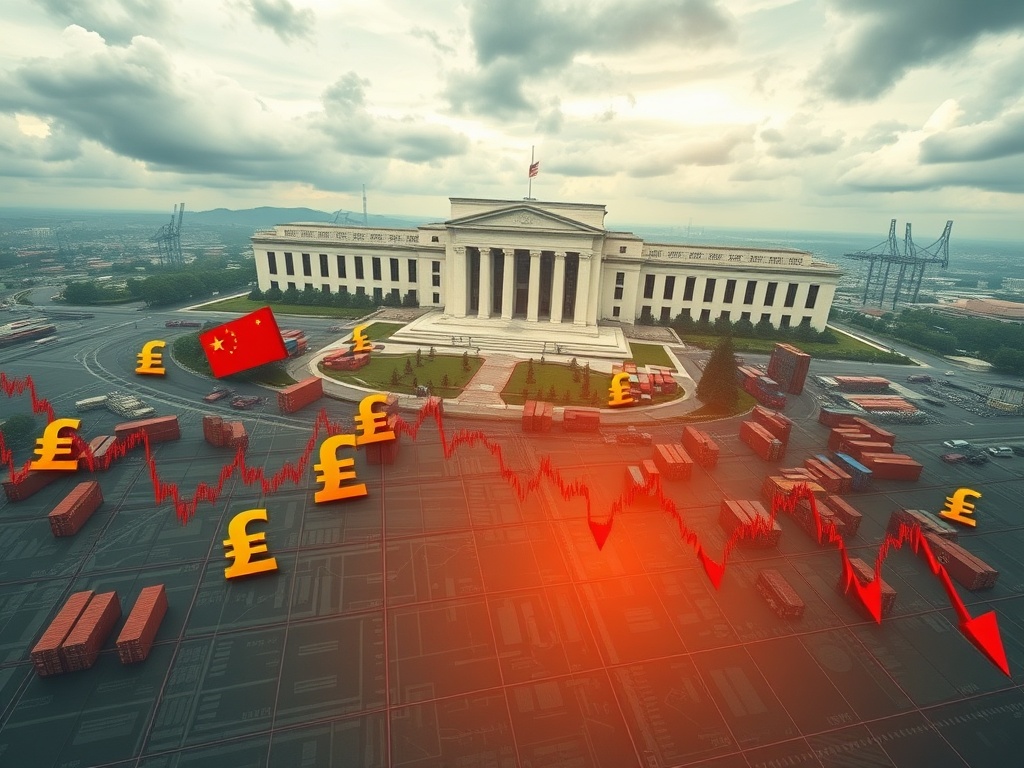
Asian Currencies Face Turbulent Times: Decoding Fed Caution and Rupee’s Crucial Decline

In the interconnected world of finance, shifts in traditional markets often ripple into the nascent but rapidly growing cryptocurrency ecosystem. Today, we turn our gaze to the East, where Asian Currencies are navigating a particularly turbulent period. For those invested in digital assets, understanding these macro-economic pressures is crucial, as they can influence capital flows, risk sentiment, and even the demand for stablecoins. Let’s unravel the forces at play and their potential implications for the broader financial landscape.

Unpacking the Current State of Asian Currencies

The forex markets across Asia have been experiencing a noticeable downturn, with several key currencies weakening against the US dollar. This broad-based depreciation is not an isolated event but rather a confluence of global and regional factors. Investors are exercising caution, leading to a flight of capital from emerging markets and a preference for safer assets. The sentiment is palpable, reflecting a complex interplay of monetary policy expectations, geopolitical tensions, and domestic economic challenges.

Many Asian Currencies, from the Japanese Yen to the Korean Won and the Indonesian Rupiah, are feeling the pressure. While each currency has its unique domestic drivers, the overarching theme is one of external headwinds. This environment makes it challenging for regional central banks to maintain stability, often forcing them to intervene or consider tighter monetary policies themselves, potentially slowing economic growth.

The Shadow of Federal Reserve Policy on Global Markets

One of the primary architects of the current global financial climate is the United States’ central bank, the Federal Reserve. Its aggressive stance on inflation, characterized by a series of interest rate hikes and quantitative tightening, has significantly strengthened the US dollar. This strengthening dollar has a direct and often detrimental impact on Asian Currencies and other emerging market economies.

When the Fed raises interest rates, it makes dollar-denominated assets more attractive to global investors. This encourages capital to flow out of riskier emerging markets and into the US, putting downward pressure on local currencies. Furthermore, a strong dollar makes dollar-denominated debt more expensive to service for countries and corporations that have borrowed in US dollars, creating financial strain. The market’s anticipation of future Federal Reserve Policy moves keeps investors on edge, leading to volatility and uncertainty across global forex markets.

Here’s a simplified look at how Fed policy impacts Asian economies:

  • Capital Outflow: Higher US rates draw money away from Asia.
  • Currency Depreciation: Weaker local currencies make imports more expensive.
  • Debt Servicing Costs: Dollar-denominated debt becomes harder to repay.
  • Inflationary Pressure: Imported goods inflation rises due to weaker currency.

Adding another layer of complexity to the already fragile market sentiment is the persistent uncertainty surrounding Trade Tariffs. Global trade tensions, particularly between major economic blocs, continue to cast a long shadow over international commerce. Tariffs, or taxes on imported goods, disrupt established supply chains, increase costs for businesses, and ultimately impact consumer prices. For export-oriented Asian economies, these tariffs can significantly curb demand for their products, hurting their economic output and, consequently, their currencies.

The unpredictability of tariff impositions and retaliations makes long-term planning difficult for businesses and governments alike. This uncertainty discourages foreign direct investment and can lead to a slowdown in global trade, which is a vital engine for growth in many Asian nations. The impact is not just on the directly targeted goods but also on broader economic confidence, which can further depress currency values.

Consider the ripple effect of trade tensions:

Impact AreaDescriptionConsequence for Asia
Supply ChainsDisruptions and re-routing of production.Increased operational costs, reduced efficiency.
Export DemandReduced international appetite for goods.Lower economic growth, pressure on local industries.
InvestmentHesitation from foreign investors due to uncertainty.Slower capital inflow, limited job creation.

Why is the Indian Rupee Decline a Key Concern?

Among the various Asian Currencies, the Indian Rupee Decline has drawn particular attention, nearing record lows against the US dollar. India, as a major emerging economy, plays a significant role in the regional and global financial landscape. The rupee’s weakness is influenced by a combination of global factors and specific domestic vulnerabilities.

One primary driver is India’s reliance on imported crude oil. As global oil prices remain elevated, India’s import bill swells, leading to a larger current account deficit. This deficit needs to be financed, often through foreign capital, but with global risk aversion, capital outflows have intensified. Additionally, the strengthening dollar, driven by the aggressive Federal Reserve Policy, further exacerbates the rupee’s woes.

The implications of a weaker rupee are far-reaching for India. It makes imports more expensive, potentially fueling domestic inflation. For Indian companies with foreign debt, repayment costs increase, impacting their profitability. While a weaker currency can boost exports by making them cheaper for foreign buyers, the current global economic slowdown and Trade Tariffs may limit this benefit. The Reserve Bank of India (RBI) faces a delicate balancing act, attempting to support the currency without stifling economic growth.

Beyond the Indian Rupee, several other Asian Currencies are reflecting broader Forex Market Trends. The Japanese Yen, for instance, has also seen significant depreciation, largely due to the Bank of Japan’s continued ultra-loose monetary policy, which stands in stark contrast to the tightening policies of other major central banks. This divergence creates a substantial interest rate differential, making the Yen less attractive.

Similarly, the Chinese Yuan has experienced fluctuations, influenced by domestic economic challenges, including property market woes and the lingering impact of strict pandemic policies, alongside global trade dynamics. Other currencies like the Korean Won and the Malaysian Ringgit are also under pressure, sensitive to global commodity prices, export demand, and capital flows. The overall trend suggests that while domestic factors are always at play, the global macro environment, dominated by inflation concerns, central bank actions, and geopolitical risks, is currently the most significant determinant of currency performance in the region.

Key Factors Shaping Asian Forex Markets:

  • Interest Rate Differentials: The gap between local interest rates and those in major economies (especially the US).
  • Commodity Prices: Many Asian economies are net importers or exporters of commodities, impacting trade balances.
  • Global Risk Sentiment: Investor appetite for riskier assets versus safe havens.
  • Capital Flows: Movement of investment money into or out of the region.
  • Geopolitical Developments: Regional conflicts or trade disputes.

Challenges and Opportunities for Asian Economies

The current environment presents both significant challenges and potential opportunities for Asian economies. The immediate challenge is managing currency depreciation, controlling inflation, and mitigating the impact of global slowdowns. Central banks are walking a tightrope, trying to support their currencies without unduly harming economic growth.

However, there are also opportunities. A weaker currency can make exports more competitive, provided global demand holds up. It can also attract foreign direct investment seeking lower costs. Furthermore, this period of external pressure might compel governments to implement structural reforms that enhance economic resilience and reduce vulnerabilities. Diversification of trade partners and strengthening domestic demand are crucial long-term strategies.

Actionable Insights for Investors

For investors, especially those with exposure to both traditional and digital assets, understanding these dynamics is key. Here are some actionable insights:

  • Monitor Central Bank Communications: Keep a close eye on statements from the Federal Reserve, the European Central Bank, and major Asian central banks for clues on future monetary policy.
  • Track Economic Indicators: Pay attention to inflation rates, GDP growth, and trade balances in key Asian economies.
  • Assess Risk Appetite: Understand global risk sentiment. During periods of high risk aversion, safe-haven assets (like the US dollar or even certain stablecoins) tend to perform better.
  • Diversify Portfolios: Consider diversification across different asset classes and geographies to mitigate currency-specific risks.
  • Evaluate Stablecoin Demand: In times of significant fiat currency volatility, demand for stablecoins pegged to stronger currencies might increase among local populations.

Conclusion: Navigating the Waves of Global Finance

The current downturn in Asian Currencies is a vivid illustration of the complex and interconnected nature of global finance. Driven by the assertive Federal Reserve Policy, exacerbated by lingering Trade Tariffs, and highlighted by the significant Indian Rupee Decline, these movements are more than just numbers on a screen. They represent real economic pressures on nations and individuals alike. For anyone observing Forex Market Trends, it’s clear that the path ahead is filled with challenges, requiring careful navigation and strategic foresight. As global economies continue to grapple with inflation and geopolitical uncertainties, the resilience of Asian markets will be tested, shaping not just their future but also influencing the broader financial world, including the evolving crypto landscape.

To learn more about the latest Forex market trends, explore our article on key developments shaping Asian Currencies and global liquidity.

This post Asian Currencies Face Turbulent Times: Decoding Fed Caution and Rupee’s Crucial Decline first appeared on BitcoinWorld and is written by Editorial Team


Market Opportunity
Waves Logo
Waves Price(WAVES)
$0,6802
$0,6802$0,6802
-%0,30
USD
Waves (WAVES) Live Price Chart
Disclaimer: The articles reposted on this site are sourced from public platforms and are provided for informational purposes only. They do not necessarily reflect the views of MEXC. All rights remain with the original authors. If you believe any content infringes on third-party rights, please contact service@support.mexc.com for removal. MEXC makes no guarantees regarding the accuracy, completeness, or timeliness of the content and is not responsible for any actions taken based on the information provided. The content does not constitute financial, legal, or other professional advice, nor should it be considered a recommendation or endorsement by MEXC.

You May Also Like

Tom Lee, 2026’yı “Ethereum Yılı” İlan Etti: Fiyat Tahminini Paylaştı!

Tom Lee, 2026’yı “Ethereum Yılı” İlan Etti: Fiyat Tahminini Paylaştı!

BitMine Yönetim Kurulu Başkanı ve Fundstrat kurucu ortağı Tom Lee, Ethereum’un 2026 yılında “öne çıkan anını” yaşayabileceğini ve ETH fiyatının 12.000 dolara kadar
Share
Coinstats2026/01/17 22:47
How to earn from cloud mining: IeByte’s upgraded auto-cloud mining platform unlocks genuine passive earnings

How to earn from cloud mining: IeByte’s upgraded auto-cloud mining platform unlocks genuine passive earnings

The post How to earn from cloud mining: IeByte’s upgraded auto-cloud mining platform unlocks genuine passive earnings appeared on BitcoinEthereumNews.com. contributor Posted: September 17, 2025 As digital assets continue to reshape global finance, cloud mining has become one of the most effective ways for investors to generate stable passive income. Addressing the growing demand for simplicity, security, and profitability, IeByte has officially upgraded its fully automated cloud mining platform, empowering both beginners and experienced investors to earn Bitcoin, Dogecoin, and other mainstream cryptocurrencies without the need for hardware or technical expertise. Why cloud mining in 2025? Traditional crypto mining requires expensive hardware, high electricity costs, and constant maintenance. In 2025, with blockchain networks becoming more competitive, these barriers have grown even higher. Cloud mining solves this by allowing users to lease professional mining power remotely, eliminating the upfront costs and complexity. IeByte stands at the forefront of this transformation, offering investors a transparent and seamless path to daily earnings. IeByte’s upgraded auto-cloud mining platform With its latest upgrade, IeByte introduces: Full Automation: Mining contracts can be activated in just one click, with all processes handled by IeByte’s servers. Enhanced Security: Bank-grade encryption, cold wallets, and real-time monitoring protect every transaction. Scalable Options: From starter packages to high-level investment contracts, investors can choose the plan that matches their goals. Global Reach: Already trusted by users in over 100 countries. Mining contracts for 2025 IeByte offers a wide range of contracts tailored for every investor level. From entry-level plans with daily returns to premium high-yield packages, the platform ensures maximum accessibility. Contract Type Duration Price Daily Reward Total Earnings (Principal + Profit) Starter Contract 1 Day $200 $6 $200 + $6 + $10 bonus Bronze Basic Contract 2 Days $500 $13.5 $500 + $27 Bronze Basic Contract 3 Days $1,200 $36 $1,200 + $108 Silver Advanced Contract 1 Day $5,000 $175 $5,000 + $175 Silver Advanced Contract 2 Days $8,000 $320 $8,000 + $640 Silver…
Share
BitcoinEthereumNews2025/09/17 23:48
BetFury is at SBC Summit Lisbon 2025: Affiliate Growth in Focus

BetFury is at SBC Summit Lisbon 2025: Affiliate Growth in Focus

The post BetFury is at SBC Summit Lisbon 2025: Affiliate Growth in Focus appeared on BitcoinEthereumNews.com. Press Releases are sponsored content and not a part of Finbold’s editorial content. For a full disclaimer, please . Crypto assets/products can be highly risky. Never invest unless you’re prepared to lose all the money you invest. Curacao, Curacao, September 17th, 2025, Chainwire BetFury steps onto the stage of SBC Summit Lisbon 2025 — one of the key gatherings in the iGaming calendar. From 16 to 18 September, the platform showcases its brand strength, deepens affiliate connections, and outlines its plans for global expansion. BetFury continues to play a role in the evolving crypto and iGaming partnership landscape. BetFury’s Participation at SBC Summit The SBC Summit gathers over 25,000 delegates, including 6,000+ affiliates — the largest concentration of affiliate professionals in iGaming. For BetFury, this isn’t just visibility, it’s a strategic chance to present its Affiliate Program to the right audience. Face-to-face meetings, dedicated networking zones, and affiliate-focused sessions make Lisbon the ideal ground to build new partnerships and strengthen existing ones. BetFury Meets Affiliate Leaders at its Massive Stand BetFury arrives at the summit with a massive stand placed right in the center of the Affiliate zone. Designed as a true meeting hub, the stand combines large LED screens, a sleek interior, and the best coffee at the event — but its core mission goes far beyond style. Here, BetFury’s team welcomes partners and affiliates to discuss tailored collaborations, explore growth opportunities across multiple GEOs, and expand its global Affiliate Program. To make the experience even more engaging, the stand also hosts: Affiliate Lottery — a branded drum filled with exclusive offers and personalized deals for affiliates. Merch Kits — premium giveaways to boost brand recognition and leave visitors with a lasting conference memory. Besides, at SBC Summit Lisbon, attendees have a chance to meet the BetFury team along…
Share
BitcoinEthereumNews2025/09/18 01:20