The Snows of Khione Ballet Academy: Lisa K. Stephenson on Structured Creativity
Confidence grows. Skill develops. Creativity finds direction.That philosophy sits at the heart of The Snows of Khione Ballet Academy, founded by Stephenson.
Lisa K. Stephenson on Structured Creativity: How Ballet, Storytelling, and Discipline Shape Transformational Experiences
What Happens When Discipline Meets Creativity?
Imagine a young dancer walking into a studio for the first time.
They carry uncertainty. Maybe their parent serves in the military. Maybe they’ve moved three times in five years. Stability feels temporary.
Now imagine that same dancer stepping into a structured environment where expectations are clear, standards matter, and creativity has room to grow.
What changes when discipline and artistic expression coexist?
For leaders in customer experience and employee experience, this question feels familiar. Organizations often wrestle with the same tension: How do you balance structure with creativity, standards with innovation, and accountability with inspiration?
In the arts, this balance is not theoretical. It plays out daily in rehearsal rooms, studios, and performances.
That is precisely the environment Lisa K. Stephenson is building.
Stephenson is the Founder and Executive Director of The Snows of Khione Ballet Academy, where discipline, artistic rigor, and long-term development shape the next generation of dancers. Her background in service deeply informs the Academy’s philosophy: growth thrives in environments built on consistency, accountability, and purpose.
Beyond ballet education, Stephenson is also a multidisciplinary creator. As CEO of She’s SINGLE Magazine and a pioneering storyteller behind The Naida Saga, she has helped redefine narrative experiences by integrating literature, music, and ballet compositions into a unified storytelling model.
Her work sits at the intersection of structure, artistic excellence, and immersive storytelling.
Through the Academy’s Military Initiative and scholarship programs, she is also expanding access to structured arts education for children of active-duty service members and veterans.
In this CXQuest conversation, Stephenson explores:
Why discipline can unlock creativity
How structured environments support personal growth
What leaders can learn from ballet training models
Why purpose-driven programs create lasting impact
Building the Snows of Khione Ballet Academy
Q1. What leadership or creative moment surprised you most while building The Snows of Khione Ballet Academy?
LKS: While creating this academy, I realized that while I may be appreciative of the art form, I was unprepared for just how intricate it is. Things like when to open auditions, how much to charge for lessons, how much to pay instructors, and just how many people are freelancers. Also, there’s a dwindling number of applicants at even the most prestigious schools. So, while I won’t say the art form is dying or disappearing, I do believe it’s changing and evolving. One of our journalists at She’s SINGLE Magazine discussed this in great detail here: Is Ballet Dead?
Q2. Why does structured training matter so much in artistic development?
LKS: I can’t speak for anyone else, but for me, I am somewhat of a perfectionist, and I want whatever my name is attached to, to be art and presented in a manner that represents me at my core. I am not someone who likes being in front of the camera or making videos online; I’m a very private person. That means that since people don’t get to see the life I live regularly, they can see it through the art I present, which is why training is so important and artistic development is important for the foundation that I am laying.
Q3. How does discipline actually unlock creativity rather than restrict it?
LKS: Discipline is born from routine, and when we have a routine, our nervous system can regulate itself. Those without a routine tend to be more anxious, irritable, and less inclined to create because they’re in survival mode. At the academy, we have a strict schedule and a routine our students can look forward to. If something is going to change, they are notified beforehand.
Lessons from Service Culture
Q4. What lessons from service culture shaped your leadership philosophy?
LKS: Continuous Improvement and Feedback. People always tell me that I am humble, and they admire that about me. Well, the truth is, I’m not afraid to admit when I don’t know something, and I love learning from others who have more experience in something than I do. As a first-generation entrepreneur, I didn’t have anyone in my family or friendship circle who could help guide me and teach me how to do a lot of things. I had to learn through trial and error and spending a lot of money. So, one thing I am always appreciative of is those in the fields who are open to giving me feedback so that we can improve and, in some instances, grow together.
Q5. How do you build environments where young artists feel both supported and challenged?
LKS: By listening to them. We want our young artists to feel heard and appreciated for their time and their gifts. They didn’t have to choose us, there are a plethora of other choices they could have made, however, they chose our academy and with that, we want to show up for them, allow them the space to speak freely about things they agree or disagree with and in return, as long as it’s within reason, the board and I will seek to make those necessary accomodations.
Q6. What role does storytelling play in ballet education and performance preparation?
LKS: Oh, a huge role! To me, it’s 50% dance and 50% story. The story is what the choreography is working around; it’s where the emotions come from, and the costume department gets its inspiration. The dancing is the aesthetics – it’s the one thing that people can universally see and revere, whereas sometimes, it takes a certain kind of individual to go the extra mile and learn the story, follow the story, and then be able to watch it play out on stage. Not everyone takes that extra step, and that’s okay…sometimes lol. But I do believe that in order to fully immerse yourself in the experience, you should take in both dance and story.
Multidisciplinary Work Across Literature, Music, and Performance
Q7. How did your multidisciplinary work across literature, music, and performance shape your approach to arts education?
LKS: Honestly, I haven’t thought about it. I could give you some media-trained answer, but that wouldn’t be the truth. Sometimes the truth is as simple as, I took the things I love and put them all together. If I didn’t know something, I asked. I read. When it comes to arts education, I have a desire to learn more because I already have a passion for it. If I didn’t, then this would just be some cash grab endeavor, and I wouldn’t be pouring so much of myself into it. I’m naturally a curious and empathetic person who appreciates people who work hard at something and have a devotion for it. So I think this is somewhat a path I was always meant to walk.
Q8. Why is the Military Initiative such an important extension of the Academy’s mission?
LKS: As a United States Army Veteran who worked on some of my debut novel while I was away in training, I know many families with children who are artistic and creative, but lack the resources and stability needed to fully pursue those goals. The initiative allows some children to take part in a summer intensive where they can have something to look forward to as they hone their skills at no extra cost to them. Maybe parents can only afford their basic necessities since the military does pay a fixed income. With this scholarship, parents can confidently enroll their children at no cost to them.
Q9. What challenges do military families face when seeking consistent arts education for their children?
LKS: A financial cap, especially for those who are active duty. As I mentioned previously, there is a fixed income that the army pays, and it is generally based on your rank, location, and family needs. This doesn’t by any means account for extracurricular activities that children may be interested in taking part in. Which is where the military initiative comes in…
Expanding Access While Maintaining High Training Standards
Q10. How do scholarship programs help expand access while maintaining high training standards?
LKS: For The Snows of Khione Ballet Academy, we have a very detailed application that does require students to share details about their past training – even if it was only at home – and information they’ve garnered throughout the years. Our goal is not to find the most technical dancer, but the most passionate ones. I would rather read through 100 applications and select 3 students who, it is evident in their responses and the videos they share, that ballet isn’t just something they want to do as a pastime, but something they’ve truly studied. Not only that, but they’ve studied the TSK Ballet Academy as well. We have a story, a great one at that, and we have a background that I think students should want to be interested in before hoping to join us.
Q11. What signals show that a structured training environment is truly working for students?
LKS: Increased confidence. By no means are we running a boot camp here at TSKBA, but we are hoping to work with serious students who have a passion to succeed outside of the usual box that most ballet dancers are placed in. We offer media training, public relations opportunities, editorial opportunities, and much more. With all of that comes representation. If a student is being interviewed on Good Morning America about the academy, we want them to not only represent themselves well, but us, too.
Q12. How do you balance artistic excellence with accessibility in a growing academy?
LKS: This is a great question because recently, an actor did an interview where he mentioned that Netflix requires writers to include the plot of the film in the script at least 3 times and not make the films too intricate because they have to account for their users mostly being on their phones when using the service. Essentially, having to dumb things down to make the content accessible to a wider audience. Well, thankfully, in this space, most of the people interested in consuming this type of art are not an audience we have to pacify or treat like morons. They are typically well-educated, high-income earners, sophisticated, and have the capacity to digest the art without feeling bewildered or needing to have us dumb it down for them to understand it, let alone enjoy the stories and performances.
Identifying Exceptional Artistic Potential Globally
Q13. What does the J.H. Abney Scholarship reveal about identifying exceptional artistic potential globally?
LKS: This scholarship is actually named after my late maternal Grandmother, Jocelyn H. Abney. She migrated here to the United States when she was very young from Kingston, Jamaica. She holds a very special place in my heart, and I want this scholarship to be a way for us to give opportunities to those around the world who have a passion for dance. This scholarship reveals that there are so many people who have the ideas, the talent, and even the support from friends and family, but they don’t have the financial means or the right teachers to help shape them and make their dreams come true, ultimately changing their lives and that of their loved ones.
Q14. How can arts institutions cultivate resilience, confidence, and purpose through training?
LKS: Consistency and evolution. Art institutions are no different than many film studios, in my opinion, in that they are afraid to take risks. They don’t want to bank on new stories or new compositions, especially in the ballet world. It’s the same stories told 100 different ways, and while that’s great, having such a solid foundation, I think it’s time we build on it. I think it’s time that we invite a new set of eyes to experience contemporary art.
Q15. What future vision guides the next phase of The Snows of Khione Ballet Academy?
LKS: I see TSKBA quickly becoming one of the largest and most prestigious ballet academies to come from this decade. There are so many moving parts: the books, the merch, the music, the ballet, and another story to come after readers have finished the books in their entirety. Teachers can receive complimentary copies of the books for their classes as well as tickets to the December show, whereby building a whole curriculum around the art – it’s modern, it’s fun. The music has different genres incorporated outside of the movements, some afrobeats, like Shells by the Sea, and there are pop songs, R&B songs… It’s going to be great, and many lives are going to change for the better.
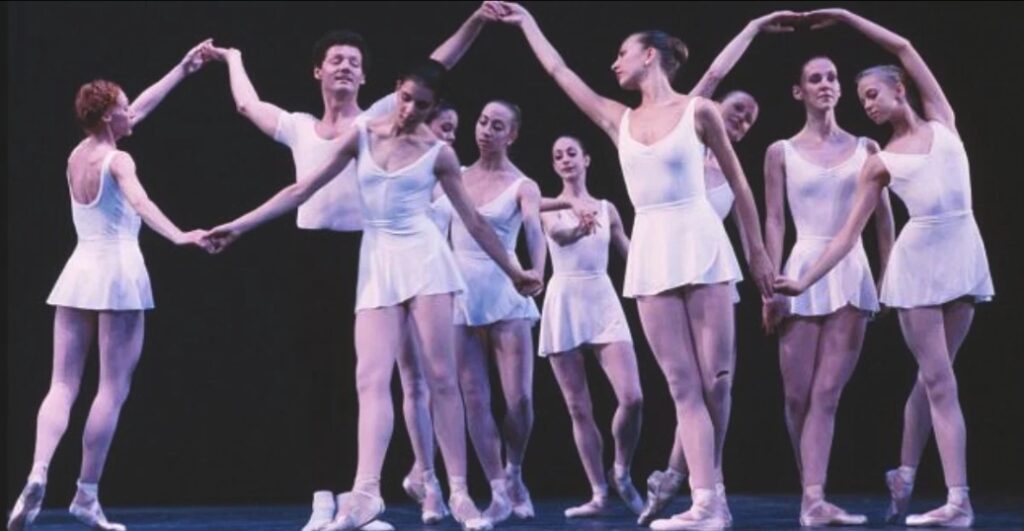
Why Structure May Be the Hidden Engine of Creativity
Creative environments often celebrate freedom.
But lasting excellence usually emerges from structured foundations.
Ballet training offers a clear example. Technique requires discipline. Repetition builds mastery. Structure provides the framework within which artistic expression flourishes.
Lisa K. Stephenson’s work demonstrates how this philosophy extends beyond dance.
Through The Snows of Khione Ballet Academy, she is building an environment where students learn not only choreography, but also accountability, resilience, and purpose-driven growth.
Programs like the Military Initiative and the J.H. Abney Scholarship also highlight a deeper mission: expanding access while maintaining artistic integrity.
For CX and EX leaders, the takeaway feels familiar:
Structure enables excellence
Purpose builds engagement
Consistency supports growth
When organizations design environments that combine discipline with creativity, individuals can thrive.
To explore more conversations on leadership, innovation, and transformative experiences, visit CXQuest’s growing coverage on AI in CX, experience design, and human-centered leadership.
Because great experiences—whether in business or ballet—are rarely accidental.
They are carefully designed.
The post The Snows of Khione Ballet Academy: Lisa K. Stephenson on Structured Creativity appeared first on CX Quest.


You May Also Like

Zero Outflows. $123M Locked. The Chainlink ETF Story Nobody Is Talking About

US Dollar Surges as Hawkish Fed Repricing Drives Breakout, Says ING