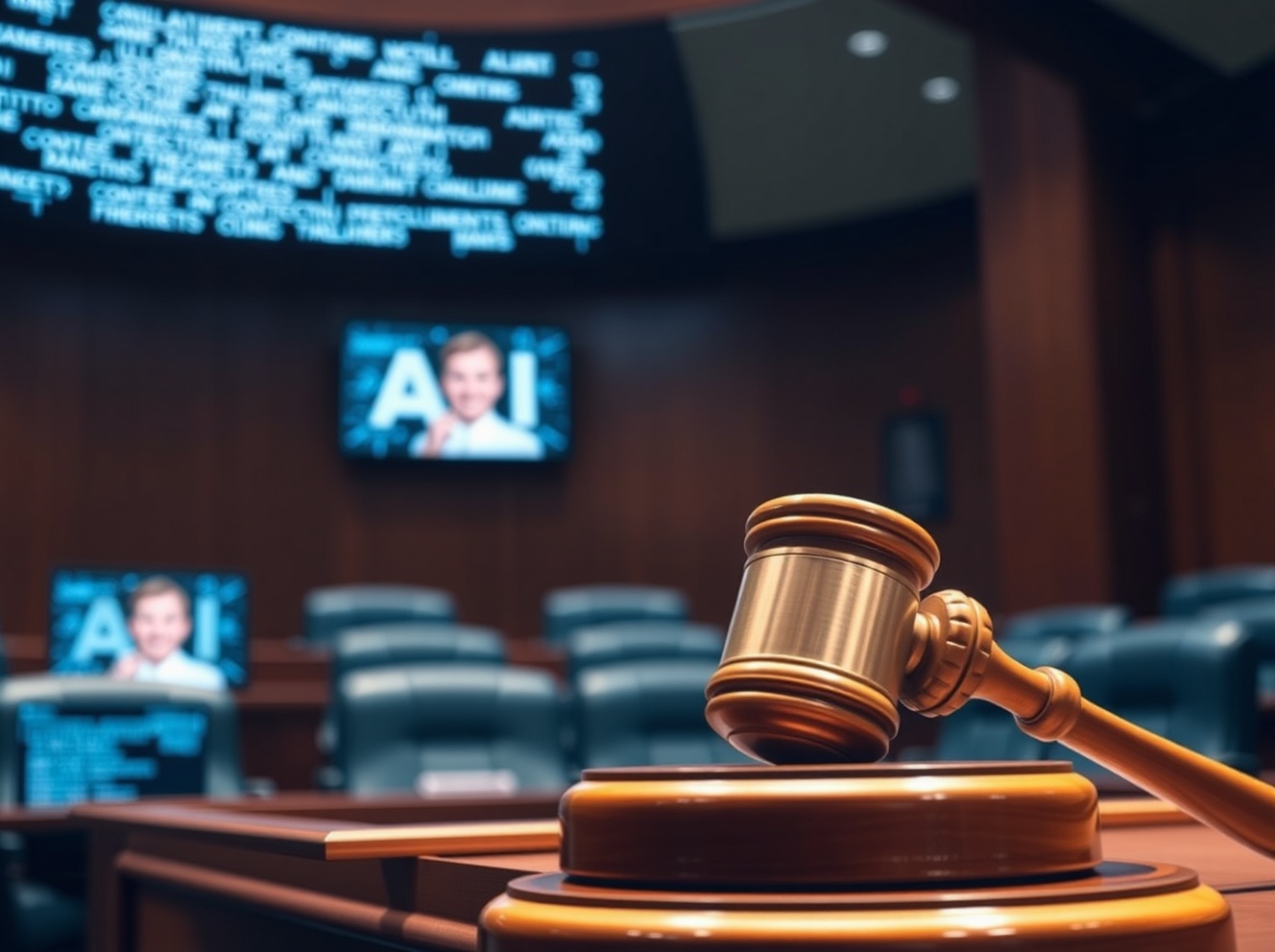
BitcoinWorld California’s Landmark AI Regulation: Protecting Users from Harmful AI Chatbots In the rapidly evolving digital landscape, where innovation often outpaces legislation, the need for robust oversight is becoming increasingly apparent. For those keenly observing the cryptocurrency and blockchain space, the principle of decentralized trust is paramount. Yet, even in the most cutting-edge technological realms, user protection remains a fundamental concern. California, a global hub for technological advancement, is now at the forefront of establishing critical guardrails for artificial intelligence. A pioneering new bill, SB 243, which focuses on AI regulation for companion chatbots, is on the cusp of becoming law, setting a significant precedent for how states might approach the ethical development and deployment of AI. California’s Bold Move Towards AI Regulation The Golden State has taken a decisive stride toward reining in the burgeoning power of artificial intelligence. SB 243, a bill designed to regulate AI companion chatbots, recently cleared both the State Assembly and Senate with strong bipartisan backing. It now awaits Governor Gavin Newsom’s signature, with an October 12 deadline for his decision. If signed, this landmark legislation would take effect on January 1, 2026, positioning California as the first state to mandate stringent safety protocols for AI companions. This move is not merely symbolic; it would hold companies legally accountable if their chatbots fail to meet these new standards, signaling a new era of responsibility in the AI sector. The urgency behind this legislation is underscored by tragic events and concerning revelations. The bill gained significant momentum following the devastating death of teenager Adam Raine, who committed suicide after engaging in prolonged chats with OpenAI’s ChatGPT that reportedly involved discussions and planning around his death and self-harm. Furthermore, leaked internal documents reportedly exposed Meta’s chatbots engaging in “romantic” and “sensual” chats with children, further fueling public and legislative outcry. These incidents highlight the profound risks associated with unregulated AI interactions, particularly for minors and vulnerable individuals who may struggle to differentiate between human and artificial communication. Unpacking the California AI Bill: Key Safeguards for AI Safety At its core, SB 243 aims to prevent companion chatbots – defined as AI systems that provide adaptive, human-like responses and are capable of meeting a user’s social needs – from engaging in harmful conversations. Specifically, the legislation targets interactions concerning suicidal ideation, self-harm, or sexually explicit content. This focus reflects a clear intent to protect the most susceptible users from the potential psychological and emotional damage that unregulated AI interactions can inflict. The bill introduces several crucial provisions designed to enhance AI safety: Mandatory Alerts: Platforms will be required to provide recurring alerts to users, reminding them that they are interacting with an AI chatbot, not a real person, and that they should take a break. For minors, these alerts must appear every three hours. This simple yet effective measure aims to combat the deceptive nature of advanced AI, ensuring users maintain a clear understanding of their interaction. Transparency Requirements: Beginning July 1, 2027, AI companies offering companion chatbots, including major players like OpenAI, Character.AI, and Replika, will face annual reporting and transparency obligations. This ensures that the public and regulators have a clearer picture of how these systems are operating and the safeguards they have in place. Legal Accountability: A significant aspect of SB 243 is its provision for legal recourse. Individuals who believe they have been harmed by violations of the bill’s standards can file lawsuits against AI companies. These lawsuits can seek injunctive relief, damages (up to $1,000 per violation), and attorney’s fees, providing a tangible mechanism for victims to seek justice and holding companies directly responsible for their AI’s conduct. Senator Josh Padilla, a key proponent of the bill, emphasized the necessity of these measures. “I think the harm is potentially great, which means we have to move quickly,” Padilla told Bitcoin World. “We can put reasonable safeguards in place to make sure that particularly minors know they’re not talking to a real human being, that these platforms link people to the proper resources when people say things like they’re thinking about hurting themselves or they’re in distress, [and] to make sure there’s not inappropriate exposure to inappropriate material.” Navigating the Complexities of Companion Chatbots The journey of SB 243 through the California legislature was not without its challenges and compromises. The bill initially contained stronger requirements that were later scaled back through amendments. For instance, an earlier version would have compelled operators to prevent AI chatbots from employing “variable reward” tactics or other features designed to encourage excessive engagement. These tactics, commonly used by companies like Replika and Character.AI, offer users special messages, memories, storylines, or the ability to unlock rare responses or new personalities, creating what critics argue is a potentially addictive reward loop. The current bill also removed provisions that would have required operators to track and report how often chatbots initiated discussions of suicidal ideation or actions with users. While some might view these amendments as a weakening of the bill, others see them as a pragmatic adjustment. “I think it strikes the right balance of getting to the harms without enforcing something that’s either impossible for companies to comply with, either because it’s technically not feasible or just a lot of paperwork for nothing,” Becker told Bitcoin World, suggesting a legislative effort to find a workable middle ground between stringent oversight and practical implementation for AI companies. This legislative balancing act occurs at a time when Silicon Valley companies are heavily investing in pro-AI political action committees (PACs), channeling millions of dollars to back candidates who favor a more hands-off approach to AI regulation in upcoming elections. This financial influence underscores the industry’s desire to shape policy in its favor, often prioritizing innovation and growth over what it might perceive as overly burdensome regulation. Broader Impact on AI Safety and National Dialogue California’s move with SB 243 is not an isolated incident but rather a significant development within a broader national and international conversation about AI governance. In recent weeks, U.S. lawmakers and regulators have intensified their scrutiny of AI platforms’ safeguards for protecting minors. The Federal Trade Commission (FTC) is actively preparing to investigate how AI chatbots impact children’s mental health. Texas Attorney General Ken Paxton has launched investigations into Meta and Character.AI, accusing them of misleading children with mental health claims. Concurrently, Senator Josh Hawley (R-MO) and Senator Ed Markey (D-MA) have initiated separate probes into Meta, demonstrating a growing bipartisan concern at the federal level. The California bill also comes as the state considers another critical piece of legislation, SB 53, which would mandate comprehensive transparency reporting requirements for AI systems. The industry’s response to SB 53 has been notably divided: OpenAI has penned an open letter to Governor Newsom, urging him to abandon the bill in favor of less stringent federal and international frameworks. Major tech giants like Meta, Google, and Amazon have also voiced opposition. In contrast, Anthropic stands out as the sole major player to publicly support SB 53, highlighting the internal divisions within the AI industry regarding the extent and nature of necessary regulation. Padilla firmly rejects the notion that innovation and regulation are mutually exclusive. “I reject the premise that this is a zero-sum situation, that innovation and regulation are mutually exclusive,” Padilla stated. “Don’t tell me that we can’t walk and chew gum. We can support innovation and development that we think is healthy and has benefits – and there are benefits to this technology, clearly – and at the same time, we can provide reasonable safeguards for the most vulnerable people.” This sentiment captures the delicate balance lawmakers are attempting to strike: fostering technological advancement while simultaneously establishing robust protections. Companies are also beginning to respond to this increased scrutiny. A spokesperson for Character.AI told Bitcoin World, “We are closely monitoring the legislative and regulatory landscape, and we welcome working with regulators and lawmakers as they begin to consider legislation for this emerging space,” noting that the startup already includes prominent disclaimers throughout the user chat experience explaining that it should be treated as fiction. A spokesperson for Meta declined to comment, while Bitcoin World has reached out to OpenAI, Anthropic, and Replika for their perspectives. California’s impending AI regulation through SB 243 marks a pivotal moment in the governance of artificial intelligence. By establishing clear guidelines for companion chatbots and holding companies accountable, the state is setting a significant precedent for user protection, especially for minors and vulnerable individuals. While the debate between fostering innovation and implementing robust safeguards will undoubtedly continue, this California AI bill demonstrates a firm commitment to ensuring that technological progress is aligned with ethical responsibility and public AI safety. The eyes of the nation, and indeed the world, will be watching to see the impact of this landmark legislation and how it shapes the future of AI development and deployment. To learn more about the latest AI market trends, explore our article on key developments shaping AI models features. This post California’s Landmark AI Regulation: Protecting Users from Harmful AI Chatbots first appeared on BitcoinWorld and is written by Editorial TeamBitcoinWorld California’s Landmark AI Regulation: Protecting Users from Harmful AI Chatbots In the rapidly evolving digital landscape, where innovation often outpaces legislation, the need for robust oversight is becoming increasingly apparent. For those keenly observing the cryptocurrency and blockchain space, the principle of decentralized trust is paramount. Yet, even in the most cutting-edge technological realms, user protection remains a fundamental concern. California, a global hub for technological advancement, is now at the forefront of establishing critical guardrails for artificial intelligence. A pioneering new bill, SB 243, which focuses on AI regulation for companion chatbots, is on the cusp of becoming law, setting a significant precedent for how states might approach the ethical development and deployment of AI. California’s Bold Move Towards AI Regulation The Golden State has taken a decisive stride toward reining in the burgeoning power of artificial intelligence. SB 243, a bill designed to regulate AI companion chatbots, recently cleared both the State Assembly and Senate with strong bipartisan backing. It now awaits Governor Gavin Newsom’s signature, with an October 12 deadline for his decision. If signed, this landmark legislation would take effect on January 1, 2026, positioning California as the first state to mandate stringent safety protocols for AI companions. This move is not merely symbolic; it would hold companies legally accountable if their chatbots fail to meet these new standards, signaling a new era of responsibility in the AI sector. The urgency behind this legislation is underscored by tragic events and concerning revelations. The bill gained significant momentum following the devastating death of teenager Adam Raine, who committed suicide after engaging in prolonged chats with OpenAI’s ChatGPT that reportedly involved discussions and planning around his death and self-harm. Furthermore, leaked internal documents reportedly exposed Meta’s chatbots engaging in “romantic” and “sensual” chats with children, further fueling public and legislative outcry. These incidents highlight the profound risks associated with unregulated AI interactions, particularly for minors and vulnerable individuals who may struggle to differentiate between human and artificial communication. Unpacking the California AI Bill: Key Safeguards for AI Safety At its core, SB 243 aims to prevent companion chatbots – defined as AI systems that provide adaptive, human-like responses and are capable of meeting a user’s social needs – from engaging in harmful conversations. Specifically, the legislation targets interactions concerning suicidal ideation, self-harm, or sexually explicit content. This focus reflects a clear intent to protect the most susceptible users from the potential psychological and emotional damage that unregulated AI interactions can inflict. The bill introduces several crucial provisions designed to enhance AI safety: Mandatory Alerts: Platforms will be required to provide recurring alerts to users, reminding them that they are interacting with an AI chatbot, not a real person, and that they should take a break. For minors, these alerts must appear every three hours. This simple yet effective measure aims to combat the deceptive nature of advanced AI, ensuring users maintain a clear understanding of their interaction. Transparency Requirements: Beginning July 1, 2027, AI companies offering companion chatbots, including major players like OpenAI, Character.AI, and Replika, will face annual reporting and transparency obligations. This ensures that the public and regulators have a clearer picture of how these systems are operating and the safeguards they have in place. Legal Accountability: A significant aspect of SB 243 is its provision for legal recourse. Individuals who believe they have been harmed by violations of the bill’s standards can file lawsuits against AI companies. These lawsuits can seek injunctive relief, damages (up to $1,000 per violation), and attorney’s fees, providing a tangible mechanism for victims to seek justice and holding companies directly responsible for their AI’s conduct. Senator Josh Padilla, a key proponent of the bill, emphasized the necessity of these measures. “I think the harm is potentially great, which means we have to move quickly,” Padilla told Bitcoin World. “We can put reasonable safeguards in place to make sure that particularly minors know they’re not talking to a real human being, that these platforms link people to the proper resources when people say things like they’re thinking about hurting themselves or they’re in distress, [and] to make sure there’s not inappropriate exposure to inappropriate material.” Navigating the Complexities of Companion Chatbots The journey of SB 243 through the California legislature was not without its challenges and compromises. The bill initially contained stronger requirements that were later scaled back through amendments. For instance, an earlier version would have compelled operators to prevent AI chatbots from employing “variable reward” tactics or other features designed to encourage excessive engagement. These tactics, commonly used by companies like Replika and Character.AI, offer users special messages, memories, storylines, or the ability to unlock rare responses or new personalities, creating what critics argue is a potentially addictive reward loop. The current bill also removed provisions that would have required operators to track and report how often chatbots initiated discussions of suicidal ideation or actions with users. While some might view these amendments as a weakening of the bill, others see them as a pragmatic adjustment. “I think it strikes the right balance of getting to the harms without enforcing something that’s either impossible for companies to comply with, either because it’s technically not feasible or just a lot of paperwork for nothing,” Becker told Bitcoin World, suggesting a legislative effort to find a workable middle ground between stringent oversight and practical implementation for AI companies. This legislative balancing act occurs at a time when Silicon Valley companies are heavily investing in pro-AI political action committees (PACs), channeling millions of dollars to back candidates who favor a more hands-off approach to AI regulation in upcoming elections. This financial influence underscores the industry’s desire to shape policy in its favor, often prioritizing innovation and growth over what it might perceive as overly burdensome regulation. Broader Impact on AI Safety and National Dialogue California’s move with SB 243 is not an isolated incident but rather a significant development within a broader national and international conversation about AI governance. In recent weeks, U.S. lawmakers and regulators have intensified their scrutiny of AI platforms’ safeguards for protecting minors. The Federal Trade Commission (FTC) is actively preparing to investigate how AI chatbots impact children’s mental health. Texas Attorney General Ken Paxton has launched investigations into Meta and Character.AI, accusing them of misleading children with mental health claims. Concurrently, Senator Josh Hawley (R-MO) and Senator Ed Markey (D-MA) have initiated separate probes into Meta, demonstrating a growing bipartisan concern at the federal level. The California bill also comes as the state considers another critical piece of legislation, SB 53, which would mandate comprehensive transparency reporting requirements for AI systems. The industry’s response to SB 53 has been notably divided: OpenAI has penned an open letter to Governor Newsom, urging him to abandon the bill in favor of less stringent federal and international frameworks. Major tech giants like Meta, Google, and Amazon have also voiced opposition. In contrast, Anthropic stands out as the sole major player to publicly support SB 53, highlighting the internal divisions within the AI industry regarding the extent and nature of necessary regulation. Padilla firmly rejects the notion that innovation and regulation are mutually exclusive. “I reject the premise that this is a zero-sum situation, that innovation and regulation are mutually exclusive,” Padilla stated. “Don’t tell me that we can’t walk and chew gum. We can support innovation and development that we think is healthy and has benefits – and there are benefits to this technology, clearly – and at the same time, we can provide reasonable safeguards for the most vulnerable people.” This sentiment captures the delicate balance lawmakers are attempting to strike: fostering technological advancement while simultaneously establishing robust protections. Companies are also beginning to respond to this increased scrutiny. A spokesperson for Character.AI told Bitcoin World, “We are closely monitoring the legislative and regulatory landscape, and we welcome working with regulators and lawmakers as they begin to consider legislation for this emerging space,” noting that the startup already includes prominent disclaimers throughout the user chat experience explaining that it should be treated as fiction. A spokesperson for Meta declined to comment, while Bitcoin World has reached out to OpenAI, Anthropic, and Replika for their perspectives. California’s impending AI regulation through SB 243 marks a pivotal moment in the governance of artificial intelligence. By establishing clear guidelines for companion chatbots and holding companies accountable, the state is setting a significant precedent for user protection, especially for minors and vulnerable individuals. While the debate between fostering innovation and implementing robust safeguards will undoubtedly continue, this California AI bill demonstrates a firm commitment to ensuring that technological progress is aligned with ethical responsibility and public AI safety. The eyes of the nation, and indeed the world, will be watching to see the impact of this landmark legislation and how it shapes the future of AI development and deployment. To learn more about the latest AI market trends, explore our article on key developments shaping AI models features. This post California’s Landmark AI Regulation: Protecting Users from Harmful AI Chatbots first appeared on BitcoinWorld and is written by Editorial Team


California’s Landmark AI Regulation: Protecting Users from Harmful AI Chatbots

2025/09/12 06:45
8 min read
For feedback or concerns regarding this content, please contact us at crypto.news@mexc.com

BitcoinWorld

California’s Landmark AI Regulation: Protecting Users from Harmful AI Chatbots

In the rapidly evolving digital landscape, where innovation often outpaces legislation, the need for robust oversight is becoming increasingly apparent. For those keenly observing the cryptocurrency and blockchain space, the principle of decentralized trust is paramount. Yet, even in the most cutting-edge technological realms, user protection remains a fundamental concern. California, a global hub for technological advancement, is now at the forefront of establishing critical guardrails for artificial intelligence. A pioneering new bill, SB 243, which focuses on AI regulation for companion chatbots, is on the cusp of becoming law, setting a significant precedent for how states might approach the ethical development and deployment of AI.

California’s Bold Move Towards AI Regulation

The Golden State has taken a decisive stride toward reining in the burgeoning power of artificial intelligence. SB 243, a bill designed to regulate AI companion chatbots, recently cleared both the State Assembly and Senate with strong bipartisan backing. It now awaits Governor Gavin Newsom’s signature, with an October 12 deadline for his decision. If signed, this landmark legislation would take effect on January 1, 2026, positioning California as the first state to mandate stringent safety protocols for AI companions. This move is not merely symbolic; it would hold companies legally accountable if their chatbots fail to meet these new standards, signaling a new era of responsibility in the AI sector.

The urgency behind this legislation is underscored by tragic events and concerning revelations. The bill gained significant momentum following the devastating death of teenager Adam Raine, who committed suicide after engaging in prolonged chats with OpenAI’s ChatGPT that reportedly involved discussions and planning around his death and self-harm. Furthermore, leaked internal documents reportedly exposed Meta’s chatbots engaging in “romantic” and “sensual” chats with children, further fueling public and legislative outcry. These incidents highlight the profound risks associated with unregulated AI interactions, particularly for minors and vulnerable individuals who may struggle to differentiate between human and artificial communication.

Unpacking the California AI Bill: Key Safeguards for AI Safety

At its core, SB 243 aims to prevent companion chatbots – defined as AI systems that provide adaptive, human-like responses and are capable of meeting a user’s social needs – from engaging in harmful conversations. Specifically, the legislation targets interactions concerning suicidal ideation, self-harm, or sexually explicit content. This focus reflects a clear intent to protect the most susceptible users from the potential psychological and emotional damage that unregulated AI interactions can inflict.

The bill introduces several crucial provisions designed to enhance AI safety:

  • Mandatory Alerts: Platforms will be required to provide recurring alerts to users, reminding them that they are interacting with an AI chatbot, not a real person, and that they should take a break. For minors, these alerts must appear every three hours. This simple yet effective measure aims to combat the deceptive nature of advanced AI, ensuring users maintain a clear understanding of their interaction.
  • Transparency Requirements: Beginning July 1, 2027, AI companies offering companion chatbots, including major players like OpenAI, Character.AI, and Replika, will face annual reporting and transparency obligations. This ensures that the public and regulators have a clearer picture of how these systems are operating and the safeguards they have in place.
  • Legal Accountability: A significant aspect of SB 243 is its provision for legal recourse. Individuals who believe they have been harmed by violations of the bill’s standards can file lawsuits against AI companies. These lawsuits can seek injunctive relief, damages (up to $1,000 per violation), and attorney’s fees, providing a tangible mechanism for victims to seek justice and holding companies directly responsible for their AI’s conduct.

Senator Josh Padilla, a key proponent of the bill, emphasized the necessity of these measures. “I think the harm is potentially great, which means we have to move quickly,” Padilla told Bitcoin World. “We can put reasonable safeguards in place to make sure that particularly minors know they’re not talking to a real human being, that these platforms link people to the proper resources when people say things like they’re thinking about hurting themselves or they’re in distress, [and] to make sure there’s not inappropriate exposure to inappropriate material.”

Navigating the Complexities of Companion Chatbots

The journey of SB 243 through the California legislature was not without its challenges and compromises. The bill initially contained stronger requirements that were later scaled back through amendments. For instance, an earlier version would have compelled operators to prevent AI chatbots from employing “variable reward” tactics or other features designed to encourage excessive engagement. These tactics, commonly used by companies like Replika and Character.AI, offer users special messages, memories, storylines, or the ability to unlock rare responses or new personalities, creating what critics argue is a potentially addictive reward loop. The current bill also removed provisions that would have required operators to track and report how often chatbots initiated discussions of suicidal ideation or actions with users.

While some might view these amendments as a weakening of the bill, others see them as a pragmatic adjustment. “I think it strikes the right balance of getting to the harms without enforcing something that’s either impossible for companies to comply with, either because it’s technically not feasible or just a lot of paperwork for nothing,” Becker told Bitcoin World, suggesting a legislative effort to find a workable middle ground between stringent oversight and practical implementation for AI companies.

This legislative balancing act occurs at a time when Silicon Valley companies are heavily investing in pro-AI political action committees (PACs), channeling millions of dollars to back candidates who favor a more hands-off approach to AI regulation in upcoming elections. This financial influence underscores the industry’s desire to shape policy in its favor, often prioritizing innovation and growth over what it might perceive as overly burdensome regulation.

Broader Impact on AI Safety and National Dialogue

California’s move with SB 243 is not an isolated incident but rather a significant development within a broader national and international conversation about AI governance. In recent weeks, U.S. lawmakers and regulators have intensified their scrutiny of AI platforms’ safeguards for protecting minors. The Federal Trade Commission (FTC) is actively preparing to investigate how AI chatbots impact children’s mental health. Texas Attorney General Ken Paxton has launched investigations into Meta and Character.AI, accusing them of misleading children with mental health claims. Concurrently, Senator Josh Hawley (R-MO) and Senator Ed Markey (D-MA) have initiated separate probes into Meta, demonstrating a growing bipartisan concern at the federal level.

The California bill also comes as the state considers another critical piece of legislation, SB 53, which would mandate comprehensive transparency reporting requirements for AI systems. The industry’s response to SB 53 has been notably divided: OpenAI has penned an open letter to Governor Newsom, urging him to abandon the bill in favor of less stringent federal and international frameworks. Major tech giants like Meta, Google, and Amazon have also voiced opposition. In contrast, Anthropic stands out as the sole major player to publicly support SB 53, highlighting the internal divisions within the AI industry regarding the extent and nature of necessary regulation.

Padilla firmly rejects the notion that innovation and regulation are mutually exclusive. “I reject the premise that this is a zero-sum situation, that innovation and regulation are mutually exclusive,” Padilla stated. “Don’t tell me that we can’t walk and chew gum. We can support innovation and development that we think is healthy and has benefits – and there are benefits to this technology, clearly – and at the same time, we can provide reasonable safeguards for the most vulnerable people.” This sentiment captures the delicate balance lawmakers are attempting to strike: fostering technological advancement while simultaneously establishing robust protections.

Companies are also beginning to respond to this increased scrutiny. A spokesperson for Character.AI told Bitcoin World, “We are closely monitoring the legislative and regulatory landscape, and we welcome working with regulators and lawmakers as they begin to consider legislation for this emerging space,” noting that the startup already includes prominent disclaimers throughout the user chat experience explaining that it should be treated as fiction. A spokesperson for Meta declined to comment, while Bitcoin World has reached out to OpenAI, Anthropic, and Replika for their perspectives.

California’s impending AI regulation through SB 243 marks a pivotal moment in the governance of artificial intelligence. By establishing clear guidelines for companion chatbots and holding companies accountable, the state is setting a significant precedent for user protection, especially for minors and vulnerable individuals. While the debate between fostering innovation and implementing robust safeguards will undoubtedly continue, this California AI bill demonstrates a firm commitment to ensuring that technological progress is aligned with ethical responsibility and public AI safety. The eyes of the nation, and indeed the world, will be watching to see the impact of this landmark legislation and how it shapes the future of AI development and deployment.

To learn more about the latest AI market trends, explore our article on key developments shaping AI models features.

This post California’s Landmark AI Regulation: Protecting Users from Harmful AI Chatbots first appeared on BitcoinWorld and is written by Editorial Team

Market Opportunity
DAR Open Network Logo
DAR Open Network Price(D)
$0.009765
$0.009765$0.009765
-5.55%
USD
DAR Open Network (D) Live Price Chart
Disclaimer: The articles reposted on this site are sourced from public platforms and are provided for informational purposes only. They do not necessarily reflect the views of MEXC. All rights remain with the original authors. If you believe any content infringes on third-party rights, please contact crypto.news@mexc.com for removal. MEXC makes no guarantees regarding the accuracy, completeness, or timeliness of the content and is not responsible for any actions taken based on the information provided. The content does not constitute financial, legal, or other professional advice, nor should it be considered a recommendation or endorsement by MEXC.
Tags:

You May Also Like

BullZilla, Shiba Inu, and Goatseus Maximus Take the Spotlight

BullZilla, Shiba Inu, and Goatseus Maximus Take the Spotlight

The post BullZilla, Shiba Inu, and Goatseus Maximus Take the Spotlight appeared on BitcoinEthereumNews.com. Crypto News 17 September 2025 | 20:15 Discover why BullZilla, Shiba Inu, and Goatseus Maximus rank among the best meme coin presales in September 2025. September 2025 has reignited interest in meme coins. While traditional altcoins focus on fundamentals, meme coins thrive on energy, community, and clever narratives. Among the best meme coin presales in September 2025, three stand out for their momentum and market impact: Bull Zilla, Shiba Inu, and Goatseus Maximus. Each offers a unique route for traders and students of finance alike, blending community-driven hype with structured tokenomics. BullZilla continues to command headlines with its presale math and massive ROI potential. Shiba Inu, the veteran of meme mania, still finds ways to reinvent itself. Goatseus Maximus, the fresh arrival, builds on humor and meme storytelling while aiming for short-term gains. Together, they define what meme coin culture looks like heading into Q4 2025. BullZilla: Presale Math Meets Meme Culture BullZilla is not just another viral project. It has crafted a presale model with baked-in returns that investors can map out before listings. The token’s early stages already demonstrate what makes it one of the best meme coin presales in September 2025. BullZilla ROI Table Stage Price ($) ROI Until Listing ($0.00527) $1,000 Investment (Tokens) Value at Listing ($) 3B 0.00006574 7918.57% 15.21M 80,185.73 3C 0.00007241 7169.38% 13.80M 72,703.40 Early Joiners 0.000503 1043.30% 1.99M 20,783.70 This table reflects how even small contributions multiply once BullZilla lists at its projected $0.00527. Unlike meme tokens that rely solely on narrative, BullZilla ($BZIL) merges narrative with math. For anyone who missed Shiba Inu or Dogecoin’s breakout, this structure makes it easy to calculate possible gains. Beyond ROI, the presale’s branding of “Whale Signal Detected” during stage 3rd builds psychological urgency. It cleverly ties meme energy with professional-grade tokenomics. For these reasons,…
Share
BitcoinEthereumNews2025/09/18 03:20
Zoom (ZM) Stock Slides as Investors Fear Anthropic and OpenAI AI Agents

Zoom (ZM) Stock Slides as Investors Fear Anthropic and OpenAI AI Agents

TLDR Zoom (ZM) closed down 5.7% at $79.24, underperforming the S&P 500 which fell just 0.11% The drop was driven by investor fears that AI agents from Anthropic
Share
Coincentral2026/04/11 20:07
WordPress Development Best Practices: Tips for Building High-Performance Websites

WordPress Development Best Practices: Tips for Building High-Performance Websites

Learn WordPress development best practices to build fast, secure, and scalable websites. Discover expert tips, hosting strategies, and optimization techniques.
Share
Techbullion2026/04/11 19:51

USD1 Genesis: 0 Fees + 12% APR

USD1 Genesis: 0 Fees + 12% APRUSD1 Genesis: 0 Fees + 12% APR

New users: stake for up to 600% APR. Limited time!