Airdrop

An Airdrop is a distribution of free tokens to a community, typically used as a marketing tool or a reward for early protocol adopters and testers. In 2026, the "points-to-airdrop" model has matured into merit-based incentive programs that utilize Sybil-resistance and Proof-of-Humanity to filter out bots. Airdrops remain a primary method for decentralized governance (DAO) bootstrapping. Follow this tag for the latest on retroactive rewards, eligibility criteria, and how to participate in the most anticipated token distributions in the ecosystem.

5500 Articles
Created: 2026/02/02 18:52
Updated: 2026/02/02 18:52

Revolutionary ZK-Based Secret Santa System: Ethereum’s Bold Step Toward Total Privacy

Revolutionary ZK-Based Secret Santa System: Ethereum’s Bold Step Toward Total Privacy

BitcoinWorld Revolutionary ZK-Based Secret Santa System: Ethereum’s Bold Step Toward Total Privacy Imagine a gift exchange where no one knows who gave what to whom, yet everyone trusts the system completely. This isn’t magic; it’s cryptography. Ethereum developers are now turning this vision into reality by building a groundbreaking ZK-based Secret Santa system. This initiative marks a pivotal first step toward a new era of privacy on […] This post Revolutionary ZK-Based Secret Santa System: Ethereum’s Bold Step Toward Total Privacy first appeared on BitcoinWorld.

Author: bitcoinworld
Ourbit SuperCEX's annual mega-event, "Wheel of the Universe," is about to set sail, with a total prize pool of $2.5 million.

Ourbit SuperCEX's annual mega-event, "Wheel of the Universe," is about to set sail, with a total prize pool of $2.5 million.

As 2025 enters its final month, Ourbit SuperCEX is about to launch its annual grand finale – the "Cosmic Wheel" year-end celebration. As one of the most important user appreciation events of the year, this grand event will express gratitude to users worldwide for their long-term support in a more open and generous manner. The event will run from 12:00 (UTC+8) on December 3rd to 00:00 (UTC+8) on December 17th, with a massive prize pool of up to 2.5 million USDT available throughout. Whether you're a seasoned user or a new participant, you can share in the generous rewards at this year-end extravaganza. During the 14-day event, users can earn rewards and platform benefits through three core gameplay modes: Contract Team Tournament (2 million USDT) Team up freely to participate in the contract trading competition. The prize pool unlocks based on the total trading volume, with a maximum of 2,000,000 USDT. The top 50 teams based on their contract trading volume will share the prize money. Card draw event (200,000 USDT card pool + 300,000 USDT prize pool) Users can earn chances to draw cards by completing daily tasks, and participate in a prize pool worth 500,000 USDT. Daily tasks include: contract trading, contract account asset snapshots, Tap Trading tasks, inviting friends, and $BITCH holding tasks. Tap Trading Daily Tasks Participate in price predictions using the daily free BIT virtual currency to earn chances to draw cards in the Cosmic Wheel and receive cash airdrop rewards. 1. How to participate in the entire "Cosmic Wheel" annual gala? Event period: December 3, 12:00 (UTC+8) – December 17, 00:00 (UTC+8) Target audience: All Ourbit CEX users Participation Process: After entering the "Wheel of the Universe" event page, users can accumulate more card draw chances through daily trading, Tap Trading tasks, and inviting friends. These chances can be used to participate in sharing a 500,000 USDT prize pool and have a chance to win ultra-rare platform NFT airdrops. Additionally, users can join or create teams to participate in contract team competitions, vying for a super-luxurious team competition prize pool of up to 2,000,000 USDT. II. Card Draw Event: Share a Super Prize Pool of 500,000 USDT Card drawing is the core gameplay of the entire "Cosmic Wheel". The total prize pool of 500,000 USDT consists of two parts: a 200,000 USDT card collection pool and a 300,000 USDT equivalent prize pool. Each draw guarantees one O/U/R/B/I/T card and has a chance to drop additional high-value rewards such as USDT, $BITCH, trial funds, and platform NFT airdrops. Users can collect all six O/U/R/B/I/T cards to create a complete set. The event will be held in two phases. After each phase, users will share a 200,000 USDT card collection prize pool based on the proportion of their current collection holdings relative to the total number of collections on the platform. Each draw will yield at least one card, with a chance to win additional high-value rewards such as USDT, $BITCH, trial funds, and platform NFT airdrops. Phase 1: 12/3 12:00 – 12/10 00:00 (UTC+8) Phase 2: 12/10 00:00 – 12/17 00:00 (UTC+8) III. Contract Team Tournament: Team up to compete for a prize pool of 2,000,000 USDT In the Contract Team Competition, users can freely form teams to compete for a maximum prize pool of 2,000,000 USDT based on their contract trading volume. The prize pool is gradually unlocked as the total contract trading volume increases, with the top 50 teams sharing the rewards proportionally. The team captain receives 20% of the team's reward, and the remaining 80% is distributed according to the trading contributions of each member (maximum 20% per member). Team leader registration period: December 3, 12:00 (UTC+8) – December 15, 00:00 (UTC+8) Team match schedule: December 3, 12:00 (UTC+8) – December 17, 00:00 (UTC+8) Users who did not participate in the team competition can still participate in Tap Trading and the gacha event independently. IV. NFT Section: Commemorative NFTs + Limited NFTs, Connecting to the Future Platform Coin Ecosystem NFTs are the key benefit of this event, divided into Commemorative NFTs (unlimited quantity) and Limited NFTs (limited to 2,000). Users who complete Ourbit's year-end summary or on-chain annual statement will be eligible to mint the Commemorative NFTs, serving as an exclusive "annual badge" to record their transaction journey in 2025. Limited NFTs symbolize ultimate scarcity and future value. When Ourbit platform token is issued in the future, Limited NFT holders will receive a platform token airdrop reward. NFT holders will also receive other high-value platform-exclusive rewards and benefits. A total of 2,000 tokens are available, with 1,000 randomly obtained through a gacha system and 1,000 acquired through subscription. V. Tap Trading Daily Task: Zero-threshold Event Contract Trading Tap Trading is the lightest and most beginner-friendly way to play in this event. Users can participate simply by receiving daily BIT virtual currency predictions of price increases or decreases, without needing to understand leverage or margin calls. All users can receive 3000 BIT virtual currency daily (reset to zero at the end of the day). When the accumulated BIT virtual currency reaches 3,000 / 5,000 / 8,000 / 12,000 / 15,000 on a given day, the corresponding number of draws in the Cosmic Wheel event will be automatically unlocked. Reaching the highest accumulated tier on a given day also gives you a chance to receive a 5 USDT cash reward. With the official launch of the "Cosmic Wheel," Ourbit SuperCEX will bring an unprecedented participation experience to global users with its largest year-long rewards event. Whether you are a seasoned contract trading expert, a player who enjoys completing tasks and collecting rewards, or a Tap Trading newbie looking for the easiest way to participate, you can find your stage in this 14-day journey. A massive reward of 2,500,000 USDT, 2,000 limited-edition core equity NFTs, and multiple random drops will all be available to users during this year-end celebration. As the year draws to a close, the grand event has begun. Join the "Wheel of the Universe" now—and celebrate good fortune, challenge the highest peaks, and win your annual glory with users worldwide! About Ourbit Ourbit SuperCEX was founded by a team of former top-tier exchange founders and industry veterans with extensive experience in the well-known Meme coin ecosystem, including SPX6900, Harry Potter, Obama, Sonic10Inu, and others. Ourbit focuses on zero-fee spot trading and boasts the most comprehensive range of Meme coin contract/spot trading pairs on the market, with some contract pairs offering leverage up to 200x.

Author: PANews
Binance: Holders of 253 Alpha Points can claim an airdrop tonight at 9 PM.

Binance: Holders of 253 Alpha Points can claim an airdrop tonight at 9 PM.

PANews reported on December 2nd that, according to an official Binance announcement, users are encouraged to prepare to claim their Binance Alpha airdrop at 13:00 (UTC) today. Users with at least 253 Binance Alpha Credits can claim tokens on a first-come, first-served basis until the airdrop pool is exhausted or the airdrop event ends.

Author: PANews
Ethereum Devs Push ZK ‘Secret Santa’ System Toward Deployment

Ethereum Devs Push ZK ‘Secret Santa’ System Toward Deployment

Markets Share Share this article

Copy linkX (Twitter)LinkedInFacebookEmail
Ethereum Devs Push ZK ‘Secret Sant

Author: Coindesk
Ethereum Developers Propose Zero-Knowledge Proofs for Privacy in Secret Santa Protocol

Ethereum Developers Propose Zero-Knowledge Proofs for Privacy in Secret Santa Protocol

The post Ethereum Developers Propose Zero-Knowledge Proofs for Privacy in Secret Santa Protocol appeared on BitcoinEthereumNews.com. Zero Knowledge Secret Santa (ZKSS) is an innovative Ethereum protocol proposed by a Solidity engineer using zero-knowledge proofs and transaction relayers to enable anonymous gift exchanges, mimicking the traditional Secret Santa game while preserving user privacy on the public blockchain. ZKSS addresses Ethereum’s transparency by hiding gift sender-receiver relations through cryptographic proofs. The protocol ensures fairness by incorporating participant-provided randomness to avoid self-gifting or duplicates. Potential applications include anonymous voting in DAOs and private token distributions, enhancing blockchain privacy amid growing crypto-finance integration. Discover how Zero Knowledge Secret Santa revolutionizes Ethereum privacy with ZK proofs. Explore the protocol’s mechanics, challenges, and real-world uses in this in-depth analysis. Stay ahead in crypto innovations—read now! What is Zero Knowledge Secret Santa on Ethereum? Zero Knowledge Secret Santa (ZKSS) is a cryptographic protocol designed for Ethereum that facilitates anonymous participant matching, similar to the holiday gift exchange game, while maintaining complete privacy through zero-knowledge proofs. Proposed by Solidity engineer Artem Chystiakov, it was initially shared on arXiv in January and further detailed on the Ethereum community forum. This approach tackles blockchain’s inherent transparency by allowing users to prove relationships without revealing identities. How Does the ZKSS Protocol Overcome Ethereum’s Privacy Challenges? The ZKSS protocol navigates Ethereum’s public ledger issues by implementing zero-knowledge proofs, which verify commitments without exposing underlying data. Chystiakov identifies three core hurdles: visibility of transactions, lack of inherent randomness, and prevention of invalid pairings. For visibility, transaction relayers submit actions on behalf of users, masking sender details. Randomness is crowdsourced from participants via encrypted commitments, ensuring no duplicates or self-assignments. According to Chystiakov’s research, this structure guarantees a valid cycle where each participant is both a giver and receiver exactly once, with mathematical rigor drawn from elliptic curve cryptography and discrete logarithm problems. Supporting data from Ethereum’s transaction volumes, which…

Author: BitcoinEthereumNews
Aster price outlook turns bullish amid buyback resumption

Aster price outlook turns bullish amid buyback resumption

The post Aster price outlook turns bullish amid buyback resumption appeared on BitcoinEthereumNews.com. Aster price is building a clean bullish reversal as the Stage 4 buyback begins ahead of schedule and traders return with stronger volume. Summary Aster trades near $0.98 after a bounce from the $0.92 area. The team launched its Stage 4 buyback eight days early to support price amid market volatility. Technical indicators show improving momentum with RSI, Stochastic, and CCI turning upward. Aster traded at $0.984 at press time, down 1.8% on the day, with a weekly range between $0.9007 and $1.18. The token sits about 15% lower over the past week and roughly 59% below its $2.41 all-time high from Sept. 24.  Trading volume rose sharply to $556M, an increase of 62%. CoinGlass data shows Aster (ASTER) derivatives volume up 31% to $1.27 billion while open interest rose 3.6%. This mix shows that more traders are adding exposure during a volatile stretch. Aster Stage 4 buyback begins On a Dec. 2 post on X, Aster announced that it had activated its Stage 4 buyback eight days earlier than planned. The team said the early rollout will “support holders during unstable market conditions,” and the program immediately went live on-chain. [Important Update] Stage 4 Buyback Now Live As committed, Stage 4 buybacks began on December 2, 01:10 UTC. Executing wallet address:0x573ca9FF6b7f164dfF513077850d5CD796006fF4 You can track buyback activity in real-time on-chain. All operations remain transparent and… https://t.co/BUrbDfDFK3 — Aster (@Aster_DEX) December 2, 2025 The structure mirrors earlier stages. Protocol fees continue to drive the buybacks, and depending on volume, the burn allocation can reach half of all purchased tokens. Aster has already bought back 155.72 million ASTER across previous stages, including 55.72 million from Stage 3 alone, with 77.8 million scheduled for burning on Dec. 5.  Community members described the early start as a show of commitment, with one holder saying…

Author: BitcoinEthereumNews
Aster price forms bullish RSI reversal pattern as team begins Stage 4 buyback ahead of schedule

Aster price forms bullish RSI reversal pattern as team begins Stage 4 buyback ahead of schedule

Aster price is building a clean bullish reversal as the Stage 4 buyback begins ahead of schedule and traders return with stronger volume. Aster traded at $0.984 at press time, down 1.8% on the day, with a weekly range between…

Author: Crypto.news
$SPY Presale Among the Top Cryptos to Buy in 2025, Countdown to Close

$SPY Presale Among the Top Cryptos to Buy in 2025, Countdown to Close

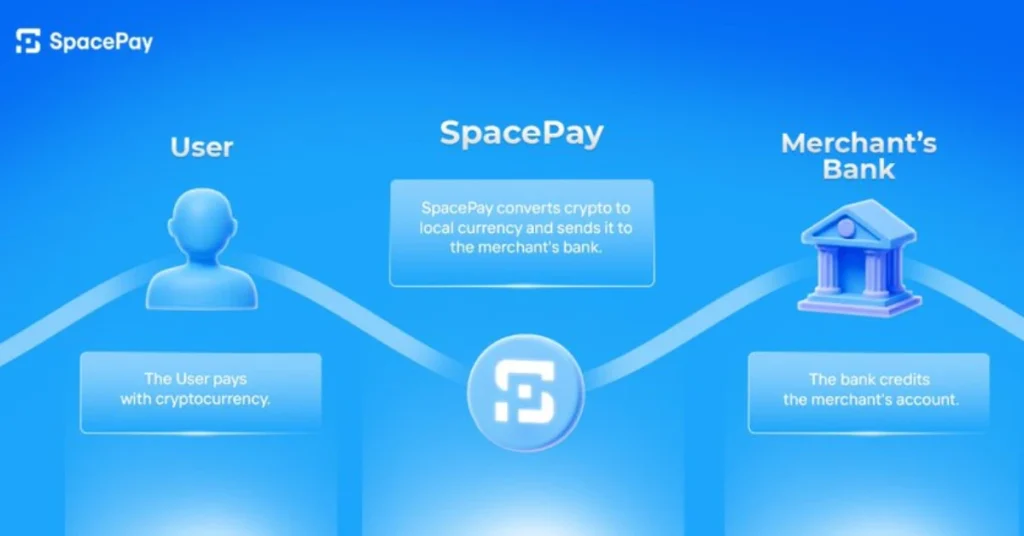
The post $SPY Presale Among the Top Cryptos to Buy in 2025, Countdown to Close appeared first on Coinpedia Fintech News November marks the final chapter for SpacePay ($SPY) presale access before mainnet deployment begins. The window to secure tokens at current prices narrows each day, and once the presale ends by the end of November, this entry point disappears. What positions $SPY among projects worth attention as 2025 approaches? SpacePay delivers a payment solution that …

Author: CoinPedia
IOSG: Prediction markets are hot, but we still need to pour some cold water on them.

IOSG: Prediction markets are hot, but we still need to pour some cold water on them.

Prediction markets are undoubtedly one of the most watched sectors in the crypto industry. Leading project Polymarket boasts over $36 billion in cumulative trading volume and recently completed a strategic funding round at a valuation of $9 billion. Meanwhile, platforms including Kalshi (valued at $11 billion) have also received substantial capital injections. ▲Source: Dune However, behind the continuous influx of capital and impressive data growth, we find that prediction markets, as a type of trading product, still face many problems. In this article, I attempt to set aside the mainstream optimism and offer some different perspectives. 01 Prediction is event-based—events are inherently discontinuous and non-replicable. Unlike the price fluctuations of assets such as stocks and forex over time, market prediction relies on a finite number of discrete events in the real world. It is low-frequency compared to trading. In the real world, there are very few events that truly garner widespread attention, have clear outcomes, and are settled within a reasonable timeframe—presidential elections are held every four years, the World Cup every four years, the Oscars every year, and so on. Most social, political, economic, and technological events do not generate sustained demand for transactions. These events are limited in number and frequency each year, making it difficult to build a stable trading ecosystem. In other words, the low-frequency nature of prediction markets cannot be easily changed by product design or incentive mechanisms. This fundamental characteristic determines that, in the absence of major events, the trading volume of prediction markets will inevitably not remain at a high level. 02 Unlike the stock market, prediction markets do not rely on fundamentals: the stock market's value comes from a company's intrinsic value, including its future cash flow, profitability, assets, and so on. Prediction markets, however, ultimately point to an outcome and depend on users' "interest in the outcome of the event itself." In this context, the amount people are willing to bet on is significantly positively correlated with the importance of the event, market attention, and time frame: scarce and high-profile events such as the finals and presidential elections attract a large amount of money and attention. Naturally, an average fan would be more concerned about the outcome of the annual finals and would place heavy bets on it, rather than performing the same way during the regular season. On Polymarket, the 2024 presidential election accounted for over 70% of the platform's total online activity (OI). Meanwhile, the vast majority of events remained in a state of low liquidity and high bid-ask spreads for extended periods. From this perspective, it's difficult for the prediction market to expand exponentially. 03 Prediction markets have a gambling nature, but they are unlikely to generate the retention and expansion that gambling does. We all know that the real mechanism of gambling addiction lies in instant feedback—slot machines go every few seconds, Texas Hold'em is played every few minutes, and contracts and memecoin transactions change rapidly every second. However, the feedback cycle in prediction markets is very long, with most events taking weeks to months to resolve. Events with rapid feedback may not be interesting enough to warrant a large bet. Immediate positive feedback significantly increases dopamine release frequency and reinforces user habits. Delayed feedback, on the other hand, fails to create stable user retention. 04 In some types of events, there is a high degree of information asymmetry among the participants. In competitive sports, in addition to the teams' theoretical strength, the outcome largely depends on the athletes' performance on the day, which means there is still considerable uncertainty. However, political events involve opaque processes involving inside information, channels, and connections. Insiders have a significant information advantage, making their bets much more certain. Just like the vote counting process in elections, internal polls, and organizational details in key areas, it's difficult for outsiders to obtain this information. Currently, there is no clear definition of "insider trading" in prediction markets from regulatory bodies, leaving this area in a gray area. In general, in these types of events, the party at an informational disadvantage is more likely to exit liquidity. 05 Due to the ambiguity of language and definitions, it is difficult to be completely objective in predicting market events. For example, whether Russia and Ukraine will cease hostilities in 2025 depends on the statistical methodology used; whether a cryptocurrency ETF will be approved at a certain time can be determined by factors such as full approval, partial approval, or conditional approval. This raises the issue of "social consensus"—when both sides are evenly matched, the losing side will not readily concede defeat. Such ambiguity necessitates the establishment of a dispute resolution mechanism on the platform. However, once prediction markets encounter linguistic ambiguity and dispute resolution, they cannot rely entirely on automation or objectivity, leaving room for human manipulation and corruption. 06 The main value proposition of prediction markets in the market is "collective intelligence," which means that, compared to the low level of trust in the media and mainstream discourse, prediction markets can gather the best information from around the world, thereby achieving collective consensus. However, before prediction markets achieve widespread adoption, this "information sampling" will inevitably be one-sided and the sample will not be diverse enough. The user base of prediction market platforms may be highly homogeneous. For example, in the early stages of a prediction market, it is certainly a platform mainly composed of cryptocurrency users whose views on political, social, and economic events may be highly convergent, thus forming an information cocoon. In this situation, the market reflects the collective bias of a specific group, and is still quite far from "collective wisdom". Conclusion The core message of this article is not to predict a bearish market, but rather to encourage us to remain calm amidst heightened FOMO, especially after the ups and downs of popular narratives like ZK and GameFi. Over-reliance on special events like elections, short-term sentiment on social media, and airdrop incentives often amplifies the superficial aspects of data and is insufficient to support judgments about long-term growth. Nevertheless, from the perspective of user education and user acquisition, prediction markets will remain important in the next three to five years. Similar to on-chain yield savings products, they have an intuitive product format and a lower learning curve, making them more likely to attract users from outside the crypto ecosystem than on-chain transaction protocols. Based on this, prediction markets are highly likely to develop further and, to some extent, become an entry-level product for the crypto industry. Future prediction markets may also occupy certain vertical sectors, such as sports and politics. They will continue to exist and expand, but they do not have the fundamental conditions for exponential growth in the short term. We should consider investing in prediction markets from a cautiously optimistic perspective.

Author: PANews
Who's making a fortune in a bear market? Unveiling the money-printing logic of CEXs, stablecoins, and KOLs.

Who's making a fortune in a bear market? Unveiling the money-printing logic of CEXs, stablecoins, and KOLs.

Author: Viee, a core contributor to Biteye Edited by: Denise, a core contributor to Biteye After the bubble bursts, what will be the bottom line for the survival of crypto projects? In an era where anything could be told a story and anything could be overvalued, cash flow didn't seem essential. But things are different now. Venture capitalists are withdrawing, and liquidity is tightening. In this market environment, the ability to make money and generate positive cash flow has become the first sieve to test the fundamentals of a project. In contrast, other projects rely on stable income to weather economic cycles. According to DeFiLlama data, in October 2025, the top three highest-grossing crypto projects generated $688 million (Tether), $237 million (Circle), and $102 million (Hyperliquid) respectively in a single month. In this article, we'll discuss projects with real cash flow. They mostly revolve around two things: transactions and attention. These two fundamental sources of value in the business world are no exception in the cryptocurrency arena. 01. Centralized Exchanges: The Most Stable Revenue Model In the cryptocurrency world, it's no secret that "exchanges are the most profitable." Exchanges primarily generate revenue from transaction fees and listing fees. Take Binance, for example; its daily spot and futures trading volume has consistently accounted for 30-40% of the entire market. Even in the sluggish market of 2022, its annual revenue reached $12 billion, and during this bull market cycle, revenue will only be higher. (Data from CryptoQuant) In short: as long as there are transactions, the exchange can generate revenue. Another example is Coinbase, which, as a publicly traded company, has clearer data disclosure. In the third quarter of 2025, Coinbase's revenue was $1.9 billion, with a net profit of $433 million. Transaction revenue was the main source, contributing more than half, with the remaining revenue coming from subscriptions and services. Other leading exchanges such as Kraken and OKX are also steadily making money; Kraken reportedly had revenue of approximately $1.5 billion in 2024. The biggest advantage of these centralized exchanges (CEXs) is that trading naturally generates revenue. Compared to many projects that are still struggling to make their business models viable, they are already genuinely charging for services. In other words, in this phase where storytelling is becoming increasingly difficult and hot money is becoming increasingly scarce, CEXs are among the few players who can survive on their own without needing to raise funds. 02. On-chain projects: PerpDex, stablecoins, public chains According to DefiLlama data as of November 27, 2025, the top ten on-chain protocols with the highest revenue over the past 30 days are shown in the figure. This reveals that Tether and Circle firmly hold the top positions. Leveraging the interest rate spread between US Treasury bonds and USDT and USDC, these two stablecoin issuers earned nearly $1 billion in a single month. Hyperliquid follows closely behind, firmly holding the title of "most profitable on-chain derivatives protocol." Furthermore, the rapid rise of platforms like Pumpfun further validates the old logic that "selling coins is worse than trading them, and selling tools is worse than selling shovels" still holds true in the crypto industry. It is worth noting that some dark horse projects, such as Axiom Pro and Lighter protocols, have already shown positive cash flow paths, even though their overall revenue is not large. 2.1 PerpDex: Real-world returns from on-chain protocols This year, the best performing PerpDex is Hyperliquid. Hyperliquid is a decentralized perpetual contract platform with its own independent blockchain and built-in matching mechanism. Its explosive growth was quite sudden; in August 2025 alone, it completed $383 billion in transactions and generated $106 million in revenue. Furthermore, the project uses 32% of its revenue to buy back and burn platform tokens. According to a report yesterday by @wublockchain12, the Hyperliquid team unlocked 1.75 million HYPE tokens (out of 60.4 million), without external funding or selling pressure, using protocol revenue to buy back tokens. For an on-chain project, this is approaching the revenue efficiency of a centralized exchange. More importantly, Hyperliquid actually earns money and then gives it back to the token economy system, establishing a direct link between protocol revenue and token value. Let's talk about Uniswap. In recent years, Uniswap has been criticized for taking tokens for free, for example, charging 0.3% on each transaction but giving it all to LPs, and UNI holders receiving no income at all. Until November 2025, Uniswap announced plans to implement a protocol fee-sharing mechanism and use a portion of its historical revenue to buy back and burn UNI tokens. Calculations suggest that if this mechanism had been implemented earlier, the funds available for burning in the first ten months of this year alone would have reached $150 million. Upon the announcement, UNI surged 40% that day. Although Uniswap's market share has fallen from a peak of 60% to 15%, this proposal could still reshape UNI's fundamentals. However, after the proposal was released, @EmberCN detected that an investment institution (possibly a Variant Fund) transferred millions of $UNI ($27.08 million) to Coinbase Prime, suggesting a possible pump-and-dump scheme. Overall, the old DEX model that relied on airdrops to hype up prices is becoming increasingly unsustainable. Only projects that truly generate stable revenue and complete their business cycle are likely to retain users. 2.2 Stablecoins and Public Blockchains: Earning Money Passively Through Interest Beyond transaction-related projects, a number of infrastructure projects are also attracting investment. Among these, stablecoin issuers and frequently used public blockchains are the most typical examples. Tether: The Giant That Continues to Print Money Tether, the company behind USDT, has a very simple profit model: whenever someone deposits $1 in exchange for USDT, Tether uses that money to buy low-risk assets such as government bonds and short-term notes to earn interest, which it keeps for itself. As global interest rates rise, Tether's profits also increase. Its net profit reached $13.4 billion in 2024 and is projected to exceed $15 billion in 2025, approaching that of traditional financial giants like Goldman Sachs. @Phyrex_Ni recently posted that despite its rating downgrade, Tether remains a cash cow, earning over $130 billion in collateral from US Treasury bonds. While USDC issuer Circle has a slightly smaller circulating supply and net profit, its total revenue in 2024 still exceeded $1.6 billion, with 99% coming from interest income. It's worth noting that Circle's profit margin isn't as exorbitant as Tether's, partly due to its revenue-sharing partnership with Coinbase. In short, stablecoin issuers are essentially money-printing machines; they don't raise funds through storytelling, but rather by having users willing to deposit their money with them. In a bear market, these savings-oriented projects actually thrive. @BTCdayu also believes stablecoins are a good business, printing money and collecting interest worldwide, and is optimistic that Circle will be the king of passive income in the stablecoin market. Public blockchains: Relying on traffic, not incentives. Looking at the mainnet public blockchain, the most direct way to monetize is through gas fees. The data in the following chart is from Nansen.ai: Looking at total transaction fee revenue across public blockchains over the past year provides a clearer picture of which chains have truly generated practical value. Ethereum's annual revenue was $739 million, remaining its primary source of income, but it declined by 71% year-over-year due to the Dencun upgrade and L2 cache diversion. In contrast, Solana's annual revenue reached $719 million, a 26% increase year-over-year, driven by the popularity of memes and AI agents, resulting in a significant boost in user activity and interaction frequency. Tron's revenue was $628 million, an 18% increase year-over-year. Bitcoin's annual revenue, however, was only $207 million, primarily affected by a decline in inscription trading activity, resulting in a significant overall drop. BNB Chain's annual revenue reached $264 million, a year-on-year increase of 38%, ranking first among mainstream public chains in terms of growth rate. Although its revenue scale is still lower than ETH, SOL, and TRX, the growth in its transaction volume and active addresses indicates that its on-chain use cases are expanding and its user structure is becoming more diversified. BNB Chain as a whole demonstrates strong user retention and genuine demand. This stable revenue growth structure also provides clearer support for the continued evolution of its ecosystem. These public blockchains are like "water sellers"; whoever is panning for gold in the market will always need their water, electricity, and roads. While these infrastructure projects may not have short-term explosive growth potential, their strength lies in their stability and resilience to economic cycles. 03. Businesses surrounding KOLs: Attention can also be monetized If transactions and infrastructure are the overt business models, then the attention economy is the "hidden business" in the crypto world, such as KOLs and agencies. This year, crypto KOLs have become the center of attention and traffic. Influential figures active on platforms like Twitter, Telegram, and YouTube leverage their personal influence to develop diversified revenue streams: from paid promotions and community subscriptions to monetizing courses. Industry rumors suggest that mid-tier and above crypto KOLs can earn up to $10,000 per month through promotions. Meanwhile, audiences are demanding higher-quality content, so KOLs who weather economic cycles are often those who have earned user trust through professionalism, sound judgment, or deep engagement. This has also subtly reshaped the content ecosystem during bear markets, eliminating those who are short-sighted and retaining those who prioritize long-term commitment. Of particular note is the third layer of attention monetization: KOL (Key Opinion Leader) funding rounds. This makes KOLs key participants in the primary market: acquiring project tokens at a discount, undertaking traffic exposure tasks, and exchanging "early-stage leverage through influence"—a model that bypasses venture capital. A whole suite of matchmaking services has emerged around KOLs themselves. Agencies have begun to act as traffic intermediaries, matching projects with suitable KOLs, making the entire process increasingly resemble an advertising placement system. If you are interested in the business models of KOLs and agencies, you can refer to our previous long article, "Unveiling the KOL Round: A Wealth Experiment Driven by Traffic" (https://x.com/BiteyeCN/status/1986748741592711374), to gain a deeper understanding of the true profit structure behind it. In short, the attention economy is essentially a monetization of trust, and trust is even scarcer in a bear market, making the threshold for monetization even higher. 04. Conclusion Projects that have managed to maintain cash flow during the crypto winter largely demonstrate the two cornerstones of "transactions" and "attention". On the one hand, whether centralized or decentralized, trading platforms can generate continuous revenue through transaction fees as long as they have stable user trading activity. This direct business model allows them to remain self-sufficient even when capital exits. On the other hand, KOLs (Key Opinion Leaders) who focus on user attention monetize user value through advertising and services. In the future, we may see more diverse models, but in any case, projects that have accumulated real revenue during periods of poor market conditions will have a greater chance of leading new development. Conversely, some projects that rely solely on storytelling and lack the ability to generate revenue may experience a short-term surge in popularity, but ultimately they may be forgotten.

Author: PANews