Airdrop

An Airdrop is a distribution of free tokens to a community, typically used as a marketing tool or a reward for early protocol adopters and testers. In 2026, the "points-to-airdrop" model has matured into merit-based incentive programs that utilize Sybil-resistance and Proof-of-Humanity to filter out bots. Airdrops remain a primary method for decentralized governance (DAO) bootstrapping. Follow this tag for the latest on retroactive rewards, eligibility criteria, and how to participate in the most anticipated token distributions in the ecosystem.

5377 Articles
Created: 2026/02/02 18:52
Updated: 2026/02/02 18:52
Shocking MYX Insider Trading Claims Rock $170M Airdrop

Shocking MYX Insider Trading Claims Rock $170M Airdrop

BitcoinWorld Shocking MYX Insider Trading Claims Rock $170M Airdrop A cloud of suspicion hangs over the cryptocurrency world as a major blockchain analysis platform, Bubblemaps, has made alarming allegations. They claim potential MYX insider trading by the MYX team, specifically linking them to wallets that received a staggering $170 million from a recent airdrop. This news has sent ripples through the community, raising serious questions about fairness and transparency in token distributions. What Sparked the MYX Insider Trading Alarm? The controversy began when Bubblemaps, a respected name in on-chain analysis, highlighted an institution receiving a massive $170 million worth of MYX tokens. This substantial sum was distributed across 100 newly created wallets, a pattern that immediately raised red flags for suspicious activity. Such large, coordinated distributions often warrant closer inspection. The sheer volume and the number of new wallets involved suggested a deliberate strategy, which Bubblemaps then set out to investigate further. The findings they uncovered pointed to something far more concerning than just a large airdrop. Unpacking the Evidence: Bubblemaps’ Deep Dive into MYX Insider Trading Bubblemaps didn’t just make an accusation; they provided detailed on-chain evidence. Their analysis started by tracking the MYX creator wallet, identified as 0x8eEB. By meticulously analyzing fund transfers across two different blockchain networks, they were able to trace connections. Direct Wallet Link: Bubblemaps identified a specific recipient address, 0x4a31. Sybil Pattern Match: This address reportedly matched the unique transaction patterns of 95 other so-called ‘Sybil wallets.’ Sybil wallets are often used in an attempt to manipulate airdrops or gain unfair advantages by creating multiple identities. Creator Association: Crucially, address 0x4a31 was also directly linked to another address, 0xeb5A, which Bubblemaps associates with the MYX creator’s activities. This direct link forms the core of the MYX insider trading allegations, suggesting an internal connection to the distribution. These connections paint a concerning picture of how the airdrop funds might have been managed and distributed. The implications for trust within the MYX ecosystem are significant. The MYX Team’s Response: Is Transparency Lacking on MYX Insider Trading? Following these serious allegations, the cryptocurrency community naturally looked to the MYX team for a clear explanation. However, according to Bubblemaps, the response received was notably vague. The MYX team reportedly stated that ‘some users had requested address changes.’ This explanation has done little to quell the concerns. Many observers feel that such a general statement falls short of addressing the specific, detailed evidence presented by Bubblemaps regarding the linked wallets and the potential for MYX insider trading. Transparency is paramount in the crypto space, and a lack of clear communication can erode community trust quickly. Why Does MYX Insider Trading Matter to You? Allegations of insider trading, whether in traditional finance or the rapidly evolving crypto world, strike at the heart of market integrity. For everyday users and investors, such incidents can have several negative consequences: Erosion of Trust: It undermines faith in project teams and the fairness of token distribution mechanisms. Unfair Advantage: Insider trading allows a select few to profit at the expense of the wider community, who may not have access to the same information. Market Manipulation: Such activities can lead to artificial price movements, harming legitimate investors. Reputational Damage: It can severely damage a project’s long-term viability and adoption. As the crypto market matures, the demand for ethical practices and robust oversight grows stronger. Incidents like the alleged MYX insider trading highlight the critical need for projects to uphold the highest standards of transparency and accountability. What Can We Learn from This Controversial Airdrop? This incident serves as a crucial reminder for all participants in the crypto space. While airdrops can be exciting opportunities, it’s vital to remain vigilant. Always conduct your own research (DYOR) into projects and their teams. Look for clear communication, transparent tokenomics, and a strong track record of ethical behavior. For projects, the message is clear: foster trust through complete honesty. Provide detailed explanations for any anomalies and engage openly with the community. This proactive approach helps build a resilient and credible ecosystem for everyone involved. Conclusion: Navigating the Murky Waters of Crypto Airdrops The allegations of MYX insider trading by Bubblemaps represent a significant challenge to the MYX project’s credibility. While the MYX team has offered a response, the detailed on-chain evidence presented by Bubblemaps demands a more comprehensive and transparent explanation. This incident underscores the ongoing need for vigilance, strong community oversight, and unwavering ethical standards within the cryptocurrency industry to ensure fair play for all participants. Frequently Asked Questions (FAQs) Q1: What is MYX? A1: MYX is a cryptocurrency project that recently conducted an airdrop, distributing its native tokens to users. Specific details about its functionality and purpose would typically be found on its official website. Q2: What are the main accusations against the MYX team? A2: Blockchain analysis platform Bubblemaps alleges potential MYX insider trading, claiming direct links between the MYX team and wallets that received $170 million from a recent token airdrop. Q3: Who is Bubblemaps? A3: Bubblemaps is a blockchain analysis platform known for visualizing on-chain data and identifying suspicious activities, often focusing on token distributions and wallet connections. Q4: What are ‘Sybil wallets’ in the context of an airdrop? A4: Sybil wallets refer to multiple wallets controlled by a single entity, often created to bypass airdrop rules or gain a disproportionate share of tokens, giving an unfair advantage. Q5: What are the potential consequences of such allegations for a crypto project? A5: Allegations of MYX insider trading can severely damage a project’s reputation, erode community trust, lead to price volatility, and potentially attract regulatory scrutiny, impacting its long-term success. If you found this analysis insightful, please consider sharing it with your network! Stay informed about critical developments in the crypto space by sharing this article on your social media channels and encouraging open discussion. To learn more about the latest crypto market trends, explore our article on key developments shaping the digital asset space and institutional adoption. This post Shocking MYX Insider Trading Claims Rock $170M Airdrop first appeared on BitcoinWorld and is written by Editorial Team

Author: Coinstats
Bubblemaps: MYX team directly linked to $170 million airdrop wallet

Bubblemaps: MYX team directly linked to $170 million airdrop wallet

PANews reported on September 11th that blockchain analysis platform Bubblemaps, in a post on the X platform, claimed that the MYX team is directly linked to a wallet that received $170 million from its airdrop, suspecting it was an insider operation. Previously, Bubblemaps revealed how a single entity received $170 million from the MYX airdrop via 100 newly deposited wallets , without any direct link to the MYX core team. Bubblemaps traced the movement of funds from multiple addresses on both blockchains, starting with the MYX creator address, which begins with 0x8eEB. They found address 0x4a31, one of the wallets that received the airdrop and matching the funding pattern of 95 other sybil wallets. 0x4a31 sent $2.8 million worth of MYX to a deposit address used only by one other wallet, 0xeb5A, which is associated with the MYX creator.

Author: PANews
Meme Coin Wars: Can Pump.Fun Hold On?

Meme Coin Wars: Can Pump.Fun Hold On?

Key Takeaways:

Pump.Fun briefly lost momentum in July as LetsBonk.Fun gained traction, peaking at over $197 million in daily volume — nearly 4x higher than Pump.Fun at the time.
By August, Pump.Fun reclaimed dominance, with volume surging to $191 million compared to $6 million on LetsBonk.Fun.
Platform changes such as paybacks and dynamic fees helped attract new meme coin creators back to Pump.Fun.
The native PUMP token rose nearly 80% over two weeks, though it still trades about 15% below its all-time high.
New contenders like Believe.me, Heaven, and Sugar.me briefly challenged Pump.Fun, but most failed to maintain long-term momentum.
In July, rumors started swirling across the crypto community that Pump.Fun was “over” and a new king had emerged: LetsBonk.Fun. The narrative wasn’t entirely baseless. If you looked at trading volumes on meme coin launchpads, LetsBonk clearly started gaining ground throughout the month. At its peak on July 21, LetsBonk.Fun recorded just over $197 million in trading volume, while Pump.Fun sat at around $50 million — a nearly 75% drop by comparison.Source: Dune Doubts about Pump.Fun were amplified by the silence of its official X account and co-founder Alon, especially in the wake of the PUMP token launch. With no major updates or news about the promised airdrop, many in the community began to assume the worst. But the sentiment shift didn’t last long. However, LetsBonk.Fun’s popularity was short-lived. In August, Pump.Fun reclaimed its position as the “king of meme coins.” For comparison, as of Sep. 10, the platform recorded a trading volume of $191 million, while its competitor managed only around $6 million. Did Paybacks Make the Difference? There could be several reasons behind the drop in interest toward LetsBonk.Fun. First, the hype around the platform may have simply faded, which is common in crypto markets. But more importantly, Pump.Fun adjusted its strategy and started offering better incentives to both traders and meme coin creators. One major update was the introduction of payback mechanics. Additionally, the platform added dynamic fees that reward meme coin creators directly. This change made Pump.Fun more appealing for new projects looking to launch their tokens, as creators now have the chance to earn a share of the launch fees. In other words, the platform started sharing its revenue with the community.Source: Pump.Fun’s X account Another important factor is the weekly paybacks in PUMP tokens. These distributions reward token holders regularly, helping boost demand for PUMP and increasing user engagement across the ecosystem. The impact is already visible in the token’s price. According to CoinGecko, PUMP has gained nearly 80% over the past two weeks. At the time of writing, it is just about 15% away from its all-time high (ATH). While many in the community still criticize the token after its initial crash, the recent recovery suggests growing confidence in the project.Source: CoinGecko More Meme Coins and Launchpads Enter the Scene LetsBonk.Fun wasn’t the only one trying to knock Pump.Fun off the throne. Earlier in the summer, there was a wave of hype around Believe.me, a platform built on the concept of Internet Capital Markets (ICM). In simple terms, users can launch meme coins based on an idea or narrative. Some startups joined the platform, including Fitcoin (FITCOIN) — an app focused on wardrobe and outfit suggestions. At the height of its popularity, Believe.me nearly matched Pump.Fun in terms of token launch trading volume.Source: Blackwork Research Despite the short-term success of these challengers, new platforms continue to emerge. In August, a new launchpad called Heaven went live. Learning from previous platforms, it immediately introduced a full 100% payback model. Shortly after launch, Heaven became the second-largest token launchpad after Pump.Fun. On Aug. 9, it accounted for nearly 28% of all new meme coin launches, while Pump.Fun held 63%. LetsBonk.Fun and Believe.me faded into the background with only 1.7% and 0.4%, respectively.Source: Dune Competition That Shapes the Meme Coin Space The growing competition between meme coins is leading to a more dynamic and responsive environment for both creators and traders. As platforms work to attract attention and liquidity, they are adjusting their models, offering new features, and becoming more creator-focused. Even Pump.Fun has made changes, such as introducing paybacks and flexible fee models, to stay ahead. At the same time, the fast pace of new token launches carries risk. Many meme coins are now created with the aim of becoming symbols of their respective platforms. One example is Useless Coin (USELESS) from LetsBonk, which gained rapid popularity earlier in the summer. Its market capitalization exceeded $400 million, with some calling it a possible successor to Fartcoin (FARTCOIN). Since July, USELESS has entered a correction and has not yet returned to its previous highs. A new launchpad, Sugar.me, has also emerged, currently ranking third in terms of launched tokens after Pump.Fun and LetsBonk. LetsBonk, in turn, has managed to reclaim second place, showing that market share in this space can shift quickly. In this environment, attention and capital tend to move fast. New projects appear regularly, and user preferences change with them. While this creates more options, it also highlights the need for careful evaluation of new platforms and tokens

Author: CryptoNews
Reshaping the Ecosystem From Crypto Trading To Traditional Assets

Reshaping the Ecosystem From Crypto Trading To Traditional Assets

The post Reshaping the Ecosystem From Crypto Trading To Traditional Assets appeared on BitcoinEthereumNews.com. A Year of Rapid Rise: 50 Million Users Witness the RWA Revolution’s Genesis Formerly known as JuCoin, the platform has officially rebranded as Ju.com. This brand transition signals not only the company’s ambition to become a global ecosystem, but also highlights how the integration of blockchain with traditional assets is transforming the fundamental logic of capital markets. User Base and Data: Explosive Growth in Just One Year Since the arrival of the new management team in 2024, Ju.com’s data curve and product capabilities have experienced an undeniable surge. Registered users soared from five million to fifty million in a single year. Daily trading volume rose to five billion dollars. The JU token price, once at $0.10, broke past the $20 mark, making it one of the strongest-performing ecosystem tokens of the year. The global community has surpassed 26 million members. Ju.com now operates in over 100 countries and regions. On the technical side, the JuChain L1 blockchain delivers fast one-second block times and is EVM-compatible, with more than a million on-chain interaction addresses, enabling users to freely switch multi-chain assets through a seamless interface. Mechanism Innovation: The JU Growth Story and Engines This momentum did not come from a single product or marketing slogans, but rather from persistent mechanism innovation and authentic community consensus. The JU story began with an IDO refund airdrop, where users participated at zero cost. This early-stage distribution model significantly lowered investment risk. The platform replaced traditional fundraising with a “protect the investor first” approach, enabling early users to hold JU at minimal cost, with wide distribution around the $2 level, which fostered a solid base of community consensus. As JuChain and JuCard ecosystem applications launched, JU gradually became the platform’s unified payment and utility token, with both trading fee discounts and governance rights driving demand.…

Author: BitcoinEthereumNews
StarAI Aligns Efforts with Pilot AI to Redefine Web3 Experiences

StarAI Aligns Efforts with Pilot AI to Redefine Web3 Experiences

StarAI is set to simplify Web3 in collaboration with Pilot AI by delivering intuitive AI-driven tools for trading, NFTs, airdrops, and elevated experiences.

Author: Blockchainreporter
Joseph Lubin Promises Future Rewards for Linea Holders Amid 20% Price Drop

Joseph Lubin Promises Future Rewards for Linea Holders Amid 20% Price Drop

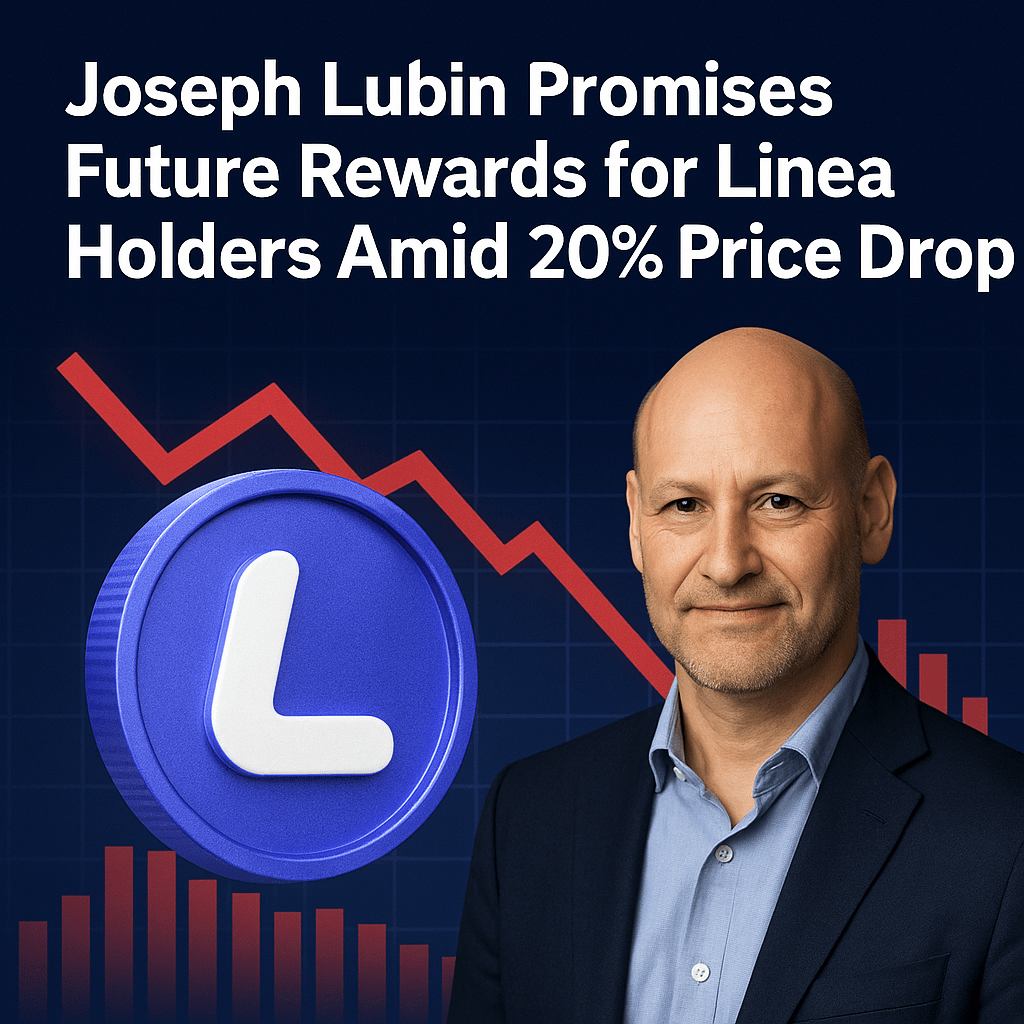
Joseph Lubin, the founder of ConsenSys and a prominent figure in the blockchain and cryptocurrency industry, has announced a new initiative involving a rewards airdrop for the upcoming Linea blockchain network. The airdrop aims to distribute tokens to early participants and supporters, fostering community engagement and providing incentives for users to participate in the platform’s [...]

Author: Crypto Breaking News
Why Did Linea (LINEA) Price Drop 30% Post-Launch?

Why Did Linea (LINEA) Price Drop 30% Post-Launch?

The post Why Did Linea (LINEA) Price Drop 30% Post-Launch? appeared on BitcoinEthereumNews.com. LINEA, the native token of the Layer 2 network Linea, has seen its value dip nearly 30% since launching yesterday. Heavy selling pressure from the airdrop could be behind the sharp decline. Such initial turbulence is common after token launches, reflecting short-term speculative dynamics. Why is LINEA Token Price Dropping? Sponsored Sponsored For context, Linea is a Layer 2 scaling network for Ethereum (ETH) developed by Consensys, the company behind MetaMask. The network is designed to make Ethereum faster, cheaper, and more user-friendly without sacrificing security. The LINEA token serves as the native asset of the Linea network, supporting activity across both Linea and Ethereum. However, users still pay gas fees on the network in ETH rather than in the token itself.  Yesterday marked the token’s debut, accompanied by listings on major exchanges. LINEA launched with a total supply of roughly 72 billion tokens.  According to the official tokenomics, the token does not have special allocations for insiders or investors. Furthermore, the team allocated 9% of the total supply for an airdrop to reward early ecosystem participants. “Early users receive tokens from an allocation equal to 9% of token supply, to be airdropped and fully unlocked at TGE,” the team stated. The launch drew significant attention, with LINEA ranking as the top trending coin on CoinGecko. Initial trading reflected strong demand, as the token surged to an all-time high of $0.046 shortly after release.  However, heavy selling pressure emerged almost immediately, driving the price down sharply. CoinGecko data showed that LINEA plunged to an all-time low of $0.022 after the peak. At the time of writing, the altcoin traded at $0.023, down approximately 30% since its launch. Sponsored Sponsored LINEA Price Performance. Source: TradingView Trading activity has also been substantial, with volumes spiking to $418 million. The transaction surge suggests…

Author: BitcoinEthereumNews
Hoe Hyperliquid met 11 werknemers $330 miljard handelsvolume haalde

Hoe Hyperliquid met 11 werknemers $330 miljard handelsvolume haalde

Connect met Like-minded Crypto Enthusiasts! Connect op Discord! Check onze Discord   Een klein team van slechts 11 mensen runt Hyperliquid, een decentrale beurs die in juli 2025 een handelsvolume van 330 miljard dollar bereikte. Daarmee wist het bedrijf zelfs meer volume te draaien dan de Amerikaanse broker Robinhood. Hoe kon een relatief onbekende speler zo snel zo groot worden? Wat is Hyperliquid? Hyperliquid is een beurs voor zogenoemde perpetuals, afgeleide producten waarmee beleggers kunnen speculeren op koersbewegingen zonder een einddatum. Het platform draait op een eigen blockchain en onderscheidt zich van andere decentrale beurzen doordat alle handel, marginbeheer en liquidaties volledig op de keten zelf plaatsvinden. Dat zorgt voor transparantie en veiligheid, maar vraagt normaal gesproken om veel snelheid. Het bedrijf zegt dit probleem te hebben opgelost met een gesplitste architectuur. De kern, HyperCore, verwerkt de orderboeken en margintransacties, terwijl HyperEVM als programmeerlaag fungeert en direct met de kern communiceert. Beide draaien onder HyperBFT, een consensusmechanisme dat zorgt voor snelle en betrouwbare verwerking van transacties. Hierdoor kan de beurs tot 200.000 transacties per seconde aan, vergelijkbaar met grote gecentraliseerde partijen. De cijfers van juli spreken boekdelen. Volgens databureau DefiLlama ging er ruim 319 miljard dollar aan perpetuals over de toonbank. Samen met spottransacties kwam het totaal uit op 330,8 miljard dollar. Daarmee deed Hyperliquid het beter dan Robinhood, dat in diezelfde maand ruim 237 miljard dollar aan aandelen en cryptohandel verwerkte. Het was al de derde maand op rij dat Hyperliquid Robinhood voorbijstreefde. Indrukwekkende groei van Hyperliquid. Bron: Cointelegraph Dat deze groei mogelijk is met slechts 11 werknemers, heeft volgens oprichter Jeff Yan alles te maken met een bewuste strategie. Hyperliquid wordt volledig zelf gefinancierd, zonder durfkapitaal. Volgens Yan houdt dat de prioriteiten scherp en voorkomt het dat externe investeerders druk zetten op de ontwikkeling. Nieuwe medewerkers worden alleen aangenomen als ze perfect bij de cultuur passen. “Het aannemen van de verkeerde persoon is erger dan helemaal niemand aannemen,” zei hij eerder. Soms nog incidenten De beurs viel ook op door de manier waarop ze incidenten afhandelt. Toen er eind juli een storing was die 37 minuten duurde, kregen getroffen handelaren de volgende dag al bijna twee miljoen dollar teruggestort. Voor een decentrale beurs is zo’n snelle reactie uitzonderlijk. Daarnaast heeft Hyperliquid een systeem ontwikkeld om liquiditeit op peil te houden. In het zogeheten HLP-fonds kunnen gebruikers kapitaal storten dat vervolgens wordt ingezet voor markt maken en liquidaties. Winsten en een deel van de handelskosten worden gedeeld met de inleggers. Tegelijkertijd gebruikt het protocol een groot deel van de opbrengsten om eigen tokens (HYPE) terug te kopen en te verbranden. Dat moet de waarde van het token ondersteunen en zorgt voor een kringloop waarbij meer handel leidt tot hogere opbrengsten voor zowel gebruikers als tokenhouders.   Welke crypto nu kopen?Lees onze uitgebreide gids en leer welke crypto nu kopen verstandig kan zijn! Welke crypto nu kopen? Fed-voorzitter Jerome Powell heeft aangekondigd dat de rentes binnenkort zomaar eens omlaag zouden kunnen gaan, en tegelijkertijd blijft BlackRock volop crypto kopen, en dus lijkt de markt klaar om te gaan stijgen. Eén vraag komt telkens terug: welke crypto moet je nu kopen? In dit artikel bespreken we de munten die… Continue reading Hoe Hyperliquid met 11 werknemers $330 miljard handelsvolume haalde document.addEventListener('DOMContentLoaded', function() { var screenWidth = window.innerWidth; var excerpts = document.querySelectorAll('.lees-ook-description'); excerpts.forEach(function(description) { var excerpt = description.getAttribute('data-description'); var wordLimit = screenWidth wordLimit) { var trimmedDescription = excerpt.split(' ').slice(0, wordLimit).join(' ') + '...'; description.textContent = trimmedDescription; } }); });   Veel HYPE-tokens werden weggegeven De distributie van de tokens verliep grotendeels via een grote airdrop eind 2024, waarbij honderdduizenden gebruikers HYPE ontvingen. In 2025 kwam er nog een extra impuls toen de populaire Phantom Wallet directe toegang tot Hyperliquid inbouwde. Daardoor konden tienduizenden nieuwe handelaren eenvoudig instappen. Toch zijn er ook risico’s. Critici wijzen erop dat de validatorenset nog relatief klein en ondoorzichtig is, waardoor centralisatie op de loer ligt. Ook is het marktaandeel van Hyperliquid inmiddels zo groot dat de hele sector kwetsbaar kan worden als er iets misgaat. Ondanks die zorgen zien veel analisten Hyperliquid als een van de belangrijkste spelers in de volgende fase van decentrale handel. Door snelheid en decentralisatie te combineren met een kleine, wendbare organisatie lijkt het platform iets te hebben bereikt waar veel andere projecten al jaren naar streven. Of Hyperliquid dit succes op lange termijn kan vasthouden, hangt af van verdere decentralisatie, transparantie en de vraag of gebruikers loyaal blijven. Voorlopig lijkt de kleine beurs met groot volume in elk geval een blijvertje. Best wallet - betrouwbare en anonieme wallet Best wallet - betrouwbare en anonieme wallet Meer dan 60 chains beschikbaar voor alle crypto Vroege toegang tot nieuwe projecten Hoge staking belongingen Lage transactiekosten Best wallet review Koop nu via Best Wallet Let op: cryptocurrency is een zeer volatiele en ongereguleerde investering. Doe je eigen onderzoek. Het bericht Hoe Hyperliquid met 11 werknemers $330 miljard handelsvolume haalde is geschreven door Thom Derks en verscheen als eerst op Bitcoinmagazine.nl.

Author: Coinstats
Bonk Vs Pepe Coin Vs Layer Brett: Which Are Analysts Tipping To Rally Over 30x In 2025?

Bonk Vs Pepe Coin Vs Layer Brett: Which Are Analysts Tipping To Rally Over 30x In 2025?

The meme coin race is heating up again, and traders are asking which token could deliver the next big wave of returns. Bonk, Pepe Coin, and Layer Brett are three of the most talked-about contenders right now, each with its own following and hype. But according to several analysts, one of these may stand out [...] The post Bonk Vs Pepe Coin Vs Layer Brett: Which Are Analysts Tipping To Rally Over 30x In 2025? appeared first on Blockonomi.

Author: Blockonomi
Aster launches $ASTER airdrop eligibility query page, over 137,000 wallets meet the requirements

Aster launches $ASTER airdrop eligibility query page, over 137,000 wallets meet the requirements

PANews reported on September 11th that Aster has launched the $ASTER airdrop eligibility checker. Over 137,000 wallets are eligible. Users must meet points or community activity requirements and log in to their wallet on the day of the Token Generation Event (TGE) to claim their airdrops, free of charge. According to previous news, Aster will airdrop 7.04 million ASTER tokens to users in the TGE on September 17 .

Author: PANews