Lending

Lending protocols form the backbone of the decentralized money market, allowing users to lend or borrow digital assets without intermediaries. Using smart contracts, platforms like Aave and Morpho automate interest rates based on supply and demand while requiring over-collateralization for security. The 2026 lending landscape features advanced permissionless vaults and institutional-grade credit lines. This tag covers the evolution of capital efficiency, liquidations, and the integration of diverse collateral types, including LSTs and tokenized RWAs.

15234 Articles
Created: 2026/02/02 18:52
Updated: 2026/02/02 18:52
Mutuum Finance sets stage for major Q4 updates with Sepolia V1 launch, $17.6m raised

Mutuum Finance sets stage for major Q4 updates with Sepolia V1 launch, $17.6m raised

The post Mutuum Finance sets stage for major Q4 updates with Sepolia V1 launch, $17.6m raised appeared on BitcoinEthereumNews.com. Disclosure: This article does not represent investment advice. The content and materials featured on this page are for educational purposes only. Mutuum Finance is entering a key phase in its roadmap, preparing to launch its V1 lending and borrowing protocol on the Sepolia testnet as its $17.6m presale nears completion. Summary Mutuum Finance is set to launch its V1 DeFi lending and borrowing protocol on the Sepolia testnet in Q4 2025. The project has raised $17.6 million, selling over 770 million tokens across six presale phases. Its dual-market model, oracle-based pricing, and community rewards system position it for a strong mainnet debut. Decentralized finance is entering another pivotal stage, with several projects preparing to move from early funding to full-scale deployment. Among them, Mutuum Finance (MUTM) has started to capture growing attention as it approaches a crucial development milestone in the final quarter of 2025. The project is preparing to launch its V1 lending and borrowing protocol on the Sepolia testnet, marking its transition from crypto presale preparation to live testing. This next phase will serve as a key indicator of how the platform’s technology performs in a real DeFi environment, a moment many investors see as a defining step toward Mutuum Finance’s broader mainnet rollout. Early signs of progress suggest the project is maintaining a rare balance between transparency, delivery, and community growth ahead of its debut. Presale progress and investor growth The presale is currently in Phase 6, with 70% of tokens already allocated at $0.035 per MUTM, ahead of the planned $0.06 launch price. This structured model has proven highly effective in driving participation and transparency throughout each stage. Every phase offers a fixed token supply and price, and once one stage sells out, the next opens at a higher valuation. This creates a clear and predictable…

Author: BitcoinEthereumNews
Top Crypto to Buy Now as Analysts Call It the SHIB of 2025

Top Crypto to Buy Now as Analysts Call It the SHIB of 2025

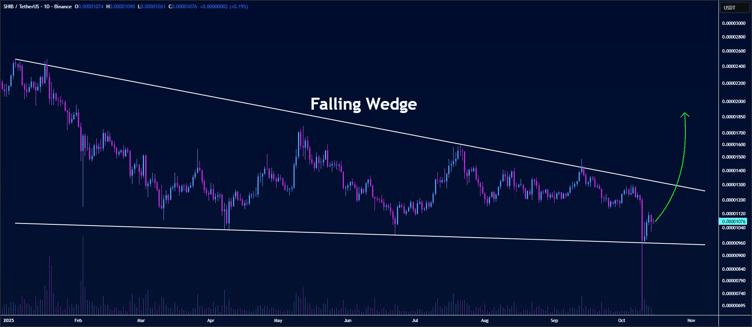
The post Top Crypto to Buy Now as Analysts Call It the SHIB of 2025 appeared on BitcoinEthereumNews.com. 2025 has been a rollercoaster for Shiba Inu (SHIB), with the meme token showing flashes of viral growth but also sharp corrections that remind investors of the risks of hype-driven assets. While SHIB’s community remains active, many are now wondering what crypto to invest in that features real utility and growth potential. Enter Mutuum Finance (MUTM), a next-generation DeFi project rapidly gaining traction as one of the top crypto coins to buy now.  Currently in Phase 6 of its presale, Mutuum Finance has already raised over $17.65 million, with more than 70% of tokens sold out at $0.035 per token, signaling strong investor confidence. Unlike Shiba Inu, Mutuum Finance is built on an innovative dual-lending model that merges Peer-to-Peer agreements with Peer-to-Contract liquidity pools, enabling users to lend, borrow, and maximize capital efficiency within the same ecosystem.  With a clear roadmap, robust presale momentum, and growing community support, Mutuum Finance is positioning itself as a project that could deliver sustainable growth and potentially become the next Shiba Inu of 2025, but with the kind of utility and structure that sets it apart in the DeFi market. Shiba Inu (SHIB) Price Analysis: Bulls Eye Breakout from Falling Wedge Shiba Inu (SHIB) is recovering from the lower line of a breaking falling wedge pattern on the daily chart, and this signifies that the buyers are coming in to support. Sufficient accumulation below this point has built severe pressure, and if bulls maintain control, SHIB can soar to much higher levels, establishing short-term momentum for traders.  As the meme coin’s gain potential is brought to the fore, most investors are equally observing new Mutuum Finance (MUTM) as the next high-potential cryptocurrency investment of 2025. Many traders now see MUTM as the top crypto to buy now, especially as it shows rising interest ahead…

Author: BitcoinEthereumNews
Bitcoin May Encounter Volatility Amid Tariff Tensions and Upcoming Altcoin Events

Bitcoin May Encounter Volatility Amid Tariff Tensions and Upcoming Altcoin Events

The post Bitcoin May Encounter Volatility Amid Tariff Tensions and Upcoming Altcoin Events appeared on BitcoinEthereumNews.com. COINOTAG recommends • Exchange signup 💹 Trade with pro tools Fast execution, robust charts, clean risk controls. 👉 Open account → COINOTAG recommends • Exchange signup 🚀 Smooth orders, clear control Advanced order types and market depth in one view. 👉 Create account → COINOTAG recommends • Exchange signup 📈 Clarity in volatile markets Plan entries & exits, manage positions with discipline. 👉 Sign up → COINOTAG recommends • Exchange signup ⚡ Speed, depth, reliability Execute confidently when timing matters. 👉 Open account → COINOTAG recommends • Exchange signup 🧭 A focused workflow for traders Alerts, watchlists, and a repeatable process. 👉 Get started → COINOTAG recommends • Exchange signup ✅ Data‑driven decisions Focus on process—not noise. 👉 Sign up → Bitcoin faces a critical week amid escalating U.S. tariff tensions and key altcoin events, potentially driving market volatility. With Bitcoin dipping below key support levels, investors watch for economic data releases and regulatory decisions that could signal recovery or further declines in the crypto market. U.S. tariff tensions intensify, pressuring Bitcoin’s price as global trade uncertainties rise. Solana’s major update and GENIUS Act comment closure highlight upcoming altcoin catalysts. SEC’s Cardano ETF decision and U.S. inflation data at 3.1% could sway investor sentiment this week. Bitcoin critical week unfolds with tariff tensions and altcoin events shaking markets. Stay informed on volatility triggers and economic indicators—discover key insights to navigate crypto risks effectively today. What is Driving Bitcoin’s Critical Week Amid Tariff Tensions? Bitcoin’s critical week is shaped by mounting U.S. tariff tensions and a series of pivotal altcoin events that could amplify market swings. As trade disputes escalate without resolution by November 1, Bitcoin has slipped under recent support levels, dragging the broader crypto market down in a bout of uncertainty. This convergence of macroeconomic pressures and blockchain developments…

Author: BitcoinEthereumNews
XRP Liquidity Gap Targets $2.55–$2.80 While Ripple Pursues $1B GTreasury Deal

XRP Liquidity Gap Targets $2.55–$2.80 While Ripple Pursues $1B GTreasury Deal

Ripple advanced its enterprise stack and institutional coverage this week, while the XRPL Lending Protocol moved into a public security-testing phase. Developer channels also confirmed an October devnet reset tied to a pending amendment. Corporate treasuries: Ripple moves to acquire GTreasury for $1B Ripple announced an agreement to acquire GTreasury for $1 billion. The deal […] The post XRP Liquidity Gap Targets $2.55–$2.80 While Ripple Pursues $1B GTreasury Deal appeared first on CoinChapter.

Author: Coinstats
Idle Stablecoins and the On-Chain Yield Paradox

Idle Stablecoins and the On-Chain Yield Paradox

The post Idle Stablecoins and the On-Chain Yield Paradox appeared on BitcoinEthereumNews.com. Most stablecoins on public blockchains sit idle, earning zero yield for holders. Issuers and custodians collect the interest instead. This disconnect between on-chain ownership and off-chain income exposes a structural flaw in DeFi. Let us explore why capital remains unproductive, what new models are emerging, and how unlocking stablecoin yield could define the next phase of crypto finance. What It Means for Stablecoins to Be Idle Stablecoins are meant to represent programmable dollars. They can move freely across blockchains, power liquidity pools, and serve as DeFi’s settlement layer. Yet for most users, these tokens simply sit still. They do not earn interest. They do not compound. In most cases, they never touch yield protocols unless the holder takes extra steps. Meanwhile, the companies that issue these tokens invest the reserves backing them and earn yield from Treasury bills and other instruments. Holders receive none of that benefit. This is the on-chain yield paradox in plain terms. The capital is digital and borderless, but the income it generates remains off-chain. The Scale of the Idle Capital Problem Galaxy Research estimates that more than 80 percent of all stablecoins earn no yield for owners. Circle and Tether together made billions of dollars in 2024 from interest on their reserves. None of that reached stablecoin holders. If one hundred billion dollars in stablecoins earned only four percent per year, that would mean four billion dollars of lost potential income. The difference between idle and active capital is too large to ignore. The result is a DeFi ecosystem that appears liquid but is still capital-inefficient. Why Capital Remains Idle Custodial and Regulatory Barriers Issuers label stablecoins as payment instruments, not investment products. Paying yield could cause regulators to classify them as securities or deposit accounts. Most issuers prefer to avoid that risk. Fragmentation and…

Author: BitcoinEthereumNews
Mutuum Finance (MUTM) Expert-Backed Price Projection for the Coming Year

Mutuum Finance (MUTM) Expert-Backed Price Projection for the Coming Year

The post Mutuum Finance (MUTM) Expert-Backed Price Projection for the Coming Year appeared on BitcoinEthereumNews.com. Experts have projected a robust trajectory for Mutuum Finance (MUTM) through 2026, drawing on its DeFi mechanics and presale momentum. Analysts point to the altcoin’s lending protocol as a key driver, positioning it among the best crypto to buy now amid rising demand for yield generation.  Phase 6 of the presale has advanced to 70% filled, with tokens priced at $0.035—a 250% rise from phase one’s $0.01 entry. Investors have raised $17,650,000 since inception, swelling total MUTM holders to 17,320.  This surge underscores why MUTM emerges as the next big crypto, backed by utility in borrowing and collateralized loans. Projections hinge on protocol rollout and market adoption, forecasting gains that outpace peers. Phase 6 Accelerates Mutuum Finance (MUTM) has opened phase 6 of its presale, drawing keen interest as the stage fills rapidly. Tokens command $0.035 each, yet availability dwindles fast. Buyers secure entry before phase 7 unlocks at $0.04, a 14.3% jump.  Launch looms at $0.06, promising current holders a 425% ROI post-deployment. Thus, urgency builds for those eyeing the best cryptocurrency to invest in, as this window narrows swiftly. Moreover, The MUTM team has launched a dashboard featuring a leaderboard of the top 50 holders, including a fresh 24-hour variant. Daily, the top-ranked participant claims a $500 MUTM bonus, contingent on completing one transaction in that span.  The board resets at 00:00 UTC each day. Leading purchases over the last 24 hours hit $519.15, $515.00, $424.76, and $308.00. Meanwhile, Mutuum Finance (MUTM) has finalized its CertiK audit with a solid 90/100 token score, affirming structural integrity. Bug Bounty Initiative Launches Mutuum Finance (MUTM) has initiated its official bug bounty program in tandem with CertiK. Officials allocated $50,000 in USDT for rewards across four tiers calibrated by vulnerability severity. Each category carries designated payouts, fostering rigorous scrutiny.  Consequently, this…

Author: BitcoinEthereumNews
This ADA Rival May Be the Next Millionaire-Maker in 2025

This ADA Rival May Be the Next Millionaire-Maker in 2025

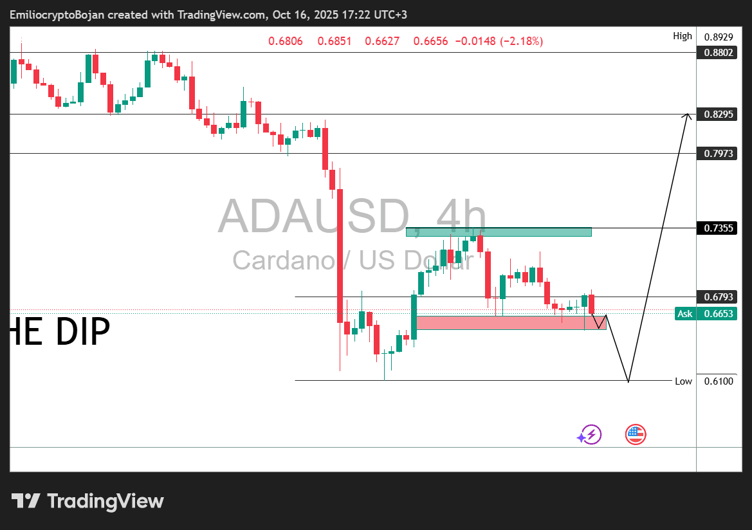
The post This ADA Rival May Be the Next Millionaire-Maker in 2025  appeared on BitcoinEthereumNews.com. As 2025 unfolds, the race to find the best cryptocurrency to invest in is intensifying, and a new challenger is stepping into the spotlight. Mutuum Finance (MUTM), currently priced at just $0.035, the lowest price it can ever be, in its Phase 6 presale, is being hailed by early investors as a potential rival to Cardano (ADA) in the decentralized finance (DeFi) market.  While Cardano continues to expand its ecosystem through slow, methodical upgrades, Mutuum Finance is rapidly building momentum with its dual-lending protocol that merges Peer-to-Peer and Peer-to-Contract systems, a model designed for speed, efficiency, and scalability. With over 70% of its current phase sold out and $17.65 million already raised, MUTM is quickly gaining recognition as a crypto to buy now before it lists on major exchanges. For investors looking beyond the traditional giants, Mutuum Finance offers a rare opportunity, a low-cost entry into a project with the potential to be 2025’s next millionaire-maker. Cardano (ADA) Price Analysis: Bulls Target $0.79 as Significant Support Resists Cardano (ADA) investors pay close attention to price action around the $0.6650–$0.6680 level of support, which has become the battleground between the bears and bulls. Rejected twice at $0.7355, ADA now occupies a turning point position, a break above $0.68 could spark a rocket to $0.79, while a slide below $0.66 could unleash a more substantial correction to around $0.61.  Guarded sentiment still pervades markets, though ongoing development activity and persistent ecosystem growth of ADA still entice long-term investors to buy the top crypto to invest in. While Cardano holds its spot among the fastest-growing layer-1 projects, investors are also eager to diversify into new cryptos to buy in 2025, with Mutuum Finance (MUTM) now on many investors’ radars. Mutuum Finance’s Gradual Growth Triggers Confidence in the Market Mutuum Finance (MUTM) is rising…

Author: BitcoinEthereumNews
Top 3 Cryptos to Buy as Whales Increase Buying Activity

Top 3 Cryptos to Buy as Whales Increase Buying Activity

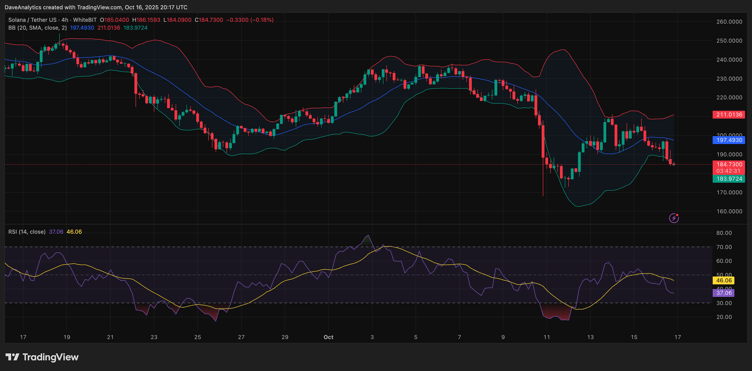
The post Top 3 Cryptos to Buy as Whales Increase Buying Activity appeared on BitcoinEthereumNews.com. As whale investors quietly accumulate positions, the crypto market is showing early signs of a renewed uptrend in Q4 2025. With sentiment shifting from fear to cautious optimism, investors are searching for the best crypto to buy now, projects with strong fundamentals, active ecosystems, and long-term potential.  Among the top cryptocurrencies attracting this surge of institutional and retail attention are Cardano (ADA), Solana (SOL), and the fast-rising DeFi contender Mutuum Finance (MUTM). Cardano continues to impress with its steady network development and focus on real-world scalability, while Solana remains a powerhouse for decentralized applications and blockchain speed. Yet, Mutuum Finance (MUTM) is capturing the speculative spotlight.  MUTM is in Phase 6 of its presale which is over 70% already sold out, signaling growing confidence in its innovative DeFi model. The tokens are available at $0.035 and this is the lowest they will ever be. Mutuum Finance is earning its place as the best crypto coins to buy now as whale activity heats up. Solana (SOL) Price Analysis: Opportunity or Correction in Brief Weakness? Solana (SOL) has recently dipped below its uptrend line and is currently trading at $182 after weeks of high appreciation. On-chain metrics indicate diminishing activity and lousy whale accumulation, which creates short-term bearishness. Technical indications like the breakdown of the rising wedge indicate that SOL may test $172–$165 unless there is a rush by buyers.  Key level to watch is remaining above $180, which can stabilize the price and lead to a short-term bounce, or re-taking $200+, which will eliminate the bearish structure and keep the door open to $220. Meanwhile, while analysts wait for the next Solana move, investors are watching Mutuum Finance (MUTM) for initiatives with new momentum into Q4 2025. Cardano (ADA) Price Outlook: Consolidation Signals Potential Upside Cardano (ADA) is presently building a…

Author: BitcoinEthereumNews
Amid the US government shutdown, a thought emerges: Will new cryptocurrency ETP regulations be a watershed moment for the industry?

Amid the US government shutdown, a thought emerges: Will new cryptocurrency ETP regulations be a watershed moment for the industry?

As the U.S. government shutdown continues, now is a good time to step back and examine a key decision made by the SEC. This decision may affect cryptocurrency industry innovation, financial advisors and ordinary investors for years to come. The SEC recently took a low-key but landmark turn: approving universal listing standards for cryptocurrency exchange-traded products (ETPs). This means that exchanges can list each eligible cryptocurrency ETP without having to submit a separate regulatory application. This structural change ends the years of uncertainty surrounding the “case-by-case” review of ETPs. The impact of this development cannot be overstated, and it should be ranked among the industry’s major breakthroughs, alongside key milestones such as the launch of Bitcoin futures on the Chicago Mercantile Exchange (CME) in 2017, Coinbase’s listing on Wall Street in 2021, the Ethereum Merge in 2022, and the approval of a spot Bitcoin ETF in 2024. The following four reasons determine that this new regulation is a watershed moment for the cryptocurrency industry: 1. The cycle is shortened, and the new ETP is more feasible Previously, each ETP was subject to a lengthy SEC review process, which could take up to 240 days. Under the new regulations, new products that meet pre-set criteria can be launched in as little as 75 days, a remarkable feat by regulatory standards. This adjustment reduces uncertainty and holding costs for issuers, which is crucial: launching an ETP requires real money and resources, including seed funding, legal/registration fees, listing costs, and ongoing marketing expenses, which all accumulate while the application is in limbo. The shortened review cycle makes more strategies economically feasible, and the ETP product pipeline is enriched accordingly. It is expected that under this simplified framework, a large number of spot token ETPs will be launched one after another, including not only Bitcoin (BTC) and Ethereum (ETH), but also other currencies such as SOL and XRP. For the cryptocurrency industry, which has long been stuck in an audit deadlock, this is undoubtedly the sounding of the "starting gun". 2. Financial advisors can finally include crypto assets in their portfolios Previously, incorporating cryptocurrencies into traditional investment portfolios faced numerous obstacles. While a handful of Bitcoin and Ethereum funds have emerged over the past two years, many mainstream brokerages and registered investment advisors (RIAs) have shied away from cryptocurrencies. A typical example is Vanguard Group, which has an asset management scale of US$10 trillion. The institution has always refused to provide customers with investment channels for spot Bitcoin ETFs. This conservative stance has left countless investors "watching from the sidelines" and has left financial advisors with almost no compliant cryptocurrency allocation options. The SEC's new rules open the door for these investors and advisors. With a streamlined listing path for diversified cryptocurrency ETPs, advisors can now offer clients index-like cryptocurrency exposure through familiar platforms. Within 48 hours of the new regulations being introduced, Grayscale Investments received approval to transform its "Digital Large Cap Fund" into the "Grayscale Crypto 5 Index ETF." While the product remains on hold and will not begin trading until final approval is received, the transition will allow its clients to invest in a basket of the five largest cryptocurrencies by market capitalization. With these products, wealth managers can now allocate to cryptocurrencies as easily as they allocate to an S&P 500 index fund or a gold fund. In fact, the "normalization" of cryptocurrencies in standard brokerage accounts means that retirees can hold digital assets alongside stocks and bonds in their individual retirement accounts (IRAs). Registered investment advisors (RIAs) can also incorporate cryptocurrencies into their asset rebalancing strategies without complex operational processes or regulatory challenges. 3. Regulated ETPs drive the integration of cryptocurrencies and banking In addition to increasing accessibility, this development also deepens the integration of cryptocurrencies with traditional finance. When digital assets are housed in regulated products, they can be integrated into the existing financial system in a more robust way. JPMorgan Chase, a long-time cryptocurrency skeptic, recently announced that it would accept cryptocurrency ETF shares as loan collateral, similar to the margin lending model that uses stock ETFs as collateral. As more ETPs come under standard custody and reporting systems, banks will be more willing to lend against these assets. The ability to use cryptocurrency holdings as collateral for borrowing makes cryptocurrencies “active participants” in banking and credit markets. Today, cryptocurrencies are no longer isolated; they are gradually becoming one of the pillars of the financial system, just like stocks or U.S. Treasury bonds. 4. Clear rules give rise to a new wave of innovation Perhaps the most noteworthy change in this transformation is the adjustment of core concepts at the regulatory level. After years of uncertainty, U.S. regulators are finally signaling that cryptocurrencies should be integrated into the existing financial system, not kept outside of it. SEC Chairman Paul Atkins has launched the "Cryptocurrency Initiative," instructing the SEC to sort out relevant provisions of securities laws to pave the way for the market to migrate to the chain. This top-down clarity of purpose fuels innovation. When companies have clear regulatory boundaries, they can move forward with greater confidence. Currently, traditional financial institutions and startups have begun to compete to launch products based on the updated rules, ranging from multi-currency index ETPs to experimental interest-bearing token funds. The results of this transformation will not only lead to the emergence of new ETPs, but will also be a test of America’s competitiveness. In the future, we may see tokenized real estate ETFs or other thematic cryptocurrency products. If the US sets the rules, innovation will take hold; if not, it will flow overseas. By rapidly incorporating cryptocurrencies into mainstream financial products and explicitly supporting an "on-chain future," the US government is ensuring the US remains competitive in the cryptocurrency space and may even reclaim its leading position. This rule adjustment is one of the most significant changes to the cryptocurrency industry in recent years. This is not just about ETPs themselves, but also about cryptocurrencies being recognized as a legitimate component of modern investment portfolios. For financial advisors, this means the ability to more comprehensively meet client needs; for investors, it brings more choices and convenience; for innovators, it marks the return of the United States to the cryptocurrency track. The integration of cryptocurrencies into the everyday financial system has been a long process, but it has now officially begun—and is accelerating, driven by clear and unambiguous rules. The road to a true on-chain financial system has been opened, and at least in my opinion, its prospects are worth looking forward to.

Author: PANews
Gold and Silver Soar as Bitcoin’s “Uptober” Turns into a Crash

Gold and Silver Soar as Bitcoin’s “Uptober” Turns into a Crash

Bitcoin’s October crash has reversed its usual positive trend, falling from 126,000 to near 100,000 dollars amid growing global credit concerns. President Trump’s 100 percent tariffs on China added to market jitters. Meanwhile, gold surged past 4,200 dollars an ounce and silver topped 52 dollars as investors sought safe havens. Central to this cautious mood is a deepening private credit crisis that threatens to impact crypto markets through liquidity strains and shadow banking risks. This evolving credit tension adds another layer of uncertainty, further driving capital toward tangible assets in 2025.

Author: Hackernoon