Oracle

Oracles are essential infrastructure components that feed real-time, off-chain data (such as price feeds, weather, or sports results) into blockchain smart contracts. Without decentralized oracles like Chainlink and Pyth, DeFi could not function. In 2026, oracles have evolved to support verifiable randomness and cross-chain data synchronization. This tag covers the technical evolution of data availability, tamper-proof price feeds, and the critical role oracles play in ensuring the deterministic execution of complex decentralized applications.

5092 Articles
Created: 2026/02/02 18:52
Updated: 2026/02/02 18:52
Tokenization Boom: Animoca Sees RWAs Becoming the Future of Finance

Tokenization Boom: Animoca Sees RWAs Becoming the Future of Finance

The Web3 investment firm believes the sector could eventually grow to represent a significant slice of the $400 trillion traditional […] The post Tokenization Boom: Animoca Sees RWAs Becoming the Future of Finance appeared first on Coindoo.

Author: Coindoo
Malaysia launched its first locally designed AI chip, the MARS1000

Malaysia launched its first locally designed AI chip, the MARS1000

Malaysia has taken a bold step into the global artificial intelligence race with the launch of its first domestically designed processor, a sign that the country wants to be more than just a supporting player in the semiconductor supply chain. The MARS1000, developed by Kuala Lumpur-based chipmaker SkyeChip, was unveiled this week as Malaysia’s first […]

Author: Cryptopolitan
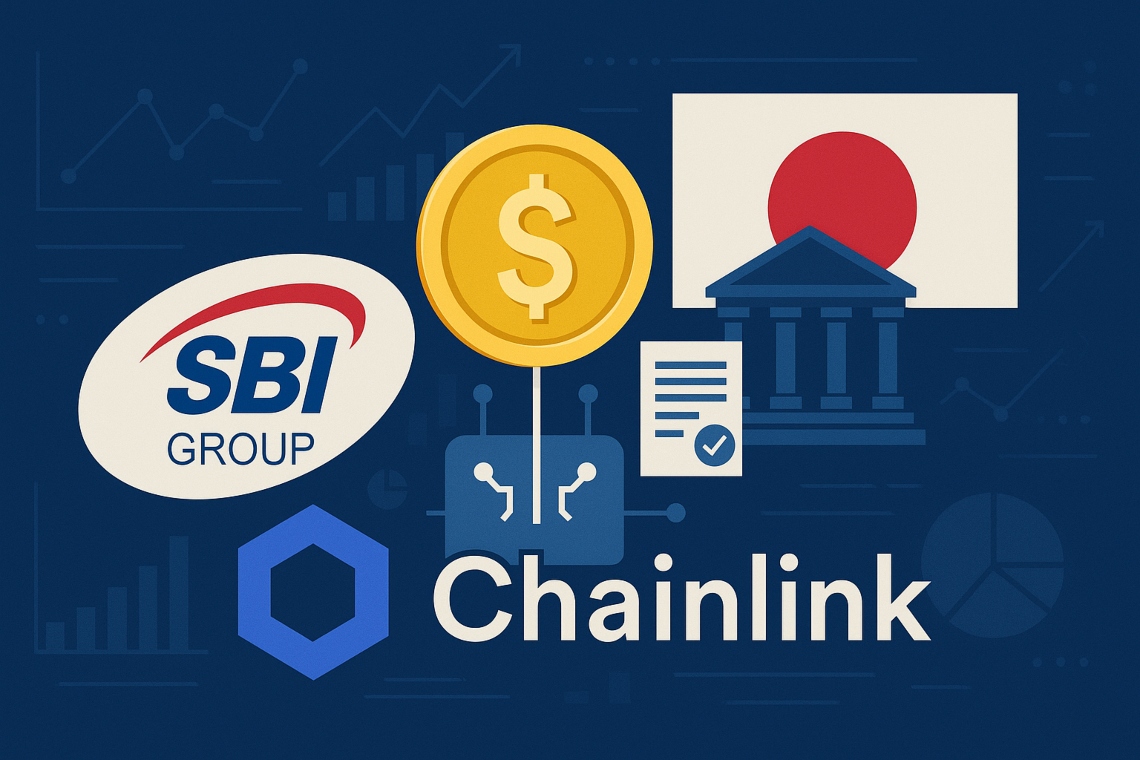
Chainlink Teams Up With Japan’s SBI Group: Could This Deal Ignite the Next Tokenization Wave?

Chainlink Teams Up With Japan’s SBI Group: Could This Deal Ignite the Next Tokenization Wave?

Chainlink, the leading blockchain oracle network, has announced a unique partnership with Japan’s SBI Group, a financial giant managing over $200 billion in assets. Related Reading: Solana’s Rally Gains Traction – Why Its Price Could Surge To New ATHs The collaboration is set to accelerate the adoption of tokenized real-world assets (RWAs), stablecoins, and blockchain-powered […]

Author: Bitcoinist
Cap Labs attracts capital with EigenLayer-backed credit model

Cap Labs attracts capital with EigenLayer-backed credit model

The post Cap Labs attracts capital with EigenLayer-backed credit model appeared on BitcoinEthereumNews.com. Cap Labs’ new stablecoin cUSD has seen rapid adoption since launch, climbing to $67.85 million in circulation over the past week, according to DefiLlama.  Etherscan shows 2,735 holders of the token to date. The jump signals strong demand for Cap’s yield-layered digital dollar model, which combines regulated reserve assets with EigenLayer-powered credit underwriting. Built atop the newly launched Cap Stablecoin Network (CSN), cUSD is designed as a 1:1 redeemable stablecoin backed by assets like PayPal’s PYUSD, BlackRock-managed BUIDL, and Franklin Templeton’s BENJI. The yield-bearing version stcUSD — minted by staking cUSD — is enabled by a three-party system of lenders, operators, and restakers. Cap’s core innovation lies in its structure: operators borrow stablecoins to deploy yield strategies, restakers underwrite the operator’s credit risk, and lenders (stcUSD holders) earn a floating yield, currently around 12%, depending on market demand and operator performance. While restaker collateral provides protection against operator default, stcUSD holders are still exposed to fluctuating yield dynamics. cUSD’s impressive growth; Source: DefiLlama Unlike many past stablecoin launches, Cap’s model is carefully tuned to comply with the GENIUS Act, the sweeping US stablecoin legislation that prohibits interest-bearing payment tokens. Speaking at the Stablecoin Summit in Cannes in June, Cap Labs founder Benjamin Lens was blunt: “They said no yield, and it’s pretty clear — there’s no way around it. They do not want stablecoins giving yield to retail investors,” Lens said. Thus, stcUSD is a separate ERC-4626 vault token, which users can mint by staking cUSD. The yield is generated through a marketplace of borrowing and restaking, not directly from Cap Labs. “Genius Act covers companies that are generating yield on behalf of users and giving them to the users,” Lens said in Cannes, whereas Cap is “an immutable open protocol like Ethereum, like Bitcoin.” Combined with the fact that…

Author: BitcoinEthereumNews
tokenization of real assets in Japan

tokenization of real assets in Japan

The post tokenization of real assets in Japan appeared on BitcoinEthereumNews.com. Japan pushes on on-chain finance: SBI Group and Chainlink initiate a collaboration to bring RWAs, regulated stablecoins, and services for institutions on an industrial infrastructure ready for the capital markets. With assets under management exceeding 200 billion USD (see PR Newswire), SBI offers critical mass and access to counterparties; Chainlink provides connectivity, verifications, and cross-chain interoperability. The goal is clear: to convert traditional assets into tokenized instruments, with deeper liquidity and faster settlement. According to data collected by market analysts and official communications from the parties involved, the partnership is designed to launch initial pilot initiatives on institutional use cases between the end of 2024 and 2025. Industry observers note how the adoption of oracles and Proof of Reserve mechanisms increases transparency — a factor considered crucial for attracting regulated issuers and institutional investors. The partnership: what it really entails The agreement aims at the development of institutional use cases for tokenized real-world assets (RWAs), tokenized funds, and stablecoin compliant with Japanese regulations, with an initial focus on the domestic market and on compliant cross-border transactions. According to the official announcement (PR Newswire), the collaboration aims to strengthen institutional adoption and the scalability of issuance, exchange, and control processes. It should be noted that the use cases will be designed with security and compliance requirements from the outset. Key data at a glance AUM SBI: greater than 200 billion USD (size data; not exclusively related to RWAs; data reported by SBI in public communications, updated 2024). Technologies: Chainlink https://chain.link/cross-chain (interoperability) and https://chain.link/proof-of-reserve (proof of reserves). Market: Japan as a launch point, with extension towards cross-border flows. International references: the topic of tokenization has been analyzed by international authorities — see the report from the Bank for International Settlements (CPMI) dated October 17, 2024, which highlights opportunities and risks for central…

Author: BitcoinEthereumNews
Software stocks lose steam as AI shifts investor bets

Software stocks lose steam as AI shifts investor bets

The post Software stocks lose steam as AI shifts investor bets appeared on BitcoinEthereumNews.com. Software’s long streak as a Wall Street favorite is wobbling as artificial intelligence resets expectations. Salesforce Inc., Adobe Inc., and ServiceNow Inc. are among the S&P 500’s weakest names this year, each down at least 16%, wiping out roughly $160 billion in combined market value. Investors pulled money from the software and services group for two consecutive months through June after just one monthly drawdown in the prior 18. “Tech obsolescence can come out of nowhere,” said Robert Ruggirello, chief investment officer at Brave Eagle Wealth Management. “There’s good reason people are growing cautious.” Not all software stocks are suffering  Microsoft Corp., Oracle Corp., and Palantir Technologies Inc., all software makers, are among the year’s top performers in the S&P 500. What separates them, in many investors’ eyes, is that they are playing offense with AI rather than just defending existing franchises, as the largest tech companies spend tens of billions of dollars to roll out products and add capacity for AI computing.  Meta Platforms Inc. is seeing accelerating revenue growth as its AI efforts improve ad targeting and user engagement. Palantir’s AI products are expected to help fuel sales growth of 45% this year. Cybersecurity names such as CrowdStrike Holdings Inc. have also thrived, backed by the view that AI cannot easily replace their core offerings. The strain is not limited to the U.S.  SAP SE, Europe’s biggest company by market value, fell alongside smaller peers such as Sage Group Plc and Dassault Systèmes SE after Monday.com’s warning.  With OpenAI’s ChatGPT now boasting roughly 700 million weekly users, Ruggirello likens software vendors to “an energy company waking up and realizing there’s now a company the size of Exxon it’s competing with.” That worry shows up in valuations. The Morgan Stanley software basket traded this month at 23 times projected…

Author: BitcoinEthereumNews
Chainlink Price Prediction: Strategic Talks With Cardano Founder Ignite Rumors – Huge Partnership Coming?

Chainlink Price Prediction: Strategic Talks With Cardano Founder Ignite Rumors – Huge Partnership Coming?

The Chainlink price has surged by over 36% in August, following partnership talks and strategic reserve announcements. Recently, Charles Hoskinson, the founder of Cardano, revealed that discussions about integrating Cardano and Chainlink are underway. Hoskinson revealed that conversations with Sergey Nazarov, Chainlink’s co-founder, are progressing favorably. While no formal partnership agreement has been finalized, Chainlink’s leadership has shown a strong interest in establishing a collaborative framework. Cardano-Chainlink Secret Talks Sparks 120% Rally Dreams If the Cardano-Chainlink talks lead to a real partnership, Cardano developers would get access to secure data feeds, price oracles, and external APIs. Chainlink is still the top oracle provider in crypto, helping smart contracts connect to real-world data. Its price has benefited from recent big partnership news. In early August, Chainlink launched the Chainlink Reserve. This new system supports the network’s growth by buying LINK tokens using revenue from big companies adopting Chainlink and from on-chain services. LINK commenced August trading at $16.85 on August 4th, subsequently surging to reach a 2025 high of $27.87 within weeks. Despite experiencing some profit-taking activity, LINK has maintained robust performance, sustaining levels above $24 while generating approximately $2 billion in daily trading volume. This impressive liquidity has enabled Chainlink bulls to believe LINK can reach its 2021 all-time high of $52.88, which is about 120% higher than current prices. The recent partnership with SBI Group, one of Japan’s largest financial companies with over $200 billion in assets, has made LINK bulls more confident. Adding to the accumulation narrative, a notable LINK whale who previously generated $1.72 million through swing trading has re-entered the market, acquiring 663,580 LINK tokens valued at $16.85 million. Chainlink Price Prediction: Golden Cross Targets $42 The daily LINK chart just formed its third-ever monthly Golden Cross. This happens when short-term moving averages cross above long-term ones. This is important because the last Golden Cross in December 2020 led to a 72% rally, showing how powerful this signal is for LINK.Source: TradingView LINK is currently trading around $24.63 and appears to be breaking out of a multi-year consolidation since the 2021 peak. The RSI shows the token is moving up from oversold levels but isn’t overbought yet, leaving room for more gains. The technical setup suggests LINK could move significantly higher, potentially targeting $40-42 based on past Golden Cross patterns. SNORT Presale Explodes Past $3.4M as AI Bot Hype Takes Over With LINK’s breakout sparking fresh altcoin optimism, attention is shifting to projects offering real tools to profit from the momentum. Snorter (SNORT) is one such presale gaining traction, thanks to its upcoming AI-powered trading bot designed to help users catch early market moves. This purpose-built trading bot is designed to catch early momentum, helping investors enter positions before the crowd piles in – where the biggest gains are made. Snorter Bot is built for precision, offering: Limit-order sniping to lock in ideal entry points MEV-resistant swaps that keep front-runners from jumping ahead Copy trading to mirror the strategies of top-performing wallets Rug-pull protection that flags shady tokens before you commit The project has already raised over $3.4 million, positioning it as a strong early pick for the current bull run. If you’re looking for a smarter, faster way to trade the next wave of altcoin momentum, Snorter could be your edge. You can buy $SNORT directly from the official Snorter website or through the Best Wallet app. It takes just seconds to join the presale using crypto or a bank card.Click Here to Participate in the Presale

Author: CryptoNews
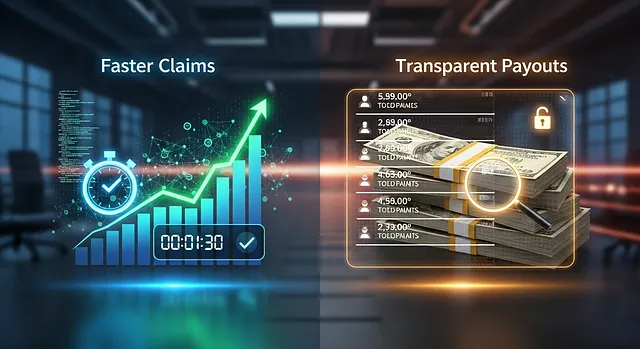
Faster Claims, Transparent Payouts: Spydra’s Blockchain-Enabled Parametric Insurance

Faster Claims, Transparent Payouts: Spydra’s Blockchain-Enabled Parametric Insurance

What is Asset Tokenization? Asset tokenization is the process of converting real-world assets into blockchain-based digital tokens. These tokens can represent real estate, stocks, commodities, or even insurance policies. Tokenization not only enhances liquidity but also democratizes access by breaking down barriers to investment. According to Boston Consulting Group, asset tokenization could unlock $16 trillion in value by 2030, with financial services and insurance at the forefront. By tokenizing assets, industries like insurance can streamline claim verification and payouts — precisely what Spydra is pioneering with blockchain-enabled parametric insurance. Understanding Parametric Insurance Unlike traditional insurance, which requires detailed claims processes and manual verification, parametric insurance uses predefined parameters or triggers. For example, if rainfall drops below a certain level in an agricultural region, the insurance policy pays out automatically. 🔑 Key Features of Parametric Insurance: Predefined Triggers — Based on objective data such as weather events or market indices. Automated Payouts — Claims are executed instantly when conditions are met. No Lengthy Paperwork — Eliminates disputes over loss assessments. This automation is why parametric insurance is forecasted to grow at a double-digit CAGR through 2030, particularly in sectors like agriculture, travel, and natural disaster coverage. Why Blockchain is a Game-Changer for Parametric Insurance Traditional parametric insurance faces challenges in trust, data accuracy, and payout transparency. This is where blockchain reshapes the game. Immutable Records — Blockchain ensures policy terms and data inputs are tamper-proof. Smart Contracts — Automatically trigger payouts when conditions are satisfied. Transparency — Policyholders can verify claim criteria and transactions on a public ledger. Speed — Reduces claim settlement time from weeks to minutes. In fact, claims settlement costs can be reduced by up to 30% with blockchain-enabled automation (Deloitte, 2022). Spydra’s Blockchain-Enabled Parametric Insurance Spydra is bridging the gap between innovation and accessibility. By integrating parametric insurance with blockchain, Spydra ensures that claims are faster, transparent, and trustworthy. 🔎 How It Works: Data Integration — Spydra uses trusted oracles to pull in real-world data (e.g., rainfall, flight delays) Smart Contract Execution — Once conditions are met, the contract auto-executes. Instant Payouts — Beneficiaries receive funds directly into their wallets. This approach eliminates disputes, reduces fraud, and increases user trust — a critical factor in regions where insurance penetration is still low. Benefits of Spydra’s Blockchain-Enabled Parametric Insurance

  1. Faster Claims Processing With blockchain and smart contracts, claims are settled in near real-time, compared to the traditional 2–4 weeks.
  2. Transparent Payouts Every transaction is recorded on the blockchain, creating an auditable trail for both insurers and policyholders.
  3. Reduced Administrative Costs By automating claims, insurers cut down on manual processing, lowering overhead costs by up to 20% (PwC Report).
  4. Trust and Accessibility For underserved markets, especially in agriculture and climate risk zones, blockchain parametric insurance builds trust by removing human bias. Real-World Applications Spydra’s solution is not just theoretical — it has practical use cases across multiple industries:
Agriculture — Farmers automatically receive payouts for droughts or floods without filing lengthy claims. Travel Insurance — Flight delays trigger instant compensation. Natural Disaster Relief — Communities affected by hurricanes or earthquakes get immediate financial aid. Healthcare — Predefined health metrics (like hospital visits or recovery data) can automate reimbursements. Given that natural disasters caused $313 billion in global economic losses in 2022 (AON), parametric insurance powered by blockchain has immense potential to provide quicker relief. Future of Insurance with Asset Tokenization As blockchain adoption accelerates, asset tokenization will merge with parametric insurance to create highly efficient, tradable, and secure policies. By tokenizing insurance products: Investors can trade insurance-backed tokens in secondary markets. Policyholders gain fractional ownership opportunities. Liquidity in the insurance sector increases. The synergy between asset tokenization and parametric insurance could reshape a trillion-dollar industry. Challenges to Consider While promising, blockchain-enabled parametric insurance faces a few challenges: Regulatory Uncertainty — Many jurisdictions are still catching up with digital insurance frameworks. Data Accuracy — Reliance on external data sources requires robust and trusted oracles. Adoption Hurdles — Educating both insurers and customers about blockchain benefits remains essential. Despite these hurdles, the growth trajectory remains positive. 70% of insurance executives surveyed by Accenture believe blockchain will significantly impact claims processing within the next five years. FAQs
  1. What is parametric insurance? Parametric insurance uses predefined conditions, like rainfall levels or flight delays, to trigger automatic payouts without manual claims.
  2. How does Spydra use blockchain for insurance? Spydra integrates blockchain smart contracts to automate claim execution, ensuring faster and transparent payouts.
  3. Can asset tokenization improve insurance? Yes! Tokenization makes insurance products more liquid, tradable, and accessible while enhancing transparency.
  4. Is blockchain insurance secure? Absolutely. With immutable records and smart contracts, blockchain reduces fraud and increases trust. Final Takeaway Spydra’s blockchain-enabled parametric insurance is setting a new benchmark for the industry. By combining asset tokenization, smart contracts, and transparent data, Spydra delivers what traditional insurers often fail to — speed, trust, and accessibility. As the world moves toward digital-first financial services, this model could become the backbone of insurance, unlocking faster claims, lower costs, and broader access. For both insurers and policyholders, Spydra represents the future of a more resilient and transparent insurance ecosystem.
Faster Claims, Transparent Payouts: Spydra’s Blockchain-Enabled Parametric Insurance was originally published in Coinmonks on Medium, where people are continuing the conversation by highlighting and responding to this story

Author: Medium
SBI (manages over 200 billion USD in assets) and Chainlink accelerate the tokenization of real assets in Japan

SBI (manages over 200 billion USD in assets) and Chainlink accelerate the tokenization of real assets in Japan

Japan pushes on-chain finance: SBI Group and Chainlink initiate a collaboration to bring RWAs.

Author: The Cryptonomist
Must Have Cryptos You’ll Regret Missing: BlockDAG, Cardano, HBAR, and LINK Are Leading the Culture Shift

Must Have Cryptos You’ll Regret Missing: BlockDAG, Cardano, HBAR, and LINK Are Leading the Culture Shift

Explore the top must have cryptos reshaping sports, finance, and real-world utility in 2025. From BlockDAG's fan coins to Cardano, HBAR, and LINK, this list goes beyond speculation.

Author: Cryptodaily