Stablecoins

Stablecoins are digital assets pegged to a stable reserve, such as the US Dollar or Gold, to minimize price volatility. Serving as the primary medium of exchange in Web3, tokens like USDT, USDC, and PYUSD facilitate global payments and DeFi liquidity. In 2026, the focus has shifted toward yield-bearing stablecoins and compliant stablecoin frameworks under global regulations like MiCA. This tag covers the intersection of traditional finance (TradFi) and crypto through stable on-chain liquidity solutions.

23336 Articles
Created: 2026/02/02 18:52
Updated: 2026/02/02 18:52
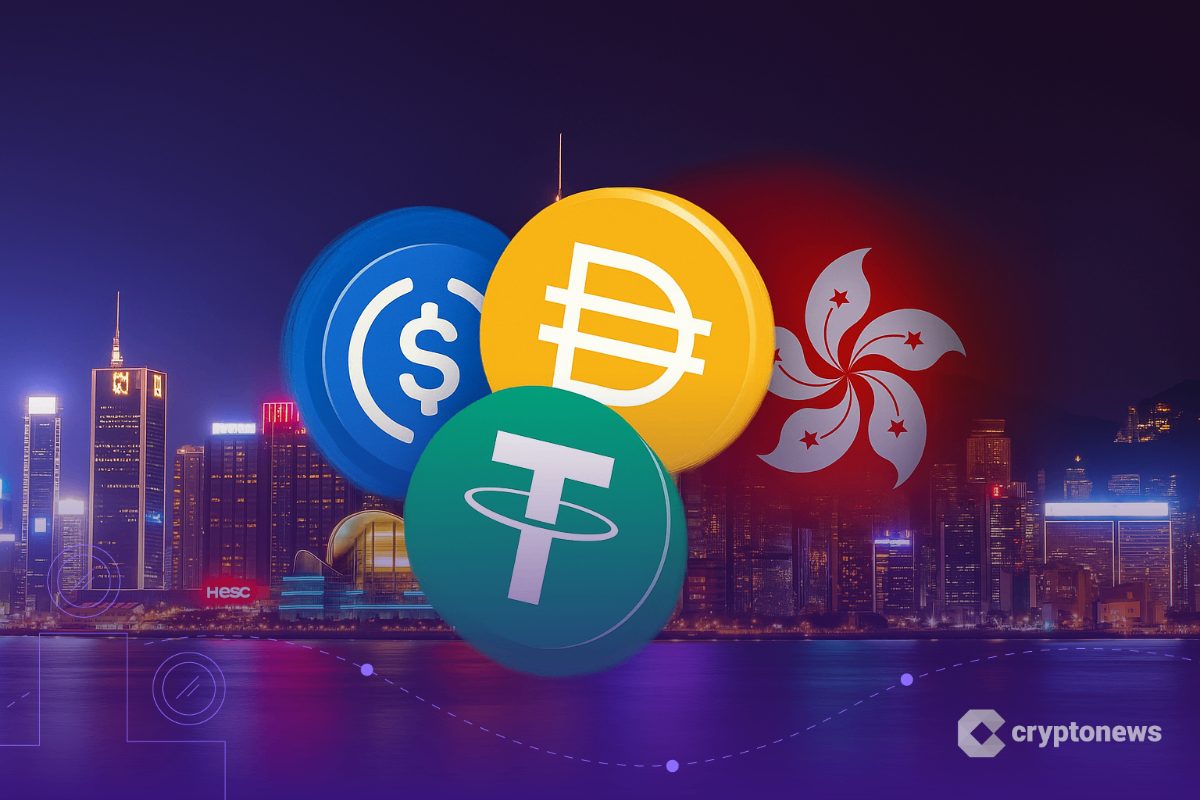
Hong Kong Declares Unlicensed Stablecoin Promotions a Crime

Hong Kong Declares Unlicensed Stablecoin Promotions a Crime

Hong Kong will soon make it illegal to market unlicensed stablecoins to the public, as the city tightens controls ahead of the rollout of a long-anticipated regulatory framework . The move comes as authorities seek to cool market euphoria and protect retail investors from hype and fraud in the digital asset space. Eddie Yue, chief executive of the Hong Kong Monetary Authority (HKMA), issued a warning on Wednesday, just days before the city’s Stablecoins Ordinance comes into effect on Aug. 1. In a blog post, he urged the public to remain cautious amid “frothy” market behavior and excessive excitement over stablecoins. Dozens of Firms Eye Stablecoin Licenses Amid Tightening Rules Yue said the new law will make it illegal to offer or actively promote fiat-referenced stablecoins, or FRS, to retail investors. However, this restriction applies only to those without a license from the HKMA. “We urge the public to stay vigilant to avoid violating the law inadvertently,” he wrote, adding that some recent promotions have bordered on market manipulation or fraud. The crackdown follows a surge of interest from companies seeking to tap into Hong Kong’s evolving Web3 ecosystem. More than 40 firms have reached out to regulators in recent months. However, most of their proposals are still in the early stages and lack viable business plans. Additionally, a few firms are reportedly still grappling with basic questions around risk management and technical capability. 🇭🇰 Hong Kong’s new stablecoin regulations will take effect on August 1, introducing a strict licensing regime and reserve requirements for issuers. #HongKong #StablecoinRegulations https://t.co/Dq6UAZsKl1 — Cryptonews.com (@cryptonews) June 6, 2025 Among the companies reportedly preparing applications are Ant Group, JD.com, Standard Chartered and Circle. In addition, several law firms told Chinese outlet Yicai that more clients are still finalizing their documents. These submissions are expected once the law officially takes effect. Stablecoin Bill Sets Strict Rules on Backing, Licensing and Access The stablecoin bill introduces a licensing regime that covers both issuers and service providers. According to official guidance, only a limited number of licenses will be granted at first. In addition, unlicensed stablecoin offerings will be restricted to professional investors. The first approvals are expected to come later this year. Yue warned that many applicants may be disappointed. “A mere announcement of intention to explore stablecoin-related business or digital assets is enough for some listed companies to grab headlines and send stock prices and trading volumes soaring,” he wrote. “Investors should remain calm and exercise independent judgment.” Under the new rules, stablecoins must be fully backed by high-quality, liquid reserves in the same currency. These reserves can include cash, bank deposits or government bonds. Moreover, they must be held in trust, separated from company assets, and shielded from creditor claims in case of insolvency. Global Momentum Builds for Stablecoin Regulation, HK Joins In The crackdown comes as international regulators intensify their focus on stablecoins. Recently, the Bank for International Settlements highlighted the sector’s potential money laundering risks. In particular, it warned about vulnerabilities in cross-border use cases. The US, meanwhile, passed landmark stablecoin legislation earlier this month under President Donald Trump’s administration, signaling a global shift toward formal oversight. Hong Kong, which has positioned itself as a digital asset hub in Asia, has taken a cautious but proactive approach. Yue said the HKMA is finalizing its supervisory and anti-money laundering guidelines. The authority expects to publish them by the end of July. While the final rules may see minor changes from earlier drafts, the regulator is still expected to take a tough stance on financial crime safeguards. “Regulation is an art of balancing divergent objectives,” Yue wrote. “More stringent regulatory requirements will inevitably limit the room for stablecoin businesses to scale rapidly in the short term.” To provide clarity on the application process, the HKMA will release an explanatory note next week outlining how it will accept and assess license applications.

Author: CryptoNews
Legendary investor Dan Tapiero: All in on crypto, Bitcoin aims for $1 million

Legendary investor Dan Tapiero: All in on crypto, Bitcoin aims for $1 million

Interview guest: Dan Tapiero, American macro investor and founder of 50T Podcast source: When Shift Happens Air Date: Jul 10, 2025 Organized by: BitpushNews Preface: In the ever-changing financial world,

Author: PANews
Stablecoin Giant Tether Rekindles Plans to Break Into US Market: Report

Stablecoin Giant Tether Rekindles Plans to Break Into US Market: Report

Tether is laying the groundwork for a fresh push into the US, spurred by a major shift in the country’s regulatory climate. CEO Paolo Ardoino told Bloomberg in an interview Wednesday that the company is moving ahead with its domestic strategy, following last week’s signing of landmark stablecoin legislation by US President Donald Trump. The so-called GENIUS Act is expected to expand the role of stablecoins in global finance, potentially allowing banks, card networks and tech firms to issue their own digital tokens. “We are well in progress of establishing our US domestic strategy,” Ardoino told Bloomberg. “It’s going to be focused on the US institutional markets, providing an efficient stablecoin for payments but also for interbank settlements and trading.” The passage of landmark US crypto legislation signed into law last week by President Donald Trump is prompting the world’s largest issuer of stablecoins to make plans to do business in the US again https://t.co/9xig1dihLB — Bloomberg (@business) July 23, 2025 Tether Shakes Off Past Scrutiny as USDT Circulation Surges His announcement signals a notable reversal for Tether, which has kept its operations largely offshore since 2021, when it paid nearly $60m to settle allegations with US regulators . The company was barred from operating in New York after the attorney general’s office accused it of making false claims about its reserves. The Commodity Futures Trading Commission also fined Tether for misleading the public about how well its stablecoin was backed. Despite the regulatory setbacks, Tether’s USDT token has remained dominant globally, with more than $162b in circulation. That figure is up 18% since the start of the year. Its closest rival, USDC issued by Circle Internet Group, has a circulating supply of around $64.7b. Tether Rejects IPO Route Even as Circle’s Stock Soars Tether’s renewed focus on the US comes as competition heats up. Circle, which went public in June , has seen its stock surge over 500% since its debut. Tether, however, has no plans to follow suit. “In general we are not interested in becoming a public company,” Ardoino said. The new legislation appears to be opening doors that were previously shut. Ardoino, along with other crypto executives, attended the White House bill signing. The law could, for the first time, help normalize stablecoin usage, both in crypto trading and across mainstream financial infrastructure. Tether has long been under fire for a lack of transparency, particularly regarding its reserves. Audits, promised for years, have yet to materialize. But Ardoino said the company has been in contact with auditing firms in recent weeks. As it re-engages with the US, Tether looks committed to its primary strategy of leading in emerging markets. Ardoino said that these regions are a key priority, where the company believes it maintains a strong advantage over competitors. “This is something that Tether has done incredibly well for the past 10 years,” he said. “We have a better technology, we have a much better understanding of this market than anyone else.”

Author: CryptoNews
JPMorgan: $2 trillion stablecoin market forecast is “overly optimistic”

JPMorgan: $2 trillion stablecoin market forecast is “overly optimistic”

PANews reported on July 24 that according to Bloomberg, JPMorgan Chase released a report questioning the $2 trillion forecast for the stablecoin market, believing that the figure is "too optimistic."

Author: PANews
Tether CEO: The company is planning to start business in the United States, focusing on the institutional market

Tether CEO: The company is planning to start business in the United States, focusing on the institutional market

PANews reported on July 24 that according to Bloomberg, after the passage of the landmark cryptocurrency legislation in the United States, Tether Holdings SA plans to resume operations in the

Author: PANews
In the past three years, what profound changes have been triggered by Hong Kong’s transition from “virtual assets 1.0” to “digital assets 2.0”?

In the past three years, what profound changes have been triggered by Hong Kong’s transition from “virtual assets 1.0” to “digital assets 2.0”?

The "Hong Kong Digital Asset Development Policy Declaration 2.0" (hereinafter referred to as the "Policy Declaration 2.0") is a policy document issued by the Government of the Hong Kong Special

Author: PANews
White House crypto report drops July 30: Here’s what’s at stake

White House crypto report drops July 30: Here’s what’s at stake

The White House's crypto policy report is set to drop on July 30, and it could either ignite a new era of U.S. blockchain dominance or deepen the industry’s regulatory quagmire.

Author: Crypto.news
$260 billion later, stablecoins have become too big to ignore

$260 billion later, stablecoins have become too big to ignore

What happens when $260 billion in stablecoins start moving through banks, buying Treasuries, and bypassing traditional financial infrastructure altogether? A federal rulebook for stablecoins emerges The idea of a privately issued digital dollar operating alongside the traditional banking system was…

Author: Crypto.news
Goldman Sachs and BNY Mellon Launch Tokenized Money Market Funds for Institutions

Goldman Sachs and BNY Mellon Launch Tokenized Money Market Funds for Institutions

Key Takeaways: Goldman Sachs and BNY Mellon have launched tokenized money market funds for institutional clients. Initial participants include BlackRock, Fidelity, Federated Hermes, and the asset arms of both banks. The platform allows real-time ownership tracking and may support future use in collateral management and settlement. Goldman Sachs and Bank of New York Mellon have launched a system allowing institutional clients to access tokenized money market funds. According to a CNBC report published on July 23, the offering targets the $7.1 trillion market, uses Goldman’s blockchain platform to record fund ownership, and is integrated with BNY’s custody services. BlackRock and Fidelity Funds Already Available Clients can invest in tokenized share classes of money market funds managed by BlackRock, Fidelity Investments, Federated Hermes, and the asset management divisions of both Goldman and BNY. The product is built for institutional users, including hedge funds, pension funds, and corporates. BNY’s LiquidityDirect and @GoldmanSachs ’ Digital Asset Platform have collaborated to launch tokenized money market funds (MMFs). 🤝 This significant initiative sets our clients on a path to access a new capability to increase the utility and potential transferability of MMFs in… pic.twitter.com/WJ1lv7m6T4 — BNY (@BNYglobal) July 23, 2025 “We have created the ability for our clients to invest in tokenized money market share classes across a number of fund companies,” said Laide Majiyagbe, Global Head of Liquidity, Financing, and Collateral at BNY. “The step of tokenizing is important, because today that will enable seamless and efficient transactions, without the frictions that happen in traditional markets,” said Majiyagbe. Unlike stablecoins, which serve primarily as a medium of exchange, tokenized money market funds offer yield and may function as cash-equivalent holdings for large financial institutions. According to Goldman and BNY, the funds could eventually be transferred between financial intermediaries without first converting to fiat currency. Goldman Sachs and BNY Target $7.1 Billion Market Mathew McDermott, Global Head of Digital Assets at Goldman Sachs, said the structure supports future use in collateral and trade settlement. “The sheer scale of this market just offers a huge opportunity to create a lot more efficiency across the whole financial plumbing,” he said. “That is what’s really powerful, because you’re creating utility in an instrument where it doesn’t exist today,” said McDermott. The firms see this step as supporting real-time settlement and reducing operational frictions tied to traditional finance infrastructure. They also framed it as complementary to regulatory developments such as the recent GENIUS Act , which establishes a federal framework for stablecoins. According to the report, U.S. money market funds hold about $7.1 trillion in assets, with roughly $2.5 trillion flowing into the space since the Federal Reserve began raising rates in 2022. Most are backed by short-term government or commercial debt. The service is currently limited to institutional users and fund providers participating in the platform. Institutional interest in programmable finance is growing, and assets like money market funds can be embedded into automated workflows across settlement, margining, and treasury operations. Such tokenized instruments could play a central role in modernizing how institutions manage liquidity and collateral across global markets. Frequently Asked Questions (FAQs) What are the tax implications for institutions holding tokenized fund shares? While ownership structure remains similar to traditional funds, the digital nature may raise questions around jurisdiction, timing of income recognition, and reporting obligations. Could tokenized funds allow 24/7 liquidity access? If integrated with global custodians and interoperable ledgers, institutions may eventually move capital between regions outside of standard market hours. What legal structures govern these digital fund shares? Each share remains subject to existing securities regulation, but the ownership ledger is now maintained on a permissioned blockchain, allowing traceability without changing asset classification.

Author: CryptoNews
Plasma Launches New Phase of Stablecoin Collective: Workshop Kicks Off

Plasma Launches New Phase of Stablecoin Collective: Workshop Kicks Off

PANews reported on July 23 that according to the Plasma announcement, the Plasma stablecoin collective has officially entered a new stage, launching new initiatives such as monthly seminars. As the

Author: PANews