

South Korea Stock Market Tripled on AI Chips, Then Hit Circuit Breakers
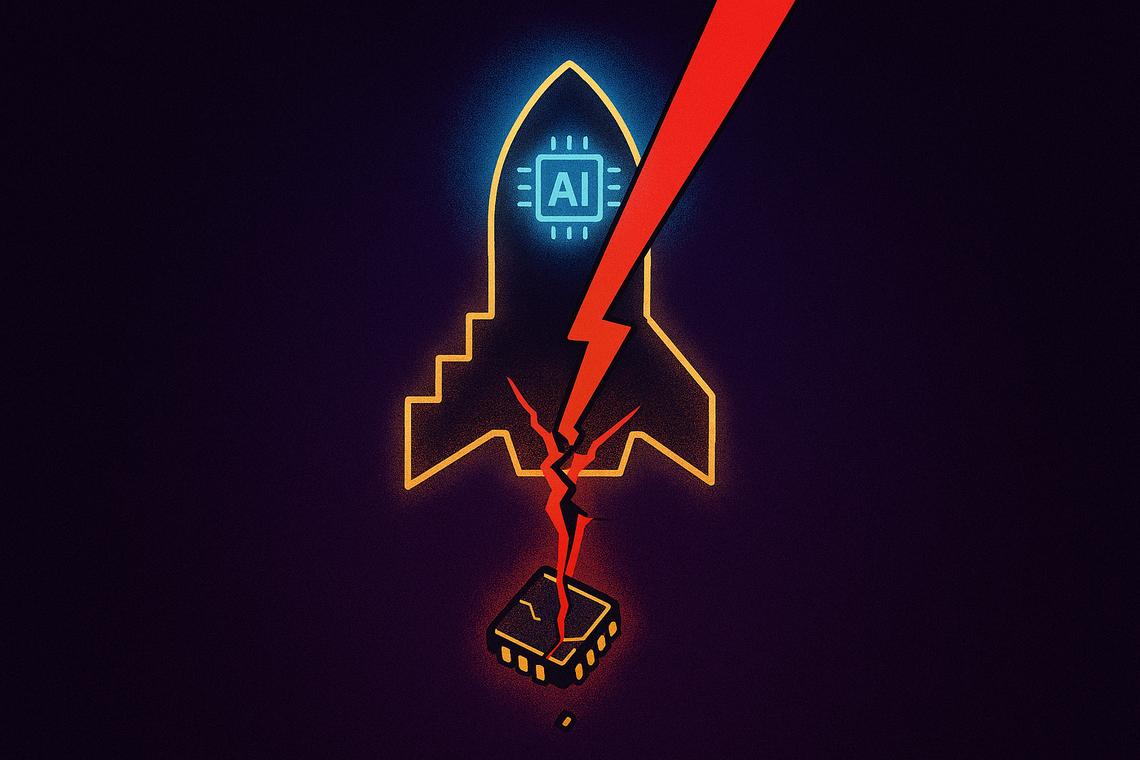
South Korea’s stock market has pulled off one of the most dramatic equity runs in recent memory — tripling in value year-on-year — powered almost entirely by two semiconductor giants and a global AI infrastructure boom that shows no sign of letting up. But the same rally that made Seoul one of the world’s hottest equity markets in 2026 is now raising harder questions about what, exactly, investors are actually buying into.
Key takeaways
- The KOSPI index broke 7,000 points for the first time in May 2026, later pushing past 8,000 and approaching 9,000.
- Samsung Electronics and SK Hynix together account for roughly 40% of the KOSPI’s weighting, making the index effectively a concentrated semiconductor bet.
- SK Hynix shares surged more than 340% during the rally; Samsung’s market cap crossed $1 trillion.
- In June 2026, the KOSPI suffered pullbacks of 8–10% severe enough to trigger trading halts on multiple occasions.
- Current valuations in these stocks are driven more by narrative momentum around AI demand than confirmed earnings growth.
South Korea’s Stock Market Triples Amid an AI Chip Boom
The numbers are staggering. South Korea’s stock market has roughly tripled in value compared to where it stood a year ago — a pace of appreciation that almost no major equity market in the world has matched. The engine behind it is not a broad economic recovery or a surge in domestic consumption. It is, almost entirely, chips.
The KOSPI index broke through 7,000 points for the first time in May 2026, registering year-to-date gains in the range of 90–100%. That milestone lasted only briefly as a headline — the index pushed past 8,000 and approached 9,000 in the months that followed, driven by relentless investor appetite for anything tied to artificial intelligence infrastructure.
The Two Companies Carrying the Index
Samsung Electronics and SK Hynix together account for roughly 40% of the entire KOSPI’s weighting. That concentration matters enormously. When those two stocks move, the index moves. And in 2026, they have moved dramatically.
SK Hynix has been the more spectacular performer. Its shares surged more than 340% during the rally, fueled by surging global demand for high-bandwidth memory chips — the specialized semiconductors that power AI training and inference workloads at hyperscale data centers. Samsung, meanwhile, crossed a threshold that few technology companies ever reach: its market capitalization exceeded $1 trillion, a milestone that signals just how central the market views South Korea’s semiconductor industry to the AI era.
What this really means is that the South Korea stock market, for all its scale and depth, is functioning in 2026 less like a diversified national equity market and more like a leveraged bet on AI chip demand. That framing is important for investors trying to understand what they are actually exposed to.
June’s Violent Corrections and What They Signal
The sharper the run-up, the more violent the reversal tends to be — and June 2026 delivered exactly that.
The KOSPI experienced sharp pullbacks of 8–10% in June 2026, corrections severe enough to trigger circuit breakers and trading halts on multiple occasions. On one session alone, the index closed nearly 5.8% lower after slumping over 8% intraday, with Samsung Electronics ending the day 5.3% lower and SK Hynix dropping 8.4%. The trading halts were not a one-off — the circuit breaker was triggered twice within a single week.
The immediate catalyst included fresh investor anxiety over whether memory chip margins could remain sustainable. Apple raising prices across its Mac and iPad lineup — citing an unprecedented shortage of memory chips driven by AI data center demand — added an unexpected wrinkle. As Fabien Yip, a market analyst at IG, wrote in a research note: “The fact that Apple — one of the most powerful buyers in the industry — cannot absorb the cost surge and must pass it on to consumers raises serious questions about demand elasticity and the durability of memory chip margins.”
Yip added that any slowdown in consumer demand would cast doubt on whether current memory chip margins are sustainable, potentially weakening one of the central pillars of the AI investment thesis.
Morgan Stanley, for its part, argued that South Korean stocks were not in a structural breakdown despite the severity of the sell-off — pointing to the underlying strength of AI-related demand as a reason to view the correction as a pullback rather than a reversal. That distinction is exactly what investors are now trying to resolve.
The AI Infrastructure Engine Driving Semiconductor Demand
The fundamental demand story behind this rally is real, and it is substantial. Google, Microsoft, and Amazon — the world’s dominant hyperscalers — have each committed tens of billions of dollars to data center buildouts. Those buildouts require advanced memory chips at a scale the industry has rarely seen, and Samsung and SK Hynix are among the very few companies in the world capable of producing high-bandwidth memory at the required volume and specification.
That structural demand is what distinguishes this rally, at least partly, from pure speculative excess. The global AI infrastructure spending cycle is not a rumor — it is showing up in capital expenditure commitments across the technology sector, and Samsung and SK Hynix are direct beneficiaries. Micron Technology’s stronger-than-expected earnings released during the same June week briefly lifted sentiment before the broader sell-off resumed, suggesting the underlying demand picture remains intact even as valuations get questioned.
The Valuation Problem That Matters
Here is where the analysis gets uncomfortable. Stock prices for Samsung and SK Hynix are currently supported more by narrative momentum than by actual earnings growth that has already materialized. Investors have priced in an extended cycle of AI-driven chip demand — and for now, the hyperscaler spending commitments justify a degree of optimism. But at current valuations, both companies will need to deliver sustained earnings growth, not just a continuation of favorable headlines, to hold these prices over the medium term.
The concentration risk compounds this. When two stocks represent 40% of a benchmark index, a re-rating of either company — due to earnings disappointment, a shift in AI chip architecture, or a slowdown in hyperscaler capex — ripples through the entire market with outsized force. The June corrections demonstrated exactly how quickly that dynamic can play out.
Retail Investors, Capital Flows, and the Crypto Connection
South Korea’s retail investor community has been a defining force in this rally. Korean retail traders — nicknamed “ants” during the 2020–2021 pandemic-era market boom for their collective market-moving power — have returned in force in 2026, joined by significant foreign capital chasing the AI semiconductor trade. The combination of retail enthusiasm and institutional momentum has amplified both the rally and the subsequent volatility.
For investors with exposure to digital assets, there is a secondary implication worth tracking. Korean retail traders have historically been among the most active participants in both equities and crypto markets. When the stock market delivers triple-digit returns, that retail capital tends to stay anchored in traditional equities rather than rotating into digital assets. A sustained bull run in Seoul is, historically, a mild headwind for Korean crypto participation — and a sharp reversal could work in the opposite direction.
The broader question — whether this is a genuine structural repricing of South Korea’s technology sector or a momentum-driven rally inflating ahead of its fundamental support — is unlikely to be answered cleanly until earnings cycles begin to either validate or contradict the narrative. What is already clear is that the circuit breakers tripped in June were not a minor footnote. They were the index signaling, briefly but loudly, that the gap between price and proof has grown wide enough to matter.
FAQ
What caused South Korea’s stock market to triple in value in the past year?
The rally was driven by surging global demand for AI-related high-bandwidth memory chips, primarily benefiting Samsung Electronics and SK Hynix. Massive capital expenditure commitments from hyperscalers like Google, Microsoft, and Amazon have sustained demand for advanced semiconductors, making South Korean chipmakers among the most sought-after equity plays in the AI infrastructure boom.
Why do Samsung Electronics and SK Hynix have such a large impact on the KOSPI index?
The two companies together account for roughly 40% of the KOSPI index’s weighting, making the index heavily concentrated in semiconductors. Their outsized share means that moves in either stock — up or down — translate almost directly into moves across the broader South Korean benchmark.
What risks have emerged from the recent South Korean stock market rally?
Key risks include extreme concentration in two semiconductor companies, sharp volatility evidenced by 8–10% corrections that triggered trading halts in June 2026, and the fact that current valuations rely heavily on narrative momentum around AI demand rather than confirmed sustained earnings growth. A slowdown in hyperscaler spending or a shift in AI chip architecture could materially re-rate both stocks.
How does AI infrastructure spending influence South Korea’s semiconductor market?
Google, Microsoft, and Amazon have each committed tens of billions of dollars to data center expansion, creating enormous demand for the high-bandwidth memory chips that Samsung and SK Hynix specialize in producing. This direct link between hyperscaler capital expenditure and Korean semiconductor revenues is the primary structural driver of the 2026 rally.
Article produced with the assistance of artificial intelligence and reviewed by the editorial team.


Ayrıca Şunları da Beğenebilirsiniz
Cryptopolitan Launches Crypto Data Dashboards and Becomes the First Media Platform with Full Agentic AI Access

The real plot of the Roberts Supreme Court

Top Analyst Says Shiba Inu Is Dead, Never Coming Back as SHIB Whales Dump Trillions of Tokens


Popüler Haberler
Daha fazla
