The post Token2049 Singapore: Quantum-Proof Crypto, Stablecoins as Bridges, DeAI, and The Rise of Real-World Asset Tokenization appeared on BitcoinEthereumNews.com. Khushi V Rangdhol Nov 10, 2025 08:09 Token2049 in Singapore highlighted key trends in crypto, including quantum-proof security, decentralized AI, real-world asset tokenization, and stablecoins as financial bridges. The event showcased a shift from speculation to sustainable wealth-building, positioning Asia as a leader in digital asset innovation. The 2025 edition of Token2049 in Singapore set the stage for the next wave of digital asset innovation, gathering over 25,000+ attendees and hundreds of speakers. The event has become a pivotal hub—the place where new narratives about blockchain, AI, real-world asset tokenization, and decentralized finance are not only discussed, but immediately ripple outward into market sentiment and development. Quantum: The Fix-or-Die MomentThe urgency around quantum computing dominated the keynote sessions. Charles Edwards, founder of Capriole Investments, described “Q-Day”—the moment quantum computers might break the cryptography upon which Bitcoin and Ethereum rely. Industry leaders stressed that quantum-proof cryptography can no longer remain a theoretical concern; it must be a priority on every roadmap. The survival of digital asset infrastructure may depend upon this upgrade within the next few years. DeAI & Agentic Systems: The Next Leap for AI in CryptoDecentralized Artificial Intelligence (DeAI) was central to discussions: how can AI be kept out of the hands of a few large corporations and be democratized for all? DeAI places shared compute, open marketplaces, and transparent access at the core. Adjacent to this are “agentic systems”—AI teammates capable of negotiating contracts, scheduling, and even transacting stablecoin payments. This is the frontier where AI doesn’t just think or predict, it acts autonomously, tightly linked to crypto rails and digital identity. Decentralized Robots—Physical Meets DigitalAmong the standout panels was BitRobot’s work with decentralized robotics. Powered by on-chain incentives and smart contracts, robots supported by BitRobot collaborate, verify, and reward… The post Token2049 Singapore: Quantum-Proof Crypto, Stablecoins as Bridges, DeAI, and The Rise of Real-World Asset Tokenization appeared on BitcoinEthereumNews.com. Khushi V Rangdhol Nov 10, 2025 08:09 Token2049 in Singapore highlighted key trends in crypto, including quantum-proof security, decentralized AI, real-world asset tokenization, and stablecoins as financial bridges. The event showcased a shift from speculation to sustainable wealth-building, positioning Asia as a leader in digital asset innovation. The 2025 edition of Token2049 in Singapore set the stage for the next wave of digital asset innovation, gathering over 25,000+ attendees and hundreds of speakers. The event has become a pivotal hub—the place where new narratives about blockchain, AI, real-world asset tokenization, and decentralized finance are not only discussed, but immediately ripple outward into market sentiment and development. Quantum: The Fix-or-Die MomentThe urgency around quantum computing dominated the keynote sessions. Charles Edwards, founder of Capriole Investments, described “Q-Day”—the moment quantum computers might break the cryptography upon which Bitcoin and Ethereum rely. Industry leaders stressed that quantum-proof cryptography can no longer remain a theoretical concern; it must be a priority on every roadmap. The survival of digital asset infrastructure may depend upon this upgrade within the next few years. DeAI & Agentic Systems: The Next Leap for AI in CryptoDecentralized Artificial Intelligence (DeAI) was central to discussions: how can AI be kept out of the hands of a few large corporations and be democratized for all? DeAI places shared compute, open marketplaces, and transparent access at the core. Adjacent to this are “agentic systems”—AI teammates capable of negotiating contracts, scheduling, and even transacting stablecoin payments. This is the frontier where AI doesn’t just think or predict, it acts autonomously, tightly linked to crypto rails and digital identity. Decentralized Robots—Physical Meets DigitalAmong the standout panels was BitRobot’s work with decentralized robotics. Powered by on-chain incentives and smart contracts, robots supported by BitRobot collaborate, verify, and reward…

Token2049 Singapore: Quantum-Proof Crypto, Stablecoins as Bridges, DeAI, and The Rise of Real-World Asset Tokenization

2025/11/11 01:08
Okuma süresi: 4 dk


Khushi V Rangdhol
Nov 10, 2025 08:09

Token2049 in Singapore highlighted key trends in crypto, including quantum-proof security, decentralized AI, real-world asset tokenization, and stablecoins as financial bridges. The event showcased a shift from speculation to sustainable wealth-building, positioning Asia as a leader in digital asset innovation.

The 2025 edition of Token2049 in Singapore set the stage for the next wave of digital asset innovation, gathering over 25,000+ attendees and hundreds of speakers. The event has become a pivotal hub—the place where new narratives about blockchain, AI, real-world asset tokenization, and decentralized finance are not only discussed, but immediately ripple outward into market sentiment and development.

Quantum: The Fix-or-Die Moment
The urgency around quantum computing dominated the keynote sessions. Charles Edwards, founder of Capriole Investments, described “Q-Day”—the moment quantum computers might break the cryptography upon which Bitcoin and Ethereum rely. Industry leaders stressed that quantum-proof cryptography can no longer remain a theoretical concern; it must be a priority on every roadmap. The survival of digital asset infrastructure may depend upon this upgrade within the next few years.

DeAI & Agentic Systems: The Next Leap for AI in Crypto
Decentralized Artificial Intelligence (DeAI) was central to discussions: how can AI be kept out of the hands of a few large corporations and be democratized for all? DeAI places shared compute, open marketplaces, and transparent access at the core. Adjacent to this are “agentic systems”—AI teammates capable of negotiating contracts, scheduling, and even transacting stablecoin payments. This is the frontier where AI doesn’t just think or predict, it acts autonomously, tightly linked to crypto rails and digital identity.

Decentralized Robots—Physical Meets Digital
Among the standout panels was BitRobot’s work with decentralized robotics. Powered by on-chain incentives and smart contracts, robots supported by BitRobot collaborate, verify, and reward contributions globally—potentially reshaping both the R&D ecosystem and how robots “earn” and upgrade themselves in the real world.

Tokenized Real-World Assets (RWA): From Watches to Real Estate and Stocks
Tokenization of real-world assets is delivering on blockchain’s promise: unlocking liquidity in previously closed markets. Traditionally illiquid assets like real estate, fine watches, and even equities are now digitally represented and tradable, enabling broader participation, transparent settlement, and new investment pathways. Platforms like Wristcheck and innovations from XDC are leading examples, making luxury watches and commercial property available to crypto investors and enthusiasts worldwide.

Stablecoins: The New Bridge for Global Finance
Stablecoins—often discussed but truly mainstream in 2025—are now foundational to DeFi liquidity pools, lending, and even traditional banking. Arthur Hayes’ vision that banks’ adoption of stablecoins could unlock trillions in liquidity was echoed throughout the event. Stablecoins are more than plumbing: they are a Trojan horse for regulated digital money, and their gravitational pull as the connective tissue of digital finance is undeniable.

Tokenized Identity, AI Companions, and Managed Digital Assets
Digital identity and AI companions were hot topics: Ryze Labs highlighted how agentic AI and wallet growth are converging. Tokenized identity could turn personality into a monetizable, ownable digital asset, fundamentally changing the creator economy and how identity is managed in this new ecosystem.

Telegram’s Super App Revolution
Telegram’s panel showcased its 140+ million wallet users and its move toward integrating both traditional stock trading and crypto transactions within its app. The ‘super app’ trend, as pioneered by WeChat in China, is now localized for a global audience via TON and Telegram, lowering the barrier for financial participation across borders.

Shift from Speculation to Wealth-Building & Trust
Entrepreneurs and fintech leaders agreed: crypto’s focus is shifting from pure trading/speculation to wealth-building, responsible innovation, and transparent trust. Education, compliance, and sustainable strategies are now recognized as essential for moving digital assets from the fringe to the center of the financial system.

Prediction Markets and the Evolution Beyond Memecoins
Polymarket’s presence signaled an evolution—crypto prediction markets might become the next collective intelligence tool, forecasting elections, policy, and AI advancements in a deeper, more impactful way than meme coins ever could.

Conclusion:
Token2049 catapulted several themes into the spotlight: quantum readiness, decentralized robots, stablecoins as bridges, real-world assets, tokenized identity, and the merging of traditional and digital assets. The industry is maturing, moving from speculation to infrastructure, hype to sustainability. What’s clear is that Asia—especially Singapore—is now a global epicenter for crypto innovation, shaping tomorrow’s digital economy.

Sources:

Forbes: “Token2049 Trends: Quantum, Stablecoins, DeAI, And RWA” (Forbes Digital Assets, Sandy Carter’s event summary)​

PRNewswire: Coverage on Token2049’s attendance and significance

Quotes from Charles Edwards (Capriole Investments), Arthur Hayes, Atul Khekade (XDC), Matthew Graham (Ryze Labs)

Panel highlights from BitRobot, Wristcheck, and Telegram/TON Foundation at Token2049

Image source: Shutterstock

Source: https://blockchain.news/news/token2049-singapore-quantum-proof-cryptostablecoins-as-bridges,-deai,-and-the-rise-of-real-world-asset-tokenization
Piyasa Fırsatı
QUANTUM Logosu
QUANTUM Fiyatı(QUANTUM)
$0.003062
$0.003062$0.003062
+1.86%
USD
QUANTUM (QUANTUM) Canlı Fiyat Grafiği
Sorumluluk Reddi: Bu sitede yeniden yayınlanan makaleler, halka açık platformlardan alınmıştır ve yalnızca bilgilendirme amaçlıdır. MEXC'nin görüşlerini yansıtmayabilir. Tüm hakları telif sahiplerine aittir. Herhangi bir içeriğin üçüncü taraf haklarını ihlal ettiğini düşünüyorsanız, kaldırılması için lütfen service@support.mexc.com ile iletişime geçin. MEXC, içeriğin doğruluğu, eksiksizliği veya güncelliği konusunda hiçbir garanti vermez ve sağlanan bilgilere dayalı olarak alınan herhangi bir eylemden sorumlu değildir. İçerik, finansal, yasal veya diğer profesyonel tavsiye niteliğinde değildir ve MEXC tarafından bir tavsiye veya onay olarak değerlendirilmemelidir.

Ayrıca Şunları da Beğenebilirsiniz

Crucial ETH Unstaking Period: Vitalik Buterin’s Unwavering Defense for Network Security

Crucial ETH Unstaking Period: Vitalik Buterin’s Unwavering Defense for Network Security

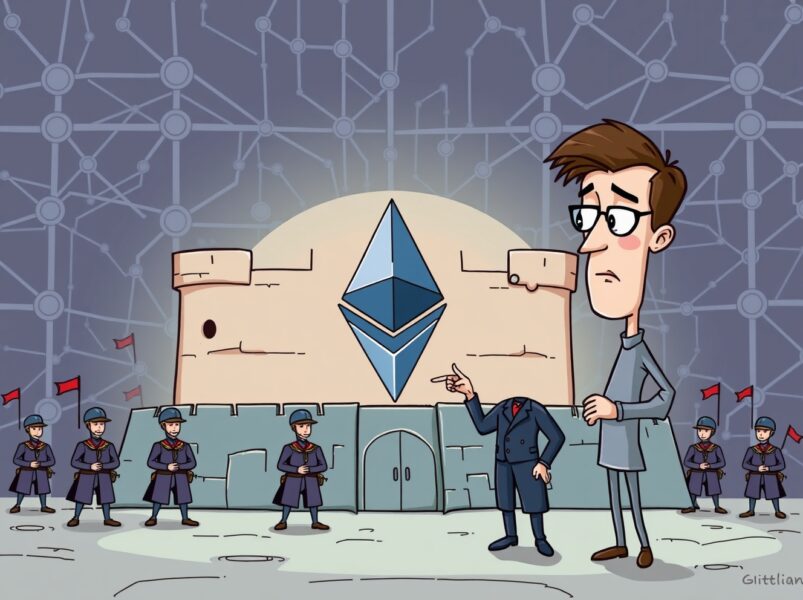
BitcoinWorld Crucial ETH Unstaking Period: Vitalik Buterin’s Unwavering Defense for Network Security Ever wondered why withdrawing your staked Ethereum (ETH) isn’t an instant process? It’s a question that often sparks debate within the crypto community. Ethereum founder Vitalik Buterin recently stepped forward to defend the network’s approximately 45-day ETH unstaking period, asserting its crucial role in safeguarding the network’s integrity. This lengthy waiting time, while sometimes seen as an inconvenience, is a deliberate design choice with profound implications for security. Why is the ETH Unstaking Period a Vital Security Measure? Vitalik Buterin’s defense comes amidst comparisons to other networks, like Solana, which boast significantly shorter unstaking times. He drew a compelling parallel to military operations, explaining that an army cannot function effectively if its soldiers can simply abandon their posts at a moment’s notice. Similarly, a blockchain network requires a stable and committed validator set to maintain its security. The current ETH unstaking period isn’t merely an arbitrary delay. It acts as a critical buffer, providing the network with sufficient time to detect and respond to potential malicious activities. If validators could instantly exit, it would open doors for sophisticated attacks, jeopardizing the entire system. Currently, Ethereum boasts over one million active validators, collectively staking approximately 35.6 million ETH, representing about 30% of the total supply. This massive commitment underpins the network’s robust security model, and the unstaking period helps preserve this stability. Network Security: Ethereum’s Paramount Concern A shorter ETH unstaking period might seem appealing for liquidity, but it introduces significant risks. Imagine a scenario where a large number of validators, potentially colluding, could quickly withdraw their stake after committing a malicious act. Without a substantial delay, the network would have limited time to penalize them or mitigate the damage. This “exit queue” mechanism is designed to prevent sudden validator exodus, which could lead to: Reduced decentralization: A rapid drop in active validators could concentrate power among fewer participants. Increased vulnerability to attacks: A smaller, less stable validator set is easier to compromise. Network instability: Frequent and unpredictable changes in validator numbers can lead to performance issues and consensus failures. Therefore, the extended period is not a bug; it’s a feature. It’s a calculated trade-off between immediate liquidity for stakers and the foundational security of the entire Ethereum ecosystem. Ethereum vs. Solana: Different Approaches to Unstaking When discussing the ETH unstaking period, many point to networks like Solana, which offers a much quicker two-day unstaking process. While this might seem like an advantage for stakers seeking rapid access to their funds, it reflects fundamental differences in network architecture and security philosophies. Solana’s design prioritizes speed and immediate liquidity, often relying on different consensus mechanisms and validator economics to manage security risks. Ethereum, on the other hand, with its proof-of-stake evolution from proof-of-work, has adopted a more cautious approach to ensure its transition and long-term stability are uncompromised. Each network makes design choices based on its unique goals and threat models. Ethereum’s substantial value and its role as a foundational layer for countless dApps necessitate an extremely robust security posture, making the current unstaking duration a deliberate and necessary component. What Does the ETH Unstaking Period Mean for Stakers? For individuals and institutions staking ETH, understanding the ETH unstaking period is crucial for managing expectations and investment strategies. It means that while staking offers attractive rewards, it also comes with a commitment to the network’s long-term health. Here are key considerations for stakers: Liquidity Planning: Stakers should view their staked ETH as a longer-term commitment, not immediately liquid capital. Risk Management: The delay inherently reduces the ability to react quickly to market volatility with staked assets. Network Contribution: By participating, stakers contribute directly to the security and decentralization of Ethereum, reinforcing its value proposition. While the current waiting period may not be “optimal” in every sense, as Buterin acknowledged, simply shortening it without addressing the underlying security implications would be a dangerous gamble for the network’s reliability. In conclusion, Vitalik Buterin’s defense of the lengthy ETH unstaking period underscores a fundamental principle: network security cannot be compromised for the sake of convenience. It is a vital mechanism that protects Ethereum’s integrity, ensuring its stability and trustworthiness as a leading blockchain platform. This deliberate design choice, while requiring patience from stakers, ultimately fortifies the entire ecosystem against potential threats, paving the way for a more secure and reliable decentralized future. Frequently Asked Questions (FAQs) Q1: What is the main reason for Ethereum’s long unstaking period? A1: The primary reason is network security. A lengthy ETH unstaking period prevents malicious actors from quickly withdrawing their stake after an attack, giving the network time to detect and penalize them, thus maintaining stability and integrity. Q2: How long is the current ETH unstaking period? A2: The current ETH unstaking period is approximately 45 days. This duration can fluctuate based on network conditions and the number of validators in the exit queue. Q3: How does Ethereum’s unstaking period compare to other blockchains? A3: Ethereum’s unstaking period is notably longer than some other networks, such as Solana, which has a two-day period. This difference reflects varying network architectures and security priorities. Q4: Does the unstaking period affect ETH stakers? A4: Yes, it means stakers need to plan their liquidity carefully, as their staked ETH is not immediately accessible. It encourages a longer-term commitment to the network, aligning staker interests with Ethereum’s stability. Q5: Could the ETH unstaking period be shortened in the future? A5: While Vitalik Buterin acknowledged the current period might not be “optimal,” any significant shortening would likely require extensive research and network upgrades to ensure security isn’t compromised. For now, the focus remains on maintaining robust network defenses. Found this article insightful? Share it with your friends and fellow crypto enthusiasts on social media to spread awareness about the critical role of the ETH unstaking period in Ethereum’s security! To learn more about the latest Ethereum trends, explore our article on key developments shaping Ethereum’s institutional adoption. This post Crucial ETH Unstaking Period: Vitalik Buterin’s Unwavering Defense for Network Security first appeared on BitcoinWorld.
Paylaş
Coinstats2025/09/18 15:30
XRP holders hit new high, but THIS keeps pressure on price

XRP holders hit new high, but THIS keeps pressure on price

The post XRP holders hit new high, but THIS keeps pressure on price appeared on BitcoinEthereumNews.com. Ripple [XRP] remains one of the top five cryptocurrencies
Paylaş
BitcoinEthereumNews2026/02/17 08:49
Will Bitcoin Price Drop to $50,000 by March 2026?

Will Bitcoin Price Drop to $50,000 by March 2026?

The post Will Bitcoin Price Drop to $50,000 by March 2026? appeared on BitcoinEthereumNews.com. Bitcoin is trading around $68,700, down nearly 22% year to date
Paylaş
BitcoinEthereumNews2026/02/17 08:59