The post Two Key Reasons Bitcoin Enters Bear Markets: Wall Street Veteran appeared on BitcoinEthereumNews.com. According to Wall Street veteran and mathematicianThe post Two Key Reasons Bitcoin Enters Bear Markets: Wall Street Veteran appeared on BitcoinEthereumNews.com. According to Wall Street veteran and mathematician

Two Key Reasons Bitcoin Enters Bear Markets: Wall Street Veteran

According to Wall Street veteran and mathematician Fred Krueger, Bitcoin bear markets happen for exactly two reasons: first, when global liquidity turns negative, in the case of Fed tightening; second, forced selling from a Bitcoin-specific shock (in the instances of Mt. Gox, miners or fraud).

Krueger backs up his assertion with figures, adding that everything else remains noise. Traders define a “bear market” to refer to a price drop of 20% or more for an asset; as such, prices are low and projected to continue dropping for an extended period. 

Krueger outlines a number of instances when Bitcoin entered bear markets, and the triggers behind it. 

In 2011, when BTC fell from $32 to $2, a 93% drop coincided with the end of quantitative easing alongside dollar tightening. The stock market also entered a stealth bear zone in this period.

From 2013 to 2015, when Bitcoin fell from nearly $1,100 to $200, marking an 85% drop, this period coincided with the collapse of Mt. Gox and massive forced selling.

From 2017 to 2018, when the Bitcoin price fell from $20,000 to $3000, an 84% drop, this period coincided with the start of Fed rate hikes alongside quantitative tightening. The global dollar liquidity also peaked, while ICO leverage saw a violent unwind.

In March 2020, when Bitcoin fell from $9,000 to $3,800, dropping about 60% in a matter of days, this period saw global margin calls as well as dollar shortage. 

Between 2021 and 2022, when Bitcoin fell from about $69,000 to $15,500, a 77% drop coincided with quantitative tightening, which saw the fastest rate hikes in 40 years. The strings of internal failures in the crypto industry marked by the collapse of Terra (LUNA), 3AC,  Celsius and FTX triggered a cascade of forced selling on the market.

No exceptions?

Krueger noted that with the exception of the 2019 pullback, which was a rally failure, not a bear market; the 2021 China mining ban, which could be deemed a correction and not a cycle reset; and the 2023-2025 drawdowns — which saw no tightening and forced sellers — there were no post-2013 Bitcoin bear markets without a negative liquidity impulse, or forced liquidation overwhelming demand.

Bitcoin extended a downtrend that started in early October with a series of lower highs. At press time, Bitcoin was trading up 3.21% in the last 24 hours to $90,015, down 28.84% from an all-time high of $126,198 reached in October. The leading cryptocurrency had previously fallen to lows near $80,000 in late November.

Source: https://u.today/two-key-reasons-bitcoin-enters-bear-markets-wall-street-veteran

Piyasa Fırsatı
Fred Logosu
Fred Fiyatı(FRED)
$0.0009062
$0.0009062$0.0009062
+2.21%
USD
Fred (FRED) Canlı Fiyat Grafiği
Sorumluluk Reddi: Bu sitede yeniden yayınlanan makaleler, halka açık platformlardan alınmıştır ve yalnızca bilgilendirme amaçlıdır. MEXC'nin görüşlerini yansıtmayabilir. Tüm hakları telif sahiplerine aittir. Herhangi bir içeriğin üçüncü taraf haklarını ihlal ettiğini düşünüyorsanız, kaldırılması için lütfen service@support.mexc.com ile iletişime geçin. MEXC, içeriğin doğruluğu, eksiksizliği veya güncelliği konusunda hiçbir garanti vermez ve sağlanan bilgilere dayalı olarak alınan herhangi bir eylemden sorumlu değildir. İçerik, finansal, yasal veya diğer profesyonel tavsiye niteliğinde değildir ve MEXC tarafından bir tavsiye veya onay olarak değerlendirilmemelidir.

Ayrıca Şunları da Beğenebilirsiniz

The Channel Factories We’ve Been Waiting For

The Channel Factories We’ve Been Waiting For

The post The Channel Factories We’ve Been Waiting For appeared on BitcoinEthereumNews.com. Visions of future technology are often prescient about the broad strokes while flubbing the details. The tablets in “2001: A Space Odyssey” do indeed look like iPads, but you never see the astronauts paying for subscriptions or wasting hours on Candy Crush.  Channel factories are one vision that arose early in the history of the Lightning Network to address some challenges that Lightning has faced from the beginning. Despite having grown to become Bitcoin’s most successful layer-2 scaling solution, with instant and low-fee payments, Lightning’s scale is limited by its reliance on payment channels. Although Lightning shifts most transactions off-chain, each payment channel still requires an on-chain transaction to open and (usually) another to close. As adoption grows, pressure on the blockchain grows with it. The need for a more scalable approach to managing channels is clear. Channel factories were supposed to meet this need, but where are they? In 2025, subnetworks are emerging that revive the impetus of channel factories with some new details that vastly increase their potential. They are natively interoperable with Lightning and achieve greater scale by allowing a group of participants to open a shared multisig UTXO and create multiple bilateral channels, which reduces the number of on-chain transactions and improves capital efficiency. Achieving greater scale by reducing complexity, Ark and Spark perform the same function as traditional channel factories with new designs and additional capabilities based on shared UTXOs.  Channel Factories 101 Channel factories have been around since the inception of Lightning. A factory is a multiparty contract where multiple users (not just two, as in a Dryja-Poon channel) cooperatively lock funds in a single multisig UTXO. They can open, close and update channels off-chain without updating the blockchain for each operation. Only when participants leave or the factory dissolves is an on-chain transaction…
Paylaş
BitcoinEthereumNews2025/09/18 00:09
WHAT NOT TO MISS AT CES 2026

WHAT NOT TO MISS AT CES 2026

Innovators Show Up for the World’s Most Powerful Tech Event Returning to Las Vegas January 6-9 ARLINGTON, Va., Jan. 2, 2026 /PRNewswire/ — CES® 2026, the world’
Paylaş
AI Journal2026/01/03 02:31
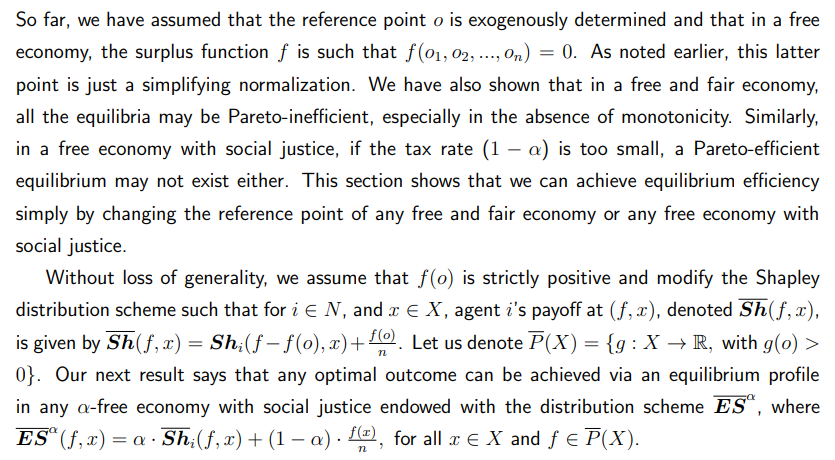
The Role of Reference Points in Achieving Equilibrium Efficiency in Fair and Socially Just Economies

The Role of Reference Points in Achieving Equilibrium Efficiency in Fair and Socially Just Economies

This article explores how a simple change in the reference point can achieve a Pareto-efficient equilibrium in both free and fair economies and those with social justice.
Paylaş
Hackernoon2025/09/17 22:30