South Korea’s Financial Intelligence Unit said it has imposed sanctions on local cryptocurrency exchange Korbit, citing widespread violations of the country’s antiSouth Korea’s Financial Intelligence Unit said it has imposed sanctions on local cryptocurrency exchange Korbit, citing widespread violations of the country’s anti

South Korea FIU Slaps Korbit With ₩2.73B Fine Over AML Breaches

2025/12/31 19:24

South Korea’s Financial Intelligence Unit said it has imposed sanctions on local cryptocurrency exchange Korbit, citing widespread violations of the country’s anti money laundering rules. The decision was finalized on Dec. 31, following a sanctions review committee meeting, according to the FIU.

The regulator issued an institutional warning to Korbit and ordered an administrative fine of ₩2.73 billion under the Specified Financial Transaction Information Act. In addition, the FIU imposed personal sanctions, issuing a caution to Korbit’s chief executive and a reprimand to the exchange’s reporting officer responsible for compliance.

The FIU said the sanctions followed a review of Korbit’s internal controls and corrective measures. While the exchange presented its position during the review process, the regulator concluded that multiple violations were confirmed and required formal penalties.

FIU Flags Thousands of Due Diligence Failures

The FIU said its on site inspection, conducted from Oct. 16 to Oct. 29, 2024, uncovered roughly 22,000 cases involving failures in customer due diligence and transaction restrictions. These cases included unclear or missing identity documents, incomplete address information, and instances where outdated documents were used for re verification.

In several cases, customers were allowed to continue trading even though identity checks had not been fully completed, the FIU said. The regulator described these lapses as breaches of core AML obligations designed to prevent illicit financial activity through virtual asset platforms.

The inspection also identified 655 cases in which Korbit failed to conduct required money laundering risk assessments before supporting new transactions. The FIU said some of these cases involved activity linked to non fungible tokens, which still require the same risk review standards under Korean rules.

Unreported Overseas VASP Transactions Trigger Action

In addition, the FIU said Korbit supported 19 virtual asset transfer transactions involving three overseas virtual asset service providers that had not completed South Korea’s mandatory reporting process. The regulator said this violated the explicit ban on transactions with unreported VASPs.

The FIU said these findings showed weaknesses in Korbit’s monitoring systems for cross border transactions. As a result, the agency decided stronger enforcement was necessary to reinforce compliance expectations across the market.

The FIU added that detailed sanctions information will be posted publicly after the fine completes a prior notice and opinion submission process. The case adds to a series of enforcement actions aimed at tightening oversight of South Korea’s digital asset sector.

Piyasa Fırsatı
The AI Prophecy Logosu
The AI Prophecy Fiyatı(ACT)
$0.02894
$0.02894$0.02894
+1.68%
USD
The AI Prophecy (ACT) Canlı Fiyat Grafiği
Sorumluluk Reddi: Bu sitede yeniden yayınlanan makaleler, halka açık platformlardan alınmıştır ve yalnızca bilgilendirme amaçlıdır. MEXC'nin görüşlerini yansıtmayabilir. Tüm hakları telif sahiplerine aittir. Herhangi bir içeriğin üçüncü taraf haklarını ihlal ettiğini düşünüyorsanız, kaldırılması için lütfen service@support.mexc.com ile iletişime geçin. MEXC, içeriğin doğruluğu, eksiksizliği veya güncelliği konusunda hiçbir garanti vermez ve sağlanan bilgilere dayalı olarak alınan herhangi bir eylemden sorumlu değildir. İçerik, finansal, yasal veya diğer profesyonel tavsiye niteliğinde değildir ve MEXC tarafından bir tavsiye veya onay olarak değerlendirilmemelidir.

Ayrıca Şunları da Beğenebilirsiniz

The Channel Factories We’ve Been Waiting For

The Channel Factories We’ve Been Waiting For

The post The Channel Factories We’ve Been Waiting For appeared on BitcoinEthereumNews.com. Visions of future technology are often prescient about the broad strokes while flubbing the details. The tablets in “2001: A Space Odyssey” do indeed look like iPads, but you never see the astronauts paying for subscriptions or wasting hours on Candy Crush.  Channel factories are one vision that arose early in the history of the Lightning Network to address some challenges that Lightning has faced from the beginning. Despite having grown to become Bitcoin’s most successful layer-2 scaling solution, with instant and low-fee payments, Lightning’s scale is limited by its reliance on payment channels. Although Lightning shifts most transactions off-chain, each payment channel still requires an on-chain transaction to open and (usually) another to close. As adoption grows, pressure on the blockchain grows with it. The need for a more scalable approach to managing channels is clear. Channel factories were supposed to meet this need, but where are they? In 2025, subnetworks are emerging that revive the impetus of channel factories with some new details that vastly increase their potential. They are natively interoperable with Lightning and achieve greater scale by allowing a group of participants to open a shared multisig UTXO and create multiple bilateral channels, which reduces the number of on-chain transactions and improves capital efficiency. Achieving greater scale by reducing complexity, Ark and Spark perform the same function as traditional channel factories with new designs and additional capabilities based on shared UTXOs.  Channel Factories 101 Channel factories have been around since the inception of Lightning. A factory is a multiparty contract where multiple users (not just two, as in a Dryja-Poon channel) cooperatively lock funds in a single multisig UTXO. They can open, close and update channels off-chain without updating the blockchain for each operation. Only when participants leave or the factory dissolves is an on-chain transaction…
Paylaş
BitcoinEthereumNews2025/09/18 00:09
Solana Prepares Major Consensus Upgrade with Alpenglow Protocol
Solana Prepares Major Consensus Upgrade with Alpenglow Protocol

TLDR: Alpenglow reduces Solana finality from 12.8 seconds to 100-150 milliseconds, a 100-fold improvement. Votor enables one or two-round block finalization through
Paylaş
Blockonomi2026/01/03 02:29
The Role of Reference Points in Achieving Equilibrium Efficiency in Fair and Socially Just Economies

The Role of Reference Points in Achieving Equilibrium Efficiency in Fair and Socially Just Economies

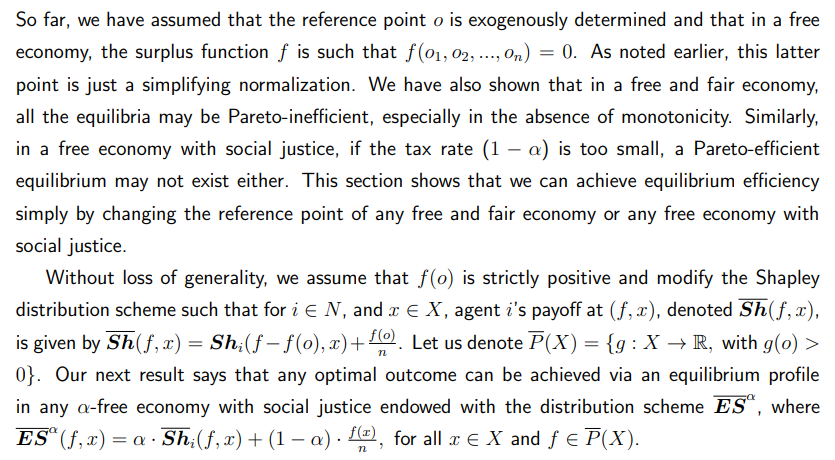
This article explores how a simple change in the reference point can achieve a Pareto-efficient equilibrium in both free and fair economies and those with social justice.
Paylaş
Hackernoon2025/09/17 22:30