

On Saint Valentine’s Day, Kaspersky warns against gift card scams
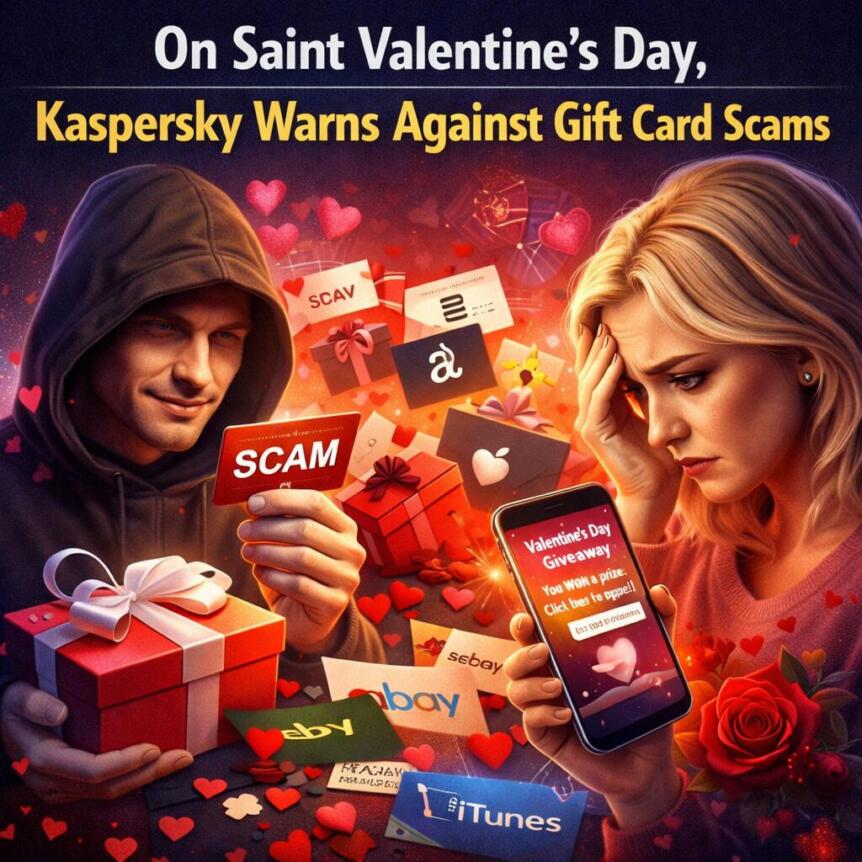
Editor’s note: Valentine’s Day is a peak time for digital gifting, but gift cards and online offers also attract scammers. This editorial highlights how fraudsters exploit popular gift options and what consumers can do to stay safe. Ahead of the day, the following press release from Kaspersky outlines current scams, risk signals and practical tips to protect yourself and your loved ones from gift-card related fraud. The aim is to provide clear, actionable context for readers navigating a surge in digital gifting and phishing activity.
Key points
- 80% of respondents consider digital gifts such as gift cards, subscriptions, or gaming credits.
- Scammers forge fake stores and verification portals to steal gift card value.
- Always verify websites, check URLs, and use official brand sites to check balances.
- A fake site mimicking major marketplaces can deploy malware or backdoors; if a deal seems too good to be true, beware.
- Kaspersky Premium offers AI-powered anti-phishing and protection against fraudulent shops.
Why this matters
Valentine’s Day shopping for digital gifts has surged, expanding opportunities for fraud. By understanding common tricks and using trusted sources, readers can reduce the risk of gift-card fraud and protect personal data during peak gift seasons.
What to watch next
- Expect more gift-card related scams around holidays.
- Watch for fake gift card sites mimicking retailers and deceptive verification portals.
- Phishing attempts through fraudulent marketplaces and links may rise; use protection with phishing detection.
Disclosure: The content below is a press release provided by the company/PR representative. It is published for informational purposes.
On Saint Valentine’s Day Kaspersky warns against gift card scams
13 February 2026
Looking for a gift for your soulmate on February 14th and think that a gift card would be a nice option? Just remember that when digital trends rapidly rise in popularity with customers, they are also gaining traction with scammers looking to use them as bait. With Saint Valentine’s Day approaching Kaspersky has identified several phishing and malicious campaigns targeting gift card owners and those who’re looking for a digital present for their loved ones. To help stay safe, the security experts at Kaspersky have also shared practical advice on how not to be tricked.
A “check‑your‑balance” that drains your gift card
Kaspersky’s latest survey* shows that 80% of respondents consider giving digital presents such as subscriptions, gaming credits or gift cards. Scammers are actively exploiting this trend capitalizing on well-known brands, creating fake online stores and even crafting fake verification portals designed specifically to steal gift card value.
Kaspersky’s phishing detection identified deceptive platforms offering victims a “secure” system to check their gift cards validity, status or balance. Targeting those who recently received a gift card, phishers steal the card’s identification data and get an opportunity to activate the certificate before the user themselves.
To stay protected from such scams, Kaspersky recommends double‑checking that a website is real. Look carefully at the web address, any links you’re asked to click, and spot any odd pictures or designs that might hint the site is fake. The safest way to confirm a gift card’s balance is to go straight to the brand’s official website – don’t follow any other links. To prevent clicking on malicious link use a security solution such as Kaspersky Premium with a strong AI-powered anti-phishing component.
Is it a gift card for you or for cybercriminals?
As gift shoppers flood online marketplaces with flash sales and limited-time deals, cybercriminals are watching closely, ready to strike when users are most vulnerable.
Kaspersky experts detected a fake website that mimics Amazon, one of the most famous marketplaces, offering $200 gift card. With this tempting offer, scammers encourage customers to press a “Get your Amazon gift card” button. However, when the user clicks it, they get an MSI installer with a backdoor that cybercriminals use to remotely control the victim’s device.
This fraudulent scheme highlights the importance of complex cybersecurity protection, showing that clicking on a wrong link may result in not only money and data loss, but also device infection or loss of control over it. When a fake site copies the original store’s look exactly, it’s hard to tell which one is real and which is a scam.
Kaspersky Premium protects users from fraudulent online stores through advanced detection technology that analyzes website characteristics and URLs to identify suspicious patterns. For its excellent performance in AV-Comparatives Fake Shops Detection certification in 2025 Kaspersky Premium was awarded an “Approved” certificate, making it the right choice for confident online shopping.
* The study was conducted by Kaspersky’s market research center in November 2025. 3000 respondents from 15 countries (Argentina, Chile, China, Germany, India, Indonesia, Italy, Malaysia, Mexico, Saudi Arabia, South Africa, Spain, Turkey, UK, United Arab Emirates) took part in the survey.
About Kaspersky
Kaspersky is a global cybersecurity and digital privacy company founded in 1997. With over a billion devices protected to date from emerging cyberthreats and targeted attacks, Kaspersky’s deep threat intelligence and security expertise is constantly transforming into innovative solutions and services to protect individuals, businesses, critical infrastructure, and governments around the globe. The company’s comprehensive security portfolio includes leading digital life protection for personal devices, specialized security products and services for companies, as well as Cyber Immune solutions to fight sophisticated and evolving digital threats. We help millions of individuals and nearly 200,000 corporate clients protect what matters most to them. Learn more at www.kaspersky.com.
This article was originally published as On Saint Valentine’s Day, Kaspersky warns against gift card scams on Crypto Breaking News – your trusted source for crypto news, Bitcoin news, and blockchain updates.
Ayrıca Şunları da Beğenebilirsiniz

The Role of Blockchain in Building Safer Web3 Gaming Ecosystems
- Immutable Ownership of Assets Blockchain records can be manipulated by anyone. If a player owns a sword, skin, or plot of land as an NFT, it is verifiably in their ownership, and it cannot be altered or deleted by the developer or even hacked. This has created a proven track record of ownership, providing control back to the players, unlike any centralised gaming platform where assets can be revoked.
- Decentralized Infrastructure Blockchain networks also have a distributed architecture where game data is stored in a worldwide network of nodes, making them much less susceptible to centralised points of failure and attacks. This decentralised approach makes it exponentially more difficult to hijack systems or even shut off the game’s economy.
- Secure Transactions with Cryptography Whether a player buys an NFT or trades their in-game tokens for other items or tokens, the transactions are enforced by cryptographic algorithms, ensuring secure, verifiable, and irreversible transactions and eliminating the risks of double-spending or fraudulent trades.
- Smart Contract Automation Smart contracts automate the enforcement of game rules and players’ economic exchanges for the developer, eliminating the need for intermediaries or middlemen, and trust for the developer. For example, if a player completes a quest that promises a reward, the smart contract will execute and distribute what was promised.
- Anti-Cheating and Fair Gameplay The naturally transparent nature of blockchain makes it extremely simple for anyone to examine a specific instance of gameplay and verify the economic outcomes from that play. Furthermore, multi-player games that enforce smart contracts on things like loot sharing or win sharing can automate and measure trustlessness and avoid cheating, manipulations, and fraud by developers.
- Cross-Platform Security Many Web3 games feature asset interoperability across platforms. This interoperability is made viable by blockchain, which guarantees ownership is maintained whenever assets transition from one game or marketplace to another, thereby offering protection to players who rely on transfers for security against fraud. Key Security Dangers in Web3 Gaming Although blockchain provides sound first principles of security, the Web3 gaming ecosystem is susceptible to threats. Some of the most serious threats include:

Knocking Bitcoin's lack of yield shows your ‘Western financial privilege’
Macro analyst Luke Gromen’s comments come amid an ongoing debate over whether Bitcoin or Ether is the more attractive long-term option for traditional investors. Macro analyst Luke Gromen says the fact that Bitcoin doesn’t natively earn yield isn’t a weakness; it’s what makes it a safer store of value.“If you’re earning a yield, you are taking a risk,” Gromen told Natalie Brunell on the Coin Stories podcast on Wednesday, responding to a question about critics who dismiss Bitcoin (BTC) because they prefer yield-earning assets.“Anyone who says that is showing their Western financial privilege,” he added.Read more
