In 2026, the financial world is defined by a paradox: we are wealthier and more efficient than ever, yet our foundational security is under its greatest threat In 2026, the financial world is defined by a paradox: we are wealthier and more efficient than ever, yet our foundational security is under its greatest threat

The Intelligent Ledger: Quantum Computing, Agentic DeFi, and the Future of Wealth in 2026

2026/02/21 09:13
Okuma süresi: 5 dk

In 2026, the financial world is defined by a paradox: we are wealthier and more efficient than ever, yet our foundational security is under its greatest threat in history. The convergence of Quantum Computing, Decentralized Finance (DeFi), and Artificial Intelligence has moved finance from a world of “Transactions” to one of “Autonomous Flows.” For a modern Business, capital is no longer a static resource but a programmable, self-optimizing entity. Simultaneously, Digital Marketing in finance has shifted toward “Verifiable Trust,” as institutions scramble to prove their resilience against the “Quantum Harvest.” This is the year the “Agentic Bank” becomes the standard, and the first “Quantum-Safe” financial protocols go live.

The Technological Architecture: The Quantum-Safe Transition

By 2026, the industry is in a race against the “CRQC” (Cryptographically Relevant Quantum Computer).
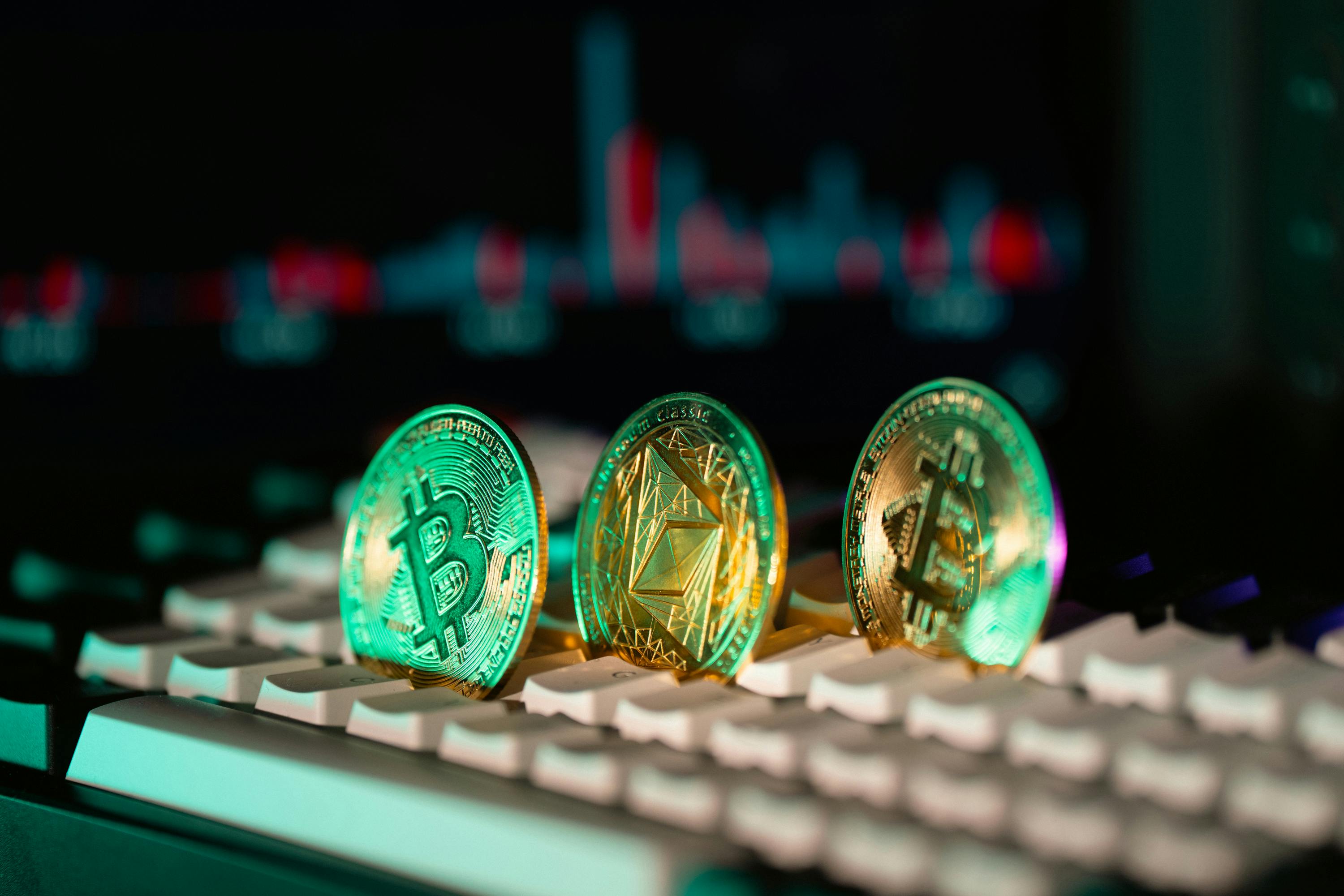
The Intelligent Ledger: Quantum Computing, Agentic DeFi, and the Future of Wealth in 2026
  • Post-Quantum Cryptography (PQC): Following NIST’s 2024 standards, 2026 marks the first year that “Hybrid Cryptography” is mandatory for global tier-1 banks. Systems now use a “Double-Wrap” approach: protecting data with both classical RSA/ECC and new lattice-based algorithms to defend against “Harvest Now, Decrypt Later” attacks.

  • Quantum Computing as a Service (QCaaS): High-frequency trading firms and hedge funds now rent quantum processing time via the cloud to solve “Combinatorial Optimization” problems—like rebalancing a $10 billion portfolio across 5,000 assets in seconds—a task that would take classical supercomputers weeks.

  • The Interoperable Blockchain Stack: The “Wild West” of fragmented blockchains has ended. In 2026, protocols like Chainlink CCIP and LayerZero act as the “TCP/IP of Finance,” allowing value to move seamlessly between a private JP Morgan chain and a public Ethereum layer.

Artificial Intelligence: From “Chatbots” to “Agentic Wealth”

In 2026, Artificial Intelligence has evolved from an advisor into an authorized “Do-Bot.”

1. Agentic Wealth Management

We have moved past simple Robo-advisors. Today’s Agentic AI has “Limited Power of Attorney.” It doesn’t just suggest a tax-loss harvesting strategy; it executes it across twelve different accounts, negotiates lower fees with providers, and re-files the necessary tax documents—all while the owner sleeps.

2. Synthetic Market Simulation

Banks use Generative AI to create “Synthetic Market Data.” By simulating millions of “Black Swan” events—from climate-driven crop failures to sudden geopolitical shifts—AI helps institutions stress-test their liquidity with a precision that was impossible when relying on historical data alone.

3. Hyper-Personalized “Life-Path” Banking

AI no longer sells “Products” (like a mortgage). It sells “Outcomes.” A banking agent monitors a user’s life trajectory and automatically adjusts their credit limit or offers a “Bridge Loan” precisely 14 days before the AI predicts a cash-flow gap.

Digital Marketing: Selling “Sovereignty and Proof”

Digital Marketing for financial services in 2026 is a battle for “Radical Transparency.”

  • GEO (Generative Engine Optimization): When a user asks an AI, “Which bank has the highest quantum-resiliency score and 24/7 liquidity?” banks must ensure their technical audits are indexed and “provable” to the AI models.

  • Verifiable AI Marketing: Consumers are skeptical of “Black Box” AI. Successful brands now market their “Explainable AI” (XAI) features, providing customers with a “Reasoning Trace” for every loan denial or investment move.

  • The “Privacy-as-a-Product” Narrative: As data breaches become more sophisticated, marketing has pivoted. Banks are no longer selling “Convenience” (which is now a commodity); they are selling “Encryption Sovereignty”—giving users the “Master Keys” to their own financial data.

Business Transformation: The Institutionalization of DeFi

The internal Business of finance has seen “TradFi” (Traditional Finance) and “DeFi” (Decentralized Finance) merge into a single “On-Chain” ecosystem.

  • Real-World Asset (RWA) Tokenization: In 2026, “Private Equity” and “Private Credit” have been democratized. An individual can now buy $1,000 worth of a tokenized toll bridge or a warehouse, receiving yield directly to their digital wallet in real-time.

  • Programmable Money (CBDCs and Deposit Tokens): Central Bank Digital Currencies (CBDCs) are now used for wholesale inter-bank settlements. This allows for “Atomic Settlement”—where the asset and the payment swap simultaneously, eliminating the 2-day “Settlement Risk” that has plagued banking for centuries.

  • 24/7 Liquidity Management: Since markets no longer close, “Treasury Management” is now a 24/7 AI-driven function. Corporate cash is moved across global yield-bearing protocols every hour to maximize returns on idle capital.

Challenges: The “Quantum Divide” and Algorithmic Bias

Despite the efficiency, 2026 faces profound systemic risks.

  • The Quantum Divide: There is a growing gap between “Quantum-Ready” nations and the rest of the world. A 2026 World Economic Forum report warns that countries failing to upgrade their cryptographic infrastructure risk being “cut off” from the global financial system due to uninsurability.

  • The Flash-Crash of Logic: As more “Agentic AI” systems trade against each other, the risk of “Algorithmic Feedback Loops” increases. The industry is currently debating “Kill-Switch” regulations that would pause autonomous trading if AI-driven volatility exceeds certain bounds.

Looking Forward: Toward “Universal Financial Intelligence”

As we look toward 2030, the goal is “Invisible Finance.” In this future, your money is an “Intelligent Utility” that flows where it is needed, protects itself from threats, and grows according to your values—all without you ever having to open a banking app.

Conclusion

The convergence of Technology, Business, Digital Marketing, and Artificial Intelligence has turned the financial sector into a high-stakes “Intelligence Race.” In 2026, wealth is no longer just about “How much you have,” but “How fast and securely your data can move.” By embracing the “Intelligent Ledger,” the financial leaders of 2026 are ensuring that even in a quantum world, trust remains the ultimate currency.


Comments
Piyasa Fırsatı
QUANTUM Logosu
QUANTUM Fiyatı(QUANTUM)
$0.002809
$0.002809$0.002809
+0.24%
USD
QUANTUM (QUANTUM) Canlı Fiyat Grafiği
Sorumluluk Reddi: Bu sitede yeniden yayınlanan makaleler, halka açık platformlardan alınmıştır ve yalnızca bilgilendirme amaçlıdır. MEXC'nin görüşlerini yansıtmayabilir. Tüm hakları telif sahiplerine aittir. Herhangi bir içeriğin üçüncü taraf haklarını ihlal ettiğini düşünüyorsanız, kaldırılması için lütfen service@support.mexc.com ile iletişime geçin. MEXC, içeriğin doğruluğu, eksiksizliği veya güncelliği konusunda hiçbir garanti vermez ve sağlanan bilgilere dayalı olarak alınan herhangi bir eylemden sorumlu değildir. İçerik, finansal, yasal veya diğer profesyonel tavsiye niteliğinde değildir ve MEXC tarafından bir tavsiye veya onay olarak değerlendirilmemelidir.

Ayrıca Şunları da Beğenebilirsiniz

Cashing In On University Patents Means Giving Up On Our Innovation Future

Cashing In On University Patents Means Giving Up On Our Innovation Future

The post Cashing In On University Patents Means Giving Up On Our Innovation Future appeared on BitcoinEthereumNews.com. “It’s a raid on American innovation that would deliver pennies to the Treasury while kneecapping the very engine of our economic and medical progress,” writes Pipes. Getty Images Washington is addicted to taxing success. Now, Commerce Secretary Howard Lutnick is floating a plan to skim half the patent earnings from inventions developed at universities with federal funding. It’s being sold as a way to shore up programs like Social Security. In reality, it’s a raid on American innovation that would deliver pennies to the Treasury while kneecapping the very engine of our economic and medical progress. Yes, taxpayer dollars support early-stage research. But the real payoff comes later—in the jobs created, cures discovered, and industries launched when universities and private industry turn those discoveries into real products. By comparison, the sums at stake in patent licensing are trivial. Universities collectively earn only about $3.6 billion annually in patent income—less than the federal government spends on Social Security in a single day. Even confiscating half would barely register against a $6 trillion federal budget. And yet the damage from such a policy would be anything but trivial. The true return on taxpayer investment isn’t in licensing checks sent to Washington, but in the downstream economic activity that federally supported research unleashes. Thanks to the bipartisan Bayh-Dole Act of 1980, universities and private industry have powerful incentives to translate early-stage discoveries into real-world products. Before Bayh-Dole, the government hoarded patents from federally funded research, and fewer than 5% were ever licensed. Once universities could own and license their own inventions, innovation exploded. The result has been one of the best returns on investment in government history. Since 1996, university research has added nearly $2 trillion to U.S. industrial output, supported 6.5 million jobs, and launched more than 19,000 startups. Those companies pay…
Paylaş
BitcoinEthereumNews2025/09/18 03:26
Here’s How Consumers May Benefit From Lower Interest Rates

Here’s How Consumers May Benefit From Lower Interest Rates

The post Here’s How Consumers May Benefit From Lower Interest Rates appeared on BitcoinEthereumNews.com. Topline The Federal Reserve on Wednesday opted to ease interest rates for the first time in months, leading the way for potentially lower mortgage rates, bond yields and a likely boost to cryptocurrency over the coming weeks. Average long-term mortgage rates dropped to their lowest levels in months ahead of the central bank’s policy shift. Copyright{2018} The Associated Press. All rights reserved. Key Facts The central bank’s policymaking panel voted this week to lower interest rates, which have sat between 4.25% and 4.5% since December, to a new range of 4% and 4.25%. How Will Lower Interest Rates Impact Mortgage Rates? Mortgage rates tend to fall before and during a period of interest rate cuts: The average 30-year fixed-rate mortgage dropped to 6.35% from 6.5% last week, the lowest level since October 2024, mortgage buyer Freddie Mac reported. Borrowing costs on 15-year fixed-rate mortgages also dropped to 5.5% from 5.6% as they neared the year-ago rate of 5.27%. When the Federal Reserve lowered the funds rate to between 0% and 0.25% during the pandemic, 30-year mortgage rates hit record lows between 2.7% and 3% by the end of 2020, according to data published by Freddie Mac. Consumers who refinanced their mortgages in 2020 saved about $5.3 billion annually as rates dropped, according to the Consumer Financial Protection Bureau. Similarly, mortgage rates spiked around 7% as interest rates were hiked in 2022 and 2023, though mortgage rates appeared to react within weeks of the Fed opting to cut or raise rates. How Do Treasury Bonds Respond To Lower Interest Rates? Long-term Treasury yields are more directly influenced by interest rates, as lower rates tend to result in lower yields. When the Fed pushed rates to near zero during the pandemic, 10-year Treasury yields fell to an all-time low of 0.5%. As…
Paylaş
BitcoinEthereumNews2025/09/18 05:59
Spur Protocol Daily Quiz 21 February 2026: Claim Free Tokens and Boost Your Crypto Wallet

Spur Protocol Daily Quiz 21 February 2026: Claim Free Tokens and Boost Your Crypto Wallet

Spur Protocol Daily Quiz February 21 2026: Today’s Correct Answer and How to Earn Free In-App Tokens The Spur Protocol Daily Quiz for February 21, 2026, is
Paylaş
Hokanews2026/02/21 17:10