

Vietnam US Tariffs: The Stunning ASEAN Winner Emerges as Manufacturing Shifts Accelerate
BitcoinWorld
Vietnam US Tariffs: The Stunning ASEAN Winner Emerges as Manufacturing Shifts Accelerate
HANOI, VIETNAM – March 2025: Vietnam stands poised as the biggest ASEAN winner from recent US tariff policies, according to comprehensive analysis from ING Bank. The Southeast Asian nation’s strategic positioning and manufacturing capabilities create significant advantages amid shifting global trade patterns. This development reflects broader economic realignments affecting supply chains across the Asia-Pacific region.
Vietnam US Tariffs Analysis Reveals Clear ASEAN Advantage
ING’s detailed research demonstrates Vietnam’s exceptional position within the Association of Southeast Asian Nations. The country’s export-oriented economy benefits substantially from redirected manufacturing investment. Consequently, Vietnam captures market share previously held by other regional competitors. The analysis examines multiple economic indicators, including foreign direct investment flows and export growth rates.
Several key factors contribute to Vietnam’s advantageous position. First, the country maintains competitive labor costs compared to regional peers. Second, Vietnam has established numerous free trade agreements with major economies. Third, infrastructure development continues at a rapid pace across industrial zones. Finally, political stability provides confidence for long-term investment decisions.
ASEAN Export Growth Comparison (2023-2025 Projection)| Country | 2023 Growth | 2024 Growth | 2025 Projection |
|---|---|---|---|
| Vietnam | 8.2% | 9.1% | 10.3% |
| Thailand | 5.7% | 6.2% | 6.8% |
| Malaysia | 6.1% | 6.5% | 7.2% |
| Indonesia | 4.9% | 5.3% | 5.9% |
| Philippines | 5.2% | 5.8% | 6.4% |
Manufacturing Shift Accelerates Across Key Industries
The manufacturing transition toward Vietnam accelerates across multiple sectors. Electronics production leads this transformation, followed closely by textile manufacturing and furniture production. Additionally, automotive component manufacturing shows remarkable growth. This diversification strengthens Vietnam’s economic resilience against potential market fluctuations.
Major corporations continue relocating production facilities to Vietnam. For instance, Samsung operates its largest smartphone factory globally in Vietnam. Similarly, Apple suppliers expand operations throughout the country. These developments create substantial employment opportunities for Vietnamese workers. Furthermore, they stimulate secondary industries supporting manufacturing operations.
Expert Analysis from ING Economists
ING economists highlight Vietnam’s strategic advantages in their latest regional assessment. The research team notes Vietnam’s comprehensive trade agreements provide preferential access to major markets. Moreover, Vietnam’s geographical position offers logistical benefits for regional supply chains. The analysis also emphasizes Vietnam’s improving regulatory environment for foreign investors.
According to ING’s regional head of research, “Vietnam demonstrates remarkable adaptability to changing global trade conditions. The country’s policy framework actively supports manufacturing diversification. Consequently, Vietnam captures disproportionate benefits from current trade realignments.” This expert perspective aligns with observable economic data trends across the region.
US-China Trade Dynamics Reshape Regional Economics
Ongoing trade tensions between the United States and China fundamentally reshape Asian economic relationships. The implementation of additional US tariffs affects global supply chain configurations. Many multinational corporations seek alternative production locations outside China. Vietnam emerges as a primary beneficiary of this corporate strategy shift.
The United States remains Vietnam’s largest export market, accounting for approximately 30% of total exports. This trading relationship strengthens as Vietnamese products gain competitive advantages. Meanwhile, Vietnam maintains robust trade relationships with China for intermediate goods. This balanced approach maximizes economic opportunities across multiple markets.
- Foreign Direct Investment: Vietnam attracted $36.6 billion in FDI during 2024, representing 15% year-over-year growth
- Export Composition: Electronics account for 42% of Vietnamese exports, followed by textiles (15%) and machinery (12%)
- Infrastructure Development: Vietnam plans $120 billion in infrastructure investment through 2030
- Labor Force: Vietnam’s workforce exceeds 57 million people with growing technical skills
Comparative ASEAN Economic Performance Analysis
Other ASEAN nations experience varied impacts from changing trade policies. Thailand benefits from automotive manufacturing but faces challenges in electronics. Malaysia maintains strength in semiconductor production but shows slower growth in consumer goods. Indonesia leverages natural resources but struggles with manufacturing competitiveness. The Philippines shows improvement in business process outsourcing but limited gains in physical exports.
Vietnam’s comprehensive advantages become apparent through comparative analysis. The country demonstrates superior performance across multiple economic indicators. This consistent outperformance suggests sustainable competitive advantages rather than temporary benefits. Regional economists increasingly recognize Vietnam’s structural economic strengths.
Long-Term Implications for Regional Development
The current economic shifts carry significant long-term implications for ASEAN development. Vietnam’s rising prominence may alter regional economic leadership dynamics. Other ASEAN members potentially face increased competitive pressure. However, regional cooperation frameworks might mitigate negative impacts through coordinated policies.
Infrastructure connectivity improvements across ASEAN could distribute economic benefits more broadly. The Regional Comprehensive Economic Partnership facilitates greater regional integration. Additionally, ASEAN’s collective bargaining power increases with unified trade policies. These factors suggest complex, evolving regional economic relationships ahead.
Conclusion
Vietnam clearly emerges as the biggest ASEAN winner from US tariff policies according to ING analysis. The country’s manufacturing capabilities, trade agreements, and strategic positioning create substantial economic advantages. This development reflects broader shifts in global supply chains and trade relationships. Vietnam’s economic trajectory suggests continued growth and regional influence expansion. The Vietnam US tariffs situation demonstrates how targeted policies can reshape regional economic landscapes significantly.
FAQs
Q1: Why does ING consider Vietnam the biggest ASEAN winner from US tariffs?
ING’s analysis identifies Vietnam’s combination of competitive manufacturing costs, extensive trade agreements, strategic location, and political stability as creating exceptional advantages for capturing redirected investment and export opportunities resulting from US tariff policies.
Q2: Which industries benefit most from Vietnam’s advantageous position?
Electronics manufacturing experiences the most significant growth, particularly smartphones and components, followed by textiles and apparel, furniture production, and increasingly automotive parts and machinery manufacturing.
Q3: How do US-China trade tensions affect Vietnam’s economic position?
Ongoing trade tensions accelerate corporate diversification of manufacturing away from China, with Vietnam emerging as a primary alternative destination due to its proximity, infrastructure, and favorable trade terms with both the US and China.
Q4: What challenges might Vietnam face despite its advantageous position?
Potential challenges include infrastructure strain from rapid growth, increasing labor costs over time, regulatory complexities, environmental concerns, and potential trade policy changes from partner countries.
Q5: How do other ASEAN countries compare to Vietnam in benefiting from trade shifts?
While other ASEAN nations experience some benefits, Vietnam demonstrates superior performance across multiple indicators including FDI growth, export expansion, manufacturing diversification, and infrastructure development, creating a more comprehensive competitive advantage.
This post Vietnam US Tariffs: The Stunning ASEAN Winner Emerges as Manufacturing Shifts Accelerate first appeared on BitcoinWorld.
Ayrıca Şunları da Beğenebilirsiniz

The Stunning ASEAN Winner Emerges As Manufacturing Shifts Accelerate
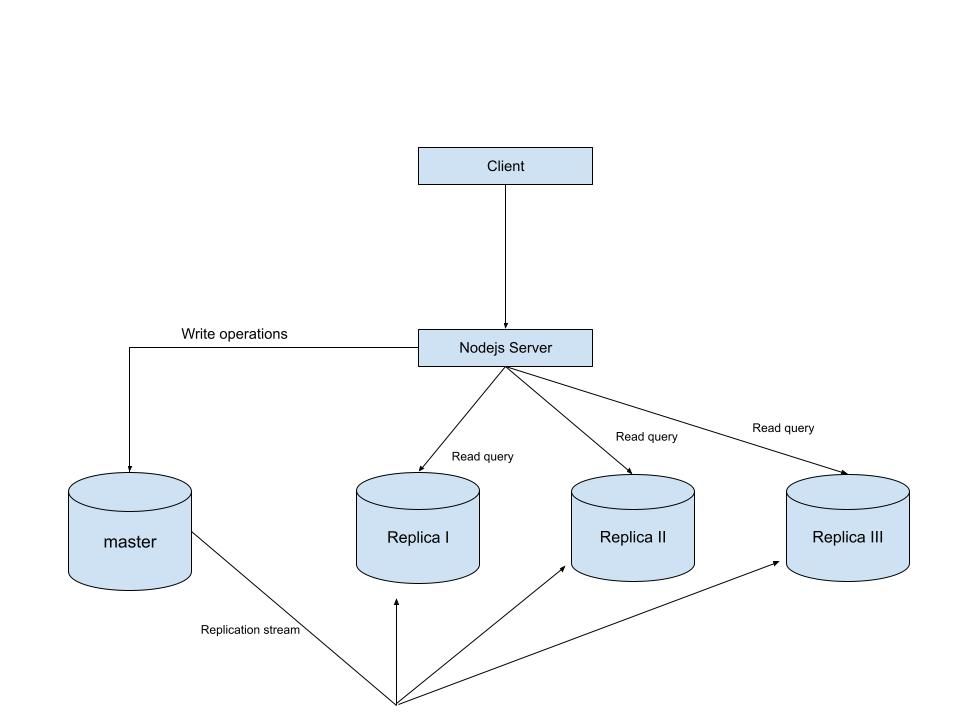
MySQL Single Leader Replication with Node.js and Docker
command: --server-id=1 --log-bin=ON The --server-id option gives each MySQL server in your replication setup its own name tag. Each one has to be unique and without it, replication won’t work at all. Another cool option not included here is binlog_format=ROW. This tells MySQL how to keep track of changes before passing them along to the replicas. By default, MySQL already uses row-based replication, but you can explicitly set it to ROW to be sure or switch it to STATEMENT if you’d rather log the actual SQL statements instead of row-by-row changes. \ Run our containers on docker Now, in the terminal, we can run the following command to spin up our database containers: docker-compose up -d \ Setting Up Our Master (Primary) Server To configure our master server, we would have to first access the running instance on docker using the following command docker exec -it mysql-master bash This command opens an interactive Bash shell inside the running Docker container named mysql-master, allowing us to run commands directly inside that container. \ Now that we’re inside the container, we can access the MySQL server and start running commands. type: mysql -uroot -p This will log you into MySQL as the root user. You’ll be prompted to enter the password you set in your docker-compose.yml file. \ Next, we need to create a special user that our replicas will use to connect to the master server and pull data. Inside the MySQL prompt, run the following commands: \ CREATE USER 'repl_user'@'%' IDENTIFIED BY 'replication_pass'; GRANT REPLICATION SLAVE ON . TO 'repl_user'@'%'; FLUSH PRIVILEGES; Here’s what’s happening: CREATE USER makes a new MySQL user called repl_user with the password replication_pass. GRANT REPLICATION SLAVE gives this user permission to act as a replication client. FLUSH PRIVILEGES tells MySQL to reload the user permissions so they take effect immediately. \ Time to Configure the Replica (Secondary) Servers a. First, let’s access the replica containers the same way we did with the master. Run this command in your terminal for each of the replica containers: \ docker exec -it <replica_container_name> bash mysql -uroot -p <replica_container_name> should be replace with the name of the replica container you are trying to setup b. Now it’s time to tell our replica where to get its data from. While inside the replica’s MySQL shell, run the following command to configure replication using the master’s details: CHANGE REPLICATION SOURCE TO SOURCE_HOST='mysql-master', SOURCE_USER='repl_user', SOURCE_PASSWORD='replication_pass', GET_SOURCE_PUBLIC_KEY=1; With the replication settings in place, let’s fire up the replica and get it syncing with the master. Still inside the MySQL shell on the replica, run: START REPLICA; This starts the replication process. To make sure everything is working, check the replica’s status with:
SHOW REPLICA STATUS\G; Look for Replica_IO_Running and Replica_SQL_Running — if both say Yes, congratulations! 🎉 Your replica is now successfully connected to the master and replicating data in real time.
Testing Our Replication Setup from the Node.js App Now that our replication is successfully set up, we can configure our Node.js server to observe the real-time effect of data being replicated from the master server to the replica server whenever we write to it. We start by installing the following dependencies:
npm i express mysql2 sequelize \ Now create a folder called src in the root directory and add the following files inside that folder connection.js, index.js and model.js. Our current directory should look like this We can now set up our connections to our master and replica server in the connection.js file as shown below
const Sequelize = require("sequelize"); const sequelize = new Sequelize({ dialect: "mysql", replication: { write: { host: "127.0.0.1", username: "root", password: "master", database: "replicaDb", }, read: [ { host: "127.0.0.1", username: "root", password: "slave", database: "replicaDb", port: 3307 }, { host: "127.0.0.1", username: "root", password: "slave", database: "replicaDb", port: 3308 }, { host: "127.0.0.1", username: "root", password: "slave", database: "replicaDb", port: 3309 }, ], }, }); async function connectdb() { try { await sequelize.authenticate(); } catch (error) { console.error("❌ unable to connect to the follower database", error); } } connectdb(); module.exports = { sequelize, }; \ We can now create a User table in the model.js file
const {DataTypes} = require("sequelize"); const { sequelize } = require("./connection"); const User = sequelize.define("User", { name: { type: DataTypes.STRING, allowNull: false, }, email: { type: DataTypes.STRING, unique: true, allowNull: false, }, }); module.exports = User \ and finally in our index.js file we can start our server and listen for connections on port 3000. from the code sample below, all inserts or updates will be routed by sequelize to the master server. while all read queries will be routed to the read replicas.
const express = require("express"); const { sequelize } = require("./connection"); const User = require("./model"); const app = express(); app.use(express.json()); async function main() { await sequelize.sync({ alter: true }); app.get("/", (req, res) => { res.status(200).json({ message: "first step to setting server up", }); }); app.post("/user", async (req, res) => { const { email, name } = req.body; let newUser = await User.build({ name, email, }); // This INSERT will go to the write (master) connection newUser = newUser.save({ returning: false }); res.status(201).json({ message: "User successfully created", }); }); app.get("/user", async (req, res) => { // This SELECT query will go to one of the read replicas const users = await User.findAll(); res.status(200).json(users); }); app.listen(3000, () => { console.log("server has connected"); }); } main(); When you make a POST request to the /users endpoint, take a moment to check both the master and replica servers to observe how data is replicated in real time. Right now, we are relying on Sequelize to automatically route requests, which works for development but isn’t robust enough for a production environment. In particular, if the master node goes down, Sequelize cannot automatically redirect requests to a newly elected leader. In the next part of this series, we’ll explore strategies to handle these challenges
