For anyone who has tried to run a cross-border payments business from Nigeria, the frustration is familiar. You… The post Nomba’s new API lets fintechs pay out For anyone who has tried to run a cross-border payments business from Nigeria, the frustration is familiar. You… The post Nomba’s new API lets fintechs pay out

Nomba’s new API lets fintechs pay out to 5 countries without the FX headache

2026/03/19 03:09
Okuma süresi: 4 dk
Bu içerikle ilgili geri bildirim veya endişeleriniz için lütfen crypto.news@mexc.com üzerinden bizimle iletişime geçin.

For anyone who has tried to run a cross-border payments business from Nigeria, the frustration is familiar. You collect naira on one end, then scramble to source foreign currency through OTC markets while your customer waits.

Meanwhile, you are holding reserve positions on the payout side too. Capital is frozen in two places at once, and every transaction costs you more than the fee you charged for it.

Nomba, Nigeria’s business payments company, wants to change that.

The company launched its Global Payout API this week, a single integration that lets fintech entities and payment operators collect funds in naira or stablecoins and disburse directly to five international markets, the United Kingdom, Europe, Canada, the Democratic Republic of Congo, and Nigeria, without manually managing foreign exchange or maintaining liquidity on both sides of the transaction.

The timing matters. Cross-border payments out of Africa remain one of the most expensive corridors in the world. The World Bank’s latest Remittance Prices Worldwide report puts the average cost of sending $200 from Sub-Saharan Africa at above 8%, more than double the UN Sustainable Development Goal target of 3%.

A significant chunk of that cost is not profit for operators. It is the friction of managing fragmented liquidity across multiple systems, and it is the exact problem Nomba is trying to remove.

Read also: Nomba acquires Canadian payment firm to build direct Africa-Canada trade rails

Nomba’s API

What the company calls the “dual liquidity trap” is the operational reality that has quietly limited how many Nigerian fintech entities can compete in cross-border payments at any meaningful scale.

You need naira to collect, you need dollars or pounds or euros to disburse, and the gap between those two states has historically required capital reserves that smaller operators simply cannot afford to sit on indefinitely.

The API collapses that into a single transaction flow. When funds land in a virtual account, whether in naira or in USDT and USDC stablecoins, the system converts instantly and initiates disbursement. Operators do not touch the foreign exchange process at all.

The stablecoin option is worth noting separately because it gives operators who want to remove naira exposure entirely a clean alternative, one that becomes more relevant every time the exchange rate moves sharply.

"Running a cross-border payments business from Nigeria has meant managing frozen liquidity on two fronts at the same time," Yinka Adewale, CEO of Nomba, said. "Operators collect naira, then go source foreign currency, all while their customers are waiting. We built this API to collapse that operational complexity into a single transaction flow."

The corridors the API covers reflect where Nigerian diaspora remittance and business payment volumes are actually concentrated.

UK payments move through Faster Payments at up to £1,000,000 per transaction, settling between one and three hours. Europe runs on SEPA at up to €100,000 with settlement in under an hour. Canada uses Interac for instant settlement alongside standard bank transfer. The DRC supports mobile money and bank transfer, both instant.

Yinka Adewale, CEO, NombaYinka Adewale, CEO, Nomba

The five-minute exchange rate lock is the detail operators will care about most in practice. The rate shown at the point of initiation is the rate applied at settlement, eliminating slippage on volatile corridors and removing one of the most persistent sources of reconciliation disputes in cross-border operations.

Nigeria’s fintech sector processed an estimated $24 billion in payment transactions in 2024, with cross-border volumes growing faster than domestic payments.

The infrastructure gap between collection and disbursement has been one of the clearest structural limits on how quickly that growth converts into internationally competitive businesses. Nomba’s Global Payout API is available now, with documentation live.

Read also: Nomba launches Apple Pay for Nigerian merchants, enabling contactless payments

The post Nomba’s new API lets fintechs pay out to 5 countries without the FX headache first appeared on Technext.

Sorumluluk Reddi: Bu sitede yeniden yayınlanan makaleler, halka açık platformlardan alınmıştır ve yalnızca bilgilendirme amaçlıdır. MEXC'nin görüşlerini yansıtmayabilir. Tüm hakları telif sahiplerine aittir. Herhangi bir içeriğin üçüncü taraf haklarını ihlal ettiğini düşünüyorsanız, kaldırılması için lütfen crypto.news@mexc.com ile iletişime geçin. MEXC, içeriğin doğruluğu, eksiksizliği veya güncelliği konusunda hiçbir garanti vermez ve sağlanan bilgilere dayalı olarak alınan herhangi bir eylemden sorumlu değildir. İçerik, finansal, yasal veya diğer profesyonel tavsiye niteliğinde değildir ve MEXC tarafından bir tavsiye veya onay olarak değerlendirilmemelidir.

Ayrıca Şunları da Beğenebilirsiniz

Franklin Templeton CEO Dismisses 50bps Rate Cut Ahead FOMC

Franklin Templeton CEO Dismisses 50bps Rate Cut Ahead FOMC

The post Franklin Templeton CEO Dismisses 50bps Rate Cut Ahead FOMC appeared on BitcoinEthereumNews.com. Franklin Templeton CEO Jenny Johnson has weighed in on whether the Federal Reserve should make a 25 basis points (bps) Fed rate cut or 50 bps cut. This comes ahead of the Fed decision today at today’s FOMC meeting, with the market pricing in a 25 bps cut. Bitcoin and the broader crypto market are currently trading flat ahead of the rate cut decision. Franklin Templeton CEO Weighs In On Potential FOMC Decision In a CNBC interview, Jenny Johnson said that she expects the Fed to make a 25 bps cut today instead of a 50 bps cut. She acknowledged the jobs data, which suggested that the labor market is weakening. However, she noted that this data is backward-looking, indicating that it doesn’t show the current state of the economy. She alluded to the wage growth, which she remarked is an indication of a robust labor market. She added that retail sales are up and that consumers are still spending, despite inflation being sticky at 3%, which makes a case for why the FOMC should opt against a 50-basis-point Fed rate cut. In line with this, the Franklin Templeton CEO said that she would go with a 25 bps rate cut if she were Jerome Powell. She remarked that the Fed still has the October and December FOMC meetings to make further cuts if the incoming data warrants it. Johnson also asserted that the data show a robust economy. However, she noted that there can’t be an argument for no Fed rate cut since Powell already signaled at Jackson Hole that they were likely to lower interest rates at this meeting due to concerns over a weakening labor market. Notably, her comment comes as experts argue for both sides on why the Fed should make a 25 bps cut or…
Paylaş
BitcoinEthereumNews2025/09/18 00:36
Cashing In On University Patents Means Giving Up On Our Innovation Future
Cashing In On University Patents Means Giving Up On Our Innovation Future

The post Cashing In On University Patents Means Giving Up On Our Innovation Future appeared on BitcoinEthereumNews.com. “It’s a raid on American innovation that would deliver pennies to the Treasury while kneecapping the very engine of our economic and medical progress,” writes Pipes. Getty Images Washington is addicted to taxing success. Now, Commerce Secretary Howard Lutnick is floating a plan to skim half the patent earnings from inventions developed at universities with federal funding. It’s being sold as a way to shore up programs like Social Security. In reality, it’s a raid on American innovation that would deliver pennies to the Treasury while kneecapping the very engine of our economic and medical progress. Yes, taxpayer dollars support early-stage research. But the real payoff comes later—in the jobs created, cures discovered, and industries launched when universities and private industry turn those discoveries into real products. By comparison, the sums at stake in patent licensing are trivial. Universities collectively earn only about $3.6 billion annually in patent income—less than the federal government spends on Social Security in a single day. Even confiscating half would barely register against a $6 trillion federal budget. And yet the damage from such a policy would be anything but trivial. The true return on taxpayer investment isn’t in licensing checks sent to Washington, but in the downstream economic activity that federally supported research unleashes. Thanks to the bipartisan Bayh-Dole Act of 1980, universities and private industry have powerful incentives to translate early-stage discoveries into real-world products. Before Bayh-Dole, the government hoarded patents from federally funded research, and fewer than 5% were ever licensed. Once universities could own and license their own inventions, innovation exploded. The result has been one of the best returns on investment in government history. Since 1996, university research has added nearly $2 trillion to U.S. industrial output, supported 6.5 million jobs, and launched more than 19,000 startups. Those companies pay…
Paylaş
BitcoinEthereumNews2025/09/18 03:26
Fed Makes First Rate Cut of the Year, Lowers Rates by 25 Bps

Fed Makes First Rate Cut of the Year, Lowers Rates by 25 Bps

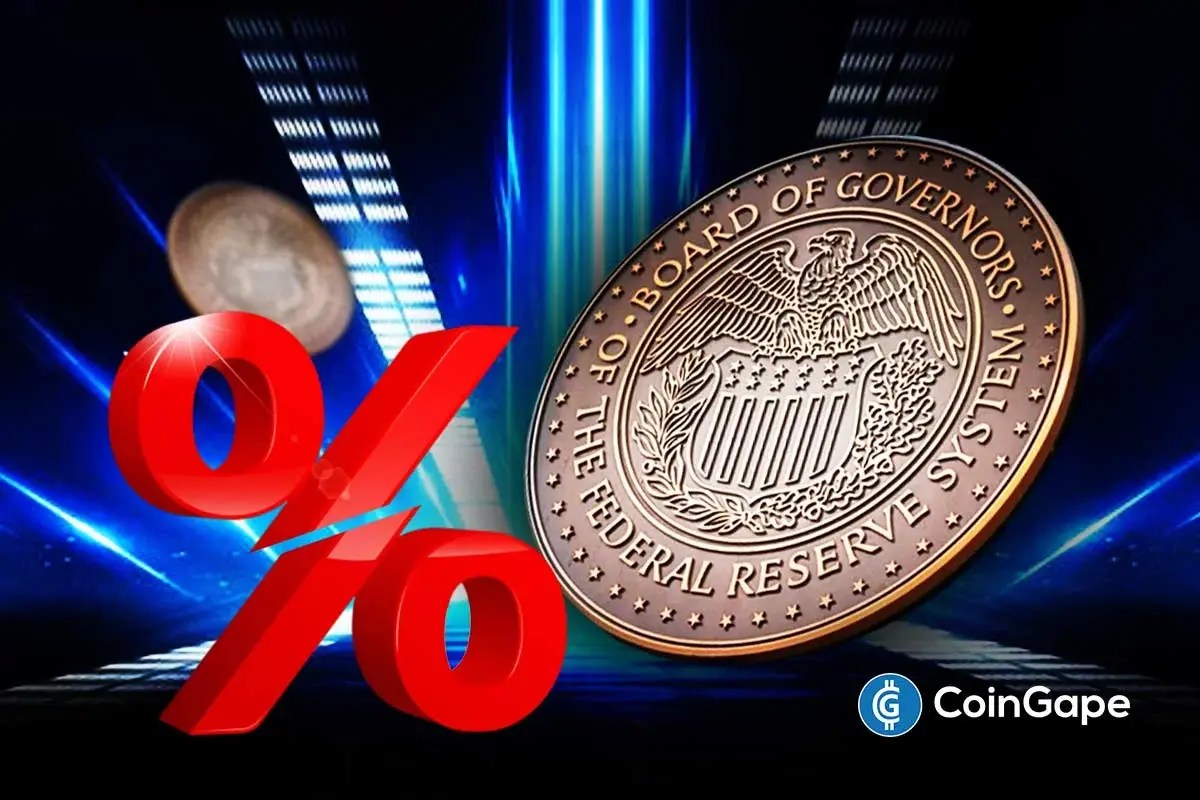
The post Fed Makes First Rate Cut of the Year, Lowers Rates by 25 Bps appeared on BitcoinEthereumNews.com. The Federal Reserve has made its first Fed rate cut this year following today’s FOMC meeting, lowering interest rates by 25 basis points (bps). This comes in line with expectations, while the crypto market awaits Fed Chair Jerome Powell’s speech for guidance on the committee’s stance moving forward. FOMC Makes First Fed Rate Cut This Year With 25 Bps Cut In a press release, the committee announced that it has decided to lower the target range for the federal funds rate by 25 bps from between 4.25% and 4.5% to 4% and 4.25%. This comes in line with expectations as market participants were pricing in a 25 bps cut, as against a 50 bps cut. This marks the first Fed rate cut this year, with the last cut before this coming last year in December. Notably, the Fed also made the first cut last year in September, although it was a 50 bps cut back then. All Fed officials voted in favor of a 25 bps cut except Stephen Miran, who dissented in favor of a 50 bps cut. This rate cut decision comes amid concerns that the labor market may be softening, with recent U.S. jobs data pointing to a weak labor market. The committee noted in the release that job gains have slowed, and that the unemployment rate has edged up but remains low. They added that inflation has moved up and remains somewhat elevated. Fed Chair Jerome Powell had also already signaled at the Jackson Hole Conference that they were likely to lower interest rates with the downside risk in the labor market rising. The committee reiterated this in the release that downside risks to employment have risen. Before the Fed rate cut decision, experts weighed in on whether the FOMC should make a 25 bps cut or…
Paylaş
BitcoinEthereumNews2025/09/18 04:36
